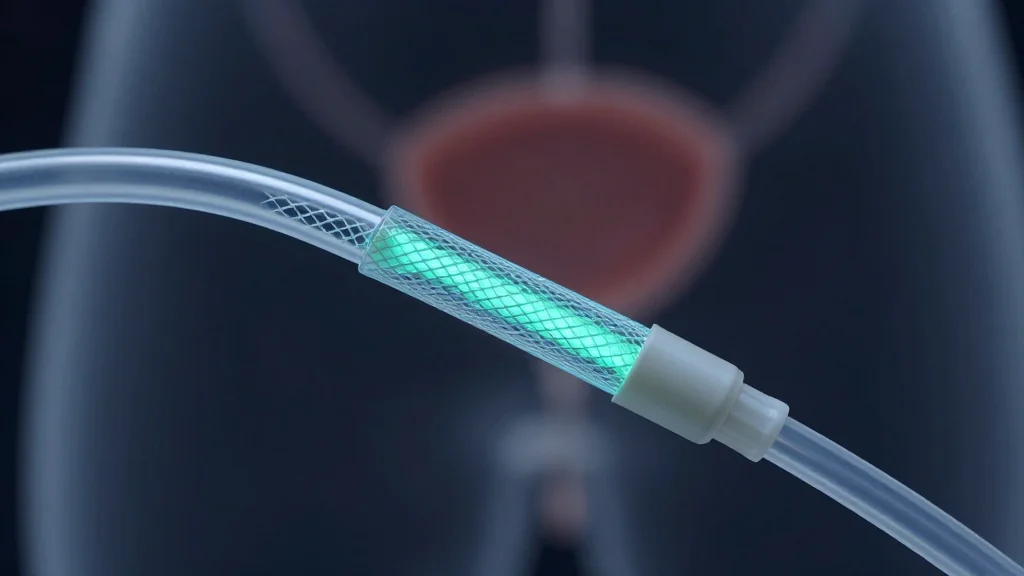
MIT Nanotech Catheter Spots Bladder‑cancer Biomarker 50,000× More Sensitively

Why It Matters
Early detection is the most effective lever for improving bladder‑cancer outcomes, yet current surveillance tools are blunt and often miss recurring tumors until they are clinically apparent. A sensor that can locate NMP‑22 at the source could shift the treatment paradigm from reactive to proactive, reducing the need for costly cystoscopies and potentially lowering recurrence‑related mortality. Moreover, the platform demonstrates how carbon‑nanotube fluorescence can be harnessed for in‑situ chemical imaging, a capability that could be repurposed for gastrointestinal, pulmonary, or vascular diagnostics. Beyond patient care, the technology signals a broader market shift toward nanomaterial‑enabled point‑of‑care devices. Companies that can integrate such sensors into existing medical workflows stand to capture new revenue streams while addressing a $1 billion‑plus market for cancer monitoring. The approach also underscores the importance of interdisciplinary collaboration—combining chemical engineering, nanomaterials science, and clinical urology—to accelerate translational breakthroughs.
Key Takeaways
- •MIT team creates catheter coated with carbon‑nanotube sensors detecting NMP‑22 50,000× more sensitively than urine tests
- •Study published in Nature Nanotechnology (2026) demonstrates real‑time chemical imaging of bladder tumors in animal models
- •Bladder cancer diagnoses: ~85,000 U.S. cases annually; 50% recur within five years
- •Sensor could reduce reliance on invasive cystoscopy and lower recurrence‑related healthcare costs
- •Next phase: human safety trials and partnership with medical‑device manufacturers
Pulse Analysis
The MIT catheter represents a convergence of nanomaterials and clinical diagnostics that could redefine surveillance for high‑recurrence cancers. Historically, bladder‑cancer monitoring has been hampered by the low concentration of biomarkers in urine, forcing clinicians to rely on invasive visual inspections. By embedding the sensor directly in the organ, the technology sidesteps dilution issues and provides spatial resolution previously unavailable in a bedside tool.
From a market perspective, the device could disrupt a niche dominated by imaging firms and urology equipment manufacturers. Its compatibility with existing catheter infrastructure lowers entry barriers, allowing established players to adopt the nanotech layer without overhauling production lines. Early adopters may gain a competitive edge by offering a less invasive, more sensitive monitoring option, potentially reshaping reimbursement models toward preventive care.
Looking ahead, the key challenge will be translating the animal‑model success into human trials while maintaining sensor stability and biocompatibility. If the team can demonstrate safety and reproducibility at scale, the platform could serve as a template for other organ‑specific sensors—think colon‑cancer detection via colonoscopic catheters or lung‑cancer monitoring through bronchoscope‑mounted nanotube arrays. The ripple effect could accelerate a new class of nanotech‑enabled diagnostic devices, cementing nanomaterials as a cornerstone of next‑generation personalized medicine.
MIT nanotech catheter spots bladder‑cancer biomarker 50,000× more sensitively
Comments
Want to join the conversation?
Loading comments...