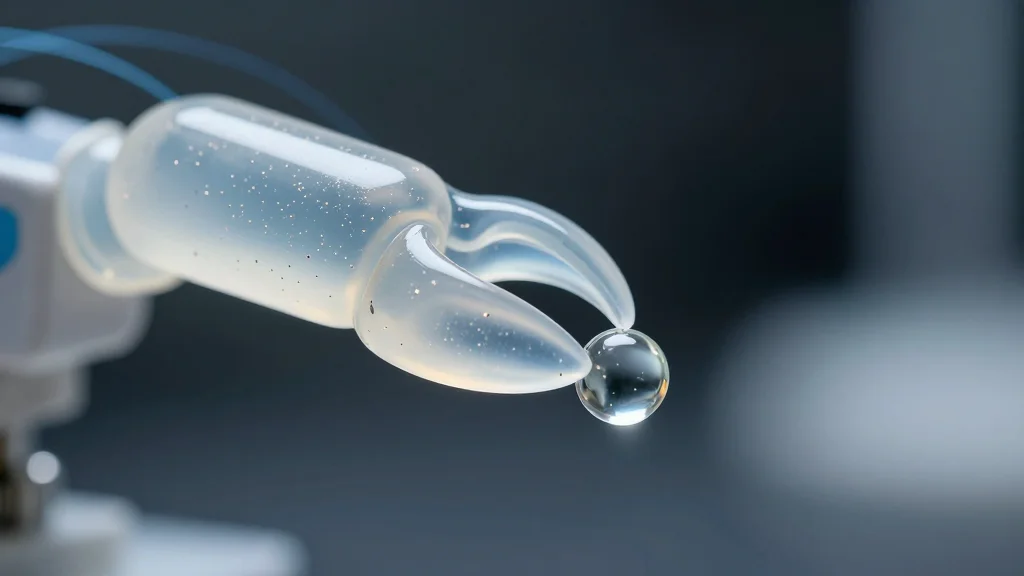
MIT Team Unveils Magnetically‑controlled Soft Hydrogel Microrobots for Medical Use

Why It Matters
The ability to 3D‑print soft, magnetically responsive structures at the micron scale bridges a gap between nanomaterials and functional medical devices. By enabling remote, instantaneous control without chemical or optical triggers, the technology could accelerate the development of injectable robots that navigate the bloodstream or tissue matrices, expanding the reach of precision medicine. Moreover, the double‑dip fabrication method offers a scalable route to embed magnetic functionality in soft polymers, a hurdle that has limited commercial adoption of magnetic microrobotics. Beyond healthcare, the approach may influence other nanotech sectors such as micro‑assembly, environmental sensing and soft actuation for micro‑electromechanical systems (MEMS). The demonstration underscores how interdisciplinary collaboration—combining materials science, robotics and biomedical engineering—can produce tools that were previously only theoretical, potentially reshaping investment priorities across the nanotech ecosystem.
Key Takeaways
- •MIT, EPFL and University of Cincinnati co‑developed soft magnetic hydrogel microrobots.
- •Double‑dip process prints polymer scaffolds then infuses iron‑oxide nanoparticles for magnetism.
- •Robots are smaller than a grain of sand and can deform independently under an external magnet.
- •Potential applications include biopsy retrieval and targeted drug delivery inside the body.
- •Next steps involve ex‑vivo tissue testing and partnerships for clinical translation.
Pulse Analysis
The magno‑bot breakthrough arrives at a moment when the nanotech industry is seeking tangible, market‑ready applications for soft robotics. Historically, magnetic actuation has been limited to macro‑scale devices because integrating sufficient magnetic particles without compromising structural integrity was a persistent engineering challenge. By decoupling the printing and magnetization steps, MIT’s team sidesteps that bottleneck, offering a pathway that could be adopted by commercial 3D‑printing firms.
From a competitive standpoint, the work positions academic consortia ahead of private startups that have focused on light‑driven or chemically powered microrobots. While those approaches excel in specific niches, magnetic control offers unmatched speed and depth of penetration, crucial for in‑body operations. Investors are likely to view this as a lower‑risk entry point into medical microrobotics, especially given the growing demand for minimally invasive procedures and the $12 billion market forecast for injectable therapeutic devices by 2030.
Looking forward, the key to commercial success will be demonstrating biocompatibility and regulatory clearance. If the team can validate safety in animal models and scale the double‑dip process to volume production, we could see the first generation of magnetically guided micro‑intervention kits within the next five years. Such kits would not only transform surgical practice but also create a new class of programmable matter that could be re‑configured on‑demand, a concept that could ripple across nanotech fields from smart coatings to adaptive sensors.
MIT team unveils magnetically‑controlled soft hydrogel microrobots for medical use
Comments
Want to join the conversation?
Loading comments...