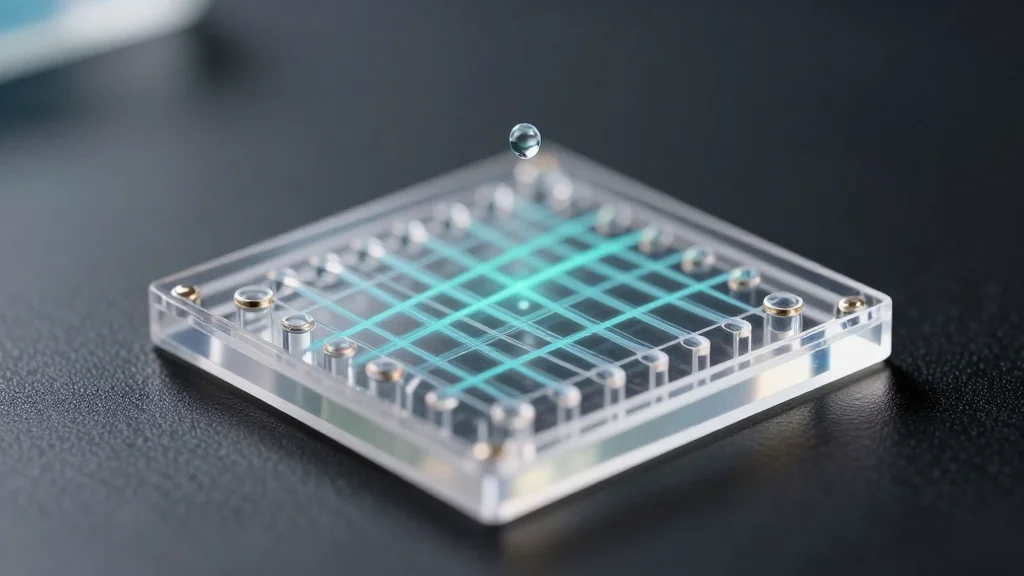
Optoelectronic Tweezers Integrated with Microfluidics Promise Low‑Power Nanoscale Manipulation

Why It Matters
Integrating OETs with microfluidics addresses two critical bottlenecks in nanobiotechnology: thermal damage and scalability. By slashing the optical power needed for manipulation, the technology makes it feasible to handle delicate cells and biomolecules in high‑throughput workflows, a prerequisite for next‑generation drug discovery pipelines. Additionally, the low‑power nature of OETs dovetails with AI‑driven automation, promising a new class of smart lab‑on‑a‑chip systems that can operate continuously without overheating, thereby accelerating the pace of biomedical research. Beyond the laboratory, the approach could democratize access to sophisticated nanomanipulation tools. Portable, battery‑operated devices could bring precise cell sorting and analysis to remote clinics, expanding the reach of personalized medicine. The roadmap therefore not only advances the scientific state‑of‑the‑art but also sets the stage for broader societal impact.
Key Takeaways
- •Zhang’s team proposes 2D semiconductor materials to boost light‑induced conductivity in OETs.
- •New architecture reduces required illumination intensity by >10×, minimizing thermal damage.
- •Dynamic surface passivation is suggested to reconcile impedance mismatch with physiological fluids.
- •Roadmap targets AI‑driven, fully automated ‘cell factories in a box’ for drug screening.
- •Next step: prototype OET‑microfluidic chip to benchmark against conventional optical tweezers.
Pulse Analysis
The convergence of optoelectronics and microfluidics marks a pivotal shift from isolated instrumentation toward integrated, data‑centric platforms. Historically, optical tweezers have been prized for their precision but hampered by high power demands that limit their use with sensitive biological samples. By leveraging the photoconductive switching principle of OETs, the new roadmap sidesteps this limitation, positioning the technology as a viable alternative for large‑scale cell handling.
From a market perspective, the nanotech instrumentation sector has been fragmented, with vendors offering niche solutions—dielectrophoresis, acoustic manipulation, or magnetic tweezers—each with trade‑offs in speed, resolution, or biocompatibility. OETs, once constrained by integration challenges, now appear ready to compete on cost, scalability, and compatibility with existing microfluidic manufacturing pipelines. Early adopters in biotech automation could gain a competitive edge by embedding OET arrays into their robotic workcells, reducing the need for high‑power lasers and associated cooling infrastructure.
Looking ahead, the success of this integration will hinge on material supply chains for high‑quality 2D semiconductors and on standardizing fabrication processes that marry photoconductive films with soft‑lithography. If these hurdles are cleared, we can expect a wave of start‑ups and established players launching turnkey OET‑microfluidic platforms, accelerating the transition to AI‑controlled bio‑manufacturing and potentially reshaping the economics of personalized therapeutics.
Optoelectronic Tweezers Integrated with Microfluidics Promise Low‑Power Nanoscale Manipulation
Comments
Want to join the conversation?
Loading comments...