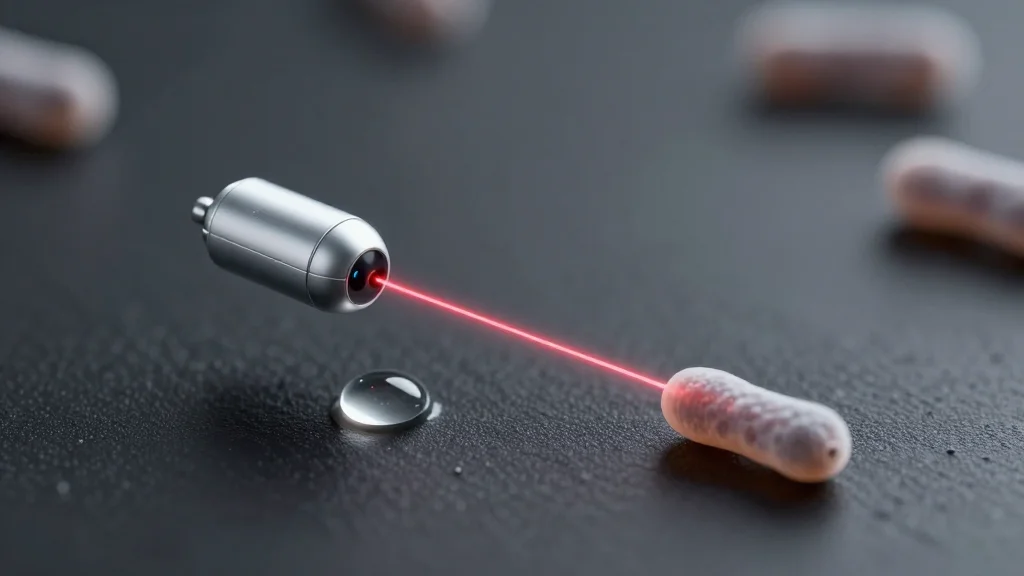
Researchers Unveil Sub‑micron Light‑driven Nanorobots that Capture and Remove Bacteria

Companies Mentioned
Why It Matters
The ability to steer nanorobots with light and capture bacteria directly addresses two critical pain points in antimicrobial technology: specificity and resistance. Traditional antibiotics act systemically and often indiscriminately, fostering resistant strains. Light‑driven nanorobots offer a physically targeted approach that could eradicate pathogens at the site of infection while sparing beneficial microbiota. Moreover, the sub‑micron scale and low mass of these bots enable them to navigate microvascular networks and biofilms that are inaccessible to larger devices. Beyond healthcare, the technology could be repurposed for environmental applications such as water purification, where laser‑controlled nanorobots could be deployed in flow‑through reactors to capture and concentrate bacterial contaminants, reducing reliance on chemical disinfectants. The convergence of optical manipulation, plasmonic engineering, and nanofabrication thus opens a versatile platform with cross‑sector impact.
Key Takeaways
- •Sub‑micron nanorobots (920 nm, 0.26 pg) powered by a 980 nm laser achieve up to 50 µm/s speed
- •Self‑correcting torque maintains orientation, enabling programmable rectangular trajectories
- •Demonstrated capture and transport of *E. coli* and *Staphylococcus carnosus* in liquid‑cell assays
- •Parallel research includes DNA‑origami virus‑hunting bots and magnetically guided microrobots
- •Potential market for antibacterial nanotech projected to exceed $2 billion by 2030
Pulse Analysis
The Azorobotics demonstration marks a technical inflection point rather than a commercial launch. Historically, nanorobotic propulsion has been dominated by magnetic or chemical actuation, each with trade‑offs in scalability and biocompatibility. Optical actuation sidesteps the need for embedded magnetic materials, reducing the risk of toxicity, but introduces challenges around tissue‑penetrating light delivery. The reported velocities—50 µm/s for a sub‑micron platform—are comparable to bacterial swimming speeds, suggesting that these bots can keep pace with or outmaneuver microbes in fluid environments.
From a competitive standpoint, DNA‑based nanorobots excel in programmability through strand‑displacement chemistry but suffer from slower mechanical response and limited payload capacity. Magnetic microrobots, while robust, often require bulky external coils that are impractical for deep‑tissue applications. Light‑driven bots occupy a niche where precise, rapid control is essential, such as in surgical fields or localized wound care where fiber‑optic delivery is feasible. The key to commercial viability will be integrating these bots into existing medical devices—perhaps as add‑ons to endoscopes—while ensuring that laser exposure stays within safe limits.
Looking ahead, the field will likely converge on hybrid actuation schemes: combining optical steering for fine positioning with magnetic or acoustic cues for bulk transport. Regulatory pathways will also shape adoption; the FDA’s precedent for laser‑based therapies could accelerate approval if the nanorobots are classified as medical devices rather than drugs. In the meantime, the current work provides a compelling proof‑of‑concept that could catalyze investment in scalable nanofabrication techniques, such as roll‑to‑roll plasmonic patterning, to bring these bots from the bench to the bedside.
Researchers unveil sub‑micron light‑driven nanorobots that capture and remove bacteria
Comments
Want to join the conversation?
Loading comments...