Self-Assembling Peptide Helps Liver Cancer Drugs Escape Lysosome Traps
Key Takeaways
- •RS‑FS self‑assembles, then forms lysosome‑disrupting nanofibers in acidic conditions
- •Combination with lenvatinib shrank tumors 61‑fold in orthotopic mouse models
- •Peptide reduces doxorubicin toxicity while increasing tumor uptake by 40‑fold
- •Works as separate adjuvant, avoiding reformulation of existing cancer drugs
Pulse Analysis
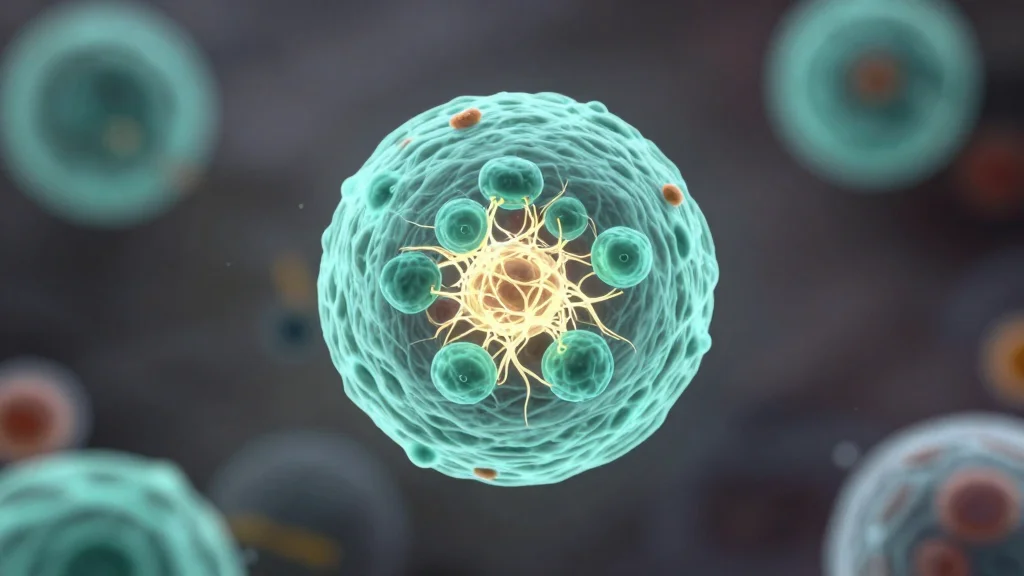
Lysosomal sequestration has long been a hidden barrier in oncology, especially for hepatocellular carcinoma (HCC), where acidic organelles can trap small‑molecule inhibitors and blunt their cytotoxic impact. The RS‑FS peptide sidesteps this problem by exploiting the very chemistry that protects tumor cells: under neutral pH it stays compact as a 147‑nm nanosphere, but once internalized into the low‑pH, glutathione‑rich lysosome it reorganizes into a fibrous hydrogel that ruptures the membrane. This stimulus‑responsive self‑assembly creates a localized “lysosome‑bomb” that releases any co‑administered drug directly into the cytosol, bypassing the recycling pathway that often leads to drug degradation.
In vivo, the approach proved strikingly effective. Mice bearing orthotopic HCC tumors received standard oral lenvatinib while RS‑FS was delivered intravenously as a separate adjuvant. Tumor weight fell by more than 60‑fold compared with lenvatinib alone, and magnetic‑resonance imaging showed no residual lesions in 50% of the cohort. A parallel study with fluorescent doxorubicin demonstrated a 40‑fold increase in nuclear drug accumulation and a marked reduction in cardiac and renal toxicity, highlighting the peptide’s capacity to improve therapeutic index without altering the drug’s chemistry. By acting as a universal lysosome disruptor, RS‑FS can be paired with diverse agents—from small‑molecule inhibitors to plant‑derived extracellular vesicles—expanding its utility across multiple treatment modalities.
Translating this technology to the clinic will require rigorous safety profiling, scalable peptide synthesis, and clear regulatory pathways for combination products. Nonetheless, the ability to convert an existing drug’s liability—lysosomal entrapment—into a therapeutic advantage could accelerate adoption, especially given the urgent need for more effective HCC interventions. If human trials confirm the preclinical potency, RS‑FS may usher in a new class of intracellular‑targeting adjuvants, reshaping nanomedicine strategies that move beyond mere delivery to active manipulation of tumor cell biology.
Self-assembling peptide helps liver cancer drugs escape lysosome traps
Comments
Want to join the conversation?