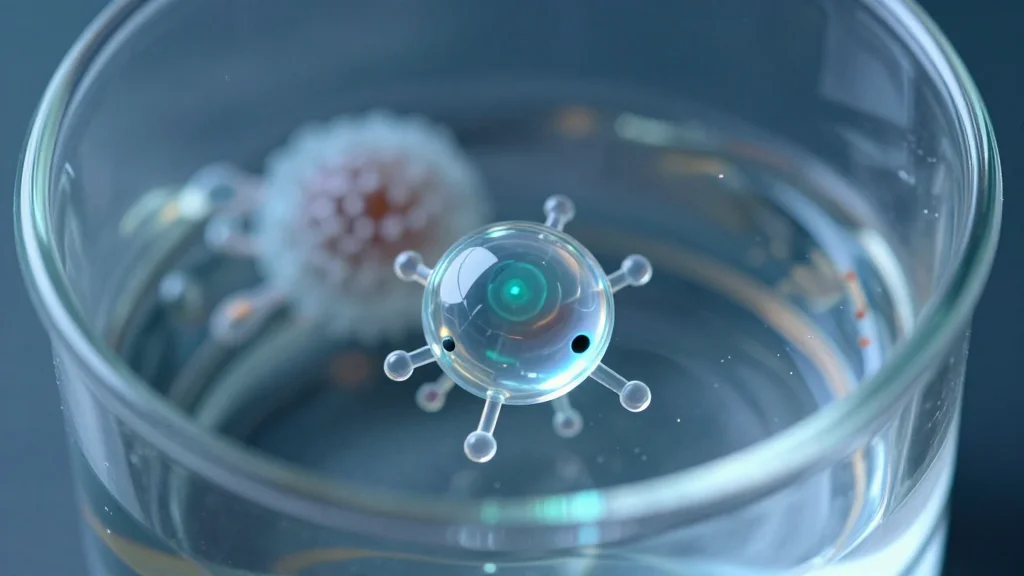
Tumor Microenvironment‐Responsive Dual‐Enzymatic Flasklike Nanobots for Enhanced Chemotherapy
Why It Matters
The technology dramatically improves drug delivery efficiency, potentially lowering systemic toxicity and enhancing outcomes for hard‑to‑treat cancers. Its biomimetic, TME‑responsive design could reshape targeted oncology therapeutics.
Key Takeaways
- •GC-M@FPNbots use glucose oxidase and catalase for self‑propulsion.
- •Directional motion follows tumor proton and hydrogen peroxide gradients.
- •Achieves 5.7× higher tumor accumulation than passive particles.
- •Delivers doxorubicin, yielding 80.8% tumor growth inhibition.
- •Deep penetration into 3D tumor spheroids demonstrated in vitro.
Pulse Analysis
Nanomedicine has long sought a vehicle that can navigate the dense extracellular matrix of solid tumors while sparing healthy tissue. Enzyme‑driven nanobots represent a promising frontier because they convert endogenous metabolites into mechanical energy. By camouflaging the bots with tumor cell membranes and shaping them like flasks, the GC‑M@FPNbot leverages the high glucose, low oxygen, and elevated hydrogen peroxide environment typical of malignant tissue to generate thrust via a glucose oxidase‑catalase cascade. This self‑propulsion mimics immune‑cell chemotaxis, allowing the platform to seek out and follow chemical gradients that are otherwise invisible to passive carriers.
In preclinical experiments, the nanobots loaded with the classic chemotherapeutic doxorubicin demonstrated remarkable tumor‑penetration capabilities. The bots migrated along proton and H₂O₂ gradients, breaching the extracellular matrix and infiltrating multicellular spheroids more effectively than static particles. Quantitatively, the directional motility translated into a 5.7‑fold boost in tumor accumulation and an 80.8% inhibition of tumor growth over 16 days, compared with a 47.6% reduction from conventional dosing. These figures suggest that the enzymatic propulsion not only improves delivery efficiency but also amplifies therapeutic potency without increasing systemic exposure.
For the oncology market, such a platform could reduce required drug dosages, lower adverse‑event rates, and open pathways for personalized regimens that adapt to each tumor’s microenvironmental profile. Commercialization will hinge on scalable synthesis of the pentosan nanostructure, rigorous safety validation of enzyme activity in humans, and regulatory alignment with nanomedicine guidelines. Nonetheless, the study underscores a shift toward bio‑inspired, smart delivery systems that could redefine standards of care for solid tumors worldwide.
Tumor Microenvironment‐Responsive Dual‐Enzymatic Flasklike Nanobots for Enhanced Chemotherapy
Comments
Want to join the conversation?
Loading comments...