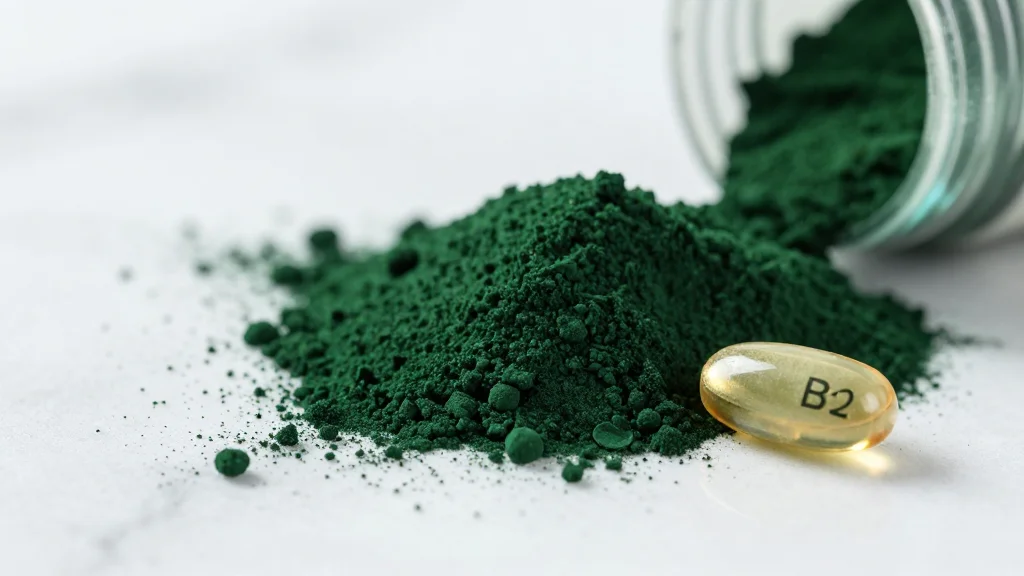
Spirulina Engineered to Match Beef’s Vitamin B12 Bioavailability

Why It Matters
Vitamin B12 deficiency is a silent public‑health crisis, especially for those on plant‑based diets. By delivering a whole‑food source of active B12, the spirulina breakthrough could reduce reliance on animal products and synthetic supplements, lowering both individual health risks and the environmental costs of meat production. Moreover, the technology showcases how precise control of growth conditions—rather than genetic modification—can unlock new nutritional potentials in existing crops. The development also highlights the strategic role of renewable‑energy‑rich regions like Iceland in future food manufacturing. If the photobioreactor approach proves economically viable, it could spur a new class of climate‑friendly, nutrient‑dense foods, reshaping supply chains and dietary recommendations worldwide.
Key Takeaways
- •Researchers achieved >98% bioavailability of active vitamin B12 in spirulina.
- •The algae delivers 1.64 µg of B12 per 100 g, comparable to beef’s 1.6‑2.0 µg.
- •B12 profile remains stable for at least nine months in controlled photobioreactors.
- •Iceland’s renewable energy makes large‑scale production carbon‑neutral.
- •Over 1 billion people worldwide are at risk of B12 deficiency.
Pulse Analysis
The spirulina breakthrough arrives at a moment when consumer demand for plant‑based nutrition is surging, yet the market still grapples with the scarcity of reliable, whole‑food sources of vitamin B12. Historically, the industry has leaned on synthetic cyanocobalamin, a product that, while effective, carries a perception of artificiality and can be cost‑prohibitive in low‑income regions. By delivering a naturally occurring, bioavailable form of B12 within a whole‑food matrix, the new spirulina strain could bridge the gap between consumer preferences for clean labels and the physiological need for a nutrient that is otherwise hard to obtain without animal products.
From a competitive standpoint, the technology could upend the supplement sector. Companies like DSM and BASF, which dominate the synthetic B12 market, may face pressure to diversify into bio‑engineered food sources or risk losing market share to early adopters of the photobioreactor model. At the same time, food manufacturers developing plant‑based meat analogues—such as Beyond Meat and Impossible Foods—could integrate the algae into their formulations, enhancing nutritional profiles and differentiating products in an increasingly crowded space.
Looking ahead, the scalability of the Icelandic system will be the decisive factor. While the renewable energy advantage is clear, the capital intensity of LED‑driven photobioreactors could limit rapid expansion unless supported by public‑private partnerships or green‑finance incentives. If these hurdles are overcome, the spirulina breakthrough could become a cornerstone of a more sustainable, nutrient‑secure food system, reducing the environmental footprint of B12 supply while addressing a critical health need for billions of people.
Spirulina Engineered to Match Beef’s Vitamin B12 Bioavailability
Comments
Want to join the conversation?
Loading comments...