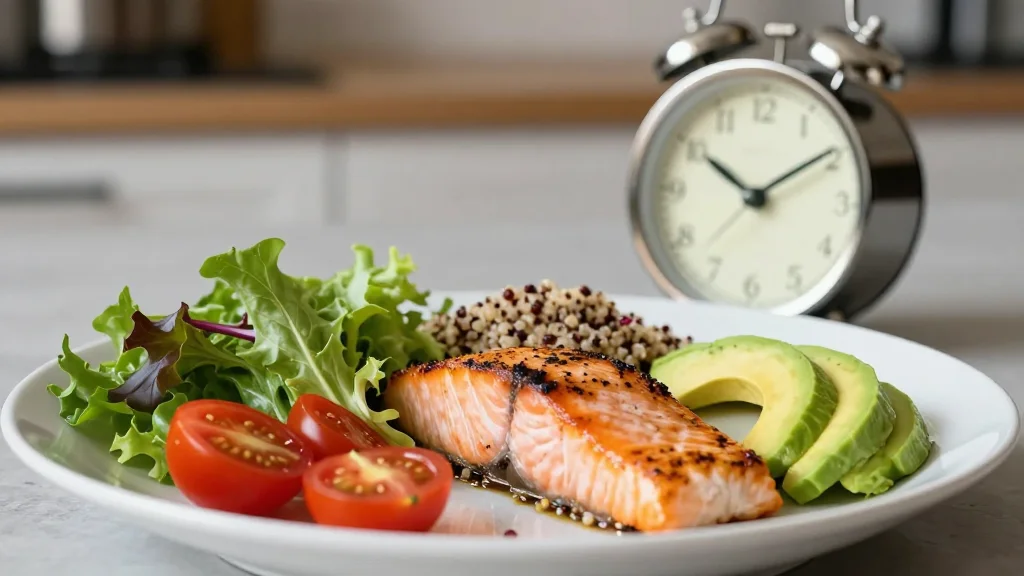
Time‑Restricted Eating Boosts Weight Loss in Women with PCOS, Study Finds

Why It Matters
PCOS is a leading cause of infertility and metabolic disease in women of childbearing age, yet effective, scalable lifestyle treatments remain scarce. Demonstrating that a six‑hour eating window can produce meaningful weight loss offers clinicians a practical, low‑cost tool that sidesteps the complexity of calorie tracking. If subsequent trials confirm benefits for hormonal balance and fertility, TRE could reshape standard care pathways and reduce reliance on medication. Beyond individual health, broader adoption of TRE could influence public‑health nutrition policies by emphasizing meal timing as a modifiable factor. This aligns with emerging research linking circadian rhythms to obesity, diabetes, and cardiovascular risk, suggesting that timing may become a new pillar of dietary guidance alongside quantity and quality.
Key Takeaways
- •Randomized controlled trial shows six‑hour eating window (1 p.m.–7 p.m.) yields greater weight loss in women with PCOS than no intervention.
- •Study published in *Nature Medicine*; led by Northwestern University researchers.
- •Shaina Alexandria, PhD, highlighted TRE’s safety and efficacy despite PCOS‑related inflammation and insulin resistance.
- •No significant changes in menstrual regularity or androgen levels observed within the short study period.
- •Phase‑III multi‑center trial planned to compare TRE with Mediterranean and low‑glycemic diets.
Pulse Analysis
The Northwestern study arrives at a moment when the nutrition field is re‑examining the temporal dimension of eating. Historically, diet advice has focused on what and how much to eat, but circadian biology is gaining traction as a third axis. TRE’s appeal lies in its simplicity: a fixed six‑hour window eliminates the need for daily calorie logs, a barrier that has plagued many weight‑loss programs. For PCOS patients—who often battle insulin resistance and chronic low‑grade inflammation—this behavioral tweak may provide a metabolic reset without adding complexity.
From a market perspective, TRE could disrupt the burgeoning digital health space that sells calorie‑tracking apps and meal‑planning subscriptions. Companies that have built ecosystems around detailed food logging may need to pivot toward tools that help users set and maintain eating windows, such as smart‑watch reminders or fasting timers. Meanwhile, pharmaceutical firms that market insulin‑sensitizing agents for PCOS could see a shift in prescribing patterns if lifestyle interventions demonstrate comparable efficacy.
Looking ahead, the key question is durability. Weight loss is a short‑term metric; long‑term outcomes—improved ovulation, reduced androgen excess, and lower cardiovascular risk—will determine whether TRE graduates from a promising pilot to a guideline‑endorsed therapy. The upcoming phase‑III trial, with its broader participant pool and longer follow‑up, will be the litmus test. If results hold, we may witness a paradigm shift where timing, not just composition, becomes a cornerstone of nutrition therapy for endocrine disorders.
Time‑Restricted Eating Boosts Weight Loss in Women with PCOS, Study Finds
Comments
Want to join the conversation?
Loading comments...