
Keck Institute for Space Studies: Shaping the Future of Space Exploration
The Keck Institute for Space Studies (KISS) positions itself as a hybrid think‑do tank dedicated to reshaping space science and exploration. Founded to catalyze bold concepts, it brings together leading researchers, engineers, and industry veterans under one roof. KISS’s core methodology is to capture far‑out, even “crazy,” ideas and channel them through rigorous feasibility studies, prototyping, and partnership building. By treating speculative visions as project pipelines, the institute turns imagination into concrete mission concepts, from advanced telescopes to novel propulsion systems. As the video emphasizes, KISS aims to “make what is presently impossible possible,” and its experts describe the process as turning “audacious missions” into actionable plans. The institute highlights recent workshops that produced a roadmap for a lunar‑orbiting interferometer and a modular deep‑space habitat. If successful, KISS could accelerate technology readiness, lower entry barriers for commercial players, and inform government roadmaps, ultimately expanding humanity’s capability to observe the universe and venture farther into space.
A Planetary Cold Case: Using JWST to Uncover the Catastrophic History of Neptune’s Moons
The lecture focused on new James Webb Space Telescope observations of Neptune’s tiny inner moons and rings, aiming to decipher how the ice giant’s satellite system formed and evolved. Dr. Riley Davis presented high‑resolution IFU spectra that capture reflected sunlight...
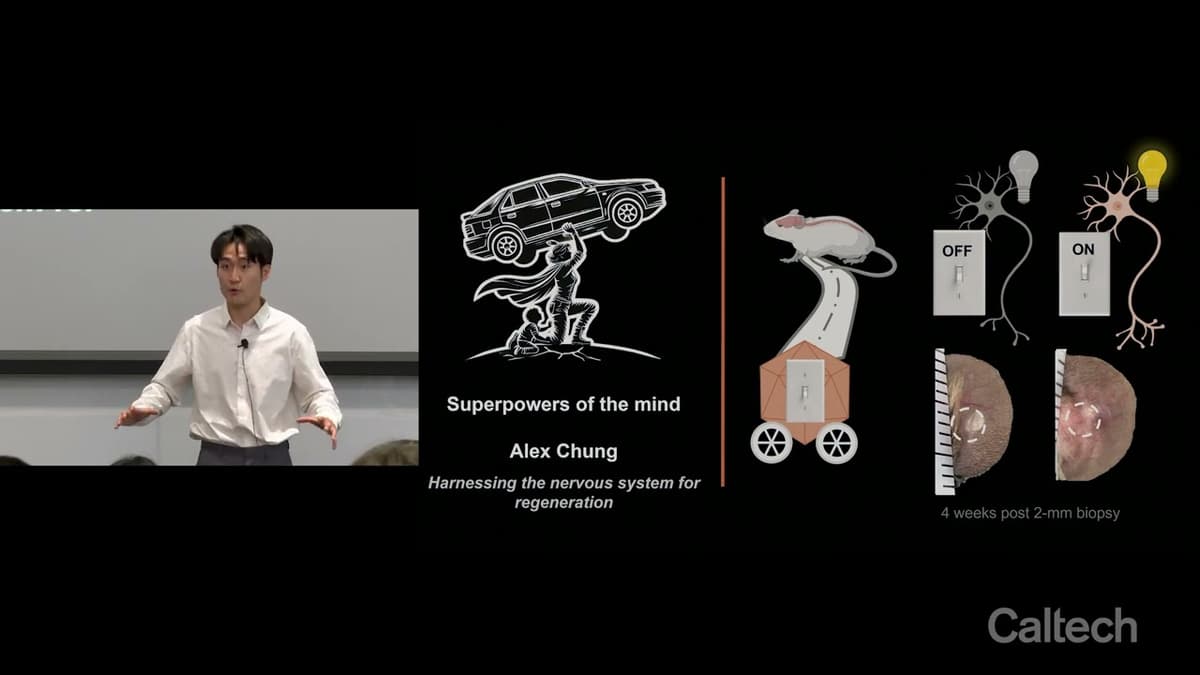
Alex Chung - Superpower of the Mind: Harnessing the Nervous System for Regeneration
In a recent presentation, Alex Chung argued that the sympathetic nervous system—traditionally linked to fight‑or‑flight—could be repurposed as a biological “superpower” to trigger tissue regeneration. He explained that humans’ poor regenerative capacity stems from an over‑active immune response inherited from our...
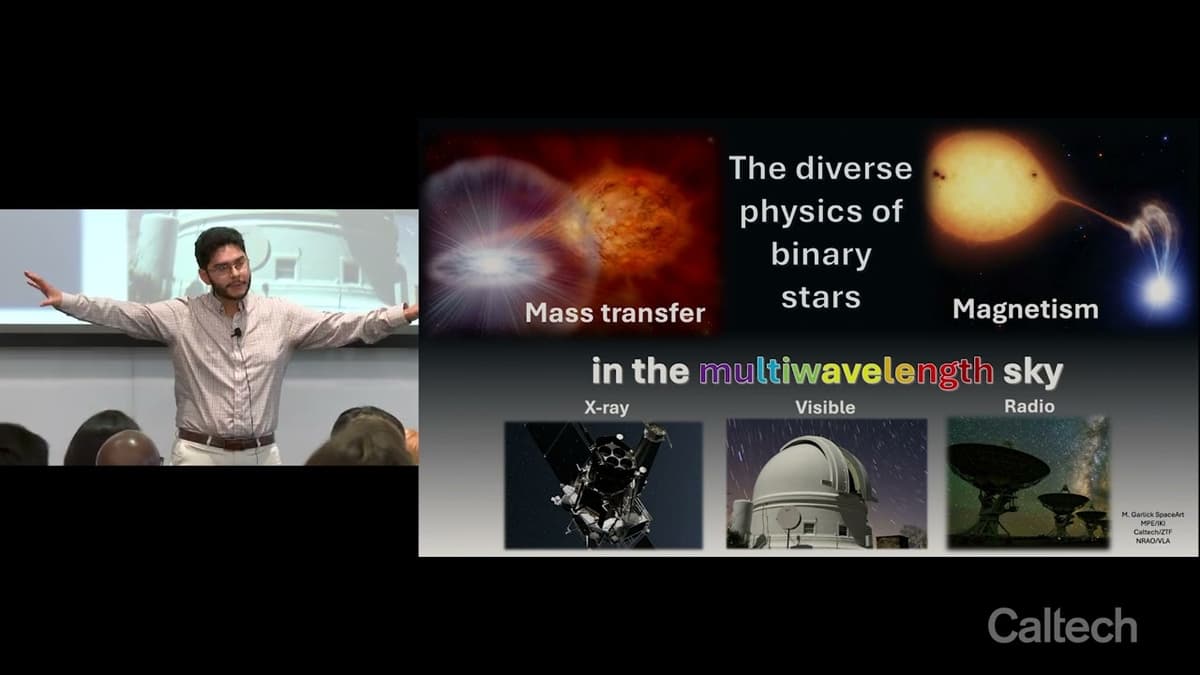
Tony Rodriguez - The Diverse Physics of Binary Stars
Tony Rodriguez explains that most stars are in binary systems, which act as natural extreme‑physics laboratories. By focusing on white‑dwarf binaries, he highlights how mass transfer and magnetism can be studied far beyond Earth‑based capabilities. Using the largest X‑ray and optical...
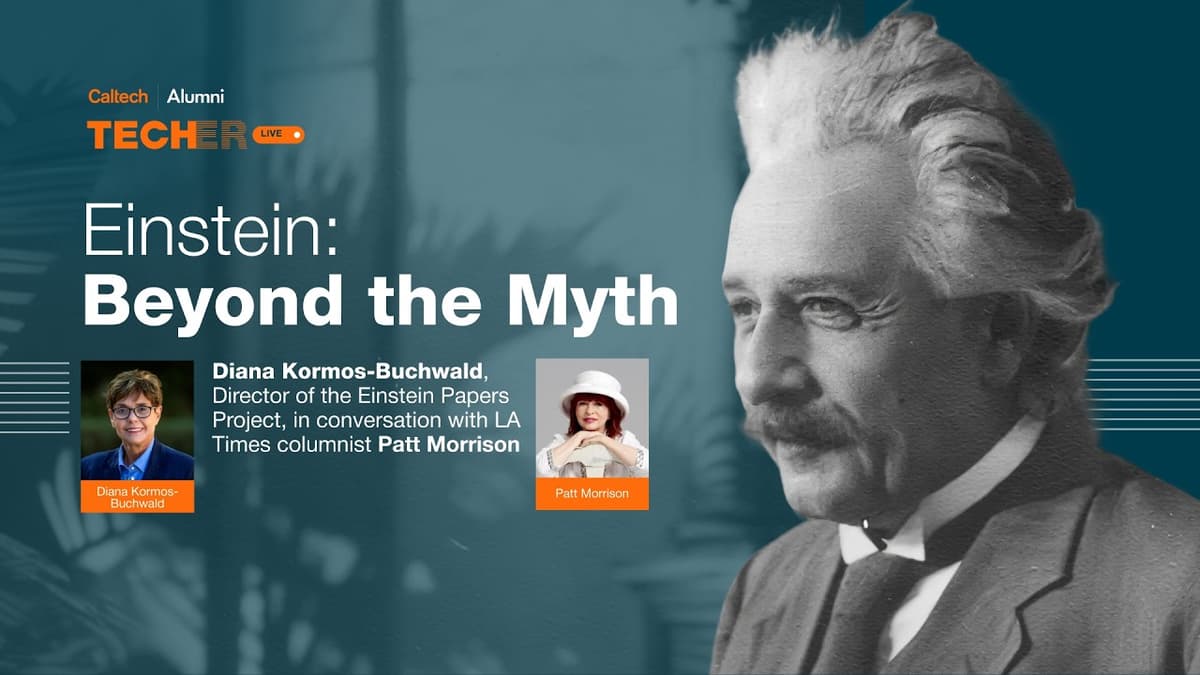
Einstein: Beyond the Myth - Techer Live
The Techer Live interview with historian Diana Kormos‑Buchwald examines Albert Einstein’s 1931 visit to Caltech, exploring how his celebrity intersected with academia, fundraising, and the political turbulence of the era. Kormos‑Buchwald notes that Einstein arrived already famed from the 1919 eclipse,...
Techer to Techer: What Is Your AI Hot Take?
In a casual campus‑style interview series, two Caltech students—Veronica, an electrical‑engineering sophomore, and Michael, a PhD candidate in experimental physics—were asked to share their “AI hot take.” The segment highlights differing perspectives on how generative AI is being woven into...
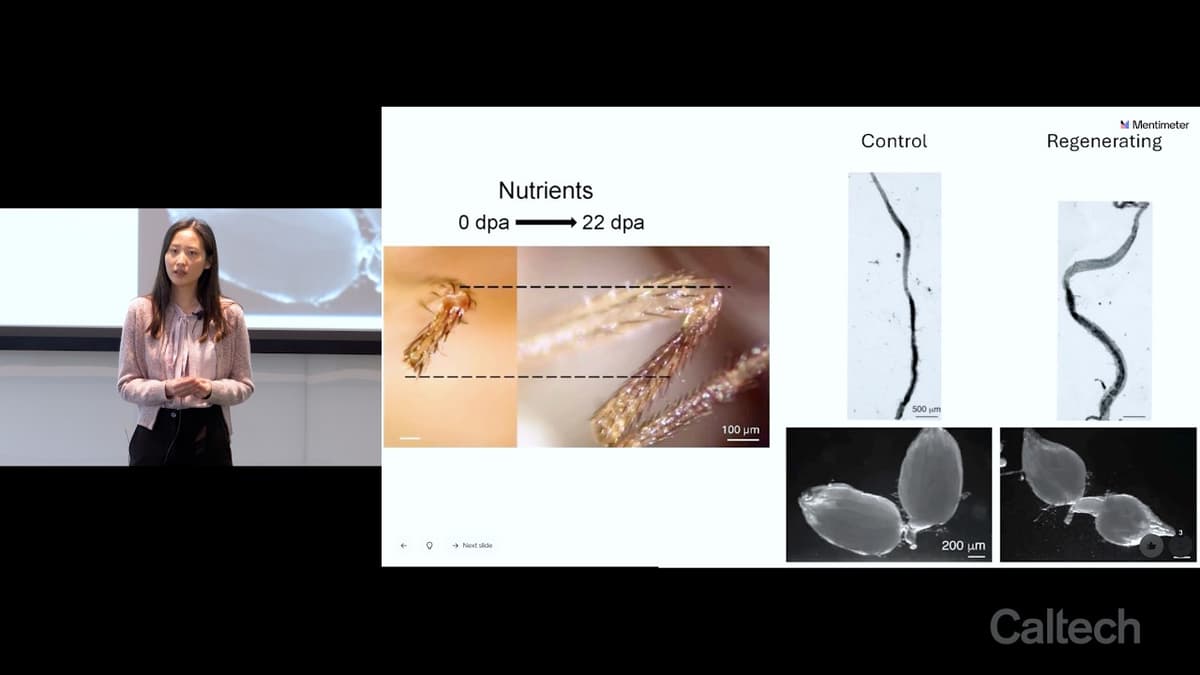
Yutian Li - Nutrient-Driven Activation of Regenertion Through Systemic Energy Reallocation
Yutian Li’s doctoral research investigates whether regeneration, a trait limited to certain animals, can be chemically induced in species that normally lack this ability. By screening nutrient combinations, Li and collaborators discovered that a specific blend of amino acids together with...
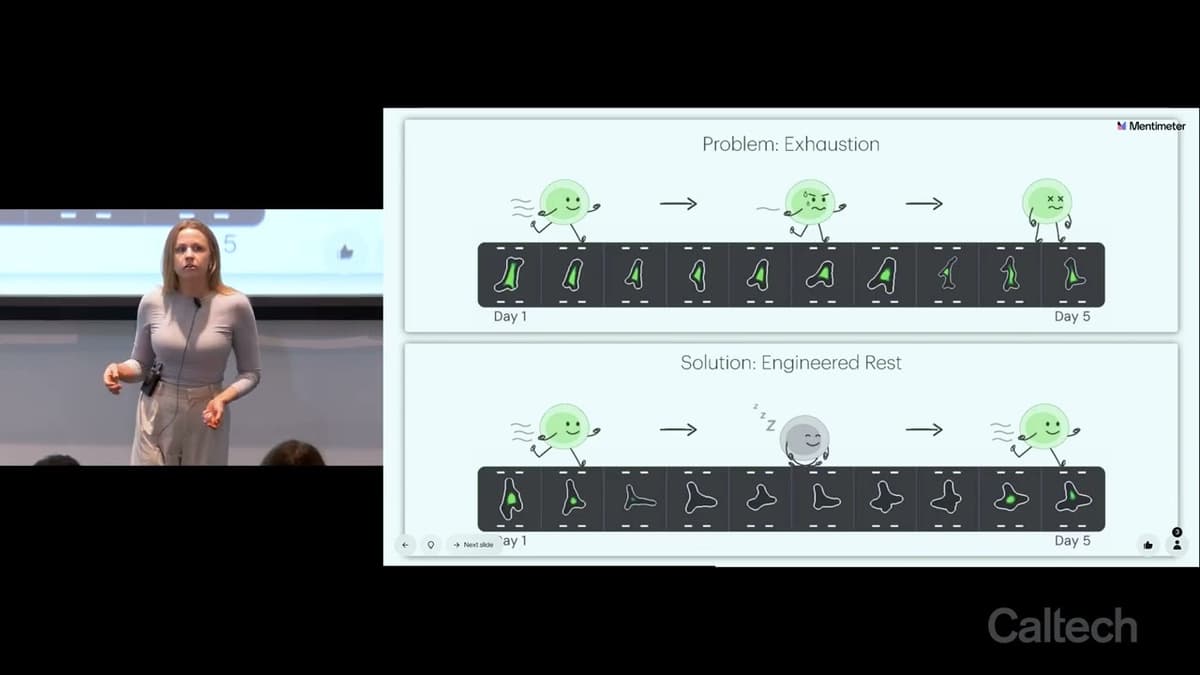
Victoria Tobin - Building Circuits to Give Cancer-Fighting Cells a Break
The video introduces Victoria Tobin’s work on engineering genetic circuits that give CAR T cells scheduled “breaks,” addressing the exhaustion that hampers their cancer‑killing performance. Tobin explains that CAR T cells, harvested from patients and reprogrammed to target tumors, work well...
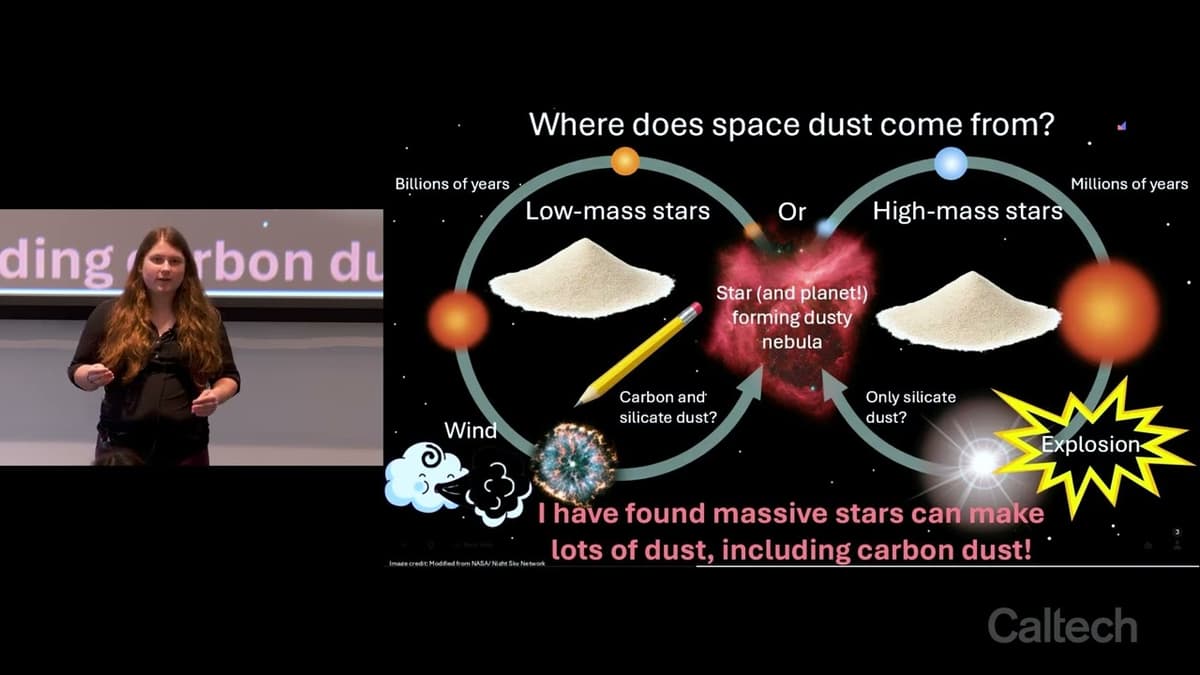
Sam Rose - Hunting for RATS: Uncovering the Origins of Space Dust in Our Universe
Sam Rose’s doctoral work tackles a long‑standing mystery—where the dust that fills galaxies actually comes from. By leading the Red Astronomical Transient (RAT) survey, he targets the brief, red‑colored explosions of massive stars to trace fresh dust across the cosmos. The...
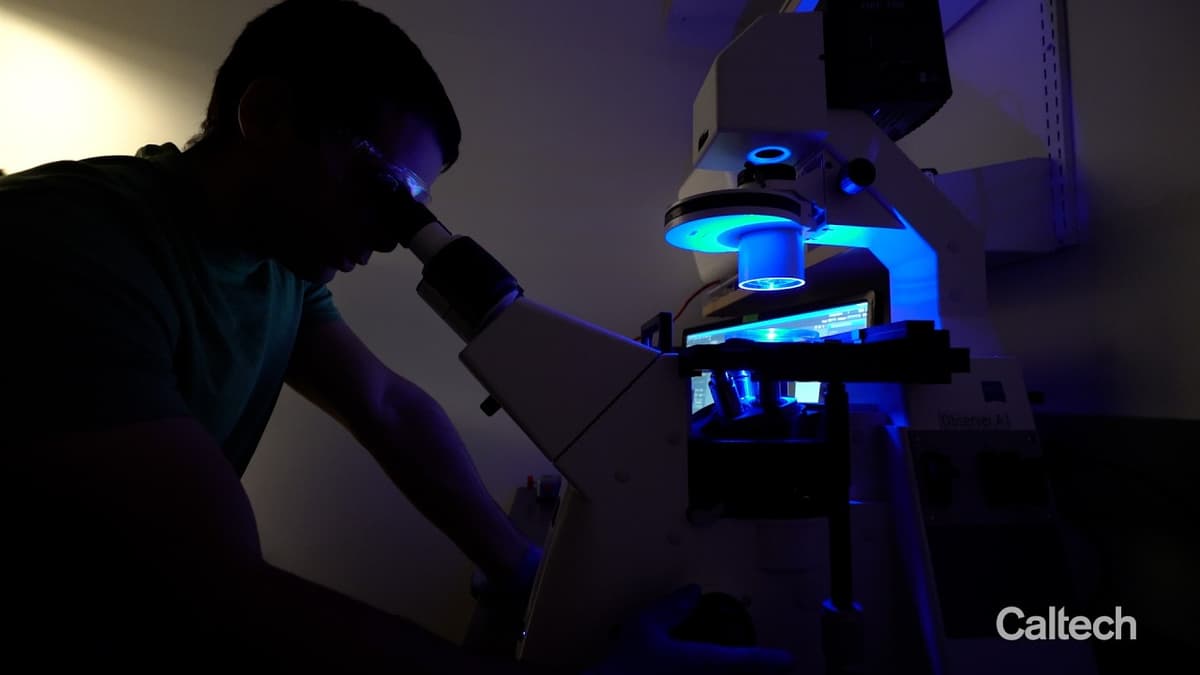
New DAbI Method Means Fast Autofocus for Microscopes
Caltech researchers have unveiled Digital Defocus Aberration Interference (DAbI), a novel autofocus method that can be retrofitted onto existing laboratory microscopes. The system illuminates the specimen with two LEDs from slightly different angles, captures two images, and applies a Fourier transform...

Enhancing Planning and Decision Making for Robotic Autonomy - John Lathrop
John Lathrop’s Everheart lecture tackled the pressing challenge of planning and decision‑making for robotic autonomy when data are scarce. He illustrated the problem with three real‑world projects—a custom tilt‑jet VTOL aircraft, an autonomous racing car, and a simulated spacecraft‑capture mission—each...

How Can We Use AI to Help People and the Environment?
The video from Science Journeys features Caltech PhD candidate Chris Yay discussing how AI can be harnessed to address environmental and social challenges, framing the talk around sustainability and the UN’s 17 Sustainable Development Goals. Yay highlights concrete data – snowfall...

Presidential Distinguished Speaker Series: Dr. Julio Frenk
The Presidential Distinguished Speaker Series featured Dr. Julio Frenk, a physician‑scientist and former Mexican health secretary now serving as president of the University of Miami. He opened by reflecting on his grandparents’ escape from Nazi Germany, framing that journey as...
History of Astronomy, From Ancient China to Modern Telescopes, and Astronomical Transients Explained
The video features Sam Rose, a Caltech graduate student, explaining astronomical transients—from ancient Chinese supernova sightings to today’s high‑speed sky surveys. She introduces the Zwicky Transient Facility (ZTF), which photographs the entire northern sky every two nights, comparing new images...
Chasing Sustainable Battery Chemistries for the Future - Kimberly See
The Watson Lecture featured Professor Kimberly C. discussing the next generation of sustainable battery chemistries at Caltech. After a lively introduction that highlighted Caltech’s unique undergraduate culture—tiny class sizes, a 3:1 student‑to‑faculty ratio, and a tradition of hands‑on research—the...