
Time Sovereignty: Internet Policy and Defense Frameworks for Critical Infrastructure Synchronization Under Geopolitical Conflict
The article spotlights time synchronization as the overlooked Achilles’ heel of modern power‑grid resilience, explaining how microsecond‑level timestamp manipulation via GPS jamming or spoofing and shallow, co‑located fiber sabotage can trigger cascading blackouts. It notes that U.S. Executive Order 13905 and EU directives address either space or terrestrial paths but not combined attacks. A four‑pillar blueprint—deep‑burial fiber standards, LEO satellite third pathways, cryptographic Secure PTP, and live‑fire time‑failure drills—is proposed to secure “time sovereignty.” Implementing these measures would transform a hidden vulnerability into a robust national‑security layer for critical infrastructure.

Two Ways to Build the Internet in Space - China, Inc. Vs Starlink Et Al
SpaceX’s Starlink constellation now exceeds 10,000 satellites and is projected to reach 16,083 by 2030, keeping it ahead of rivals. China’s satellite strategy groups three constellations—Guowang, Qianfan and Honghu‑3—into a coordinated, layered architecture that would total about 11,692 satellites by...

Beyond Connectivity: How Submarine Cable Resilience Dictates Digital Sovereignty in the Age of Fragmented Governance
Submarine cables, spanning more than 1.4 million km, carry over 99 % of intercontinental data traffic, making them the hidden backbone of the digital economy. Ownership is consolidating among a few hyperscalers—Google, Meta, Microsoft and Amazon—shifting digital sovereignty from nation‑state contests to...

Africa’s Community Networks Offer a Local Path to Inclusive and Resilient Connectivity
Community networks—locally owned, low‑cost wireless mesh or fiber systems—are emerging as a pragmatic solution to Africa’s persistent digital divide. By providing affordable connectivity in rural and hard‑to‑reach areas, they enable access to education, health, and economic services while enhancing digital...

The New Space Race for Connectivity: Satellite Internet and Critical Infrastructure
Satellite internet is moving from a niche backup solution to a core component of the global connectivity architecture. Low‑Earth‑orbit (LEO) and medium‑Earth‑orbit constellations, together with 5G‑compatible non‑terrestrial networks (NTN), are delivering fiber‑like latency and throughput. Direct‑to‑device services now let ordinary...

No Safe Harbor: SCOTUS Scuttles the DMCA
The Supreme Court’s unanimous Cox v. Sony ruling stripped the DMCA’s safe‑harbor defense, replacing it with a narrow “inducement only” standard. The Court reversed a $1 billion contributory infringement judgment against Cox, holding that an online service provider is liable only...

Internet Number Resources Are Not Political Property
The article argues that regional Internet registries (RIRs) were created as a technical scaling solution, not as political authorities. As IPv4 addresses became scarce and financially valuable, registries gained disproportionate power without matching accountability. This mismatch has led to politicized...

Iran’s Digital Arsenal: When Invisible Fences Rise in the Conflict
On 28 February 2026, coordinated cyber operations drove Iran’s internet traffic to just 1‑4 % of normal levels, coinciding with US‑Israeli air strikes that killed the Supreme Leader. Analysts attribute the blackout to a hybrid mix of regime‑imposed whitelisting, large‑scale DDoS attacks,...
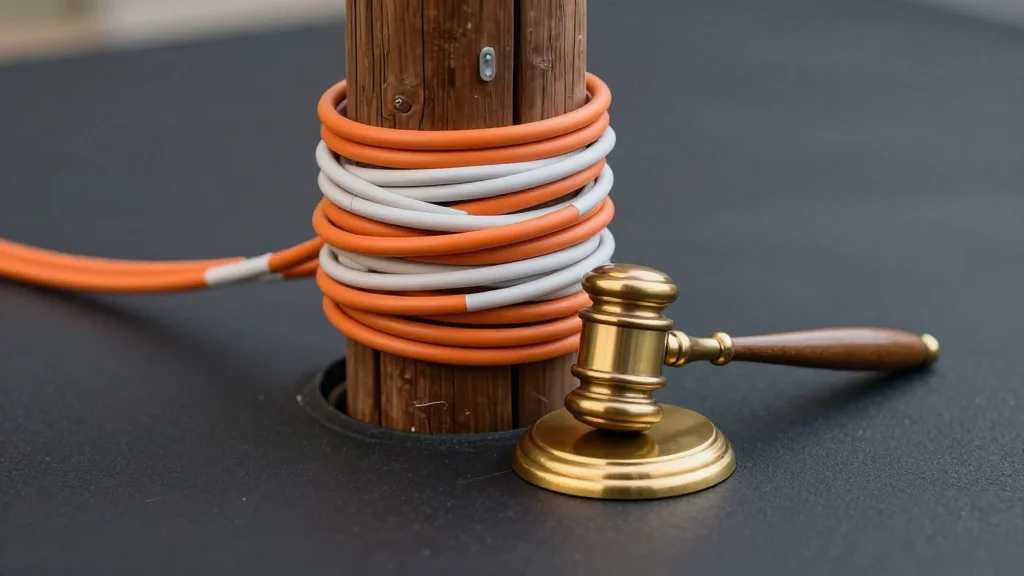
The Challenge of Adding Fiber to Poles
On February 5, 2026 the FCC issued a Memorandum and Order resolving a pole‑attachment dispute between Comcast and Appalachian Power Company (APCO). The FCC reaffirmed that attachers only pay the incremental cost of replacing a pole when the existing pole violates...