
Turn Athletic Facilities Into School-Wide Communication Hubs
Digital Scoreboards is urging school districts to repurpose athletic scoreboards as multi‑purpose communication hubs. The company’s ecosystem combines premium video displays, a zero‑capital‑outlay sponsorship model that turns screens into revenue generators, and an education curriculum that teaches students media production, event management and digital storytelling. By leveraging existing infrastructure, districts can stretch budgets while engaging students and the broader community. A forthcoming webinar will walk administrators through implementation and ROI calculations.

Eat More Protein? Exercise More? Why Teachers Need Better Self-Care Advice (Opinion)
Special‑education teacher Kyna Engelhart describes a deep, chronic fatigue that goes beyond ordinary tiredness, coining it “teacher tired.” A doctor’s advice to eat more protein and exercise felt superficial, prompting her to recognize that emotional labor and neglect of personal...

'Personalized' Learning in Math Has Proved Elusive and Overhyped. Can AI Offer a Breakthrough?
At La Vista High School, math teacher Al Rabanera used a large language model to design a rate‑of‑change assignment linked to real‑world labor data, aiming to make math relevant for his low‑income, marginalized students. The AI‑generated questions prompted personal insights,...

Education Groups Say New E-Rate Bidding Portal Will Hurt Small Districts Hardest
The FCC voted to adopt a new online bidding portal for the E‑rate program, which funds school internet connections, replacing the current self‑certification system. The change aims to boost transparency and curb fraud in the $3 billion annual program, with implementation...

Trump Admin. Doesn't Deem Education Degrees 'Professional' In Student Loan Rule
The U.S. Department of Education finalized a rule that strips education graduate programs from the list of “professional” degrees eligible for higher federal loan limits. Effective July 1, education students can borrow up to $20,500 annually, far less than the $50,000...

What SEL Can Do to Help Kids Manage Their Online Lives
A panel hosted by the Collaborative for Academic, Social, and Emotional Learning urged educators to adopt a strengths‑based SEL approach to help teens navigate social media, rather than relying on fear‑based narratives. Experts highlighted that teens spend over four hours...

Increases in Teacher Pay Offset by Inflation, Union Analysis Shows
The National Education Association reports that average teacher salaries rose 3.5% to $74,495 for 2024‑25, but when inflation is accounted for, pay is 4.6% lower than a decade ago. High‑pay districts such as California, New York and Washington, D.C. also rank among...

Students Will Take the Lead on Crafting a Model AI Policy for Schools
Dozens of superintendents and a select group of students will convene in Boston for a three‑day workshop aimed at drafting a model AI use policy that districts nationwide can adopt. The event, organized by AASA and MIT’s Day of AI,...

How Teachers Can Get the Most Out of Their HR Office (Downloadable) (Opinion)
Anthony Graham, a former teacher turned school administrator, explains how educators can leverage their district HR office beyond basic payroll tasks. He clarifies legal and ethical boundaries that shape HR interactions, emphasizing confidentiality and compliance. The piece outlines practical steps...

40 Minutes of Recess Is Now the Law in This State
Oklahoma Governor Kevin Stitt signed a bill that doubles required elementary recess from 20 to 40 minutes per day for grades K‑5, effective next school year. The legislation also prohibits using recess as a disciplinary tool. The move counters a...

Want to Recruit Teachers? Restrict Student Cellphone Use During School
A 2025 EdWeek Research Center survey of 270 district recruiters shows that 29% now view student cellphone bans as a recruiting advantage, up from 20% in 2024. While 59% of districts have a policy, only half say it influences hiring,...

Can Student Influencers Woo Classmates to This District?
Detroit Public Schools announced a $1 million marketing push that includes hiring roughly two dozen student influencers to share district news on TikTok, Instagram and other platforms. Each influencer will receive a $250 monthly stipend, training on social‑media policy, and coaching...

Student Gambling Is on the Rise. That Puts Schools on Alert
Student gambling is rapidly increasing, with 36 % of boys aged 11‑17 reporting bets in the past year, prompting schools to act. The National Federation of State High School Associations (NFHS) launched a free online course for coaches, administrators, athletes and...

Schools Have Another Year to Make Websites Accessible. Why That Matters
The U.S. Department of Justice has pushed back the deadline for school districts to meet new web‑accessibility regulations until 2028, extending the original 2027 target for smaller agencies. The rule, issued under Title II of the ADA, mandates compliance with WCAG 2.0...

Female Athletes' Physical and Mental Struggle to Recover From Torn ACLs
Female athletes are disproportionately prone to anterior cruciate ligament (ACL) tears, a risk amplified by anatomical and hormonal factors. Recovery extends beyond physical therapy, encompassing emotional stages akin to grief as young women mourn temporary loss of sport participation. Dallas...

What Are the Ingredients of a Good Preschool Curriculum?
EdReports unveiled its first-ever pre‑K curriculum reviews, applying a three‑gateway framework that assesses diversity, content quality, and implementation. The nonprofit Student Achievement Partners simultaneously released preschool instructional guidelines, giving districts a research‑backed benchmark. State preschool enrollment surged to a record...

Students Can Hear Questions Aloud When They Take Many Tests. Does It Help?
Digital Promise analyzed how 8th‑grade students used the text‑to‑speech feature on a NAEP geometry item. About 7% of the 26,000 test‑takers—primarily English learners, special‑education students, and students of color—activated the tool. Low‑performing students who listened up to 25 seconds performed...

Making AI Work in Schools: From Experimentation to Purposeful Practice
A new professional development session titled “Making AI Work in Schools” highlights the shift from experimental pilots to system‑wide, purpose‑driven AI use in K‑12 districts. Speakers—including AI for Education CEO Amanda Bickerstaff, UConn researcher Alex Lamb, Superintendent Susan Coleman, and...

Trump Sidestepped Congress on More Than $1 Billon in Ed. Spending Last Year
The Trump administration redirected roughly $1 billion of education appropriations during FY 2025, moving more than $700 million between competitive grant programs and leaving about $300 million in research funding unspent. Notable shifts included transferring the $90 million SEED grant to the American History and...

A Student’s Perspective on AI in Schools (Opinion)
High‑school student Elliot Rogers writes to Education Week urging schools to treat artificial‑intelligence as a core subject rather than a cheat‑sheet. He argues that AI tools are already reshaping homework and test‑taking, and that outright bans punish innovation. Rogers calls for...

'We’re Going Grassroots': How a Principal of the Year Is Boosting AP Enrollment
Jason Johnson, principal of Orange High School in Hillsborough, N.C., was named the 2026 National Association of Secondary School Principals High School Principal of the Year. After returning from a district‑level coaching role post‑COVID, he emphasizes personal connections, asking each...

'Easy, Positive, and Judgment Free.' How Families Can Support Their Children (Opinion)
The opinion piece outlines practical ways families can become active partners in their children’s education, drawing on Harvard education expert Karen Mapp’s Dual Capacity‑Building Framework and insights from learning scientist Manu Kapur. It recommends six core actions—recognizing parental power, building partnership...

Middle School Assistant Principal of the Year Is Tackling Student Anxiety
Assistant Principal William Toungette of Woodland Middle School in Brentwood, Tenn., was named the 2026 National Assistant Principal of the Year by the National Association of Secondary School Principals. The award highlights his work expanding mental‑health supports, launching a daily...

A Heartbreaking Meeting With a Teacher Changed How I See Accountability (Opinion)
Fort Worth principal Katy Myers Allis recounts a pivotal meeting with a teacher whose benchmark scores fell short, prompting her to rethink traditional accountability. She shifted from a procedural growth plan to a supportive, coaching‑focused model that emphasized bite‑sized feedback...

How a School Photo CEO Dealt With a Jeffrey Epstein Conspiracy Theory
Lifetouch, the nation’s largest K‑12 photo provider, faced a social‑media rumor linking its private‑equity owner Apollo to Jeffrey Epstein, prompting dozens of districts to pause or cancel contracts. The company’s CEO Ken Murphy responded with a public FAQ, detailed safety...

Schools Play Game of Media Literacy Catch-Up as AI Use Rises
Schools are scrambling to update media‑literacy curricula as AI-generated content floods students' feeds. A February‑March 2026 EdWeek survey shows 61% of elementary teachers say pupils struggle heavily distinguishing AI‑created material, with lower but still significant challenges in middle and high...

AI Can Read to Our Children. That Doesn’t Mean It Should (Opinion)
AI-powered voice assistants are increasingly used to read bedtime stories and tutor K‑12 students. While these tools offer convenience and personalized feedback, experts warn that they cannot replace the responsive human interactions essential for early brain development and emotional bonding....

The Good, Bad, and Ugly of Screen Time: An Explainer
Education Week’s explainer highlights the growing complexity of defining and managing screen time for children as digital devices become integral to schooling, social life, and entertainment. Recent studies link more than two hours of daily screen exposure to higher rates...

Welcome to the 'Funky' Politics of the Tech in Schools Debate
The Trump administration unveiled a vision for an AI‑powered robot teacher called “Plato,” promising personalized, always‑available instruction. At the same time, states such as Utah have enacted laws banning AI for grading and restricting device use in early grades, reflecting...
Frustration, Skepticism: Survey Reveals Shifting Gen Z Attitudes Toward AI
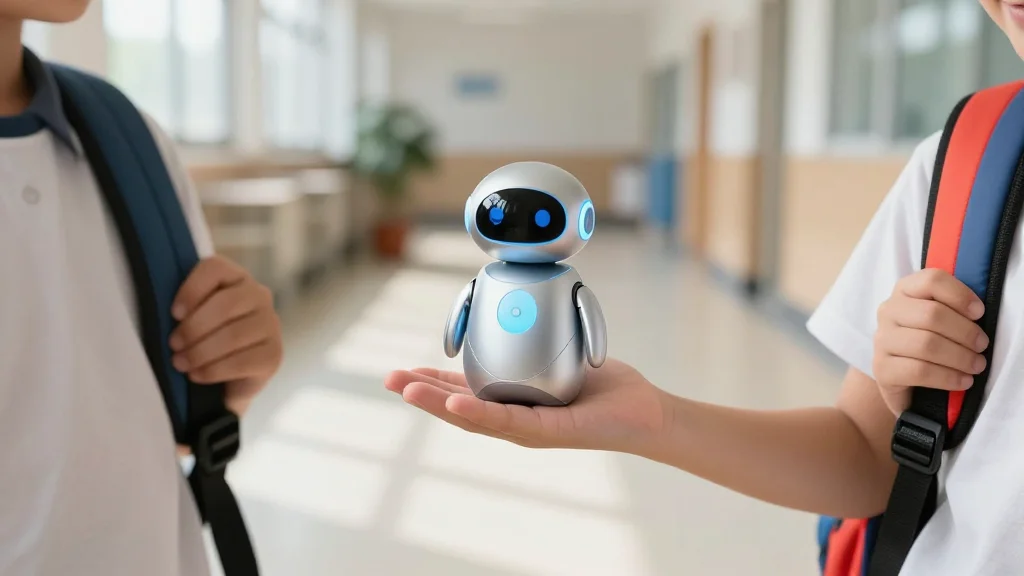
A Gallup survey of 1,572 Gen Z respondents shows AI usage is steady—about half use it weekly—but enthusiasm is waning and anger is rising. School policies are becoming more permissive, with 65% allowing AI for assignments and 49% permitting access on...

Why the Supreme Court’s Ruling on Conversion Therapy Matters for Schools (Opinion)
The U.S. Supreme Court in *Chiles v. Salazar* ruled that state bans on conversion therapy could violate the First Amendment if they are deemed viewpoint‑based speech restrictions. The 6‑3 decision framed the Colorado law as unconstitutional under strict‑scrutiny standards, sending...

AI + Math Learning. How to Solve a New Problem
The National Council of Teachers of Mathematics (NCTM) is urging teachers, principals and district leaders to stay current on AI trends as artificial‑intelligence tools become commonplace in math classrooms. While AI can deliver instant step‑by‑step solutions, the organization warns that...

Schools Are Urged to Embrace AI—And Ban Phones. Can We Resolve the Tension? (Opinion)
Michael Horn argues that the push to adopt AI in schools clashes with simultaneous calls to ban phones, revealing a deeper tension about technology’s role in education. He warns that simply layering AI onto existing classroom structures will repeat past...

How Far Can You Stretch a Starting Teacher Salary? We Crunched the Numbers
Policymakers have pushed for a $60,000 minimum starting teacher salary, but federal bills like the Pay Teachers Act remain stalled. Maryland’s Blueprint for the Future requires districts to hit that floor, and half of the state’s 24 districts have succeeded....

Minn. Districts Ask Judge to Restore Immigration Enforcement Limits by Schools
Attorneys for the Fridley and Duluth school districts and the Education Minnesota union asked a federal judge to block a Trump‑era policy that lifted longstanding restrictions on immigration enforcement near schools. The Department of Homeland Security rescinded the “sensitive locations”...

Bloom's Taxonomy Needs an Update for the AI Age (Opinion)
Since ChatGPT’s 2022 debut, generative AI has turned creation into an early, prompt‑driven activity, challenging the traditional view of Bloom’s Taxonomy as a linear climb from remembering to creating. Educators argue that the hierarchy no longer mirrors how students interact...

What's Your Educator Wellness Score? Here's How to Find Out
Principal Damon Lewis of Ponus Ridge STEAM Academy shares a daily ritual of silent reflection and strict calendar management to keep work and home separate. He notes that educators face relentless demands—lesson planning, grading, rising student misbehavior, absenteeism, and budget...

We’re Finally Holding Tech Accountable for Harming Teens. What Happens Next? (Opinion)
A California jury found Meta and YouTube liable for harms to teenagers, marking the first major legal acknowledgment that social‑media platforms are designed to be manipulative. The verdict has accelerated legislative actions on age verification, school cellphone bans, and broader...

Trump Admin. Terminates Several Agreements to Protect Transgender Students
The U.S. Department of Education has terminated five civil‑rights agreements that previously required school districts and a college to protect transgender students under Title IX. Those settlements, reached during the Obama and Biden eras, extended anti‑discrimination safeguards to gender identity and...

Ease the Teacher-Hiring Process with AI (Downloadable)
School districts face ongoing teacher‑hiring shortages, prompting leaders to explore AI solutions. Emerging AI agents can autonomously screen applications and generate interview questions. Golf School District 67 in Morton Grove, Illinois, created a library of highly structured prompts that work with...

Building Resilient Students: Leadership Beyond the Classroom
A panel of education leaders from IMG Academy, Christopher Columbus High School, Country Day School, and Baylor University explored how schools can embed sport‑derived performance principles, mindset training, and experiential learning to build student resilience and leadership. They highlighted structured...

What One Researcher Saw Inside 29 Kindergarten Classrooms
Developmental psychologist Susan Engel spent two years observing 29 kindergarten classrooms in 14 states, documenting how modern kindergarten has shifted from half‑day, play‑based learning to full‑day, reading‑focused instruction. She found that teachers universally prioritize order and literacy, but approaches to...

Superintendents Increasingly Report Economic Pressures on Their Districts
The AASA’s 2025 survey of 1,951 superintendents revealed growing fiscal anxiety, with 38% reporting declining district economics—up from 30% a year earlier. Despite these pressures, 89% plan to stay in their current roles, reflecting a desire for leadership continuity. The...

The Weight Room Is the Best Classroom in a School (Opinion)
Middle school teacher Alexander Han argues that the weight room functions as a powerful learning environment, teaching accountability, delayed gratification, and resilience through tangible, immediate feedback. He observes that structured, high‑expectation routines in strength training foster a growth mindset and...

A State Gets Closer to Challenging Undocumented Students' Free Access to School
Tennessee lawmakers are debating a bill that would force public schools to collect every student’s immigration status starting in the 2026‑27 school year, aiming to challenge the 1982 Plyler v. Doe decision that guarantees free education for undocumented children. The...

We’re Not Preparing Principals for the Real Job of School Leadership (Opinion)
Meagan Booth argues that principal preparation programs focus heavily on instructional tactics while neglecting the adult‑management realities principals face daily. She highlights that conflict, morale, legal issues, and crisis response consume most of a leader’s time, yet training rarely covers...

Reading Is Hard to Teach. Can AI Help?
Experts predict AI-powered reading tools will soon be commonplace in K‑12 classrooms, offering adaptive instruction and real‑time feedback. These technologies aim to personalize literacy learning, addressing persistent gaps in reading proficiency. However, educators caution that excessive dependence on AI could...

Quick Answers to Common Questions About Early Childhood Education
Early childhood education in the United States remains fragmented, with 17 states and the District of Columbia mandating kindergarten attendance as of 2023. Preschool programs lack a national standard, varying between publicly funded and private tuition‑based models. The federal Head...

MTSS + AI in Action: Reimagining Student Support
North Kitsap School District in Washington is piloting an AI‑driven framework that integrates real‑time academic, behavioral and attendance data to reinforce its Multi‑Tiered System of Supports (MTSS). The initiative uses AI to generate instant feedback, easing teacher workload while sharpening...

How a School Uses AI to Address Student Behavior Problems
Holmen School District in Wisconsin has built a custom AI assistant using Google Gemini to support its behavior intervention team. The tool draws on the district’s social‑emotional learning (SEL) playbook, helping staff quickly brainstorm conversation starters and skill‑building steps for...