Middle East Conflict Revives Concerns Over Fertilizer Dependence in the U.S. and Brazil
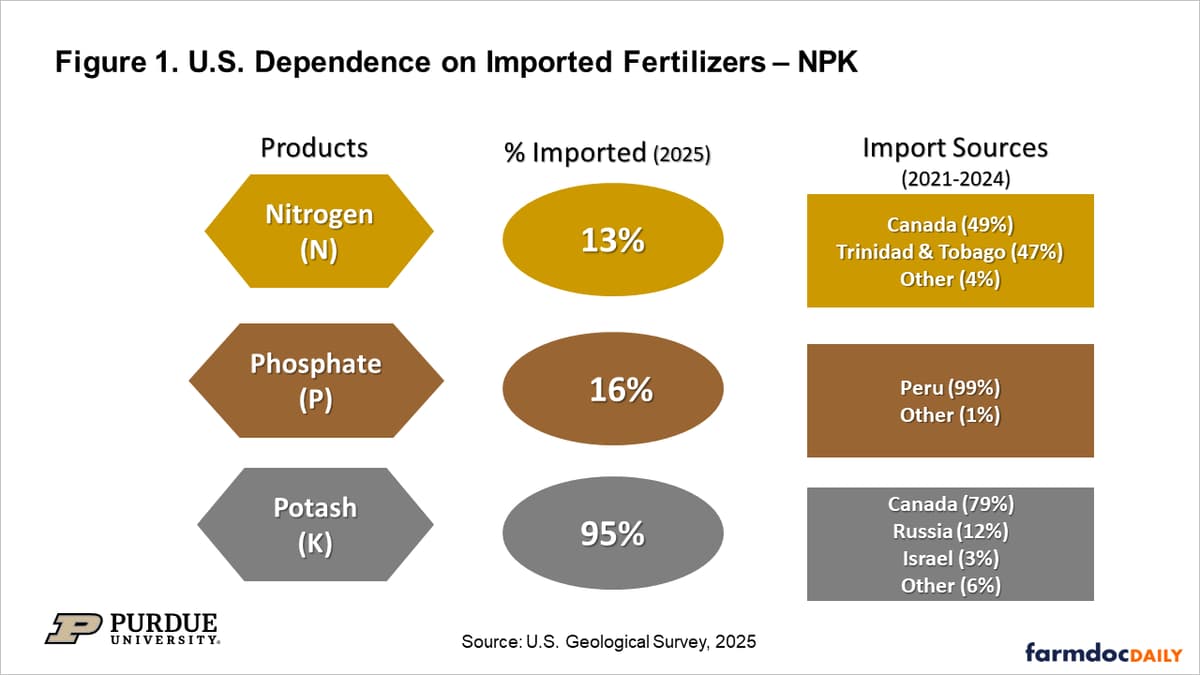
Recent hostilities in the Middle East have restricted traffic through the Strait of Hormuz, a conduit for roughly 30% of global fertilizer shipments. The United States, which supplies about 60% of its own fertilizer, still relies on imports for 95% of potash and increasing shares of nitrogen and phosphate. Brazil, now the world’s largest fertilizer importer, depends on imports for 96% of potash, 95% of nitrogen and 72% of phosphate, with imports reaching a record 43.3 million metric tons in 2025. The heightened geopolitical risk threatens crop margins in both countries, especially Brazil where domestic production cannot keep pace with demand.
Rewriting the RFS Playbook: Final 2026-2027 RVOs for Biomass-Based Diesel
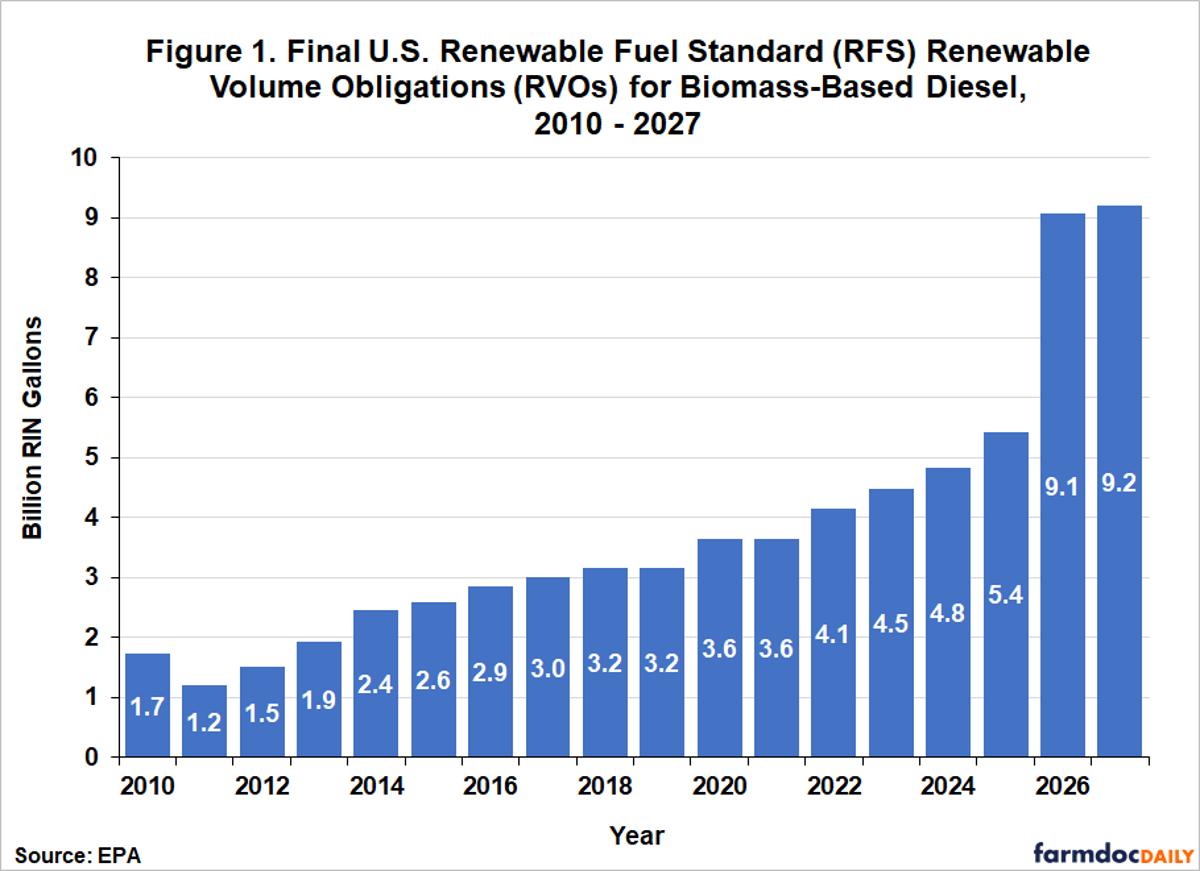
On March 27, 2024 the EPA issued its final Set 2 rule establishing Renewable Volume Obligations for 2026‑2027. The rule sets biomass‑based diesel obligations at 9.07 billion RIN gallons in 2026 and 9.20 billion in 2027, roughly a 70% jump from 2025. It...
Forecast Performance of RMA Expected Yields: Comparison of Yield Projection Methods
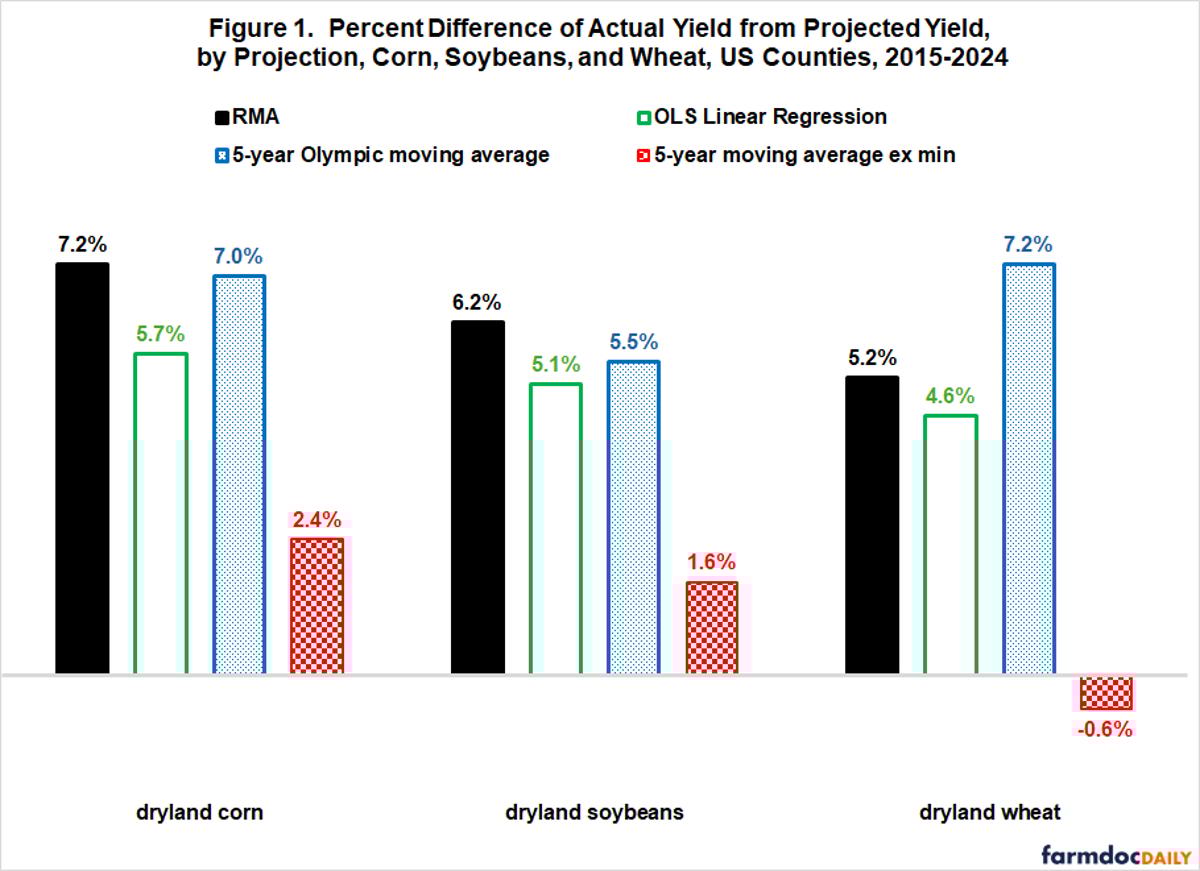
The study comparing four county‑yield projection methods for 2015‑2024 finds the Risk Management Agency’s (RMA) own projections are the least accurate across corn, soybeans, wheat, cotton and rice. A 5‑year moving average that excludes the minimum yield delivers the smallest...
Illinois Cash Rents and Leasing Expectations Through 2027
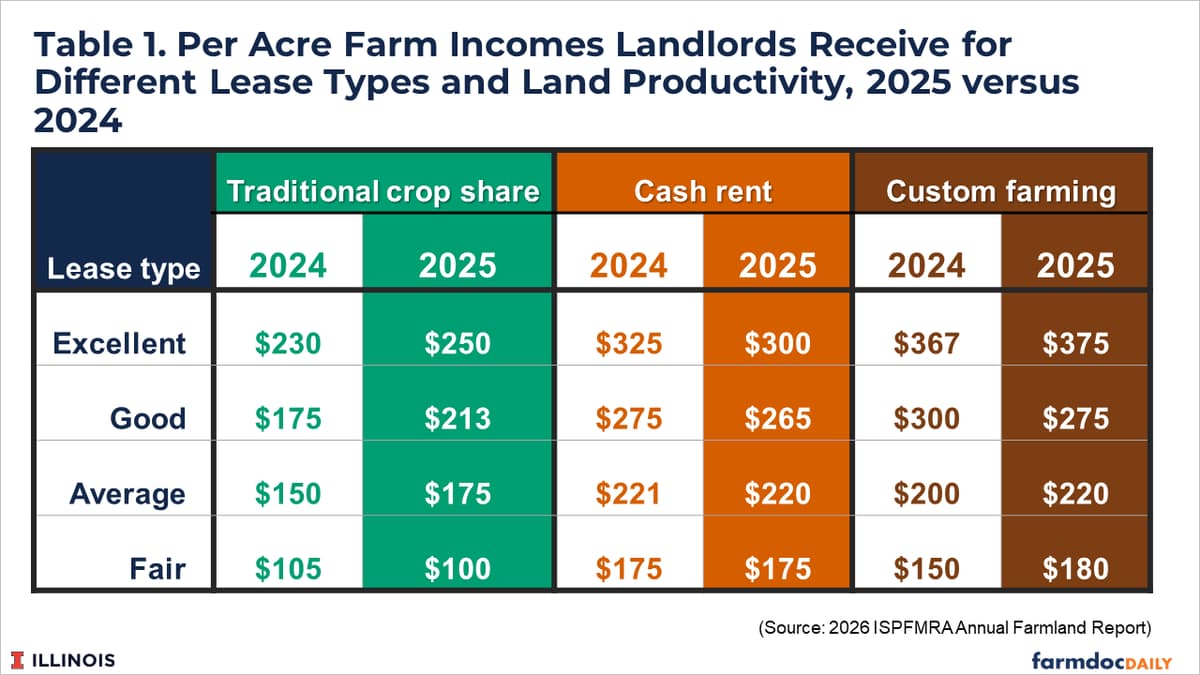
The Illinois Society of Professional Farm Managers and Rural Appraisers survey shows cash‑rent rates on Illinois farmland remained robust in 2026, with median rents of $375 per acre for excellent soils and $325 for good soils. While 2025 cash‑rent returns...

The Iran Conflict and Fertilizer Markets: Why Brazil Faces Greater Near-Term Risk than the U.S.
The escalation between the United States, Israel and Iran has forced the Strait of Hormuz to close intermittently, tightening the global fertilizer supply chain and pushing prices to multi‑year highs. Brazil, which imports roughly 99% of its nitrogen, phosphate and...

Fats in the MAHA Era: Consumer Perceptions of Common Cooking Fats
The Gardner Food and Agricultural Policy Survey reveals that U.S. consumers are broadly aware of seven cooking fats, yet purchase patterns vary sharply. Olive oil, butter/ghee, and soybean oil dominate household buying, while beef tallow, despite 73% awareness, is purchased...
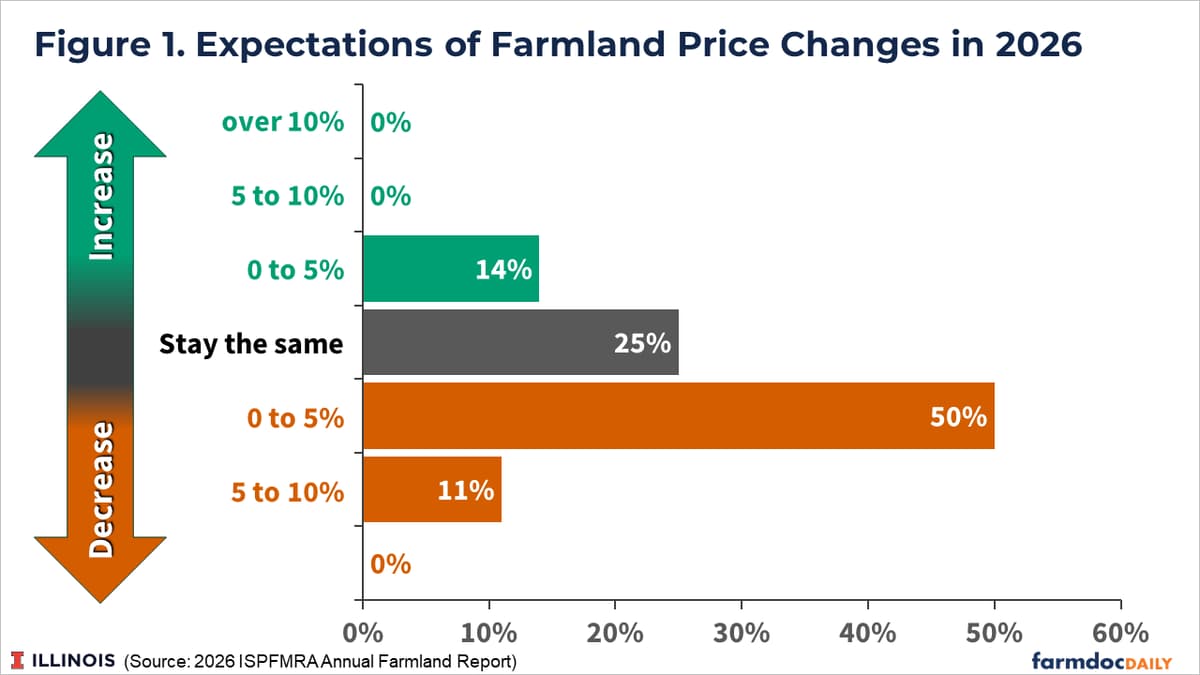
2026 Illinois Farmland Price Expectations: Navigating a Stable Yet Softening Market
Illinois farmland values are entering a stabilization phase after double‑digit gains in the early 2020s. The ISPFMRA survey shows 61% of respondents expect a modest 0‑5% price decline in 2026, while 25% see no change and 14% anticipate a slight...

Trends in General Inflation and Farm Input Prices
The study compares long‑term general inflation with agricultural input prices from 1973 to 2025, finding that farm inputs rose at an average 4.1 % annually versus 3.4 % for the PCE deflator. Correlation between the two series is moderate (0.59), but input...

Net Interest Margins of U.S. Commercial Banks Participating in Agricultural Lending Widen in the Fourth Quarter of 2025
U.S. commercial banks with agricultural loan portfolios expanded their net interest margins in Q4 2025, driven by higher yields on earning assets and lower funding costs. Aggregate agricultural loan balances grew 3.9% year‑over‑year to $207.39 billion, with agricultural banks holding $87.83 billion and...

Another Round of Crop Insurance; Update From the Policy Design Lab
The Policy Design Lab released interactive county‑level visualizations of USDA’s crop insurance data for 2014‑2024, highlighting stark geographic imbalances. Midwest counties, such as those in Illinois, consistently pay more in premiums than they receive in indemnities, while counties like Gaines...

Burdensome Grain & Oilseed Stocks?
Grain and oilseed inventories are not unusually high when measured against current use. U.S. corn ending stocks represent 13% of 2025 projected use, yielding a 12.9% stock‑use ratio—close to the post‑1997 average. World grain‑oilseed stock‑use ratios sit at 26.1%, only...

Nitrogen Prices Remain in Focus After Iran Conflict
Anhydrous ammonia prices in Illinois surged to $998 per ton in mid‑March 2026, an 18.4% rise from February levels before the Iran‑U.S. conflict. A regression model linking ammonia prices to corn and natural‑gas markets forecasts the fertilizer will still trade...

Biodiesel Production Profits and Tax Credits
The U.S. biodiesel sector has struggled with pandemic fallout, rising renewable diesel competition, and the 2023 RIN cliff, prompting several plant closures. Recent state and federal tax credits—particularly Iowa’s production credit, the Small Agri Producer credit, and the new 45Z...

Brazil Heads for a Record Soybean Harvest as Farm Margins Approach Breakeven
Brazil is on track for a record 2025‑26 soybean harvest of about 6.5 billion bushels, driven by expanded acreage and strong yields. However, farm margins have collapsed to near‑breakeven levels, the lowest in almost twenty years, as production costs surged to...

Insurance Impacts in the Presence of High Subsidy – High Coverage Products: A Case Study of STAX
Since its 2015 launch, the STAX high‑coverage, 80%‑subsidy area‑add‑up insurance has become a cornerstone of the U.S. upland‑cotton safety net, covering 29% of insured cotton acres. Over 2015‑2024, STAX‑linked indemnities offset 97% of the sector’s $11.5 billion market loss, contributing $1.8 billion...