
How Are Benchmark Borrowing Costs Measured? : A Close Look Into the 10-Year Treasury Yield
The 10‑year Treasury yield, measured as the market yield on a constant‑maturity note, is the cornerstone benchmark for U.S. borrowing costs. It reflects the annualized return an investor would earn holding a risk‑free government security at today’s price. Between May 2021 and May 2026 the yield swung from a low of 1.19% in August 2021 to a peak of 4.98% in October 2023, mirroring the Federal Reserve’s shift to tighter monetary policy. This data series, hosted on FRED, is widely used to gauge the health of the broader credit market.

Bankrate and Freddie Mac Mortgage Rate Data : Using FRED to Compare Similar but Not Identical Datasets
The Federal Reserve’s FRED platform now hosts parallel mortgage‑rate series from Freddie Mac and Bankrate, letting users visualize and quantify differences between the two datasets. Freddie Mac’s rates reflect averages of thousands of loan applications, while Bankrate’s figures come from surveys of...

The Peculiar Recent Behavior of Unemployment
The traditional “plucking model” of unemployment—slow declines in expansions and rapid spikes in recessions—has been broken over the past three years. Since 2023 the U.S. unemployment rate has risen gradually from historically low levels without a concurrent recession, a pattern...

Velocity of Money: The Invisible Pulse of the Economy : A US-India Comparison
The article explains the velocity of money—how often a unit of currency is used to purchase goods and services—and compares the United States and India from 2004 to 2019. In 2004 the U.S. velocity was about 2.6, roughly double India’s...

Economic Policy Uncertainty and Aggregate Economic Activity in India
The Economic Policy Uncertainty (EPU) Index for India, built from newspaper mentions of policy‑related risk, shows a clear negative relationship with key macro variables. Higher EPU values coincide with slower growth in private consumption, gross fixed capital formation, and overall...

How Markets Have Responded to Military Action Against Iran : Tracking Crude Oil Prices and Volatility with FRED
The U.S. and Israel launched strikes against Iranian nuclear and military sites on February 28, 2026, catching oil markets off guard. Immediate tanker disruptions in the Strait of Hormuz on March 1 caused Brent and WTI prices, along with the VIX, to...

What’s Happening with Interest Rates on Bank Accounts? : Survey Data From Large Lenders
The Federal Reserve Economic Data (FRED) platform now tracks average yields for CDs, savings and checking accounts using Bankrate Monitor data from the ten largest U.S. banks in ten markets. Since October 2022, the average 1‑year CD rate has consistently exceeded...

From Net Oil Importer to Net Oil Exporter : Shifts in the Role of Petroleum in the US Economy
The United States transitioned from a long‑standing net oil importer to a net exporter around 2020, as refined petroleum exports outpaced imports. Data from the Federal Reserve’s FRED series show the net export share of GDP turning positive after decades...

Revisions to 2025 State Employment
In early April 2026 the Bureau of Labor Statistics issued its annual benchmark revision of 2025 state employment figures. The revision reduced the number of states showing positive job growth from 34 to 22 and pushed the median state growth...
Early Signals About Retail Sales : An Advance Data Release From the Chicago Fed
The Chicago Federal Reserve has released its Advance Retail Trade Summary (CARTS) data on the FRED platform, offering weekly estimates of U.S. retail and food‑service sales that exclude motor vehicles and parts. Between April 2025 and March 2026, CARTS’ benchmarked weekly averages...
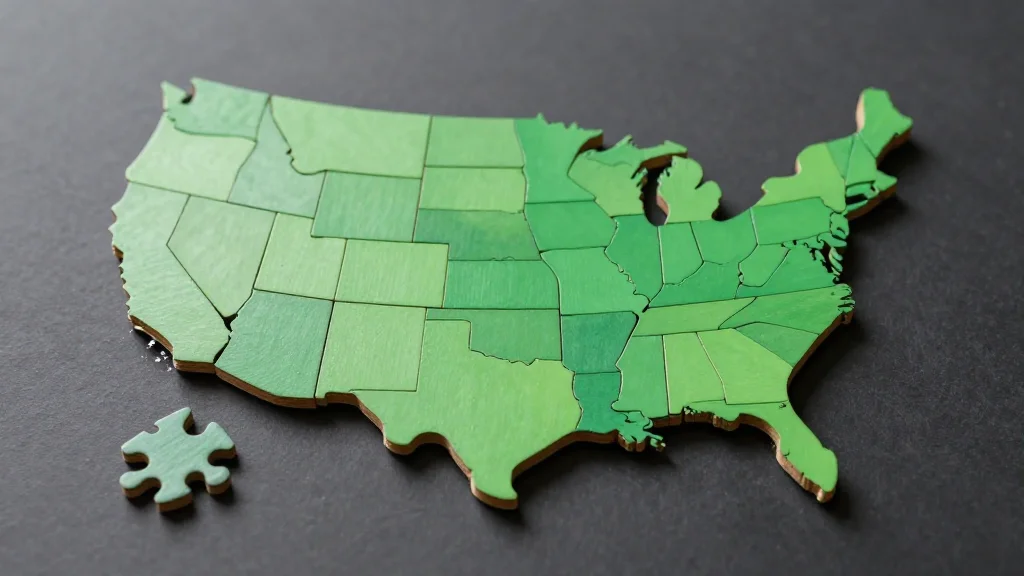
Real GDP Growth by State: Fourth Quarter 2025
The Bureau of Economic Analysis released real GDP data for all 50 states, annualized for the fourth quarter of 2025. The mean annualized growth was 1.8 percent, with the median state, New Jersey, matching that figure. South Carolina posted the fastest growth...

India’s Long Work Year
India’s workers logged an average of 2,605 hours in 2019, the highest among the countries covered by the FRED database. Bangladesh and Pakistan followed with more than 2,400 hours, while the United States recorded under 1,800 hours. The metric—average annual...

Newly Added Daily Data From NASDAQ
The Federal Reserve Economic Data (FRED) platform now provides daily Nasdaq data across 9,705 series, including the Nasdaq Composite, Nasdaq‑100, and Nasdaq‑100 Technology Sector indexes normalized to a base of 100 in April 2020. Visual analysis shows the three indexes move...

US-India Trade
The Federal Reserve Economic Data (FRED) series show that U.S. exports and imports with India have risen steadily since the 1990s, yet they remain a modest slice of overall trade. As of January 2026, Indian-bound exports account for roughly 2.5%...
Electricity Prices Have Increased and Vary by Region : The Latest BLS Data and Recent Research
Residential electricity prices in the United States have surged, climbing 44.4% between April 2020 and January 2026, according to Bureau of Labor Statistics data. The Northeast Census Region now pays the highest average rate at $0.265 per kilowatt‑hour, while the South remains...