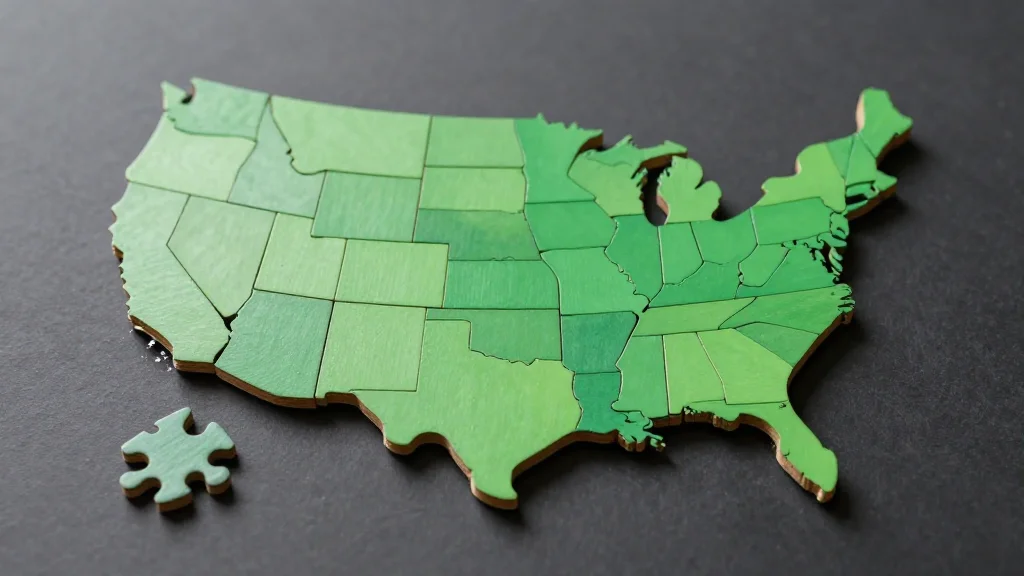
Real GDP Growth by State: Fourth Quarter 2025
Companies Mentioned
Why It Matters
State‑level growth differentials shape fiscal policy, investment allocation, and regional competitiveness, making the data crucial for both public and private decision‑makers.
Key Takeaways
- •All 50 states posted positive growth in 2025
- •Mean annualized growth was 1.8%, median New Jersey matched it
- •South Carolina led at 3.1% growth; North Dakota at 0.3%
- •Eighth District: Indiana fastest (2.5%), Kentucky slowest (1%)
- •26 states outperformed the national mean, indicating uneven recovery
Pulse Analysis
On April 9, 2026, the Bureau of Economic Analysis published the latest real gross domestic product figures for every U.S. state, annualized for the fourth quarter of 2025. The St. Louis Fed’s FRED platform transformed those series into a two‑tone map that distinguishes modest growth (0‑2 percent) from moderate expansion (above 2 percent). The map’s construction involved selecting the “Percent Change from Year Ago” unit, setting an annual frequency, and defining custom color breaks at 2 percent and 5 percent. This visual tool lets policymakers and investors instantly spot where economic momentum is strongest.
Across the nation, all 50 states recorded positive growth, but the pace varied sharply. The average annualized increase was 1.8 percent, with New Jersey exactly matching the mean as the median state. South Carolina posted the highest surge at 3.1 percent, while North Dakota barely edged ahead at 0.3 percent. In the Fed’s Eighth District, Indiana outpaced the national average at 2.5 percent, contrasted by Kentucky’s sluggish 1 percent. These disparities highlight regional cycles, suggesting that sectors tied to tourism, technology, and energy may drive the faster performers, whereas resource‑dependent economies lag.
The data are provisional and subject to revision, a reminder that real‑time analysis must account for later adjustments. Researchers can track each vintage through the ALFRED database, preserving the historical snapshot of how estimates evolved. For businesses, the state‑level breakdown informs location‑specific investment decisions, labor‑market planning, and supply‑chain risk assessments. By coupling the granular GDP trends with other FRED series—such as employment, consumer spending, or housing starts—analysts can build a more nuanced forecast of regional economic health as the United States moves into 2026.
Real GDP growth by state: Fourth quarter 2025
Comments
Want to join the conversation?
Loading comments...