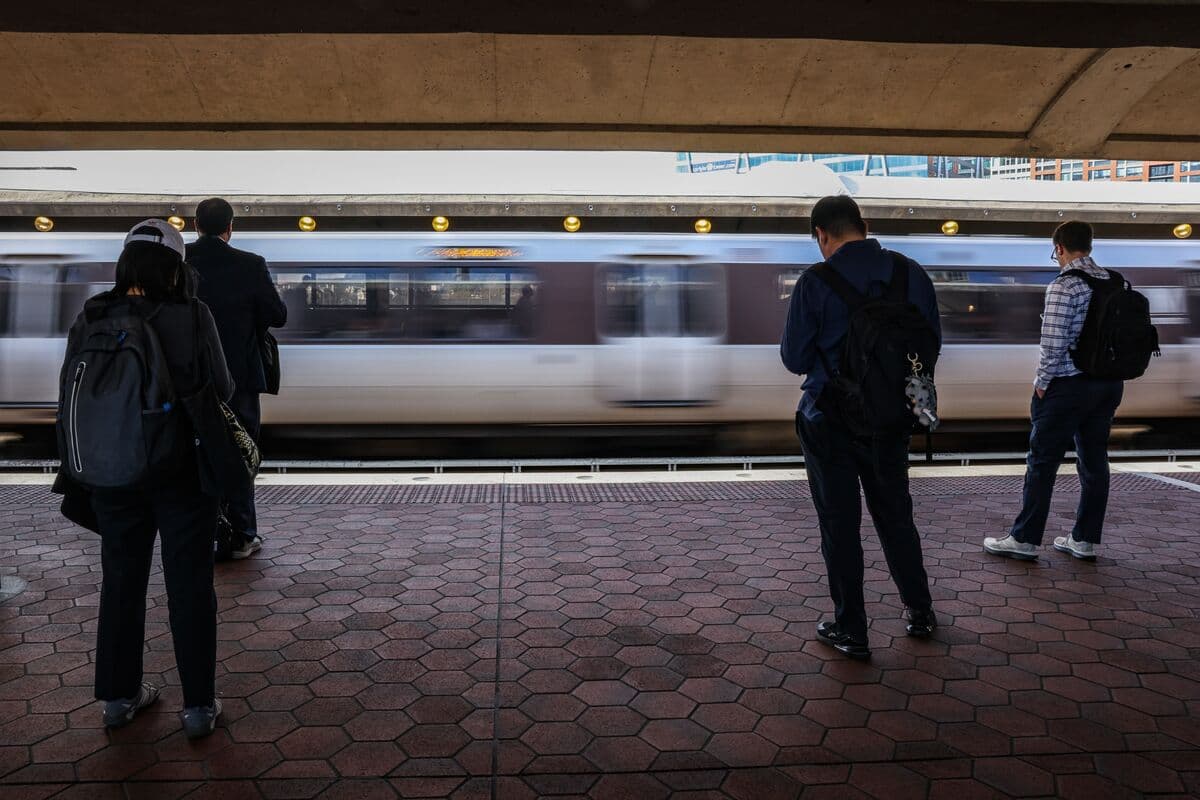
US Jobs Report Set to Reveal Solid Growth, Steady Unemployment Rate
The U.S. Labor Department will release its May 2026 employment report on Friday, with economists forecasting the unemployment rate to remain steady at 4.3%. Payrolls are projected to rise by 89,000 jobs, pushing the three‑month average to the highest level in more than a year. This uptick suggests a more durable acceleration in hiring across the economy. The data will be closely watched for clues about the labor market’s resilience amid ongoing monetary tightening.

Inflation Is Spreading Through the U.S. Economy Beyond the Pump
U.S. inflation is moving beyond gasoline, with the latest PCE data showing a 3.8% year‑over‑year rise, the fastest since 2021. Core PCE, which strips out food and energy, climbed 3.3%, indicating underlying price pressures. The surge coincides with higher energy...

The ‘Three A’s’ Are Keeping the Economy Afloat During Iran War. Is It Enough to Avoid Recession?
Gregory Daco, chief economist at EY Parthenon, says U.S. growth hinges on three A's—affluent consumers, AI investment, and asset appreciation. Inflation rose to a three‑year high of 3.8% while wages lag at just over 3%, and the personal savings rate fell...
Rock-Bottom Immigration Rates Leave Mark on U.S. Economy
President Trump’s immigration crackdown has triggered one of the steepest slowdowns in U.S. population growth in decades, pulling labor‑force expansion to near‑zero levels. Federal Reserve analysis shows the breakeven job‑gain rate has collapsed, while state‑level data reveal that regions with...

Fed's Bowman Willing to Look Through War-Driven Inflation Bump
Federal Reserve Vice Chair Michelle Bowman told an Iceland conference that the recent inflation spike, driven by higher energy prices and one‑off tariff effects from the Iran war, should be looked through. She emphasized using trimmed‑mean PCE rather than headline...
Fed’s Bowman Says Too Soon to Judge Inflation Impact of Iran War
Federal Reserve Vice Chair Michelle Bowman warned that it is too early to assess the inflationary fallout from the U.S. war in Iran, urging policymakers to look through temporary energy‑price spikes. She backed the Fed’s decision to keep rate‑cut language...

Fed’s Schmid Says Officials Must Signal Commitment to Inflation
Federal Reserve Bank of Kansas City President Jeff Schmid warned that inflation has stayed above the Fed’s 2 percent target for more than five years and urged officials to visibly commit to price stability. He highlighted that the renewed US‑Israeli conflict...

One in Three American Men No Longer Work as Jobs Shift Deepens
One in three American men are now outside the labor force, with the Bureau of Labor Statistics reporting a 66 % participation rate for men aged 20 and over in April 2026—down from 73 % in 2006 and near post‑2008 levels. The...
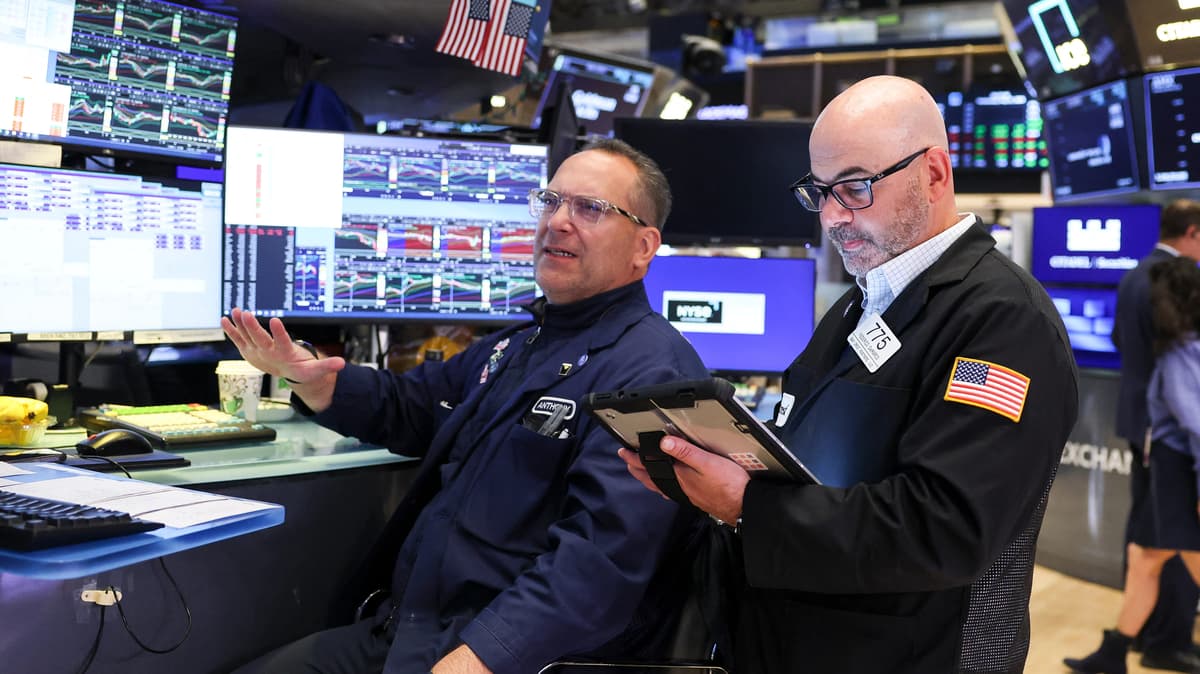
Stagflation Warning Signs Are Flashing, But the AI Boom Is Letting Investors Ignore Them (For Now)
U.S. equity indices hit record highs on Thursday even as the Federal Reserve’s preferred inflation gauge, the personal consumption expenditures (PCE) index, rose to a three‑year peak of 3.8% year‑over‑year. At the same time, Q1 GDP was revised down to...
Federal Reserve Inflation Split Starts Shaking Confidence Across U.S. Economy
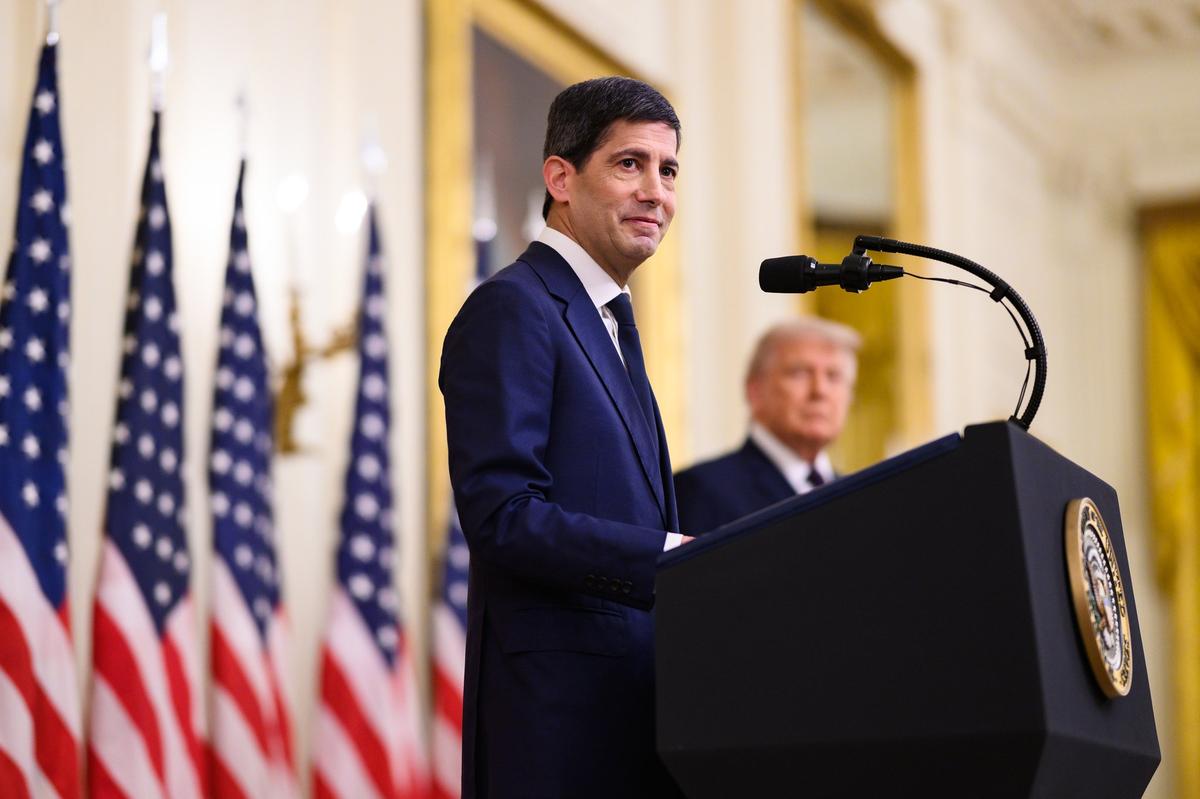
The Dallas Federal Reserve’s trimmed‑mean inflation gauge fell to 2.3% year‑over‑year in April, a modest dip from 2.4% in March, but economists warn it may now understate true price pressure. At the same time, core personal consumption expenditures (PCE) inflation...
Americans Are Spending Faster than Their Income Is Growing
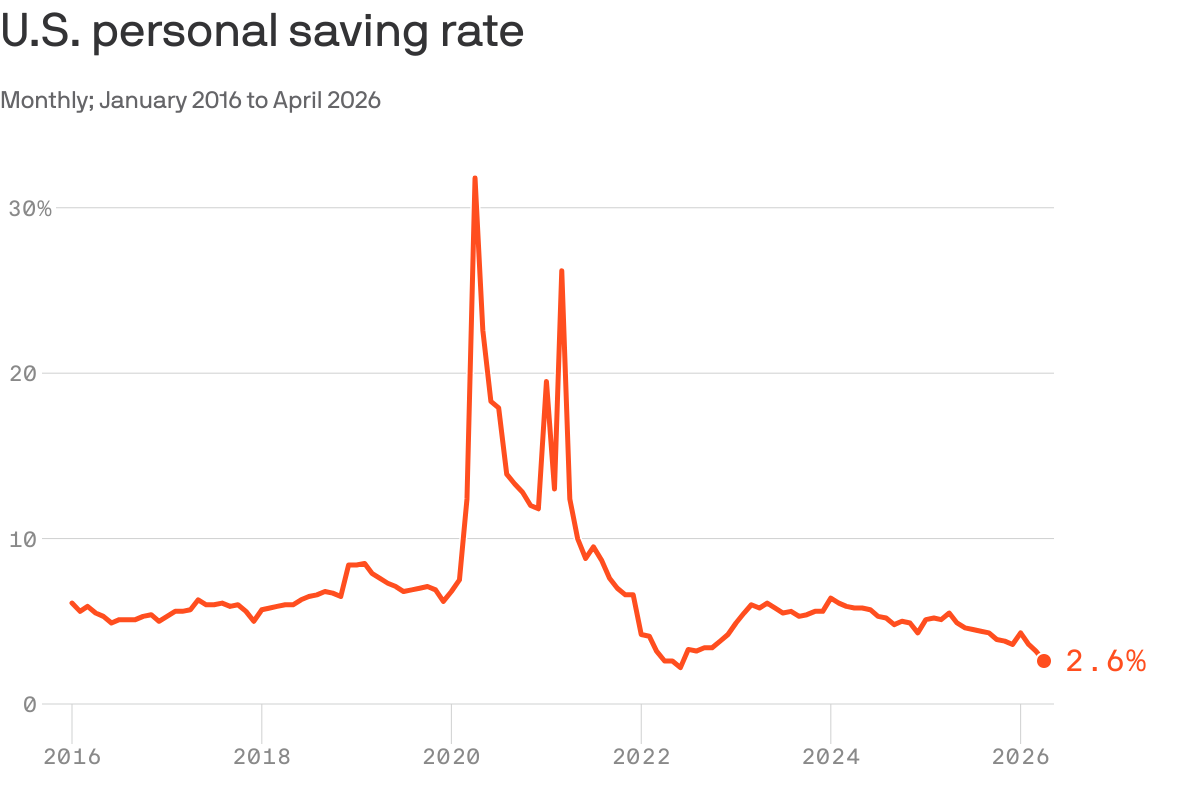
U.S. consumer spending rose 0.5% in April while disposable personal income slipped 0.1%, driving the personal saving rate down to a six‑month low of 2.6%. The gap is fueled by higher energy costs linked to the Iran war, with gasoline...

US Inflation Rose at Fastest Pace in Three Years in April as Iran War Hikes up Prices
U.S. inflation accelerated to its fastest pace in three years in April, driven by a sharp rise in energy costs linked to the Iran‑Israel conflict. The personal consumption expenditures (PCE) price index jumped 3.8% year‑on‑year, while core PCE rose 3.3%,...

New-Home Sales Slow in April After a Strong March
New‑home sales in April 2026 fell 6.2% month‑over‑month and 11.3% year‑over‑year, marking the weakest month since January. Despite the volume decline, the median price rose 8% to $422,500, the highest since May 2025, driven by strong West‑region activity. Builder inventory...

First-Quarter GDP Chopped to 1.6%. Here’s Why — and What It Tells Us About the Economy.
U.S. first‑quarter GDP was revised to a 1.6% annualized increase, down from the initially reported 2%. The downgrade stems from weaker consumer spending and lower inventory growth, while durable‑goods purchases rose modestly and services spending slipped. Business investment surged, with...

Iran War Lifts a Second Inflation Reading to Highest Level Since 2023
U.S. personal consumption expenditures (PCE) inflation jumped 3.8% year‑over‑year in April, the fastest rise since May 2023, while core inflation climbed to 3.3%, a multi‑year high. The surge is linked to supply disruptions from the Iran war, which has tightened global...