HR Daily Advisor - Latest News and Information

The EEOC voted 2‑1 on Jan 22, 2026 to rescind its 2024 Enforcement Guidance on Harassment, its first major policy reversal since regaining a quorum in late 2025. The original guidance modernized Title VII interpretation, incorporated Bostock, remote‑work issues, and gender‑identity protections. The rescission follows a Texas court ruling striking down gender‑identity sections and aligns with Executive Order 14168 directing agencies to drop non‑binary sex interpretations. While the guidance is gone, the underlying statutes and Supreme Court precedents remain fully enforceable.

The U.S. Supreme Court has granted certiorari to resolve a split among federal circuits over whether multi‑employer pension plans must use actuarial assumptions fixed at the end of the plan year or may adopt new assumptions after year‑end based on...

New Census Bureau data shows the gender pay gap widening for the first time in two decades and female representation in leadership plateauing. Shelly MacConnell, WIN’s chief strategy officer, proposes a four‑step framework to reverse this trend: conduct organization‑wide pay...

Business owners often postpone addressing disputes, assuming they can resolve issues later, but such delays can cause claims to become time‑barred. A statute of limitations is a procedural deadline that, once missed, results in dismissal of the claim without relief....

Betsy Lopez‑Riley, speaking ahead of SPARK HR 2026, argues that HR leaders should focus on eliminating uncertainty rather than simplifying complexity. She notes that people can manage intricate tasks, but unclear trade‑offs erode confidence during change. Lopez‑Riley will present sessions on immediate...

In 2025, ICE revived large‑scale worksite enforcement targeting I‑9 compliance, while the Department of Homeland Security dismantled key immigration programs, ending humanitarian parole, destabilizing TPS, and terminating automatic EAD extensions. Simultaneously, states such as Iowa and Ohio introduced mandatory E‑Verify...

Two U.S. federal courts issued landmark decisions on the use of generative AI in litigation. In Warner v. Gilbarco, the Eastern District of Michigan held that AI‑assisted work directed by counsel remains protected under the work‑product doctrine. Conversely, the Southern...

The February 2 deadline for Massachusetts employers to submit their federal EEO reports to the secretary of the commonwealth has passed. Covered firms—those with 100 or more Massachusetts employees and a federal EEO filing obligation—must now use the online portal to file...

The 4th U.S. Circuit Court of Appeals ruled that two West Virginia employees were not protected under the ADA because they could not perform their jobs' essential functions, even with accommodations. In the first case, an accounting assistant with breast...
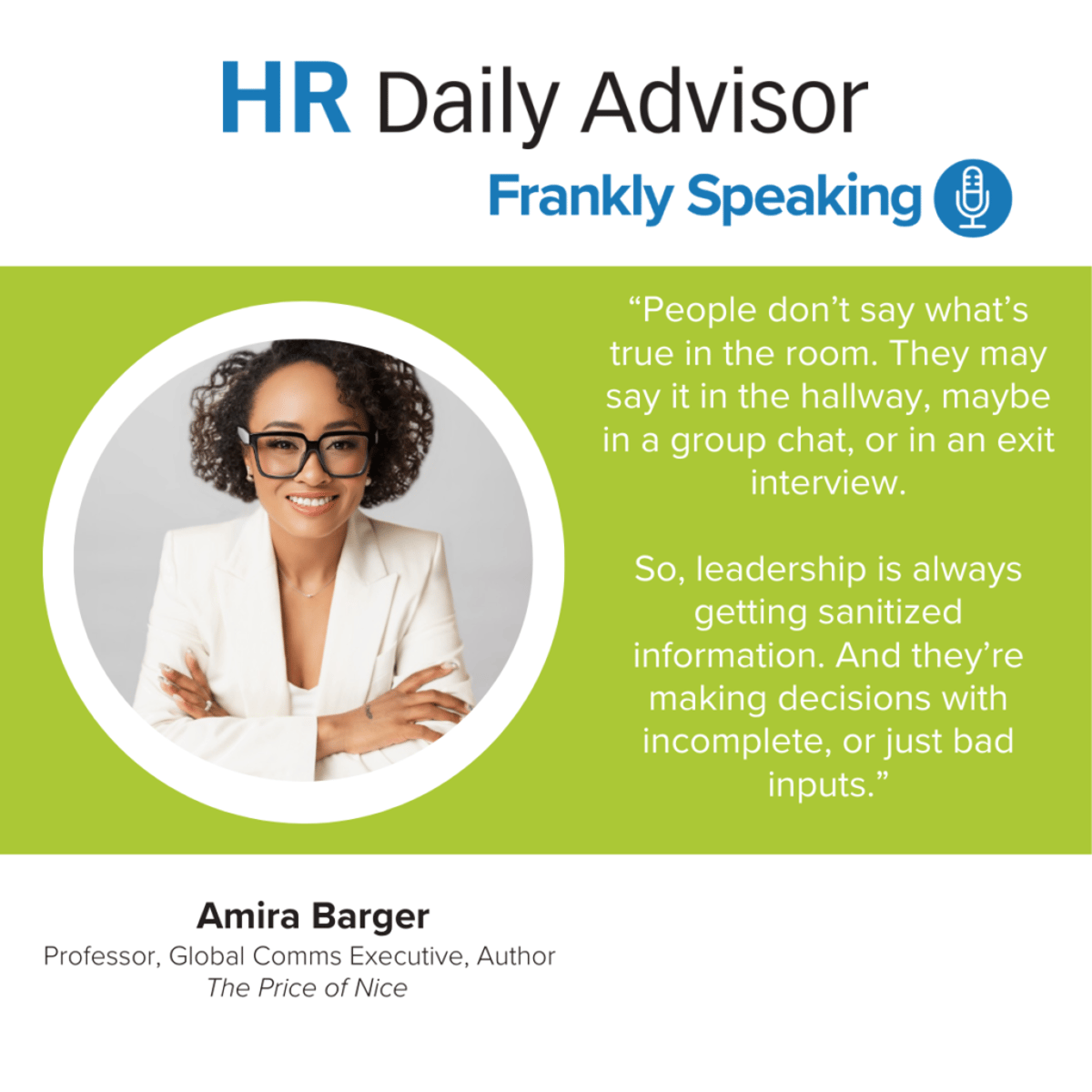
The article argues that excessive workplace niceness creates a silent feedback loop that deprives leaders of truthful input. Employees often withhold criticism to avoid conflict, leading to sanitized information reaching decision‑makers. This dynamic hampers productivity, innovation, and effective problem‑solving. Amira...

People decisions such as pay, promotions, and headcount are under heightened scrutiny, demanding both fairness and financial discipline. A HiBob survey of 4,700 managers reveals that nearly three‑quarters faced formal challenges to their decisions in the past year. Managers spend...

The U.S. Department of Labor issued new guidance confirming that travel time to and from medical appointments qualifies as protected leave under the Family and Medical Leave Act. The clarification applies whether the employee is seeking treatment for their own...
Employers face a wave of I‑9 and E‑Verify volatility as ICE worksite enforcement resurged in 2025 and federal programs that stabilized work authorization were dismantled. The termination of humanitarian parole, TPS volatility, and the end of automatic EAD extensions have...

Jenessa Disler, McKesson’s Senior Director of Talent Succession, argues that effective employee engagement should feel calm and boring, driven by role clarity, two‑way feedback, and cohesive systems. She highlights three themes for HR leaders: AI as an amplifier that frees...

The article outlines employer duties when court orders intersect with the workplace, covering wage garnishments, court‑appearance leave, custody schedules, restraining orders, and confidentiality requirements. Employers must withhold and remit support payments precisely, avoid retaliation for legal attendance, and adjust work...


