Inspectioneering - Latest News and Information

Ricardo Valbuena’s second installment on asset integrity highlights two core pillars: people development and risk‑based inspection (RBI). He advocates establishing a structured inspector career ladder and supporting staff with API certifications to boost motivation, skills, and retention. The article also explains RBI as a systematic methodology that quantifies failure probability and consequence for equipment. Together, these processes aim to elevate reliability, reduce unplanned downtime, and improve safety in refineries and chemical plants.

Phased‑array ultrasonic testing (PAUT) is being promoted as a replacement for radiographic testing (RT) in heat‑recovery steam generator (HRSG) pipe weld inspections. PAUT removes ionizing radiation exposure, delivers instant defect data, and allows real‑time welding adjustments. The technology shortens inspection...

The American Petroleum Institute’s Fall 2025 API Standards Conference, held November 9‑15 in Anaheim, convened the Committee on Refining Equipment to review and advance SCIMI initiatives. Six SCIMI standards were published in 2025, including addenda to RP 574, RP 580, RP 575 and RP 570,...

Inspectioneering’s Fall 2025 “Meeting of the Minds” roundtable in Anaheim revisited the core pillars of mechanical integrity (MI). Participants highlighted the Corrosion Control Document (CCD) and Integrity Operating Windows (IOWs) as essential data foundations. The discussion warned against the “shiny‑object” trap,...

Laser surface ablation is emerging as a precise, environmentally friendly alternative to traditional mechanical, chemical, and ultrasonic cleaning methods. By using controlled laser‑material interactions, it can selectively remove rust, coatings, and contaminants while preserving the substrate and eliminating abrasive waste....

The article emphasizes that a structured inspection planning process, anchored by a risk‑based planning matrix, is essential for successful turnarounds (TAs). Developing a comprehensive Inspection Test Plan (ITP) early ensures clear communication of scope, methods, acceptance criteria, and hold points...

The Inspectioneering article outlines how thermal hotspots in refractory‑lined, high‑temperature equipment jeopardize structural integrity and operational continuity. It details damage mechanisms such as overheating, cracking, and corrosion that arise when refractory linings fail. The authors emphasize inspection techniques—infrared, acoustic, and...

API’s Inspection and Mechanical Integrity Summit (IMIS) is slated for July 20‑23, 2026 at the Henry B. González Convention Center in San Antonio, Texas. Marking the event’s 10th edition, the summit will convene inspection planners, corrosion specialists, and fixed‑equipment decision‑makers....

The article explains how identifying limiting crack sizes before an inspection can streamline equipment assessments and guide repair decisions. It highlights the use of the Failure Assessment Diagram (FAD) from API 579‑1/ASME FFS‑1 to evaluate crack stability through the Kr (toughness) and...
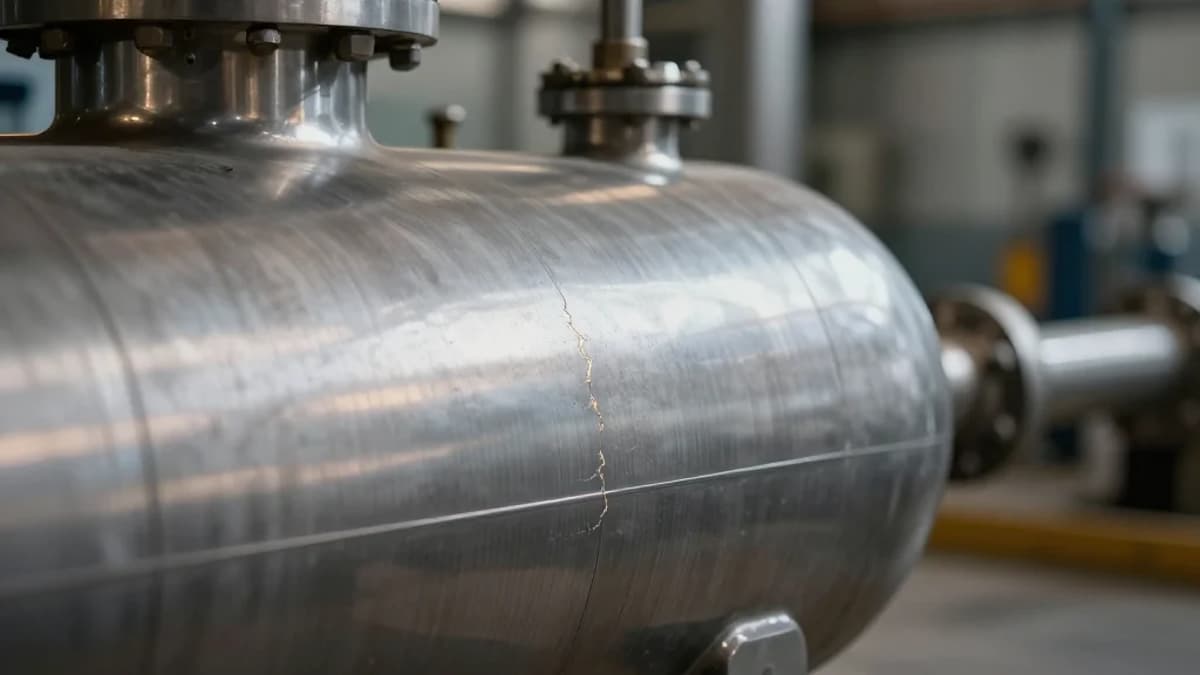
WRC Bulletin 599, released in 2023, delivers a comprehensive set of recommendations for assessing brittle‑fracture resistance in carbon and low‑alloy steel pressure vessels and piping. The bulletin critiques existing screening methods in ASME Sections VIII‑1, VIII‑2, B31.1, B31.3, B31T and API 579, exposing...

John Reynolds revisits the distinction between fixed equipment mechanical integrity (FEMI) knowledge and FEMI wisdom, emphasizing that accumulating a robust body of knowledge alone does not guarantee effective problem solving. He argues that wisdom—knowing when, how, and what to communicate—transforms...

The Inspectioneering article presents next‑generation quantitative RBI examples that tackle three key limitations of API RP 581: poor CML/TML data utilization, cumbersome piping modeling, and vague inspection recommendations. By applying probabilistic algorithms, the authors demonstrate how historic corrosion‑monitoring data can be...

The Inspectioneering Journal highlights growing capabilities to perform fitness‑for‑service (FFS) assessments on fiber‑reinforced polymer (FRP) equipment. Since 2017, a series of technical articles have built a data foundation that bridges the gap between construction codes and real‑world operating conditions. While...

Secondary stresses, often hidden behind welding, temperature changes, and deformation, are a leading cause of piping and pressure vessel failures. The article highlights three case studies—a PWHT carbon steel pipe, a high‑temperature austenitic tube, and a boiler feed‑water system—where secondary...

The Fauji Fertilizer Company’s Port Qasim plant performed an in‑situ rehabilitation of two circumferential weld seams on its vintage CO₂ absorber (C‑208), originally built in 1964 and relocated from the United States. The repair followed ASME Section VIII guidelines, employing heat‑treated...


