Iconic Biologist Ru Chih Huang Dies at 94
Renowned biochemist and molecular biologist Ru Chih Huang, the first female tenure‑track professor in the physical sciences at Johns Hopkins, died at 94. Her groundbreaking 1962 paper on histone‑mediated suppression of chromosomal RNA synthesis became a Citation Classic and reshaped gene‑expression research. Huang’s lab later pioneered in‑vitro transcription of immunoglobulin and developed the anticancer agent Terameprocol, while she authored over 300 papers, secured 16 patents, and mentored hundreds of scientists. She was widely honored, including induction into the National Academy of Inventors.

Study Explains Why HIV Sometimes Persists in Blood Post-Treatment
Johns Hopkins researchers published a study in Nature Communications showing that most cases of non‑suppressible viremia in people on antiretroviral therapy are driven by defective, non‑infectious HIV‑1 copies. Analysis of blood from 52 participants revealed that about 95% of detectable...
New Framework Offers Fresh Insights Into Autism Risk Factors
Researchers at Johns Hopkins and Kaiser Permanent unveiled a statistical framework that merges polygenic risk scores with case‑parent trio data to parse genetic and environmental drivers of autism. Analyzing more than 18,000 trios across diverse ancestries, they confirmed that existing European‑derived...
Habits Form Far Faster than Science Previously Thought, Research Shows
Johns Hopkins researchers published a study in Nature Communications showing that habits can emerge almost instantly, overturning the long‑standing view that they develop gradually through repeated actions. Using a novel real‑time mouse paradigm, the team observed a sudden switch from...

Genome Scientist Ana Pombo Joins Johns Hopkins Faculty
Ana Pombo, a leading molecular biologist who invented Genome Architecture Mapping (GAM), has joined Johns Hopkins University as a Bloomberg Distinguished Professor of Genome Biology. Her appointment spans the Department of Biology and the Department of Molecular Biology and Genetics,...
What We Know About the Current Ebola Outbreak
A rapidly escalating Ebola outbreak caused by the rare Bundibugyo strain has hit the Democratic Republic of the Congo and Uganda, leaving more than 230 dead and over 900 suspected cases as of May 25. The World Health Organization declared a...

Chemist Rebekka Klausen Wins Prestigious Brown Investigator Award
Synthetic chemist Rebekka Klausen, a Johns Hopkins professor, has secured the Brown Investigator Award, receiving up to $2 million over five years to explore three‑dimensional silicon polymers. Her lab focuses on silicon‑silicon bonds, aiming to uncover novel electronic and quantum phenomena...
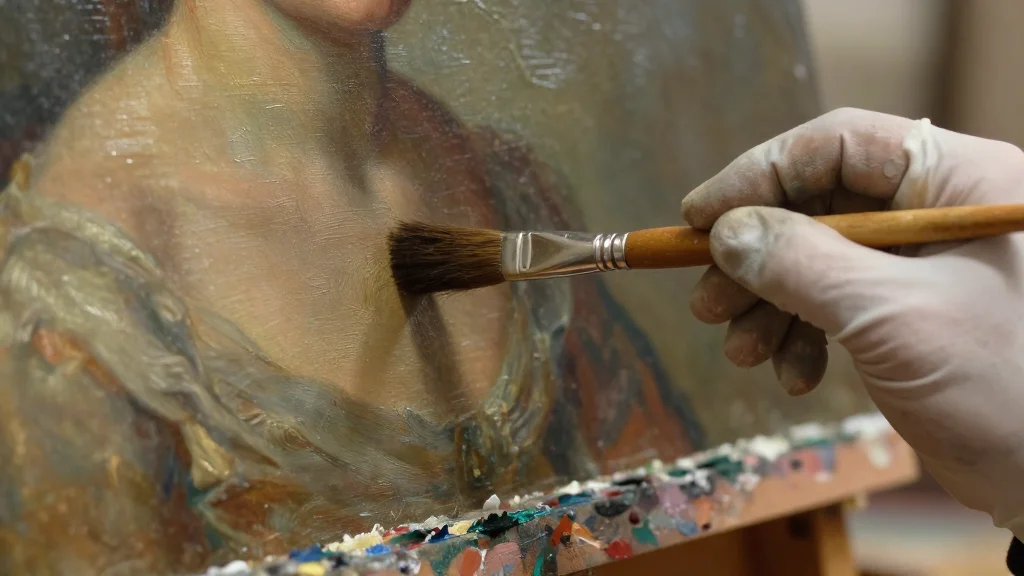
Facelift for 'The Four Doctors'
John Singer Sargent’s 1906 painting *The Four Doctors*, featuring Johns Hopkins founding physicians, has completed a comprehensive five‑week conservation. The project removed decades of grime, varnish and unauthorized over‑painting, restoring the original flesh‑toned palette and detailed background. Conservation was led...

FDA Approves Early Warning System for Sepsis
U.S. Food and Drug Administration has cleared the Targeted Real‑Time Early Warning System, an AI‑driven tool from Johns Hopkins and Bayesian Health that flags sepsis before clinicians suspect it. The system can detect the infection 2 to 48 hours earlier...

Behind the Scenes of NASA's Artemis II
NASA public‑affairs specialist Madison Tuttle witnessed the Artemis II splashdown aboard the USS John P. Murtha, coordinating broadcast and relaying real‑time data to the public‑affairs team. She described the re‑entry dynamics—25,000 mph, 5,000 °F heat shield, six‑minute communications blackout—and the flawless parachute deployment that led...

Johns Hopkins Acquires Major Work by Artist Lindsay Adams
Johns Hopkins University announced the acquisition of Lindsay Adams' large‑scale diptych *Kind of Blue (1959)*, a 14‑foot‑wide, six‑foot‑tall abstract work inspired by Miles Davis' iconic jazz album. The piece will be installed in the renovated Milton S. Eisenhower Library, slated...

First-Time Gardening Tips From Blue Jay's Perch
Blue Jay’s Perch, a student‑run community garden at Johns Hopkins Eastern, offers a zero‑commitment space where beginners can learn gardening through research, crop diversification, and peer support. The garden maintains two dozen individual plots, a fruit orchard and pollinator beds, drawing a mix...

Asthma-Related ER Visits Spike in Baltimore After Nighttime Heatwaves
Johns Hopkins researchers found a clear surge in asthma‑related emergency‑room visits in Baltimore weeks after nighttime heat waves hit neighboring communities. The study, published in GeoHealth, shows that the city’s Code Red Extreme Heat alert, which only tracks daytime temperatures, overlooks...

BioOne to Join Hopkins Press, Advancing Shared Vision for Scholarly Publishing
Johns Hopkins University Press will incorporate BioOne, a nonprofit aggregator of over 200 bioscience journals, into its organization. The merger links BioOne’s life‑science collection with the humanities‑focused Project MUSE platform, expanding the Press’s disciplinary reach. Both entities will continue using the...

Johns Hopkins Builds Constellation of Community-Based Programs
Johns Hopkins University unveiled a new “Committed to Community” website that maps its $19.4 billion Baltimore economic impact into concrete benefits for local businesses and residents. The BUILD College program helped Baltimore contractor THG Companies secure about $6 million in JHU contracts,...