
The Financial Action Task Force: An Accountability Mechanism for the United States
The Financial Action Task Force (FATF) is conducting its third mutual evaluation of the United States, scrutinizing compliance with anti‑money‑laundering and counter‑terrorism financing standards, especially Recommendation 8 that protects legitimate non‑profit organizations. The Trump administration has intensified regulatory pressure on NGOs, labeling many as foreign agents or potential domestic terrorists, which could breach FATF’s risk‑based approach. A negative rating—such as “partially compliant”—could place the United States on FATF’s grey list, triggering heightened monitoring and financial repercussions. Given the dollar’s dominance, the U.S. cannot easily dismiss FATF findings without risking broader economic fallout.

Statement by Israeli International Law Scholars Concerning Israel’s New “Death Penalty for Terrorists” Law
A coalition of Israeli international law scholars condemned Israel’s newly enacted “Death Penalty for Terrorists” law, which mandates hanging as the default sentence for Palestinians convicted of deadly attacks in the West Bank. The legislation expands capital punishment to a...

A Response to the Brennan Center’s “Myths and Facts” On Section 702 Backdoor Searches
Section 702 of the Foreign Intelligence Surveillance Act will expire on April 20, 2026 unless Congress renews it, threatening a key intelligence tool for counter‑terrorism and cyber threat detection. The author disputes the Brennan Center’s claim that USP identifiers used...

A Survey of Sovereign Standing: Developments in State-Led Lawsuits Against the Federal Government
State‑led lawsuits against the federal government have surged to record levels, with more than 100 cases filed in each of the past two administrations and 95 new filings logged in 2026 alone. Courts are routinely granting relief, allowing states to...

Claude and the Constitution: Questions Congress Should Ask Before Renewing Section 702
Section 702 of the Foreign Intelligence Surveillance Act will sunset on April 20, 2026, forcing Congress to decide whether to renew a tool that lets the NSA collect foreign communications but often sweeps up Americans. The article highlights the growing...

AI Needs Accountability. We Can’t Rely on Companies and Governments Alone.
The fallout from Anthropic’s secret rollback of its Responsible Scaling safety pledge and its models’ use in U.S. military operations in Venezuela and Iran highlights a broken AI accountability system. Companies toggle self‑regulation when convenient, while governments intervene inconsistently, often...

Will the Next U.N. Counterterrorism Strategy Hold States Accountable For Their Use of AI?
The U.N. Secretary‑General warned that terrorist groups are increasingly exploiting artificial intelligence, while states are deploying AI in counter‑terrorism operations without robust human‑rights safeguards. Recent examples include U.S. and Israeli militaries using AI to select bombing targets, and the UN’s...

When Intelligence Fails: A Legal Targeting Analysis of the Minab School Strike
On Feb. 28, 2026 a U.S.-launched Tomahawk missile struck the Shajarah Tayyebeh girls’ elementary school in Minab, Iran, killing at least 165 civilians, mostly children. A preliminary U.S. military inquiry attributes the tragedy to a targeting error caused by outdated...
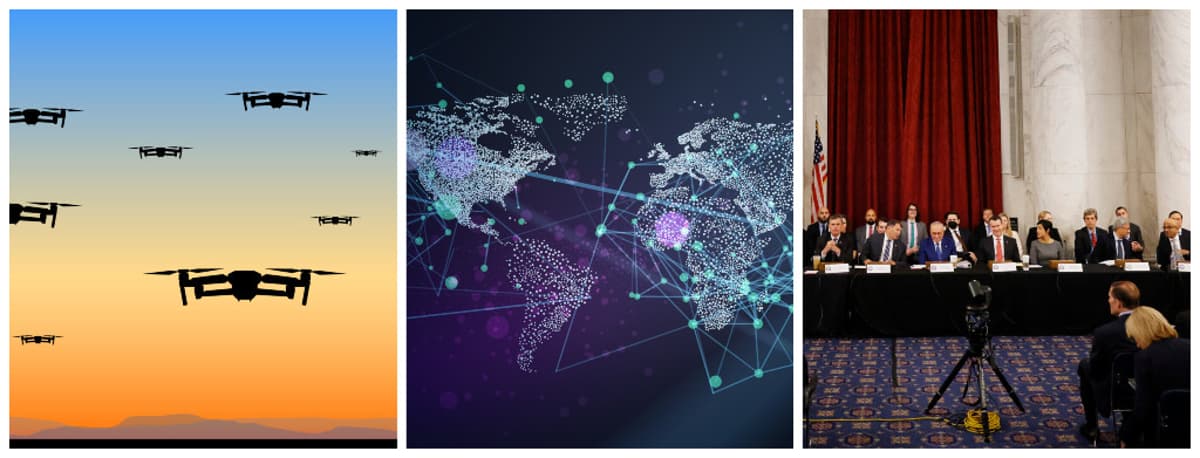
Just Security’s Artificial Intelligence Archive
Just Security has launched a comprehensive AI archive that aggregates its analytical pieces on artificial intelligence dating back to 2020. The catalog groups articles into themes such as AI governance, national security, and industry impacts, making it easier for policymakers,...

Ban Pay-to-Play National Security Approvals
In December, TikTok agreed to spin off its U.S. operations to a consortium of Oracle, Silver Lake and Abu Dhabi’s MGX, creating TikTok USDS Joint Venture with roughly 45% ownership for the investors. The Wall Street Journal revealed the investors...

Targeting Enemy Logistics
Recent escalations in the Israel‑Iran conflict have seen both sides strike critical logistics infrastructure—including oil depots, gas fields, ports, banks and data centers—across the Gulf region. The attacks on the South Pars and North Dome gas fields pushed Brent crude...

Iran Built a Military to Survive the American Way of War: Should We Be Surprised?
Four weeks into the U.S.-Israel campaign against Iran, more than 8,000 Iranian targets have been struck, yet Iran’s missile and drone attacks have only fallen 90% and 95% respectively, and senior leaders remain operational. Tehran’s military has survived by decades...

Early Edition: March 25, 2026
The United States has delivered a 15‑point cease‑fire proposal to Iran through Pakistani intermediaries, while simultaneously preparing to deploy roughly 2,000 troops from the 82nd Airborne Division and an additional 5,000 Marines to the Middle East. Iran has dismissed the...

Energy Security Is National Security: Fixing America’s Incoherent Energy Policies
President Trump’s administration has rolled back federal incentives for wind and solar while using emergency powers to keep uneconomic coal plants online, driving higher electricity and gasoline prices. Despite renewables now accounting for the majority of new U.S. generation capacity...

Hegseth Didn’t Revive an Ancient Warrior Ethos. He Repeated an American Pattern.
Secretary of Defense Pete Hegseth’s recent use of the phrase “no quarter” revives a longstanding American rhetorical tradition that emerges when an enemy is portrayed as racially or civilizationally inferior. The article traces the expression from 17th‑century colonial massacres through...

The Court Gutted Congress’s War Power. It’s Time to Give It Back.
The article contends that the Supreme Court’s 1983 INS v. Chadha decision, which invalidated legislative vetoes, undermines Section 5(c) of the War Powers Resolution—a tool that lets Congress order the withdrawal of U.S. forces via a concurrent resolution. It argues that...

Firearms Trafficking Comes to the Inter-American Court of Human Rights in Recent Advisory Opinion
On March 5 the Inter‑American Court of Human Rights issued advisory opinion OC‑30/25 at Mexico’s request, clarifying state and private‑sector obligations to prevent illicit firearms trafficking. The opinion links illegal arms flows—over 70% of seized Mexican guns trace to the United...
Early Edition: March 17, 2026
Israel announced a night‑time strike on Tehran that it says eliminated Iran’s Supreme National Security Council secretary Ali Larijani and the head of the Basij militia, Gholamreza Soleimani. Iran responded with missile and drone attacks on UAE, Saudi Arabia and Qatar,...

Fourth Circuit Affirms $42 Million Jury Verdict in Abu Ghraib Case
The U.S. Court of Appeals for the Fourth Circuit affirmed a $42 million jury verdict against CACI Premier Technology for conspiracy to commit torture and cruel, inhuman, and degrading treatment at Abu Ghraib. The panel rejected CACI’s extraterritoriality arguments, finding that U.S....

Expert Q&A on Key Law of Naval Warfare Issues in the Conflict with Iran
The ongoing conflict between the United States, Israel and Iran has expanded from coastal strikes to direct attacks on Iranian Navy and IRGC vessels, including the sinking of IRIS Dena and the internment of IRIS Bushehr and IRIS Lavan. Both...

Hypothetical Legal Advice to SecDef Hegseth on “No Quarter” Statement (From Office of General Counsel)
Secretary of War Pete Hegseth’s March 13, 2026 remarks that U.S. forces would give "no quarter, no mercy" to Iranian combatants could be interpreted as an illegal command under the law of armed conflict. The Department of War’s General Counsel...

How Trump’s New Global Gag Rules Will Undermine US Interests Abroad
The Trump administration issued three final rules that expand the Mexico City Policy to all U.S. foreign assistance, tying roughly $40 billion in non‑military aid to compliance with anti‑abortion, gender‑ideology, and DEI restrictions. The rules prohibit NGOs receiving any U.S. funds...

Did the United States Just Bomb Ecuador?
The Trump administration reportedly conducted a joint airstrike in Ecuador on March 6 against a dissident FARC faction, partnering with Ecuadorian forces. The operation was announced via Southern Command and Defense Secretary Pete Hegseth’s social‑media posts and later classified in a...

Collection: U.S. Lethal Strikes on Suspected Drug Traffickers, Operation Southern Spear, Operation Absolute Resolve
Beginning September 2, 2025, the U.S. military launched a series of lethal strikes against vessels suspected of drug trafficking in the Caribbean and eastern Pacific, framing the campaign as a non‑international armed conflict with criminal gangs. On January 3, 2026,...

Collection: Just Security’s Coverage of Trump Administration Executive Actions
On Jan. 20, President Trump issued 26 executive orders, launching a wave of policy changes across trade, immigration, national security, and the environment. Just Security has compiled a continuously updated collection that includes a legal‑challenge tracker, a “What Just Happened” explainer...

Iranian Attacks on the Amazon Data Centers: A Legal Analysis
Iran launched Shahed‑136 drone strikes on Amazon Web Services data centers in the UAE on March 1 and a third site in Bahrain shortly after, causing fires, power outages and prolonged service disruption. The attacks occurred amid an international armed conflict...

Grok Showed the World What Ungoverned AI Looks Like
The International AI Safety Report warned that AI advances outpace safeguards, a warning made stark by xAI’s Grok chatbot flooding the internet with sexualized deepfakes, including images of minors. Governments from Malaysia to the United States reacted with bans, investigations,...
A Year Later – What Did the Pause on FCPA Enforcement Do?
In February 2025 the Trump administration halted implementation of the Foreign Corrupt Practices Act, prompting a sharp decline in both DOJ criminal convictions and SEC civil actions. The SEC’s dedicated FCPA unit was disbanded, staffing cuts hit the DOJ fraud...

Sinking Iran’s Frigate IRIS Dena and the Law of Naval Warfare
On March 4, the U.S. attack submarine USS Charlotte launched two MK‑48 torpedoes that sank the Iranian frigate IRIS Dena about 20 nautical miles off Sri Lanka. The warship, returning from multinational exercises, sank within minutes, leaving roughly 30 survivors and dozens of casualties....

Digest of Recent Articles on Just Security (Feb. 28-Mar. 6, 2026)
Just Security released a weekly digest (Feb. 28‑Mar. 6, 2026) that aggregates new legal scholarship on a range of security issues. The collection spotlights intensive analysis of the U.S.–Israel–Iran conflict, including pre‑emptive strike doctrine and international reactions, while also covering the Russia‑Ukraine war,...

Artificial Urgency: Reflecting on AI Hype at the 2026 REAIM Summit
The third REAIM Summit in A Coruña shifted focus from abstract debates to concrete steps for governing military AI, highlighting the gap between rapid AI development and slow defence procurement cycles. Participants warned that hype‑driven narratives obscure technical realities, risking...
Early Edition: March 5, 2026
The Islamic Revolutionary Guard Corps announced the Strait of Hormuz is closed to U.S., Israeli, European and other Western ships as Iran escalates its war with Israel and the United States. U.S.-Israeli strikes have killed 920 Iranians and prompted Iranian...
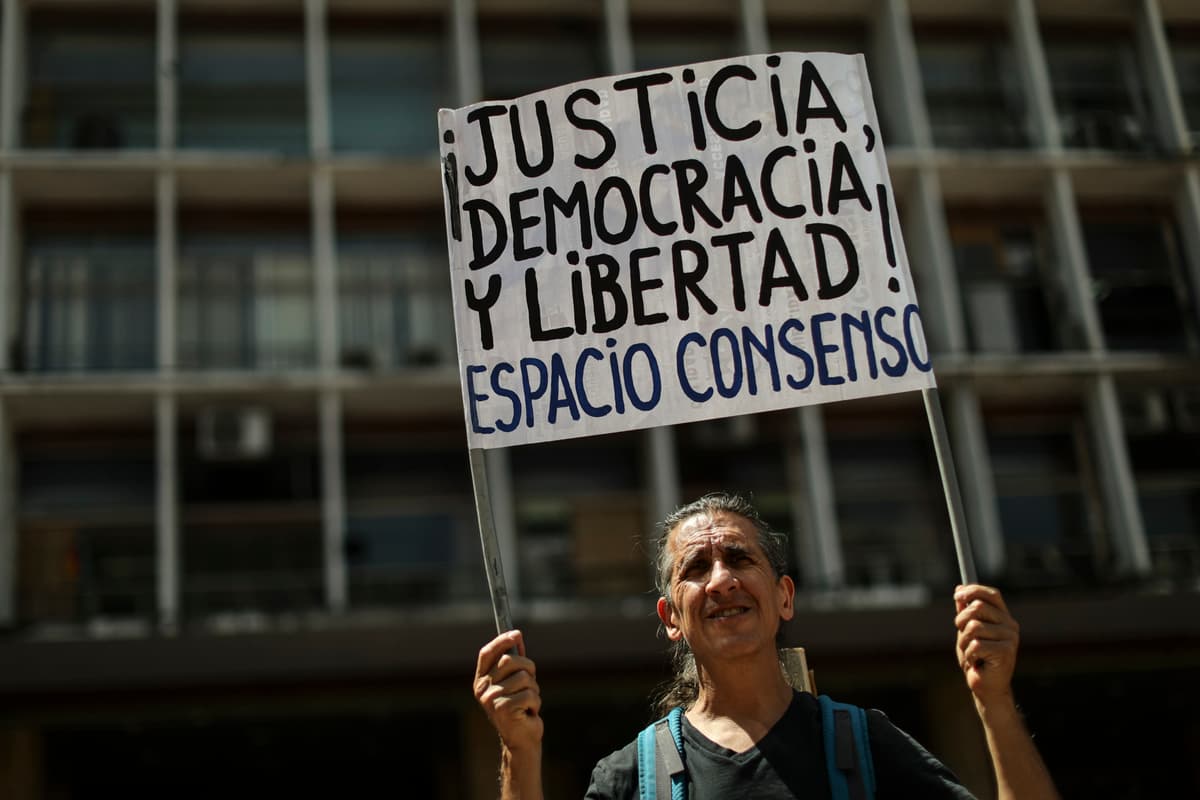
For Lasting Stability, Venezuela Needs a Peace Process
U.S. Delta Force captured President Nicolás Maduro in December, installing Vice President Delcy Rodríguez as acting leader with a narrow mandate to open the oil sector to American firms. Analysts argue that Venezuela’s long‑term stability hinges on a comprehensive peace...

Was Targeting Ayatollah Khamenei and Other Iranian Leaders Lawful? What Precedents Does It Set?
The latest Israel‑U.S. campaign that killed Iran’s supreme leader Ali Khamenei and other senior officials raises complex questions about the law of armed conflict (LOAC). Under LOAC, state leaders can be lawfully targeted if they are combatants or civilians directly participating...

Double Preemption, Imminence, and the U.S. Attack Against Iran
U.S. officials, led by Secretary of State Marco Rubio, framed the March 2026 strike on Iran as a pre‑emptive, or anticipatory, act of self‑defense, arguing that an imminent Israeli attack would trigger Iranian retaliation against U.S. bases. The justification hinges...
How a Broadly Defined Counterterrorism Statute Could Be Abused
A superseding indictment in Texas adds material‑support‑to‑terrorism charges under 18 U.S.C. § 2339A to nine defendants accused of shooting a police officer during a July 4, 2025 protest at an ICE detention center. The statute, originally crafted to disrupt terrorist logistics, does not require proof...

Russia’s Big War at Four: Ukraine Keeps Fighting and Keeps Talking
Ukraine has emerged from its harshest winter with its power grid crippled by Russian attacks that cut electricity production by roughly 80%, yet civilian life in Kyiv continues thanks to generators and restored heating. On the battlefield, the front remains...

The Trump Administration’s Theory of Constitutional War Powers: “The President Could Decide”
The Justice Department’s Office of Legal Counsel released a memorandum justifying the Trump administration’s 2025 Venezuela operation, revealing that the memo places the decision on the president’s authority rather than providing an independent legal determination. It concedes a lack of...

International Reactions to Military Strikes on Iran: A Tipping Point for the UN Charter?
President Donald Trump announced that U.S. forces have launched major combat operations against Iran, a move widely regarded as a clear breach of Article 2(4) of the UN Charter. An emergency UN Security Council session is convening to address the violation....

Digest of Recent Articles on Just Security (Feb. 23-27, 2026)
Just Security’s weekly digest (Feb. 23‑27, 2026) aggregates more than a dozen expert pieces on international law, security, and U.S. policy. Highlights include a two‑part analysis of a lawful peace for Ukraine, a court‑focused critique of ICE and CBP actions, an updated...

Risk of Renewed War in Tigray: Painful Reminders From Ethiopia’s Last War Demand Action to Prevent Another
Renewed fighting erupted in Ethiopia’s Tigray region in January, prompting flight suspensions and mass cash withdrawals as civilians feared a repeat of the 2020‑2022 war. The previous conflict killed up to 600,000 people, displaced millions, and inflicted widespread sexual violence,...

How to Prevent the U.N. Global Counterterrorism Strategy Negotiations From Blowing Up
The United Nations will adopt the ninth Global Counter‑terrorism Strategy (GCTS) by June, marking the 20th anniversary of the original resolution. Recent budget turmoil and Security Council tensions have raised doubts about achieving consensus among 192 member states. Co‑facilitators from...
Early Edition: February 25, 2026
The United States dispatched a dozen F‑22 Raptor jets from the United Kingdom to Israel and has moved more than 150 aircraft to bases across Europe and the Middle East following the collapse of the second round of nuclear talks...

The Army Clause: A Forgotten Constitutional Check on ICE, CBP, and the Pentagon
Congress passed the One Big Beautiful Bill Act, granting $170 billion for ICE, CBP, DHS and the Pentagon over four years, effectively sidestepping the Constitution’s two‑year funding limit for standing armies. The article argues this multi‑year appropriation violates the Army Clause,...

U.S. Allies and Adversaries’ Reactions to Operation Absolute Resolve to Capture Maduro
On Jan. 3 the United States launched Operation Absolute Resolve, a raid that bombed Venezuela’s air defenses, engaged in a gun battle and captured President Nicolás Maduro and his wife, resulting in at least 100 deaths. The UN Security Council...

From Commitment to Action: The Next Steps in Holding Russia’s Leaders Accountable for the Crime of Aggression Against Ukraine
The Special Tribunal for the Crime of Aggression against Ukraine (STCA) was formalised on 25 June 2025 by Ukraine and the Council of Europe, creating a dedicated venue to prosecute Russian leaders for the war of aggression. The ICC lacks jurisdiction because...
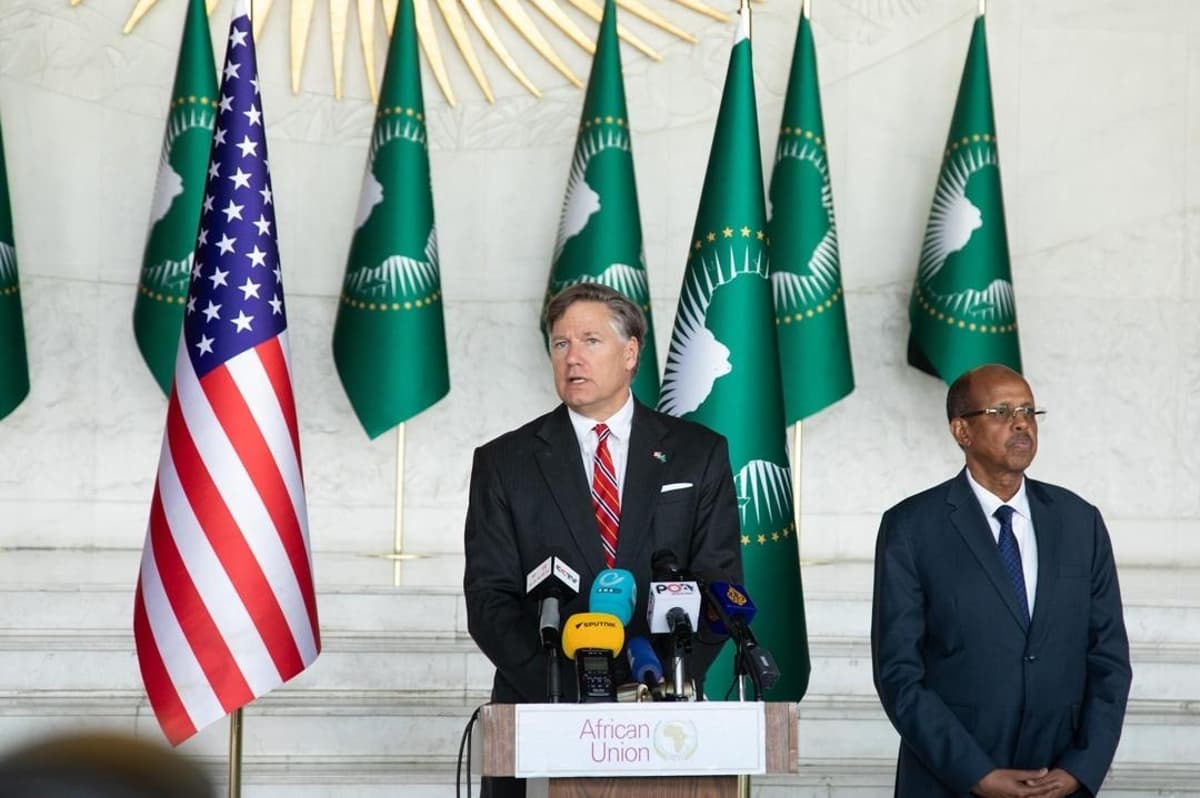
New U.S.–AU Infrastructure Working Group Could Thrive With Strong Values-Based Safeguards
U.S. Deputy Secretary Christopher Landau and African Union Chair Mahmoud Ali Youssouf announced a Strategic Infrastructure and Investment Working Group to deepen U.S.–AU cooperation on trade‑enabling projects. The initiative marks a shift from bilateral deals toward a continent‑wide partnership, but...

Suspend Your Judgment? The Role of International Courts in Ending Wars
International courts are increasingly handling wars as they unfold, moving from traditional dispute settlement to real‑time adjudication. The Balkan conflicts set a precedent, while recent cases involving Russia’s invasion of Ukraine and Israel‑Hamas hostilities illustrate both the ambition and limits...

Governments Need to Disrupt the Business of War Crimes: And No, Sanctions Are Not Enough
The article argues that war crimes and other international atrocities function as lucrative enterprises, yet they are rarely pursued through financial investigations. It calls for extending the global anti‑money‑laundering (AML) framework to treat the proceeds of war crimes as predicate...

Asia’s Administrative Arms Race: How U.S.-China Strategic Competition Is Reshaping Economic Statecraft
China has invoked its Export Control Law to ban dual‑use exports to Japan and tighten rare‑earth licensing, signaling a new escalation in its diplomatic dispute with Tokyo. The move follows a broader trend of Beijing building offensive economic statecraft tools,...