
The Healing Power of Nature Reduces Stress, Anxiety and Depression
A second‑order meta‑analysis of more than 3,800 studies involving over 10 million people finds that direct contact with natural environments consistently reduces symptoms of anxiety and depression while enhancing relaxation. The review, published in Nature Human Behaviour, quantifies the mental‑health benefits of forest bathing, green‑space exposure, and other nature‑based therapies. Researchers argue that these findings make a strong case for embedding nature into clinical mental‑health strategies and urban‑planning policies. However, they caution that high‑quality randomized trials are still required to translate the evidence into practice guidelines.

A Systematic Overview and Second-Order Meta-Analysis of Nature-Based Interventions for Stress, Anxiety and Depression
Researchers performed a preregistered systematic overview and second‑order meta‑analysis of nature‑based interventions (NBIs) across 116 systematic reviews and 30 meta‑analyses, encompassing 3,870 primary studies and an estimated ten million participants. The analysis found NBIs significantly reduced negative mental‑health outcomes (overall...

Methodological Considerations for Evaluating Policy Impacts on Transgender and Non-Binary Youth Suicidality
The authors of a new Nature Human Behaviour paper critique a recent study that used difference‑in‑differences analysis to claim anti‑transgender legislation raises suicide attempts among transgender and non‑binary youth. They point out that post‑treatment data are heavily concentrated in a...
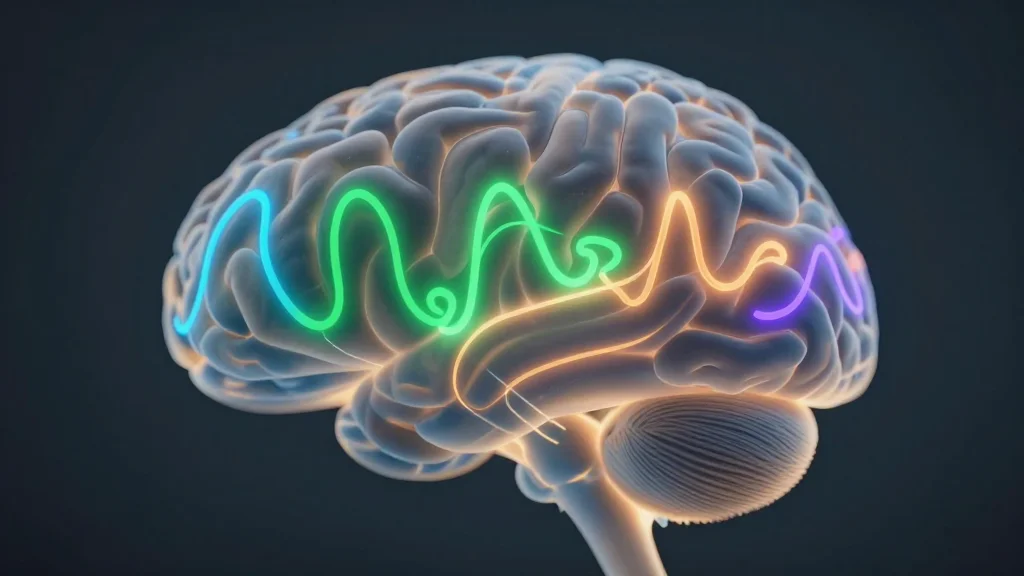
Thalamic Oscillations Distinguish Natural States of Consciousness in Humans
A new human study recorded thalamic activity across wakefulness, non‑REM, REM sleep and anesthetized states, showing that each natural state of consciousness is marked by a distinct oscillatory pattern. Low‑frequency spindles dominate deep sleep, while beta‑range bursts emerge during arousal...

Why Social Media Research Has Failed Policy-Makers
Recent research published in Nature Human Behaviour argues that the bulk of studies linking adolescent mental health to social‑media use suffer from weak causal inference and overlook the “cost of missing out” (COMO) – the social penalty of exclusion. The...

Long-Term Memory Reorganization of Navigational Episodes
Researchers examined how real‑world navigational memories change over delays ranging from six days to three decades using Berlin Zoo visitors and immersive VR. Performance on egocentric and allocentric tasks declined nonlinearly with time, best captured by a power‑law regression that...

Polygenic Risk Scores Are Not Genetic Predispositions
The authors argue that polygenic risk scores (PRS) should not be described as genetic predispositions because they are statistical aggregates of population‑level DNA associations, not intrinsic, stable traits. PRS accuracy hinges on the reference population, environmental context, and the underlying...

To Regulate Vaping We Need Pragmatic, Evidence-Based Policy
A coalition of leading public‑health researchers argues that vaping policy must be grounded in pragmatic, evidence‑based standards. The authors synthesize recent data showing e‑cigarettes can lower smoking rates when regulated proportionally, while warning that overly strict rules may push youth...

E-Cigarettes Increase Harm and Should Be Discouraged
A new study published in Nature Human Behaviour argues that electronic cigarettes, long promoted as a safer alternative to smoking, actually increase health risks and should be discouraged. The authors, Ling and Glantz, cite a growing body of epidemiological and...

Digital CBT Reduces Mental Disorders and Boosts Access to Care in College Students
A population‑based randomized trial across 26 U.S. colleges tested a digital cognitive‑behavioral therapy (CBT) guided self‑help program delivered after universal mental‑health screening. Over a two‑year follow‑up the intervention lowered the combined prevalence of anxiety, depression and eating disorders by roughly...

Human Gloss Perception Reproduced by Tiny Neural Networks
Researchers trained extremely shallow convolutional neural networks on thousands of human gloss judgments and found that even a single‑kernel model can predict perceived glossness with about 75% of the human‑to‑human consistency ceiling. Networks with three convolutional layers approach the full...

Social Functioning in Autism: A Systematic Review and Meta-Analysis
Researchers conducted the largest systematic review and meta‑analysis of social functioning in autism, integrating 2,622 behavioural studies that encompassed 94,114 autistic and 172,847 neurotypical participants across 32 countries. The analysis identified five clustered social domains and found a substantial overall...

Population-Based RCT of a Digital Cognitive-Behavioural Guided Self-Help Intervention for Anxiety, Depression and Eating Disorders in College Students
A population‑based randomized controlled trial evaluated a digital cognitive‑behavioral therapy (CBT) guided self‑help program targeting anxiety, depression, and eating disorders among U.S. college students. The study screened over 26,000 students across 26 cohorts, enrolling 4,500 participants who received weekly coach‑supported...

An Individual Participant Data Meta-Analysis of How Physical Activity Relates to Affective Well-Being in Daily Life
A new individual‑participant data meta‑analysis pooled 67 intensive‑longitudinal studies from 14 countries, covering 8,223 adults and nearly one million hours of accelerometer‑measured physical activity. The analysis shows that, within individuals, more activity—especially walking—raises energetic arousal, positive affect and valence, while...

Ancient DNA Evidence for the History of the Albanians
Researchers analyzed more than 6,000 ancient West Eurasian genomes together with 74 newly sequenced present‑day ethnic Albanians. Using identity‑by‑descent detection, they found a strong genetic continuity from Late Bronze‑Age and Iron‑Age populations in the western Balkans into early medieval Albania....