New Space Economy
Covers commercial space ventures, markets, and economic impacts
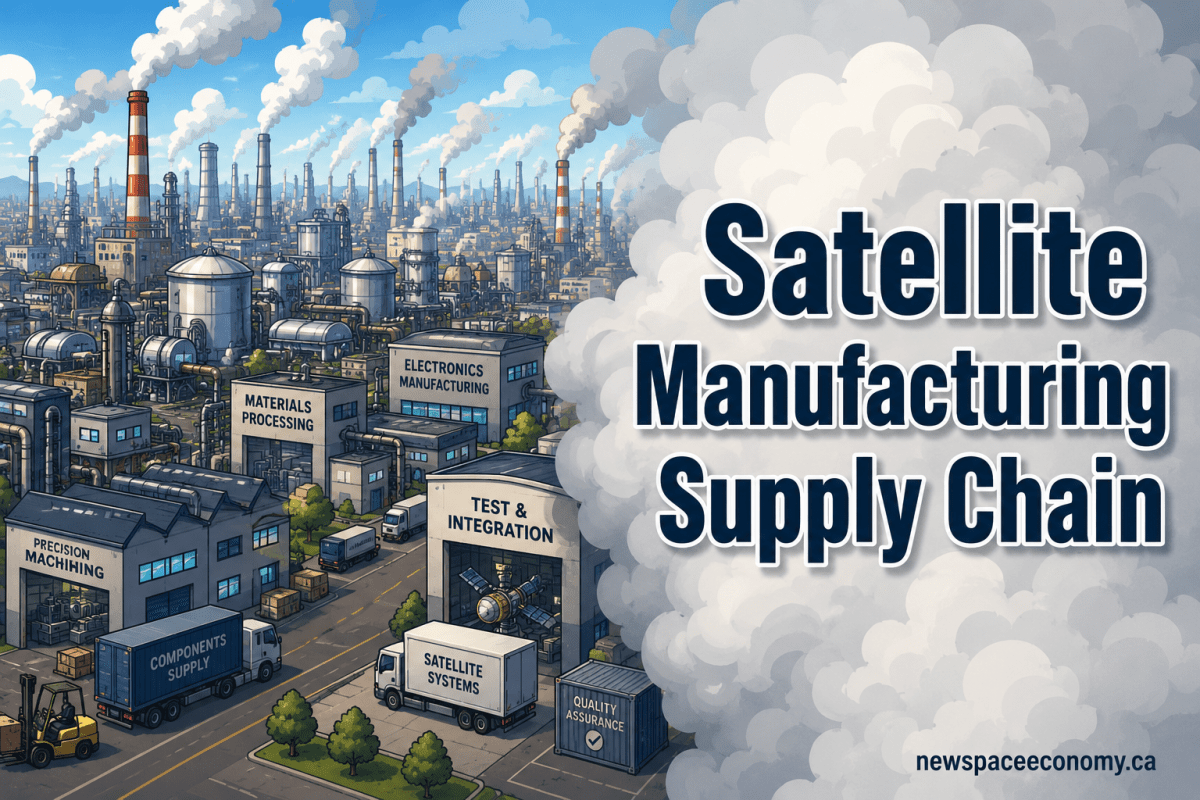
Satellite Manufacturing Supply Chain and the Industrial Base Behind Modern Spacecraft
Satellite manufacturing generated $17.2 billion in 2023, a modest slice of the $613 billion global space economy but a critical conversion hub for materials, electronics, and software into orbiting assets. The rise of low‑Earth‑orbit constellations is shifting the industry from one‑off, high‑value builds to repeatable, high‑volume production lines, demanding tighter supplier coordination and automated testing. Supply‑chain resilience now hinges on export‑control compliance, radiation‑hard electronics qualification, and the ability to secure strategic components such as solar cells and microelectronics, highlighted by recent U.S. CHIPS‑for‑America awards. These dynamics reshape cost structures, schedule risk, and national security considerations across commercial, civil, and defense programs.
Chinese Reusable Orbital Launch Vehicles
China’s reusable launch sector has moved from concept to flight‑test, with LandSpace’s Zhuque‑3, SAST’s Long March 12A, CAS Space’s Kinetica‑2 and Space Pioneer’s Tianlong‑3 all attempting orbital missions by June 2026. All four vehicles reached orbit or attempted launch, but none achieved a successful...

How Does Starship Compare to Falcon 9, Falcon Heavy, New Glenn, Vulcan, Nova, and Neutron?
SpaceX’s Starship promises over 100 metric tons to low‑Earth orbit in a fully reusable configuration, but as of June 2026 it remains a test‑flight program under FAA review. By contrast, Falcon 9 is the only operational, high‑cadence reusable launcher, while Falcon Heavy, New Glenn, and ULA’s...

What Does Sovereign AI Mean?
Sovereign AI is a policy framework that lets nations control the full AI stack—compute, data, models, talent, standards and governance—without relying on foreign cloud platforms or legal regimes. Canada’s June 2026 AI Sovereign Compute Infrastructure Program and AI for All strategy earmark roughly...
What Does the ISS Air Leak Emergency Reveal About the Aging Space Station?
On June 5, 2026 NASA ordered the four Crew‑12 astronauts to shelter inside their docked SpaceX Crew Dragon after a leak in the Russian Service Module Transfer Tunnel accelerated to roughly two pounds of air per day. The incident moved the ISS from...
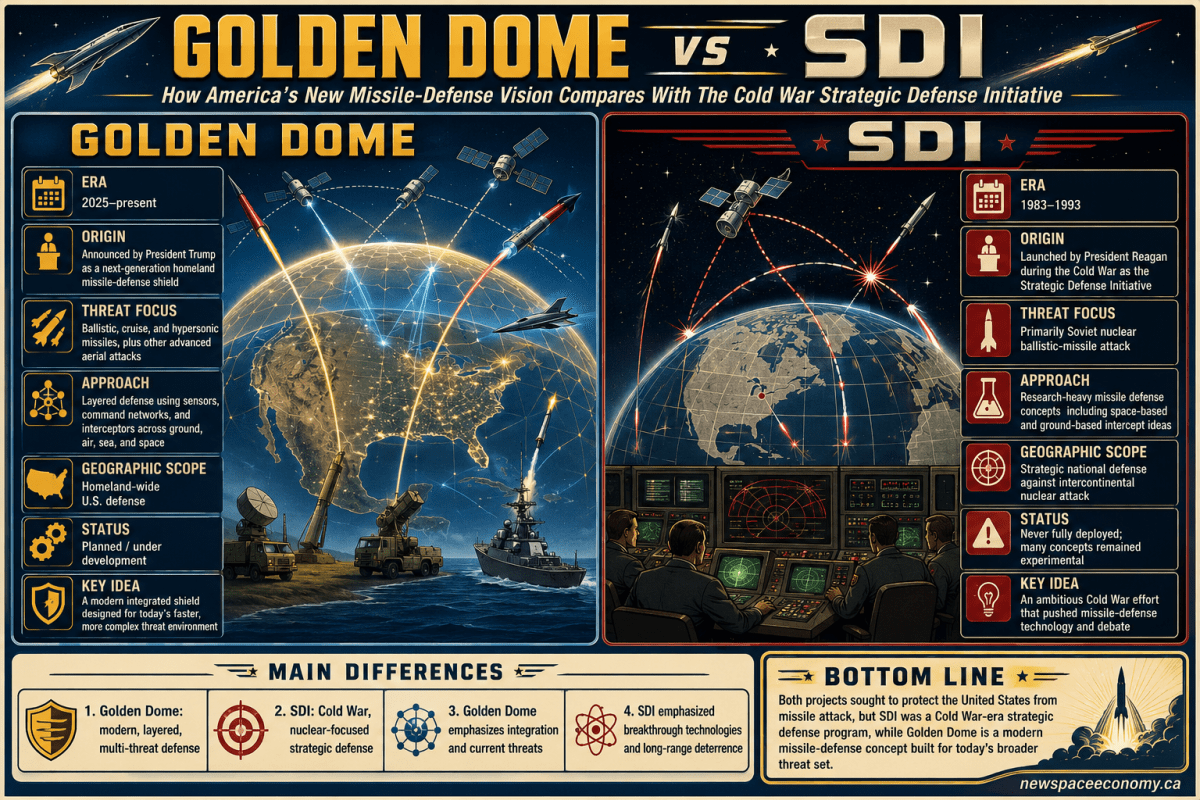
Is Golden Dome Another SDI?
The Pentagon’s Golden Dome program, launched under the 2025 “Iron Dome for America” executive order, aims to build a layered, space‑centric shield against ballistic, hypersonic and cruise missile threats. Unlike Reagan’s Strategic Defense Initiative, Golden Dome relies on commercial low‑Earth‑orbit...
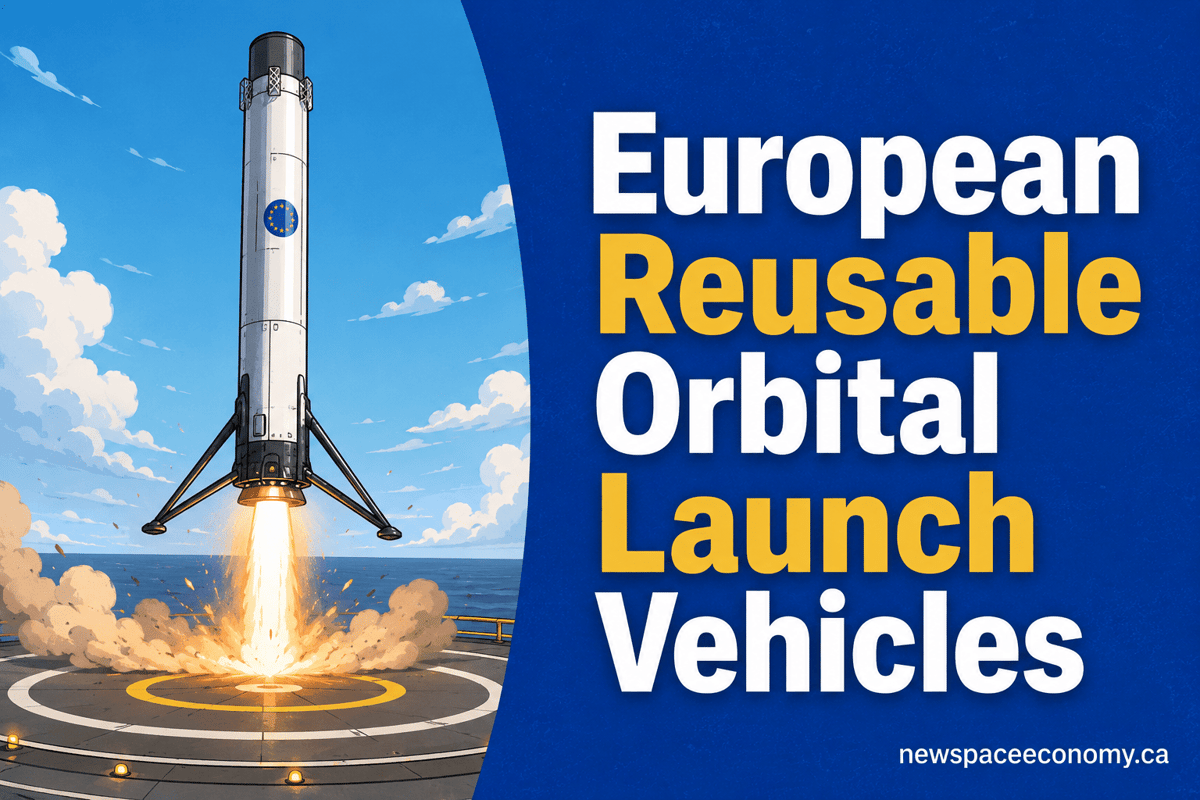
European Reusable Orbital Launch Vehicles
The article outlines Europe’s emerging reusable launch ecosystem, focusing on ESA’s Themis demonstrator, commercial ventures MaiaSpace and PLD Space, and the ESA Launcher Challenge that turns ESA into a launch‑service customer. While hardware and funding are advancing, Europe still lacks...
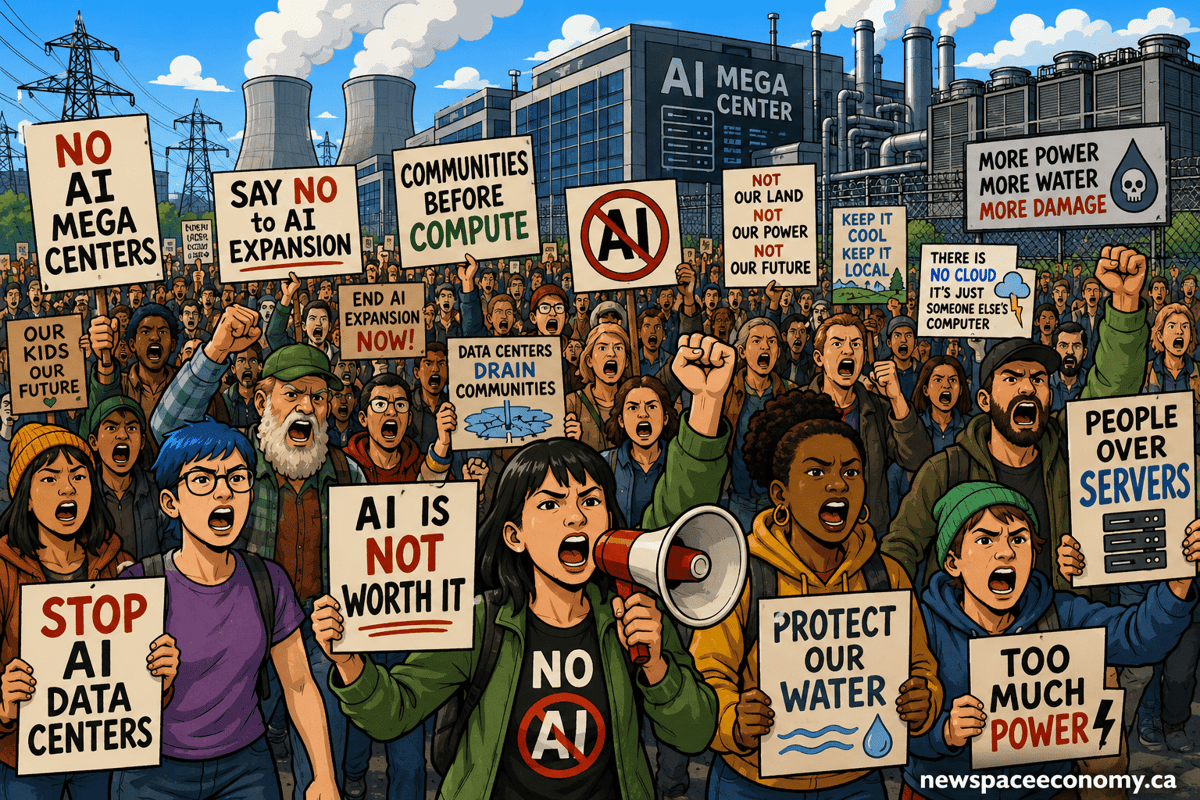
What Are the Main Public Concerns About AI in 2026?
In 2026 public sentiment toward artificial intelligence diverges sharply from expert optimism, with surveys showing only a minority of Americans feeling confident about AI’s impact. Major concerns center on job displacement, misinformation from deepfakes, privacy erosion, and the physical footprint...

Who Holds AI Market Share in 2026, and Where Does Each Vendor Win?
AI market share in 2026 is fragmented across the technology stack, with different vendors leading each layer. NVIDIA commands the high‑end accelerator market, while AWS holds the largest cloud infrastructure share at 28%. Microsoft leverages its enterprise software ecosystem to...
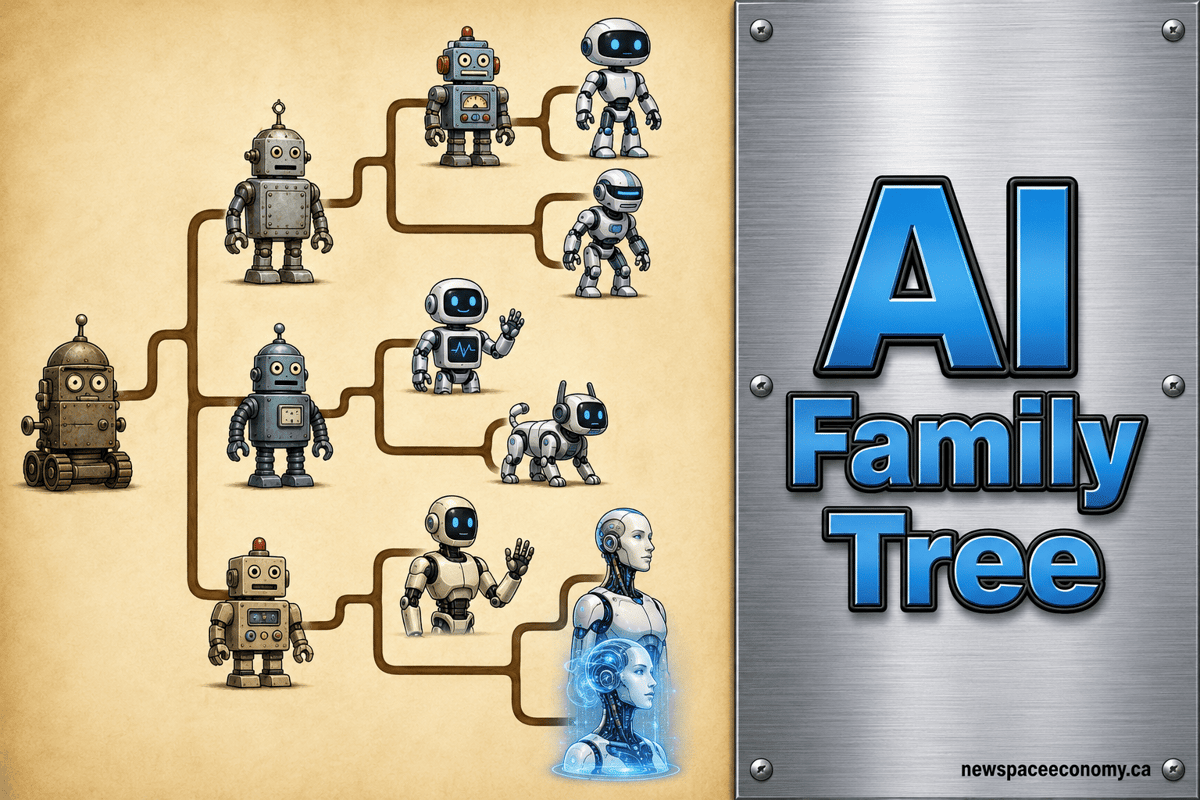
What Is the AI Taxonomy for Technology and Markets?
AI taxonomies categorize technology, vendors, markets, regulation, and workloads, starting with the specific AI workload—training, inference, fine‑tuning, retrieval‑augmented generation, and evaluation. Gartner projects $2.52 trillion in global AI spending for 2026, making a clear taxonomy essential for allocating capital across chips,...
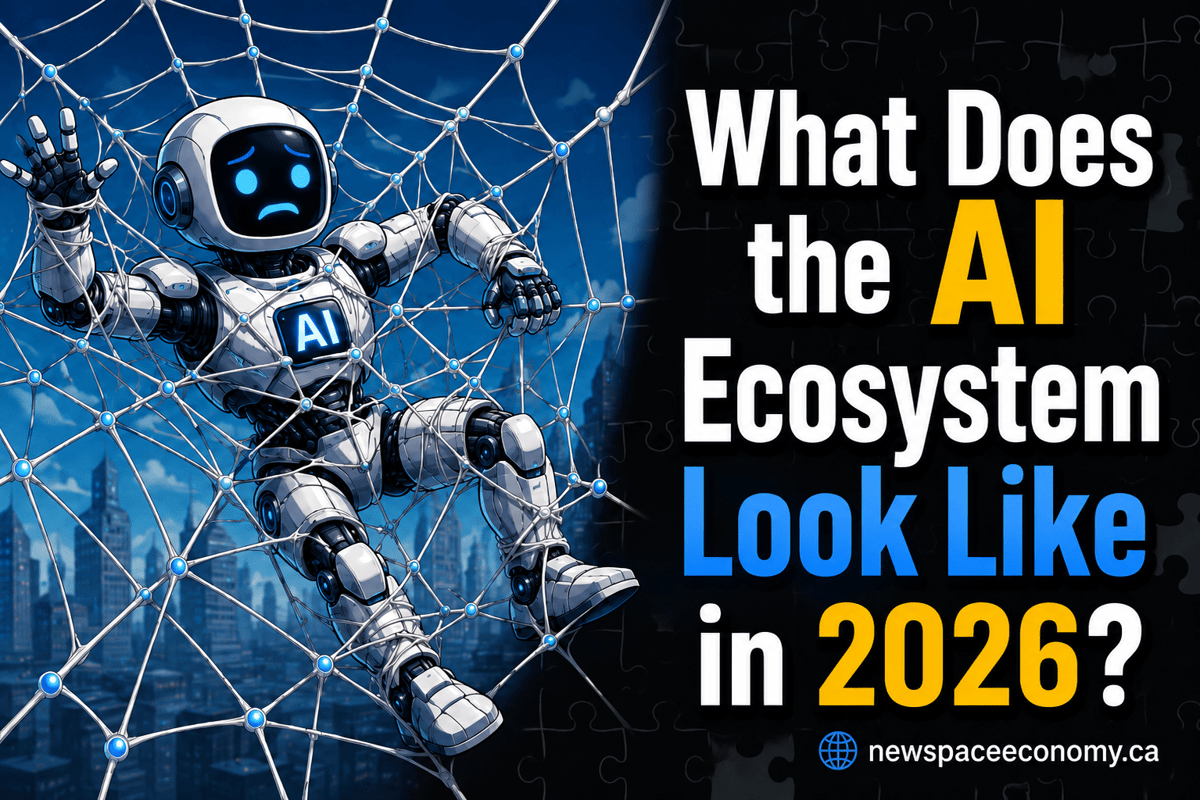
What Does the AI Ecosystem Look Like in 2026?
The 2026 AI ecosystem is dominated by compute, models, data, cloud platforms and enterprise workflows, with the United States leading private AI investment at $285.9 billion in 2025, far outpacing China. Gartner projects total AI spending to reach $2.52 trillion this year,...
What Are the Main AI Risks in 2026?
The 2026 Stanford HAI AI Index recorded 362 AI incidents in 2025, highlighting that AI risks now stem from large‑scale deployment rather than isolated experiments. Organizations often launch models faster than they establish monitoring, audit trails, and human‑in‑the‑loop controls, exposing...
We Pumped So Much Groundwater That Earth’s Spin Shifted
Between 1993 and 2010 humans extracted roughly 2,150 gigatons of groundwater, moving it to the oceans. The mass shift added about 6 mm to global mean sea level and nudged Earth’s rotational pole eastward by roughly 78 cm. By comparing observed polar motion...

What Do AI Conspiracy Theories Reveal About Trust in 2026?
AI conspiracy theories have surged in 2026 as generative tools become ubiquitous in daily life, from chatbots that confidently err to deepfakes that mimic public figures. The article explains how real technical risks—hallucinations, bias, and opaque algorithms—blend with unfounded claims...

SpaceX Milestone Promises and Completion Record
SpaceX’s milestone record, detailed in a June 1, 2026 analysis, separates public announcements from verifiable completions across launch vehicles, crew transport, satellite services, and emerging concepts. The company has turned early aspirations into operational capabilities such as Falcon 9 reusable boosters, Crew Dragon crew...