
Distributed Quantum Sensing Achieves 1/N^2 Precision Without Entanglement
Researchers introduced a distributed quantum sensing protocol that uses a causal‑order switch instead of entangled probes, achieving a 1/N² precision scaling. The method was experimentally validated in a free‑space optical network with up to nine sensors, delivering picoradian‑scale tilt‑angle estimation. By coupling weak‑value amplification with the causal‑order strategy, the system surpasses the traditional Heisenberg limit and demonstrates a robust, scalable route for high‑precision measurement networks.

Quantum Networks Achieve Accurate PDE Solutions, Advancing Physics-Informed Neural Networks
Scientists from the German Aerospace Center unveiled quantum‑enhanced physics‑informed neural networks (qPINNs) that fuse variational quantum circuits with classical layers to solve nonlinear partial differential equations. In benchmark experiments qPINNs achieved comparable mean‑squared‑error to classical PINNs while requiring roughly ten‑fold...

Qufid Advances Quantum Program Fidelity Estimation with Adaptive Measurement Budgets
Researchers from Zhejiang University introduced QuFid, an adaptive framework that estimates quantum program fidelity by dynamically allocating measurement shots. By modeling circuits as directed acyclic graphs and integrating real‑time statistical feedback, QuFid quantifies structural complexity and hardware‑specific noise without pre‑calibrated...
Llms Achieve 206% Improvement with Codified Expert Knowledge for AI Agents
Researchers at Siemens and Eindhoven University unveiled a software‑engineering framework that captures human expert knowledge and embeds it into large language models using a request classifier, Retrieval‑Augmented Generation, and thousands of codified rules. The augmented LLM generated simulation‑data visualisations with...
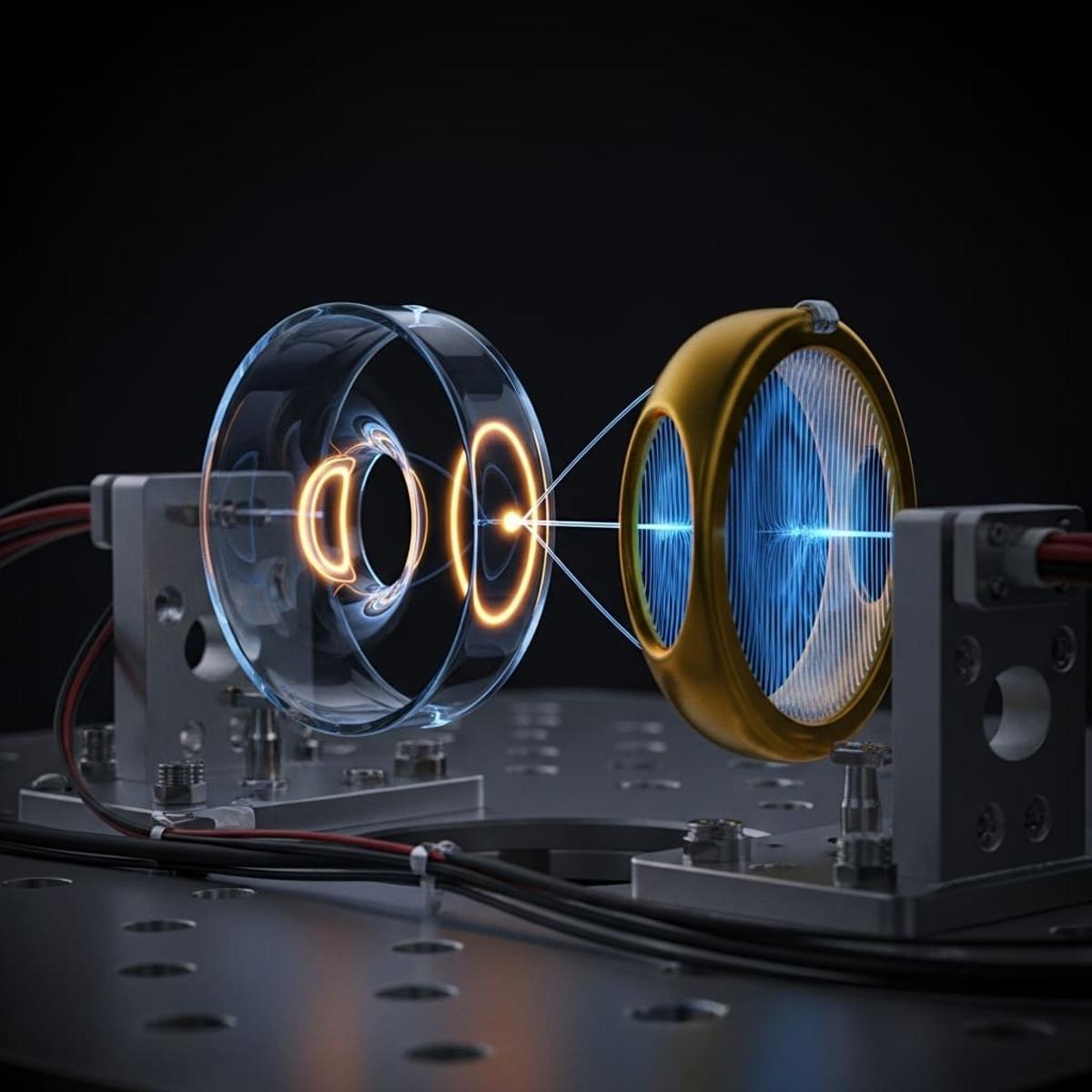
Resonant Cavity Transducer Achieves Percent-Level Microwave to Telecom Photon Conversion
Researchers at the University of Pittsburgh and Skyworks have demonstrated a bulk lithium‑niobate resonant transducer that converts microwave photons to telecom‑band optical photons with percent‑level efficiency at room temperature. The device uses an all‑dielectric design, integrating the crystal into a...
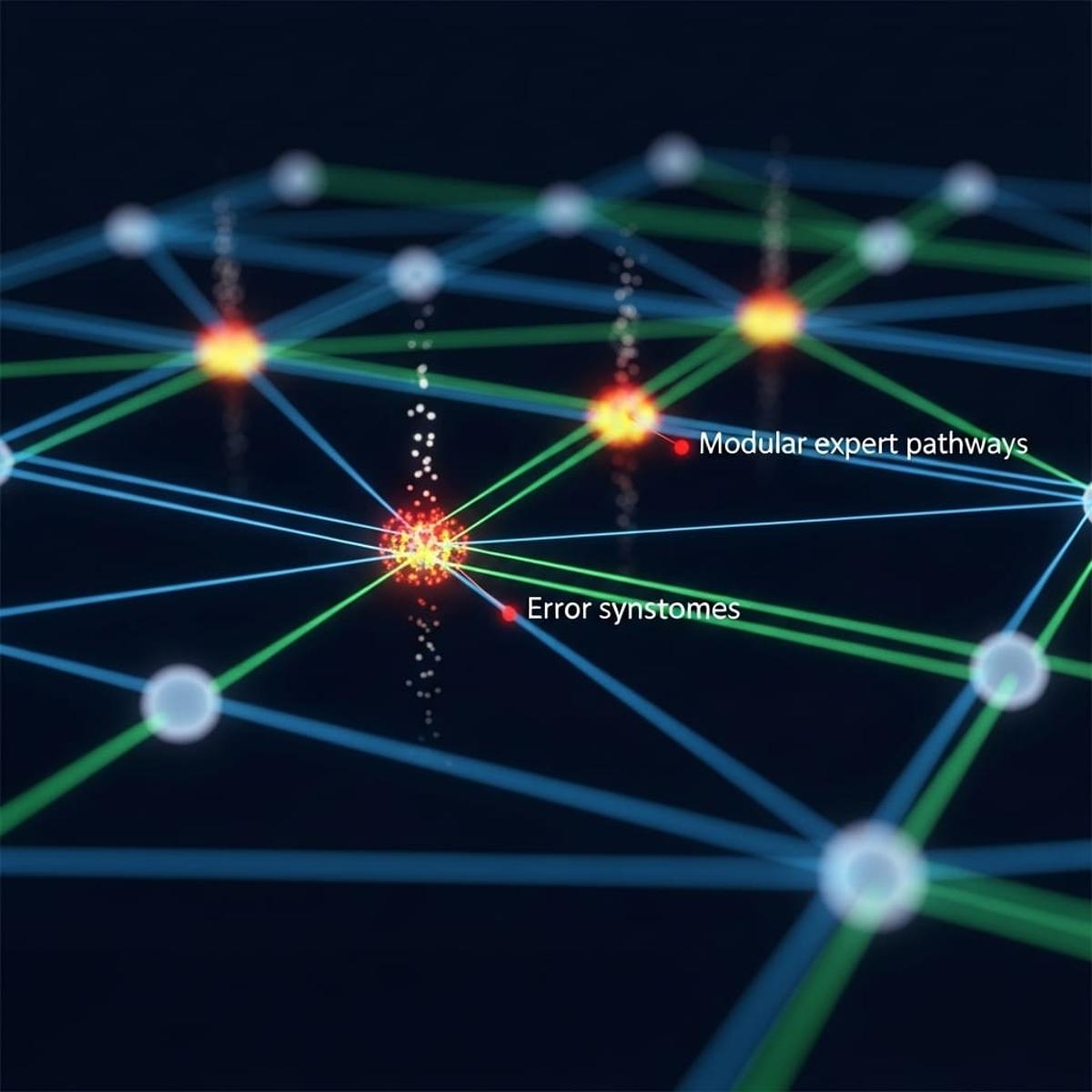
Mixture of Experts Vision Transformer Achieves High-Fidelity Surface Code Decoding
Researchers introduced QuantumSMoE, a vision‑transformer‑based decoder that integrates a mixture‑of‑experts (MoE) layer to tackle surface‑code error correction. By embedding the toric code’s geometry through plus‑shaped patches and adaptive masking, the model captures local lattice interactions while maintaining global context. Experiments...
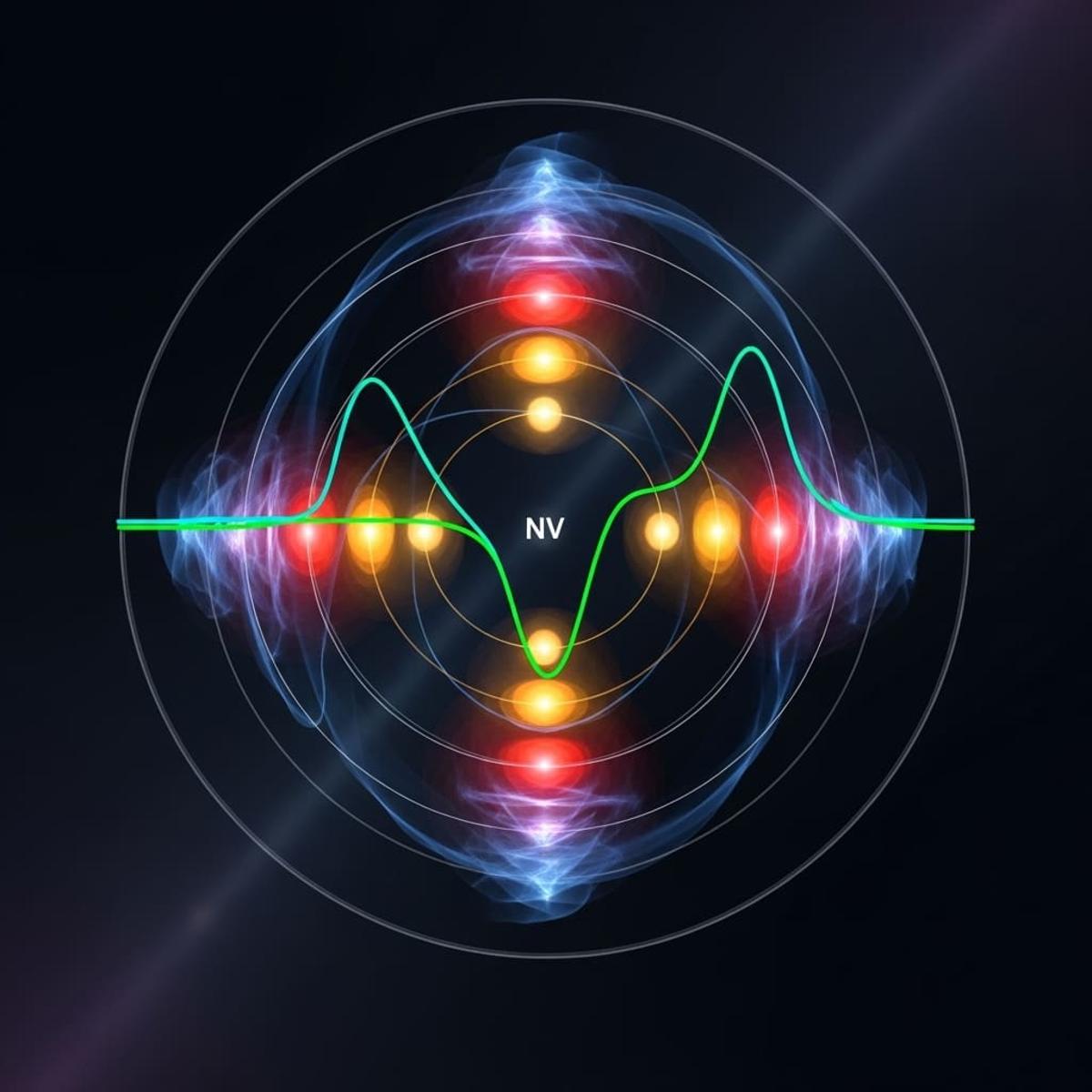
Simulation Toolkit Advances Realistic Noise Modelling for Seven-Level Nv-Center Magnetometry
Researchers from TCS and IISER Bhopal introduced QDsiM, a noise‑aware simulation toolkit that acts as a digital twin for continuous‑wave wide‑field ODMR in nitrogen‑vacancy (NV) diamond magnetometers. The seven‑level model captures laser power, microwave power, beam waist, integration time, and...

Lumos Achieves Efficient Fluorescent Molecule Design with Data-Physics Driven Generative Frameworks
Researchers introduced LUMOS, a data‑physics driven framework that directly links molecular specifications to fluorescent structures, bypassing traditional generate‑and‑screen cycles. By coupling a generative model with fast TD‑DFT‑based predictors in a shared latent space, LUMOS can simultaneously optimise multiple optical and...
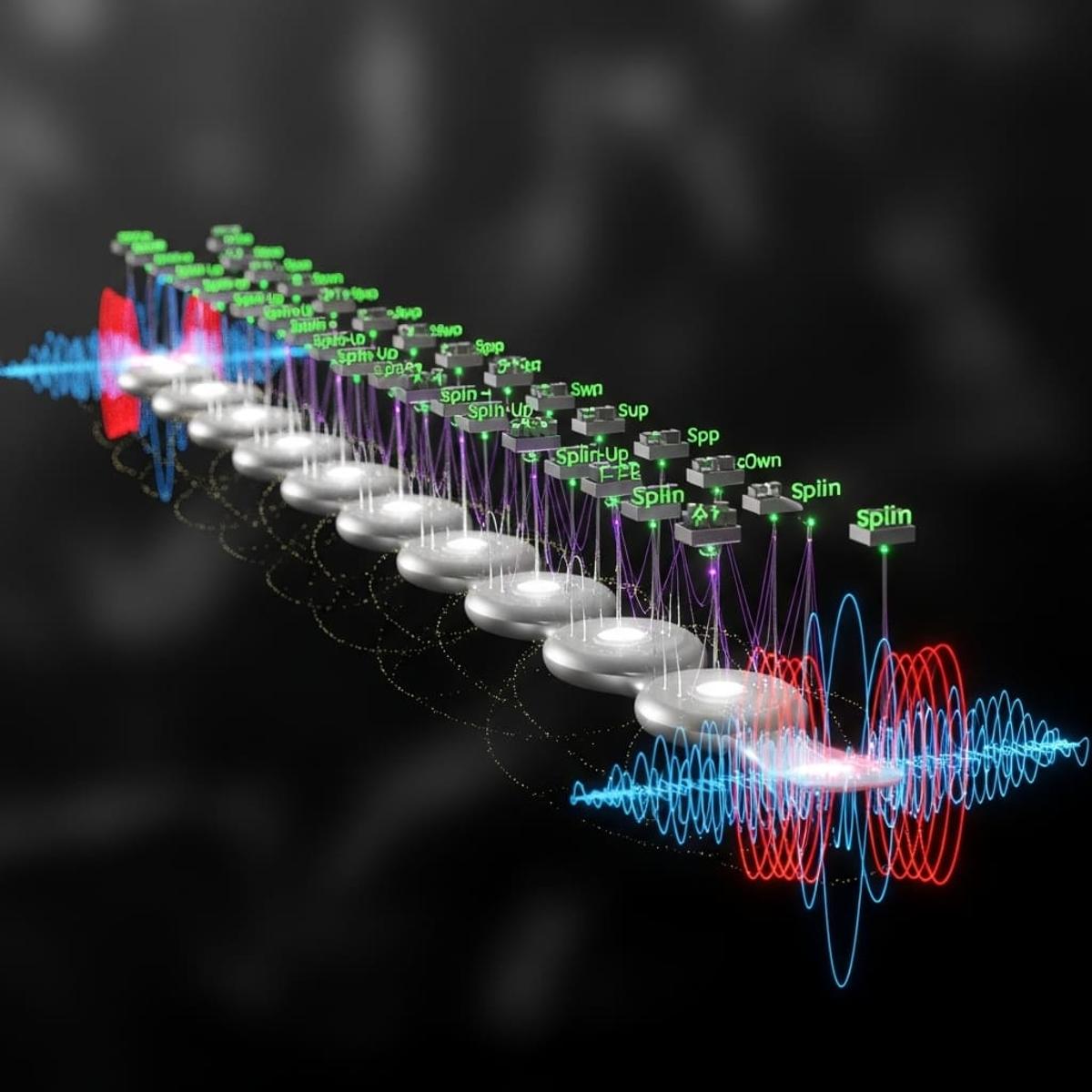
Spin Control Advances Kitaev Chain Coherence, Enabling Exponentially Scalable Qubits
Researchers at QuTech and Delft demonstrated spin‑based control of phase differences in Kitaev chains, eliminating the need for external magnetic flux. Using a three‑site InSbAs 2DEG device with quantum‑dot‑superconductor hybrids, they tuned the superconducting phase via the spin state of...
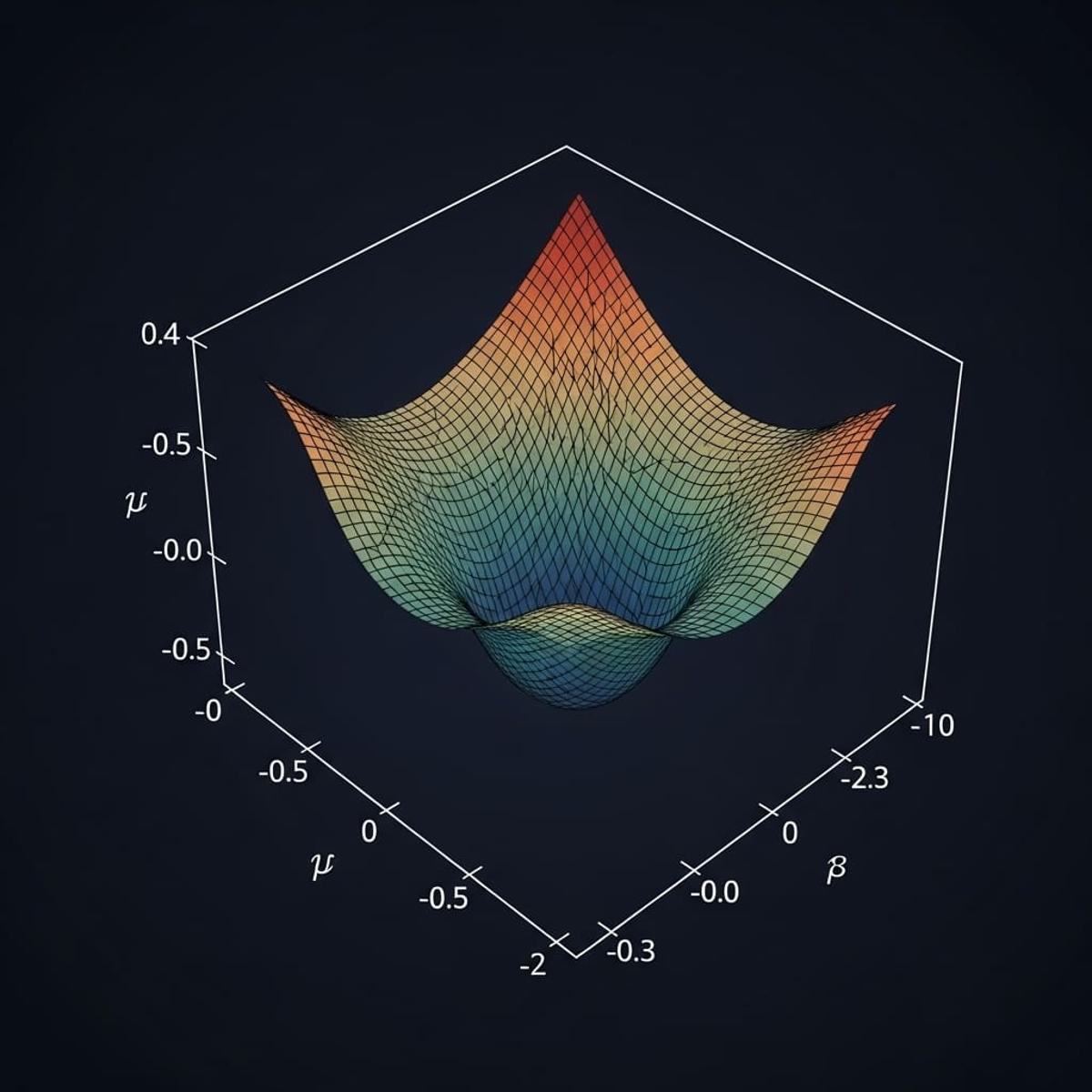
Wh Statistics Achieves Unified Framework with Λ, \K{appa} & Γ Parameters
Researchers at Harbin Institute of Technology introduced WH Statistics, a unified theoretical framework that incorporates three continuous parameters—λ for particle distinguishability, κ for exclusion weight, and γ for intrinsic symmetry. The model bridges Bose‑Einstein, Fermi‑Dirac, Maxwell‑Boltzmann and anyonic statistics, delivering...
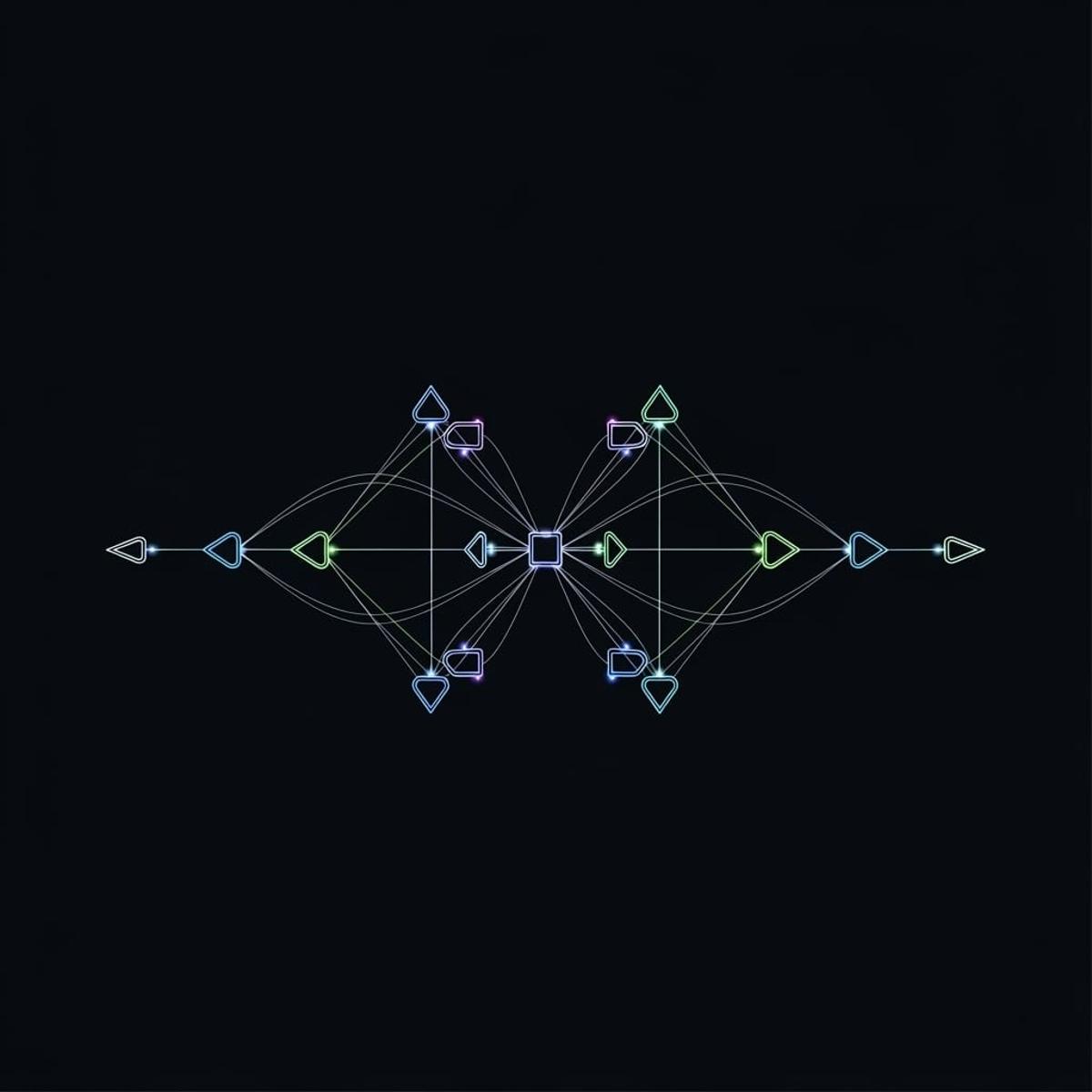
Two-Qubit Gates: Research Achieves Unique Symmetries with Just Two Applications
Researchers Selvan and Balakrishnan show that the B‑gate equivalence class, uniquely symmetric under mirror, inverse, and combined operations, can construct universal two‑qubit circuits with just two non‑local gates. Their geometric analysis identifies one‑parameter families on reflecting planes (e.g., c₁=π/2, c₂=π/4)...

Uav-Deployed QKD Achieves Finite-Key Security with AI-Assisted Calibration
Researchers have introduced a unified channel model for orbital angular momentum (OAM) encoded BB84 quantum key distribution on unmanned aerial vehicles, accounting for Kolmogorov turbulence, pointing misalignment, and aperture clipping. By integrating weak‑plus‑vacuum decoy‑state techniques with a physics‑informed AI module...

Advances Post-Quantum Aggregation with Code-Based Homomorphic Encryption and LPN
Researchers at the Technical University of Munich present a post‑quantum secure aggregation protocol built on code‑based homomorphic encryption under the Learning Parity with Noise (LPN) assumption. The design features a key‑ and message‑additive homomorphic scheme, a committee‑based decryptor realized via...

Quantum Circuit Pruning Achieves 47.7% Fidelity Gain Via Smart Approximation
Researchers at Universitat Politècnica have introduced a routing‑aware pruning technique that removes small‑angle controlled rotations when the SWAP overhead outweighs their benefit. By evaluating fidelity loss from both the gate and the required routing, the method trims up to 48.6%...
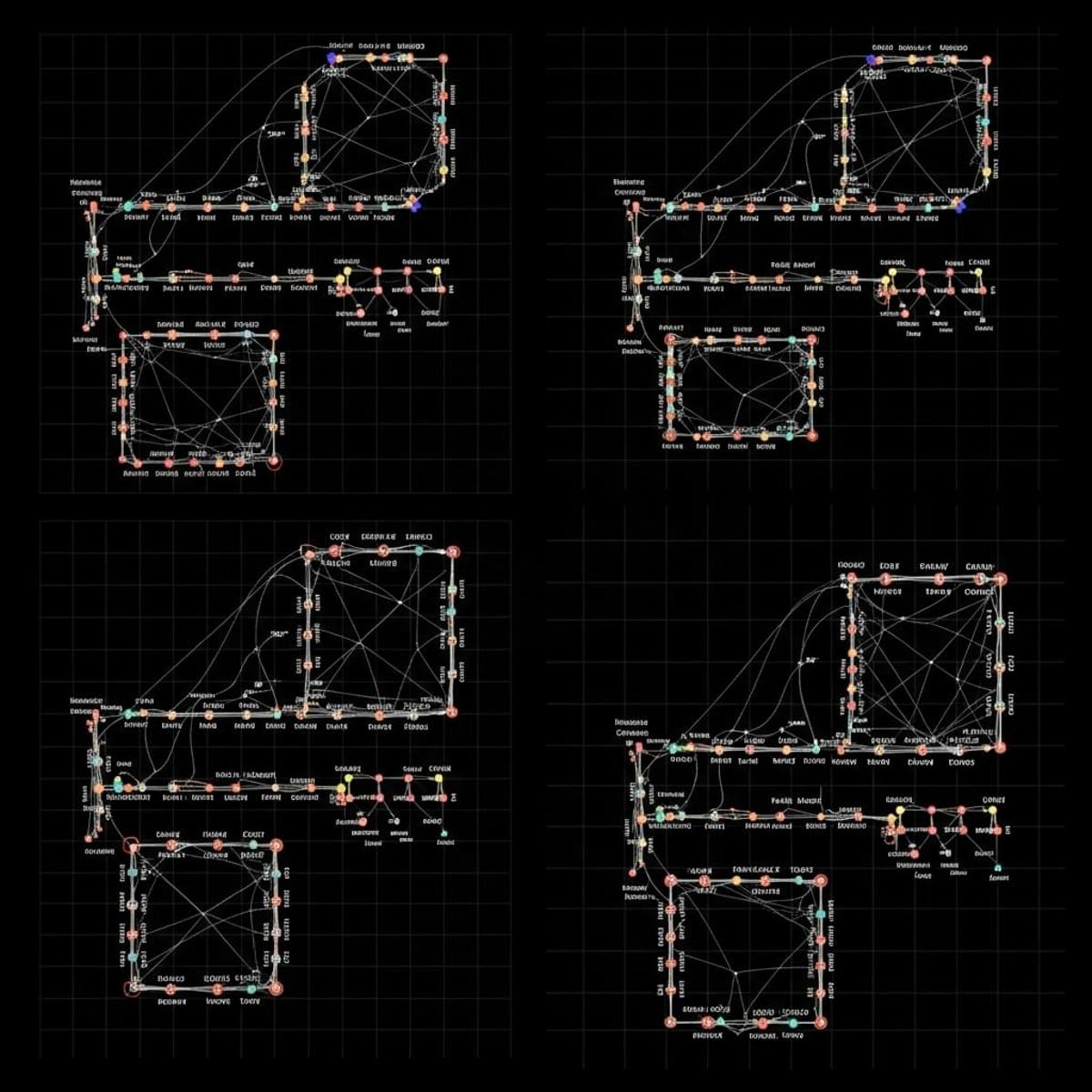
Noise-Aware Quantum Architecture Search Achieves Robust Circuits with Nsga-Ii Algorithm
Researchers at Nanjing University of Science and Technology introduced Noise‑Aware Quantum Architecture Search (NA‑QAS), a framework that embeds a realistic noise model into the training of parameterized quantum circuits. By coupling a hybrid Hamiltonian ε‑greedy evaluation strategy with an enhanced...

SkyWater Technology Warns Quantum Manufacturing Must Stay Onshore for US Leadership
SkyWater Technology warns that without focused U.S. investment, quantum manufacturing could follow the semiconductor industry's offshoring trend. The company emphasizes that scaling quantum devices—through superconducting electronics, cryogenic CMOS, photonics, and advanced packaging—requires domestic fab capacity. SkyWater’s Technology-as-a-Service model offers collaborative...

Colorado School of Mines Launches Quantum Engineering Program with UK’s Universal Quantum Company
The Colorado School of Mines will launch the United States’ first undergraduate Quantum Systems Engineering degree in 2026, with financial and strategic backing from Universal Quantum. The curriculum blends physics, engineering, and computer science to teach systems‑level design, integration, and...
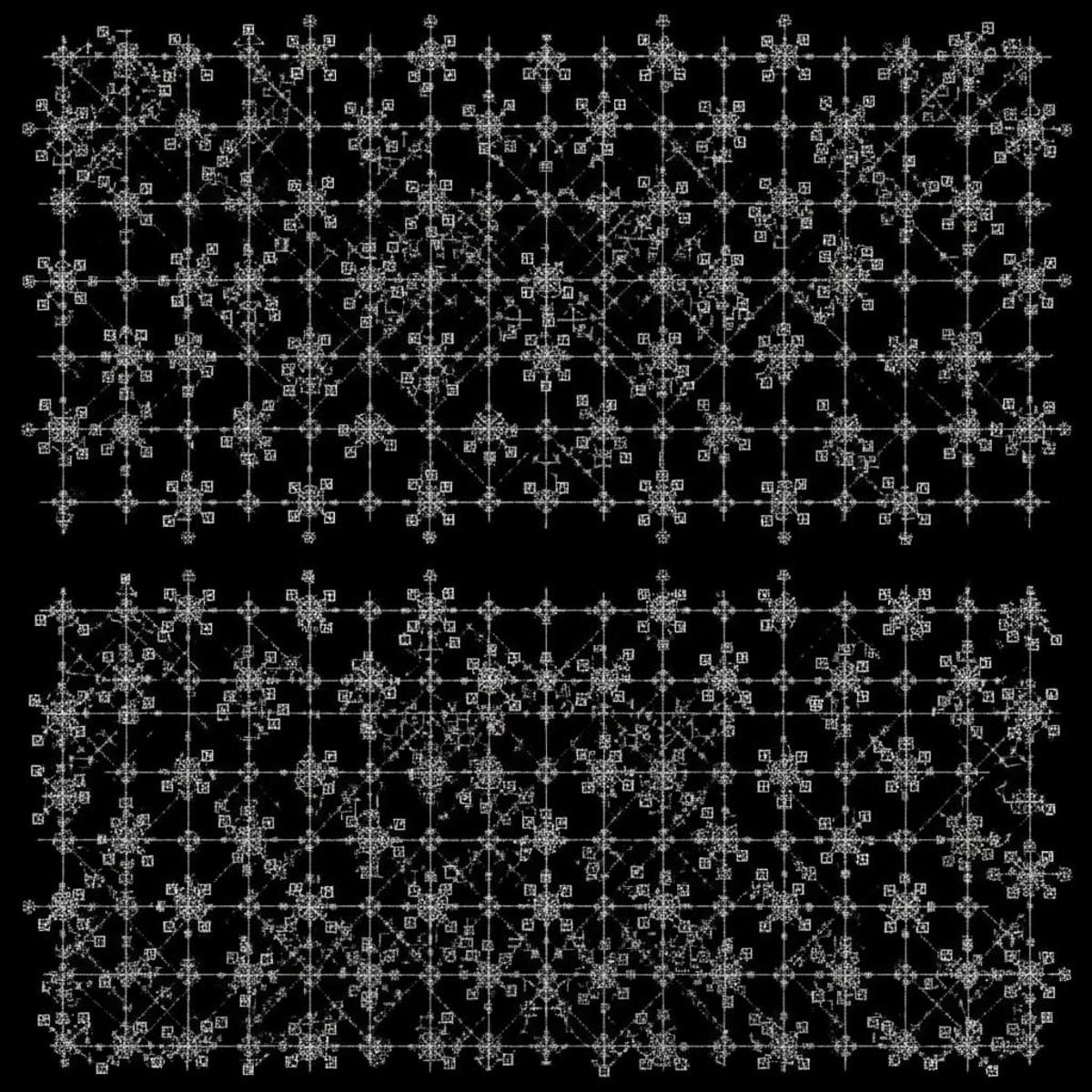
Dmrg Achieves Lowest Energy & Error with Optimal 2D Lattice Layouts
Researchers led by A. Scardicchio have identified a geometric cost function, LA₁⁄₂, that tightly predicts Density Matrix Renormalization Group (DMRG) efficiency on two‑dimensional lattices. By arranging lattice sites along optimal Hamiltonian paths—often derived from Hilbert‑curve heuristics—they cut the required bond dimension...

DOE Awards $875K to Dien Nguyen for Neutron Spin Research
Assistant Professor Dien Nguyen received a $875,000 Early Career Award from the U.S. Department of Energy to probe neutron spin, a notoriously difficult aspect of nuclear physics. The project, conducted with Thomas Jefferson National Accelerator Facility and MIT, will use...

Quantum Trading Achieves 34% Accuracy Increase, Applications Expand Says WEF
Quantum‑enabled algorithmic trading debuted at the World Economic Forum, delivering a 34% boost in forecasting accuracy. The breakthrough marks the first practical quantum deployment in finance, moving the technology from theory to market. Organizers highlighted the potential to overhaul risk...

University at Buffalo Study Reveals Delayed Thermalization for Quantum Computing
A University at Buffalo team discovered that photons and atoms can remain at different temperatures for extended periods, creating a pre‑thermal state that delays thermalization. Their simulations of neutral‑atom arrays inside optical cavities show that this non‑equilibrium condition can persist...

Integrated Quantum Technologies’ AIQu VEIL™ Redefines Scalable, Privacy-Preserving AI
Integrated Quantum Technologies launched AIQu VEIL™, a quantum‑resilient AI platform that processes only anonymized, compressed data via its proprietary Informationally Compressive Anonymization (ICA) technology. The solution promises enterprise‑scale AI performance without exposing raw data, sidestepping the computational penalties of homomorphic encryption...
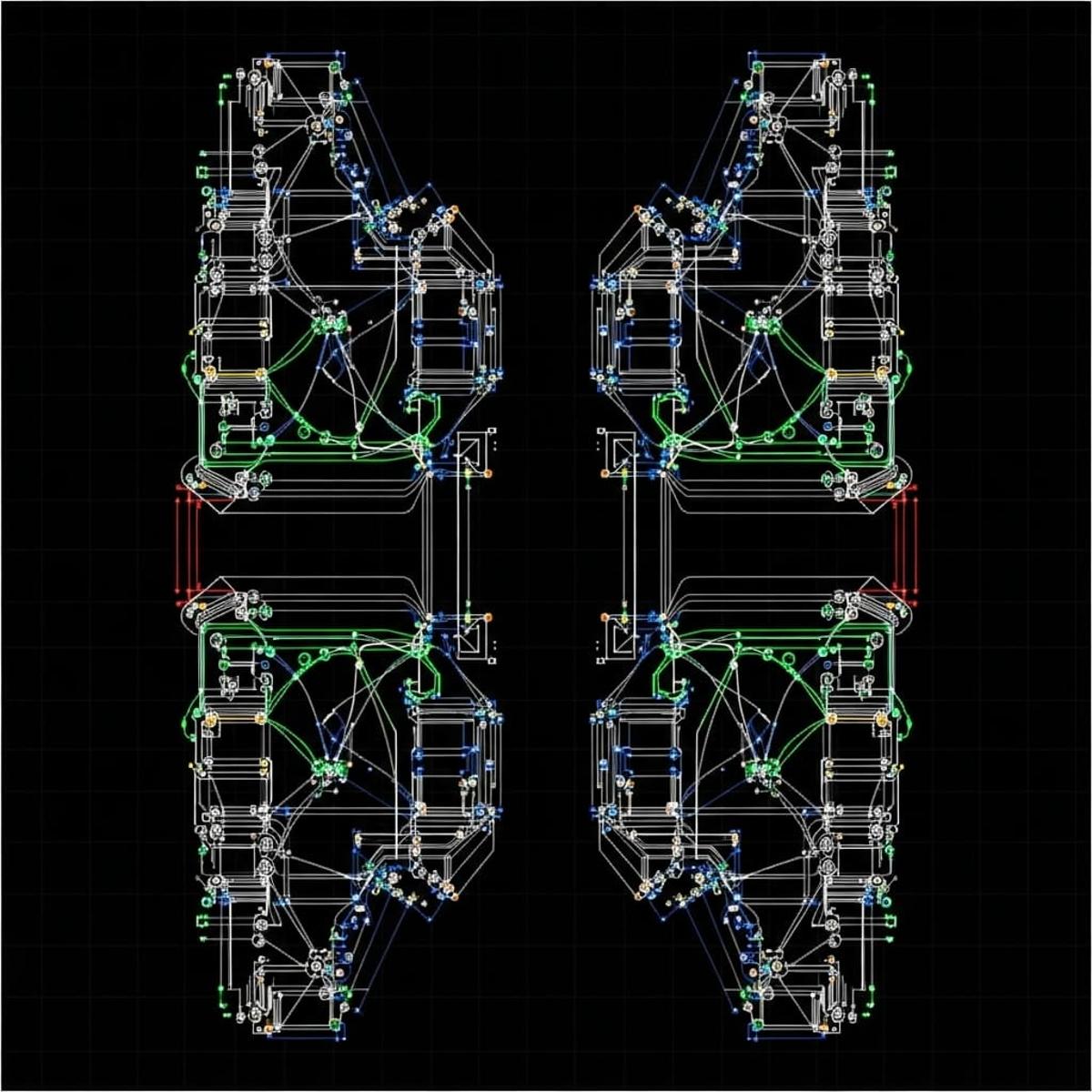
Achieves Four-State Fault-Tolerant Preparation for Steane-Type Quantum Circuits
Researchers at TUM and Munich Quantum Software have introduced an automated method to synthesize fault‑tolerant state‑preparation circuits for any Calderbank‑Shor‑Steane (CSS) code. The approach eliminates the need for large code symmetry groups, enabling constant ancilla overhead—potentially as few as four...
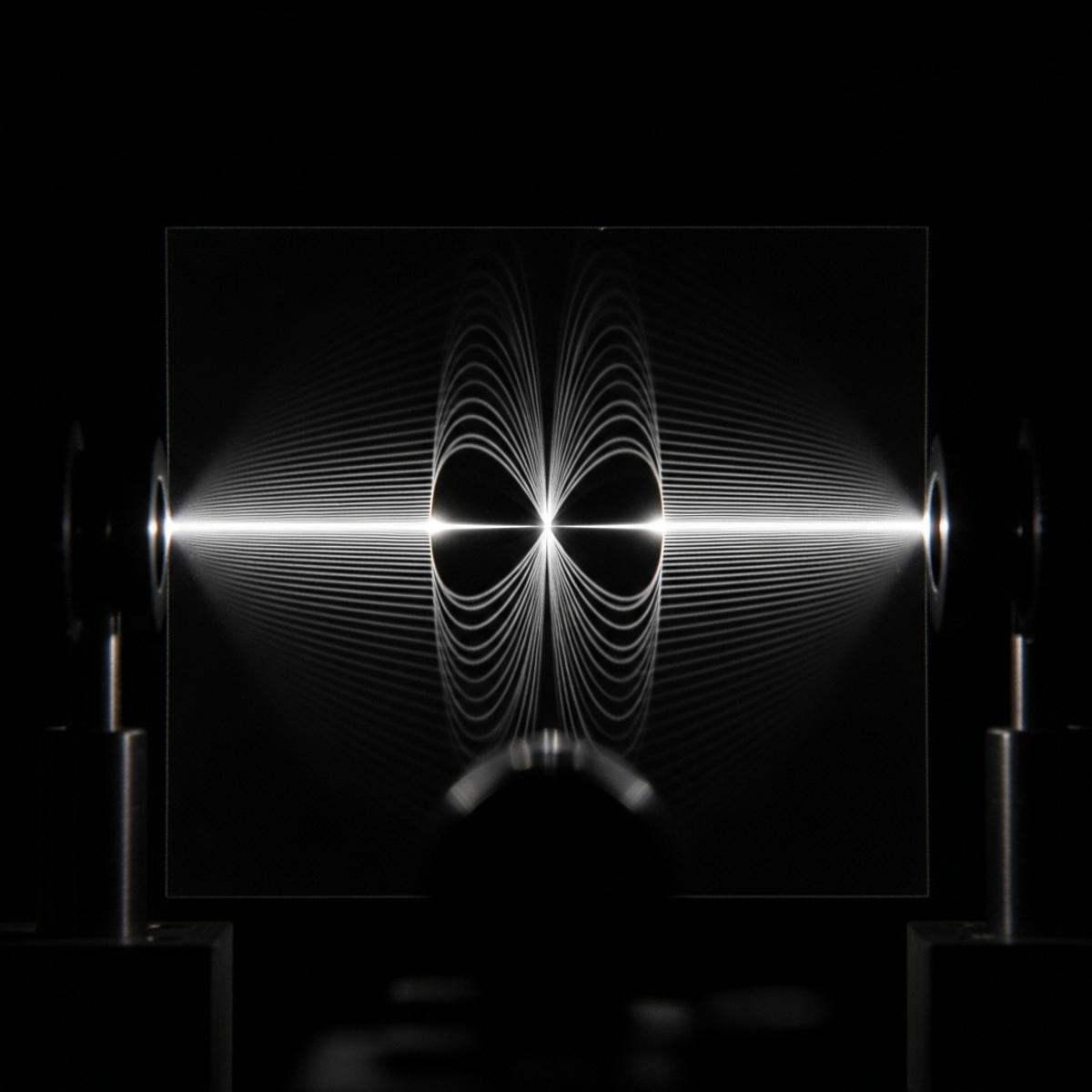
Spade Demonstrates Superior Sub-Rayleigh Source Discrimination with Two Incoherent Points
Scientists have experimentally demonstrated sub‑Rayleigh source discrimination using spatial‑mode demultiplexing (SPADE) combined with a Bayesian inference framework. The approach leverages relative‑belief (RB) analysis to update prior hypotheses and provides a clear RBₖ = 1 threshold for supporting alternative source models. Experiments with...

Continuous Gaussian Quantum Metrology Achieves Fundamental Precision Limits for Bosonic Systems
Scientists Yokomizo, Clerk and Ashida present a theoretical framework for continuous quantum metrology using multimode bosonic systems under Gaussian measurements. They derive analytical bounds for global and environmental quantum Fisher information, showing Heisenberg‑type scaling with mode number but only linear...
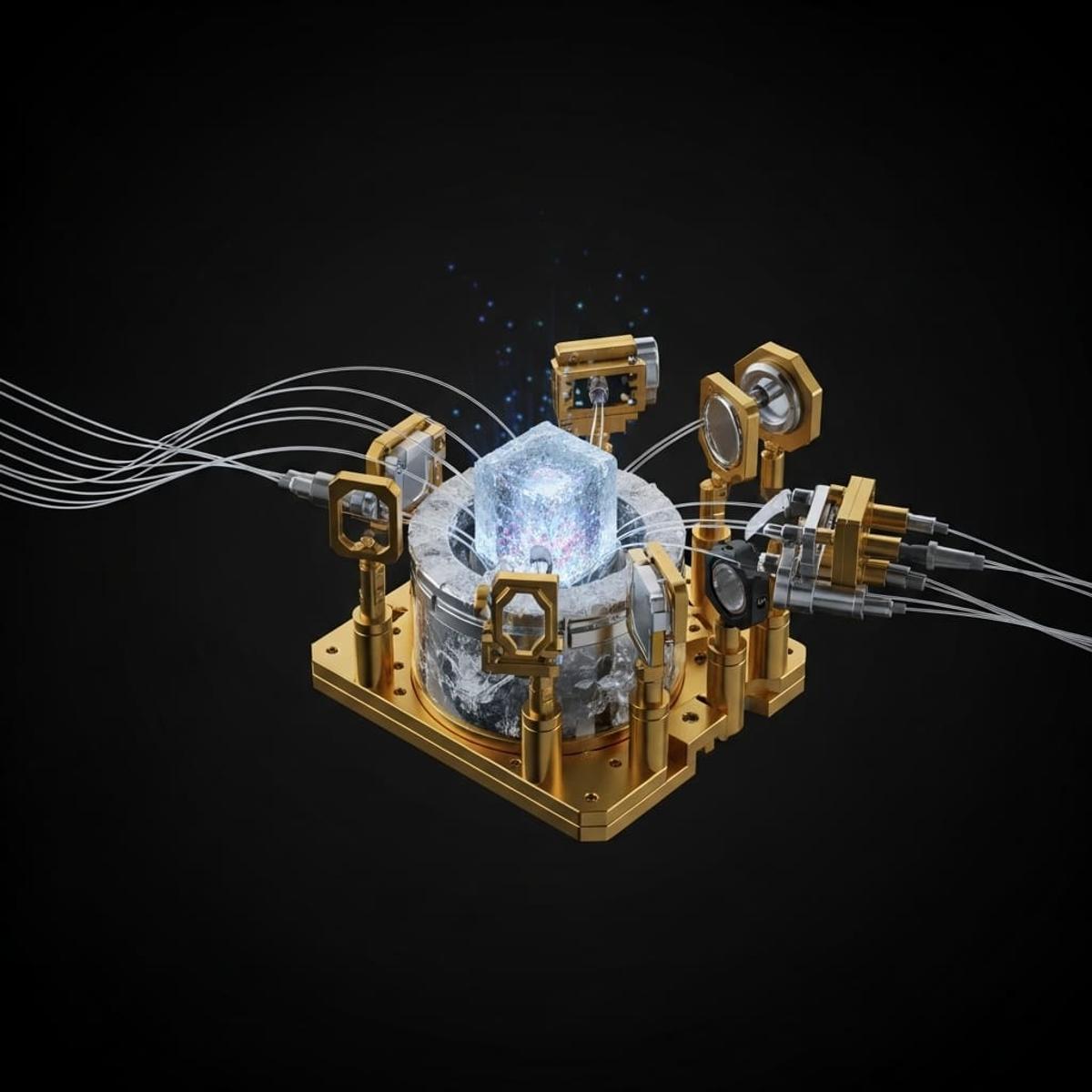
Researchers Achieve 35ms Qubit Memory Certification Via Device-Independent Quantum Tests
Researchers at Universität Siegen and Innsbruck introduced a device‑independent protocol to certify quantum memories by analyzing temporal correlations. Using a trapped‑ion processor they verified 35 ms of qubit storage, demonstrating violations of causal inequalities that cannot be explained by classical models....
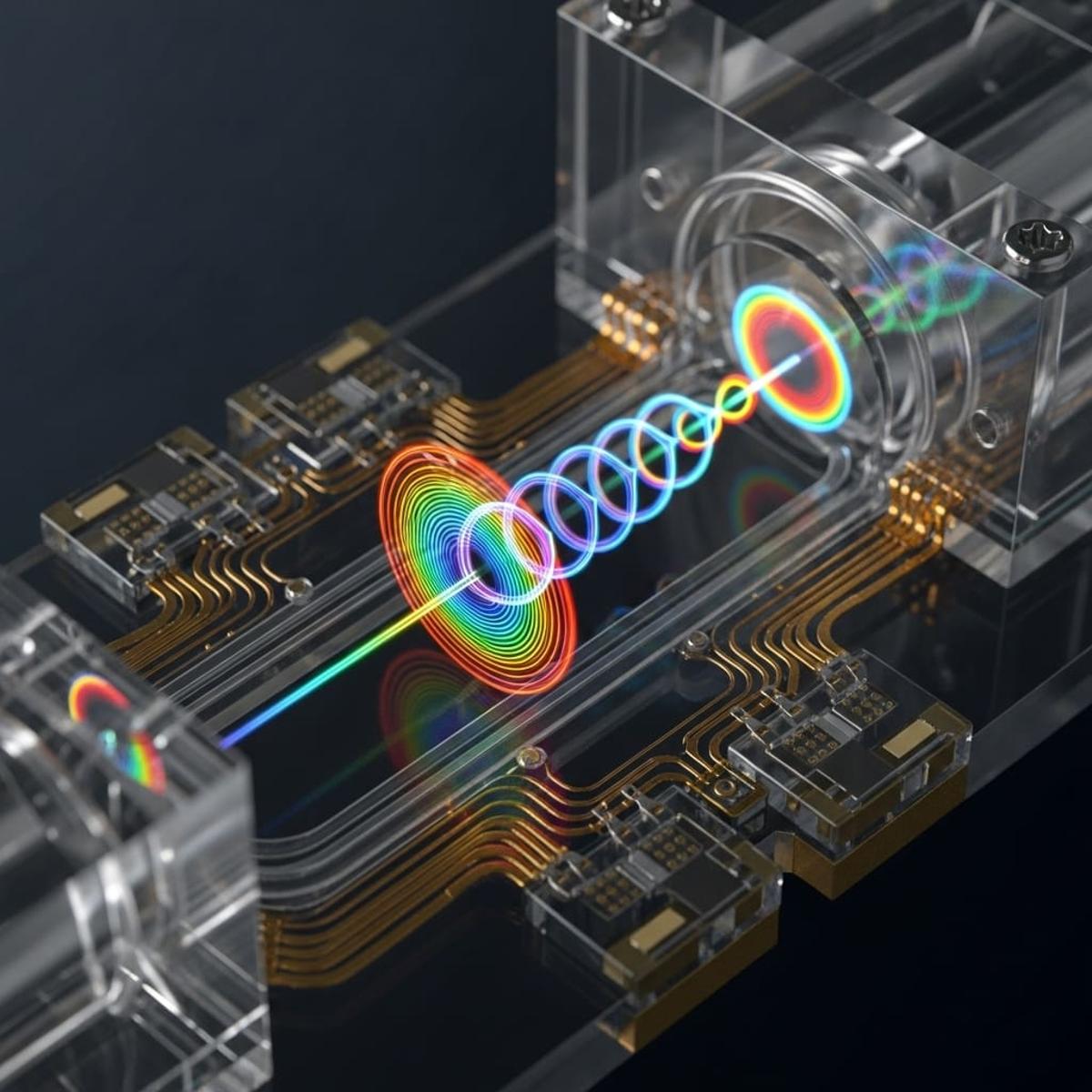
Electrical Detection Achieves Direct Readout of Optical Orbital Angular Momentum
Researchers at Peking University have demonstrated a silicon‑on‑chip photodetector that directly converts optical orbital angular momentum (OAM) into electrical currents. The device covers topological charges from –9 to +9, achieving a record‑high OAM responsivity of 226 nA W⁻¹. By employing momentum‑matched plasmonic...

MIT Leader Joins Zapata Quantum in Davos Discussions on Quantum Commercialization
Zapata Quantum CEO Sumit Kapur addressed global leaders at the World Economic Forum in Davos, stressing that quantum computing’s next phase hinges on reliable, hardware‑agnostic applications rather than hardware alone. The publicly traded pure‑play software firm highlighted its portfolio of...

Single Electrons Resolve Qubit Excitations in Coupled Trapped-Ion Quantum Computer
Researchers have demonstrated coherent coupling between free electrons and a trapped‑ion quantum computer by integrating a transmission electron microscope with a planar ion trap. Individual electrons, focused to nanometer scales, can induce qubit excitations with bit‑flip probabilities up to 0.1–1...

World Economic Forum Explores Quantum Computing’s Potential to Reduce Energy Use
The World Economic Forum highlighted quantum computing as a potential solution to the rising energy demands of data‑centres and AI workloads. By exploiting reversible quantum algorithms, the technology can theoretically bypass Landauer’s limit that forces energy loss in classical bit...

Stochastic Quantum Information Geometry Achieves Negative Interference in Single-Shot Realizations
Melo, Paraguassú, Duarte Queirós and colleagues introduce the Conditional Quantum Fisher Information (CQFI), a trajectory‑level extension of Fisher information that merges information geometry with stochastic thermodynamics. The CQFI separates into population, basis‑rotation, and a transient interference term, the latter capable of...
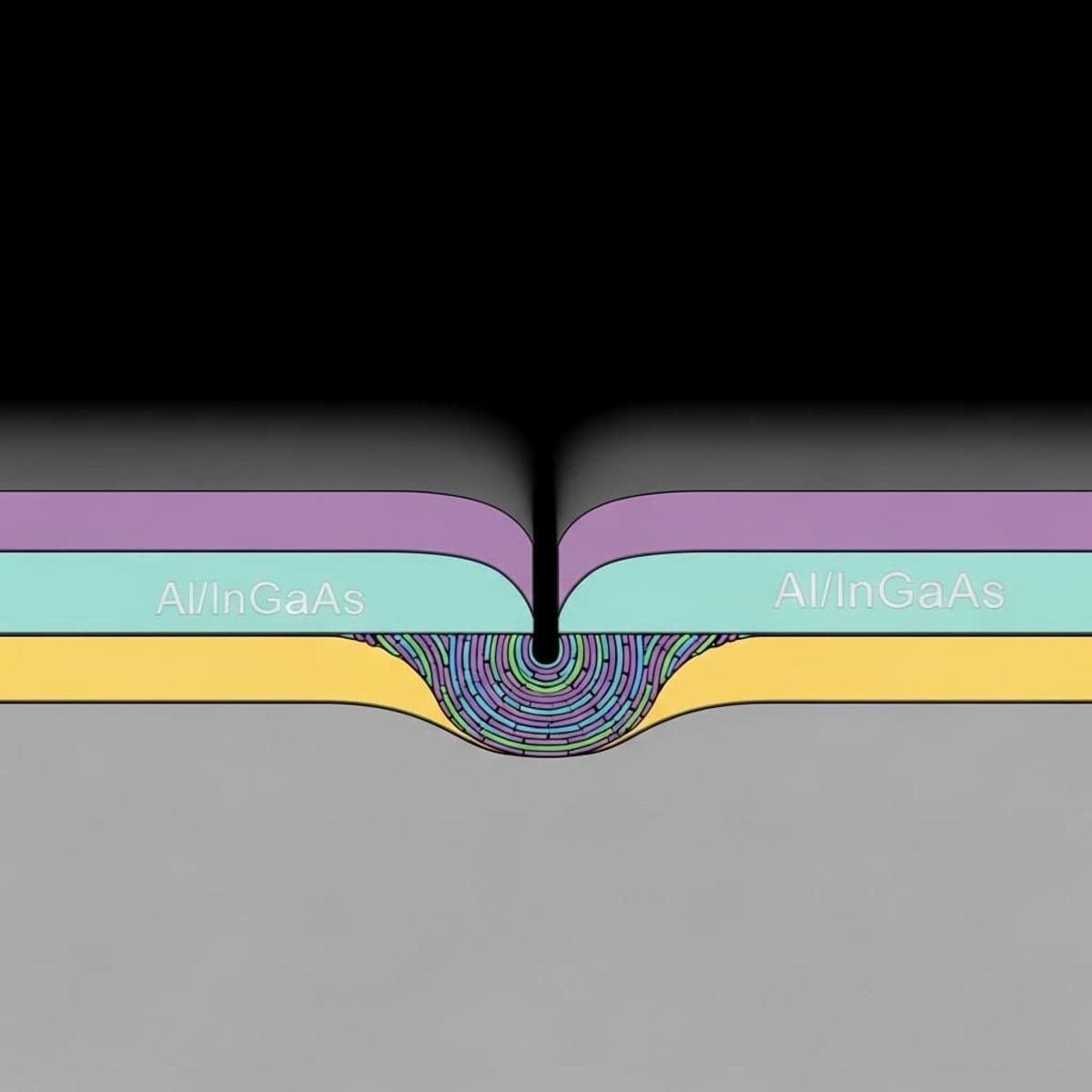
Al/Ingaas System Achieves Continuous Films with No Detectable Indium Interdiffusion
Scientists have demonstrated a robust method for growing epitaxial aluminium films on indium‑gallium arsenide (InGaAs) using molecular‑beam epitaxy at near‑room temperature. By depositing aluminium at 3 Å s⁻¹ onto a 14 °C substrate, they achieved continuous, superconducting layers with no detectable indium interdiffusion....
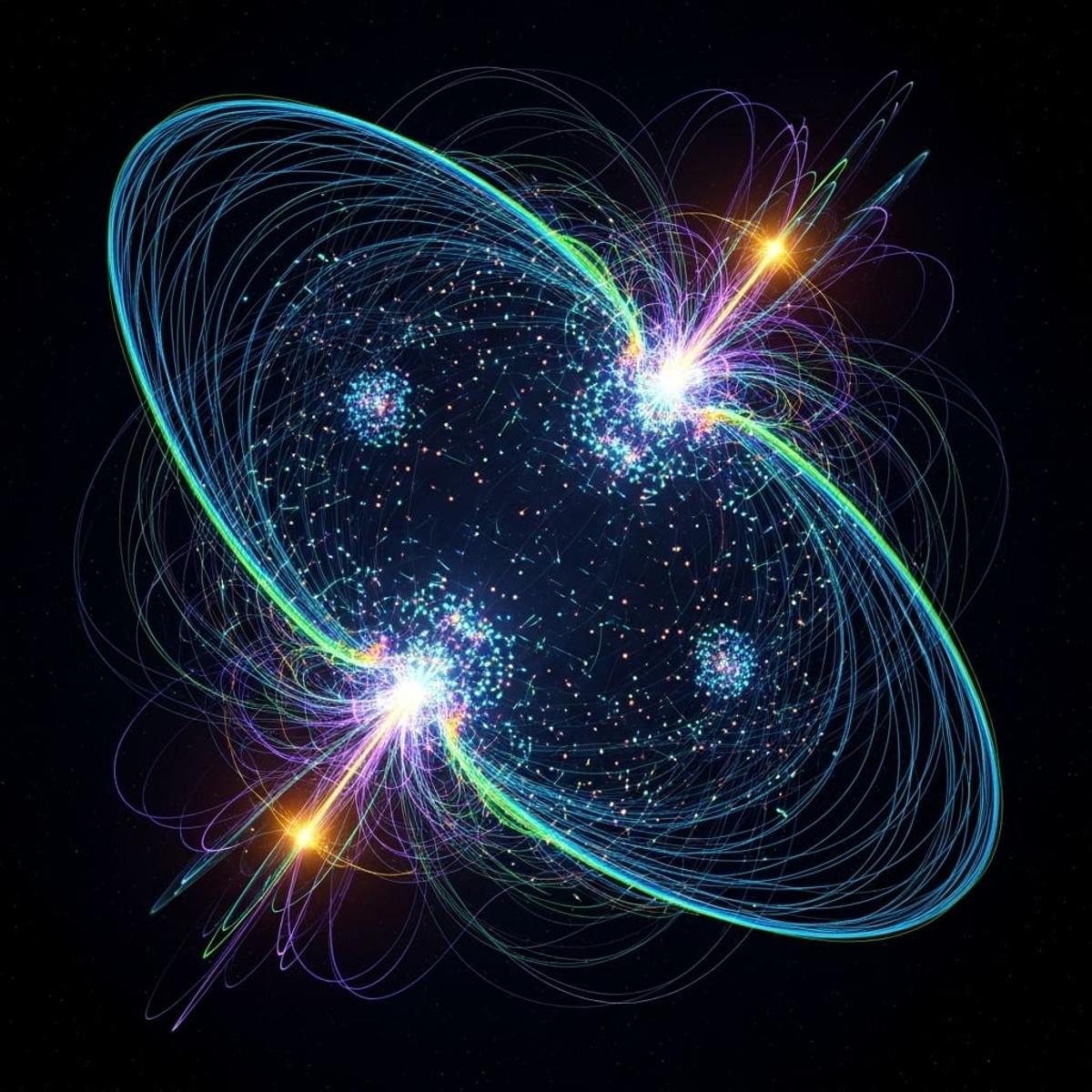
Neural Networks Advance Hadronic Physics Via Data-Driven Quantum Model Selection
Researchers introduced a "quantum qualifier" metric to decide when quantum‑enhanced deep neural networks (QDNNs) should replace classical deep neural networks (CDNNs) in hadronic physics analyses. Applied to deeply virtual Compton scattering data, the qualifier evaluates data complexity, noise, and dimensionality,...

Quantum Software Testing Advances Quality Assurance for Complex Systems
The authors expose the growing infeasibility of classical simulation for large‑scale quantum software and introduce a suite of software‑engineering techniques that operate directly on real quantum hardware. They advocate circuit simplification, property‑based testing, and assume‑guarantee decomposition to create scalable test...

Good Quantum Codes Achieve Unique Output Distributions for Classical Communication
Researchers Aytekin, Nomeir, Hu, and Ulukus prove that good quantum codes used for classical communication possess a unique optimal output distribution. They show that as block length grows, the empirical output distribution of such codes converges to this optimum, mirroring...

Quantum Walks on Photonic Processors Advance Universal Quantum Computation
Researchers at Quix Quantum have demonstrated leaking quantum walks on an integrated photonic processor, introducing controllable absorbing boundaries. The experiments show that homogeneous losses at a lattice edge reshape the walker’s probability distribution, with absorption strength directly influencing coherence and...

Quantum State Teleportation Advances with 2510.24325v1 Proton Systems Demonstrated
Researchers led by H. Witala have demonstrated that Bell‑state entanglement can be generated in unpolarized proton‑proton scattering and deuteron‑breakup reactions, providing a realistic route to quantum‑state teleportation among protons. Using the AV18 nucleon‑nucleon potential, they identified energy and angular regimes where...
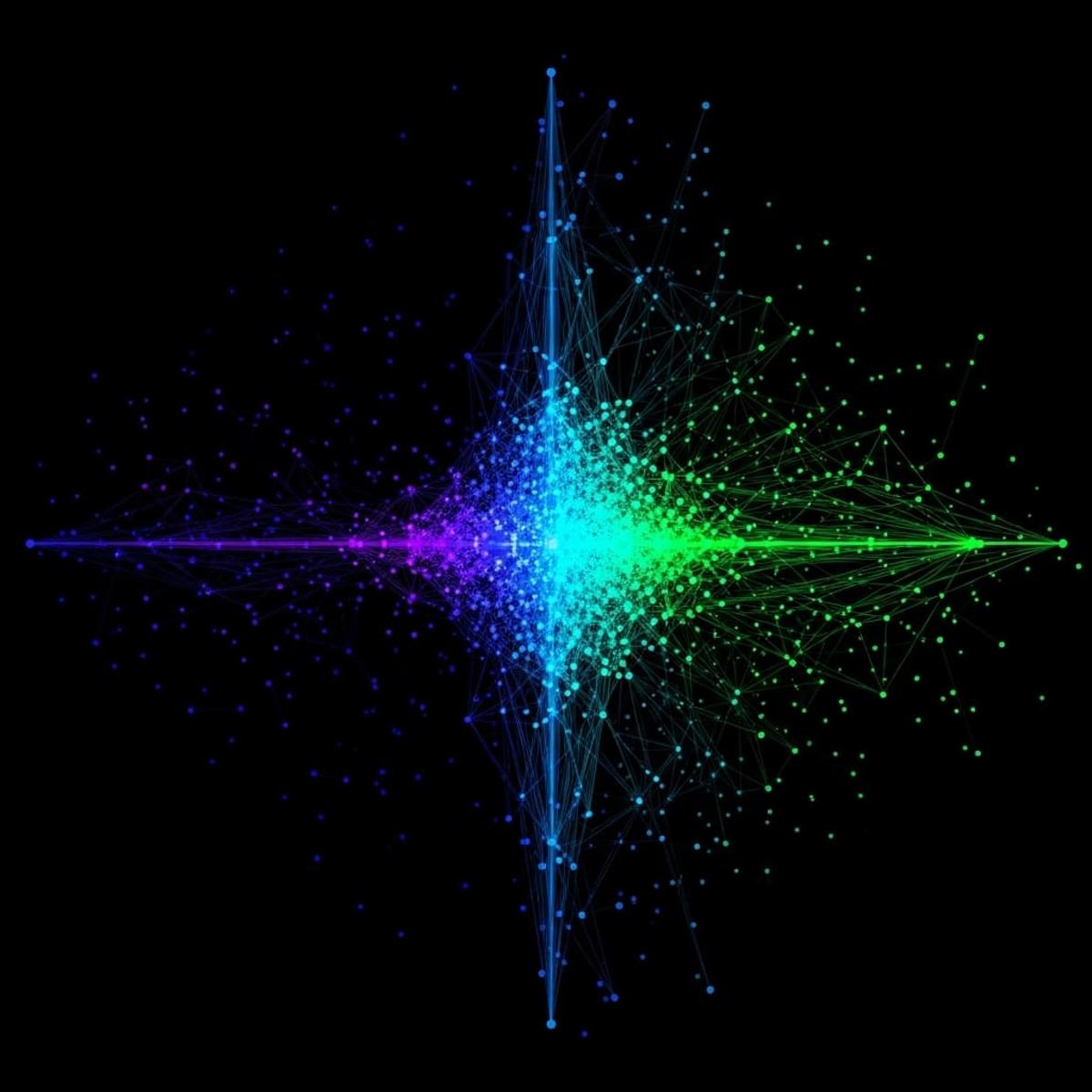
Localizable Entanglement Achieves Universal Scaling at Critical Measurement Probability
Researchers at IIT Madras have identified localizable entanglement (LE) as a robust order parameter for measurement‑induced phase transitions (MIPTs). Their analysis demonstrates universal finite‑size scaling of LE, with a diverging entanglement correlation length ξ_E at a critical measurement probability around...
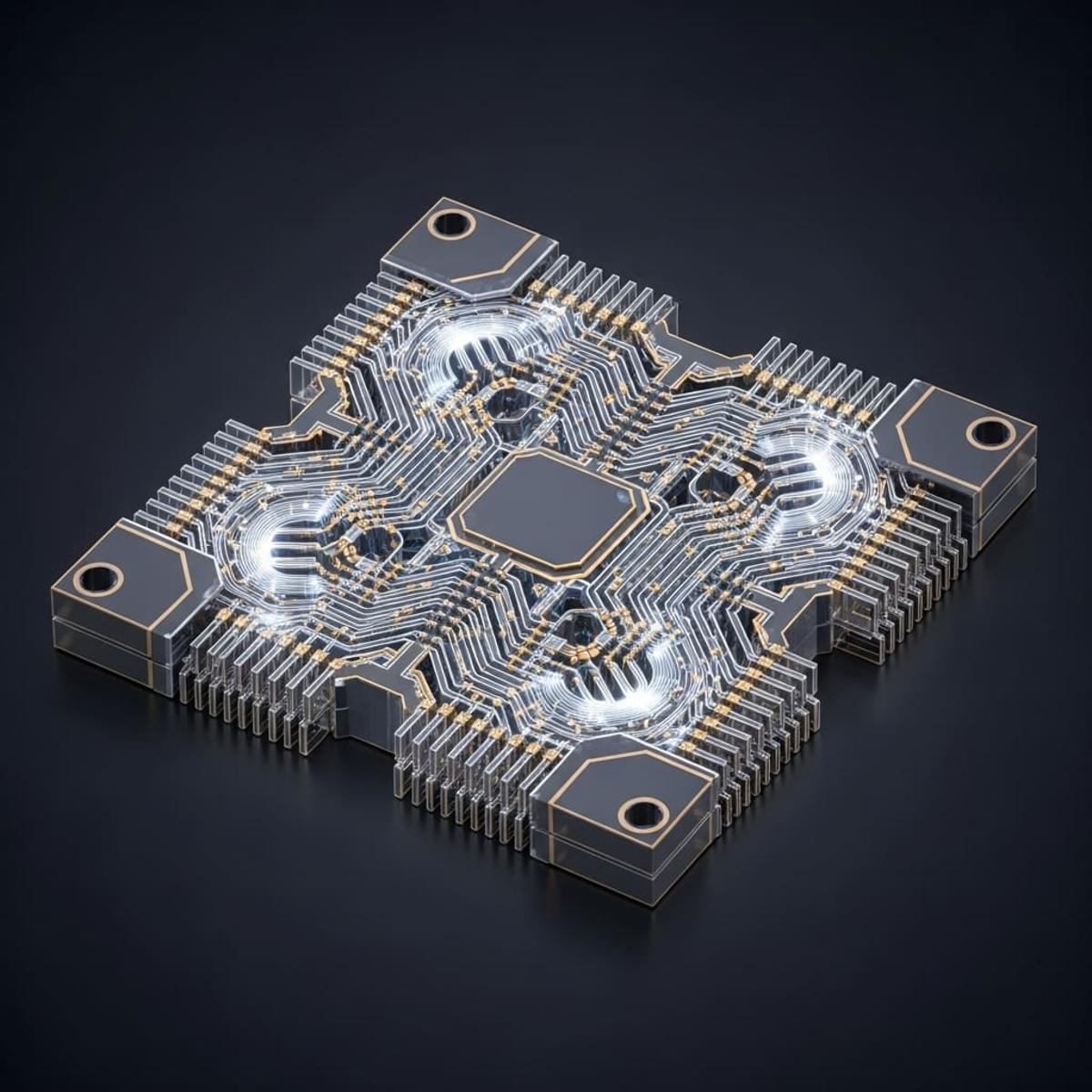
Compact Squeezed Light Source Achieves -8 dB Improvement for Quantum Technologies
Scientists at Ariel University have built an ultra‑compact, low‑cost two‑mode squeezed‑light source operating at 795 nm using four‑wave mixing in hot rubidium vapor. The modular system, driven by only 300 mW of pump power, achieves up to –8 dB of intensity‑difference squeezing at...

Locality Forces Equal Spacing in Quantum Many-Body Scar Towers of States
Physicists have proved that any complete tower of many‑body scar states that are exact eigenstates of a local Hamiltonian must exhibit equally spaced energy levels. The theorem holds for k‑local interactions on arbitrary bounded‑degree graphs, extending beyond simple lattice models...

Mixing Established on Schreier Graphs, Demonstrating Ergodicity for Infinite Cayley Graphs
A team led by El‑Charles Bordenave, Cyril Letrouit and Mostafa Sabri has proved quantum mixing on large Schreier graphs that converge to infinite Cayley graphs. The proof hinges on the limiting Cayley graph having an absolutely continuous spectrum, eliminating the...

Quantum Computing Achieves Database Optimisation with Sub-5 Second Runtime Performance
Researchers at USC introduced Q2O, a quantum‑augmented query optimiser that embeds quantum annealing into PostgreSQL’s planning phase. By encoding join‑order problems as a nonlinear model solvable by low‑latency NL‑Solver hardware, Q2O delivers real‑time optimisation with sub‑5‑second runtimes. Experiments on the...
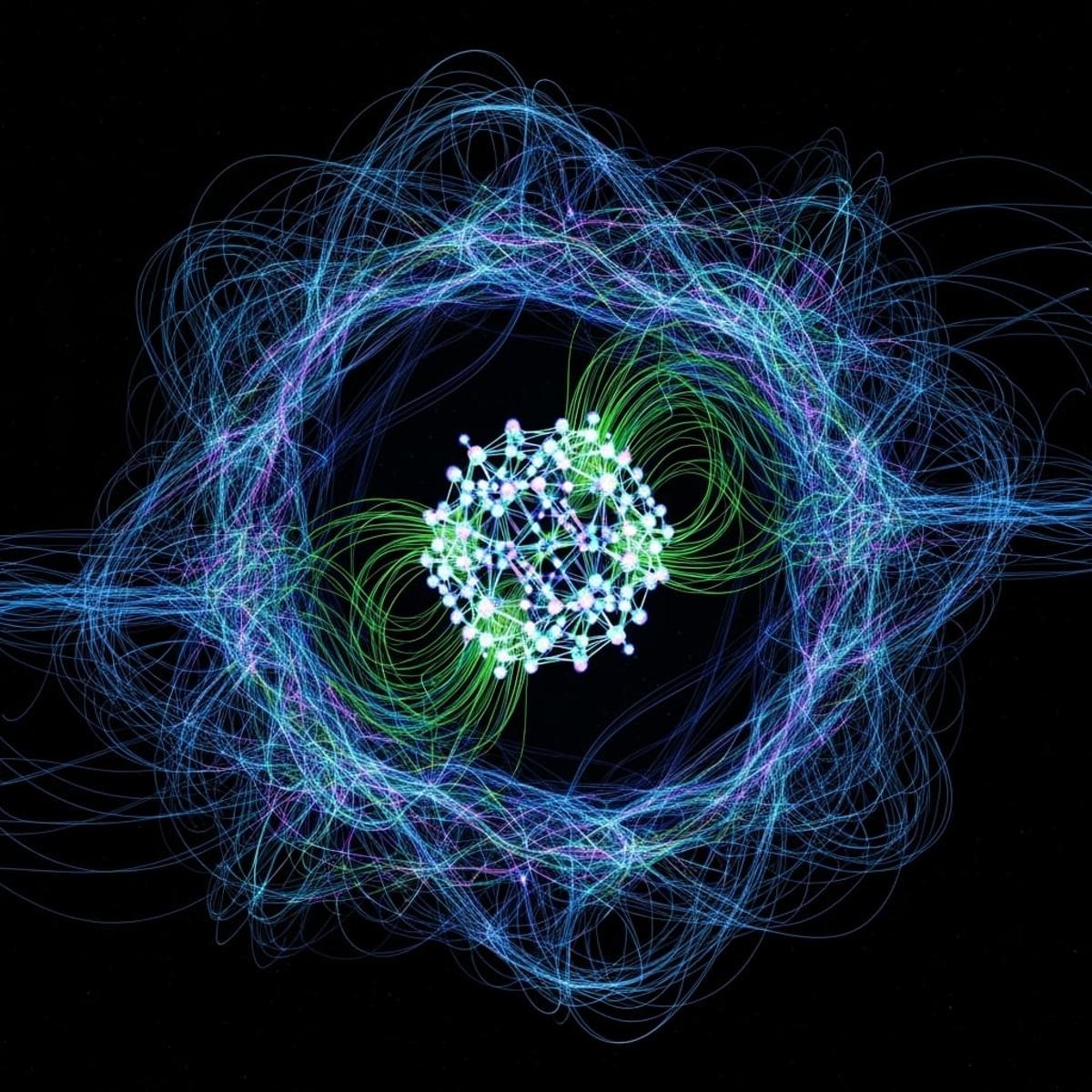
Inverse Quantum Simulation Achieves Quantum Material Design with Desired Properties
Researchers introduced an inverse quantum simulation (IQS) framework that flips traditional quantum‑material studies by starting with desired properties and working backward to a Hamiltonian. The method encodes target characteristics in a cost function, minimizes it on programmable quantum hardware, and...
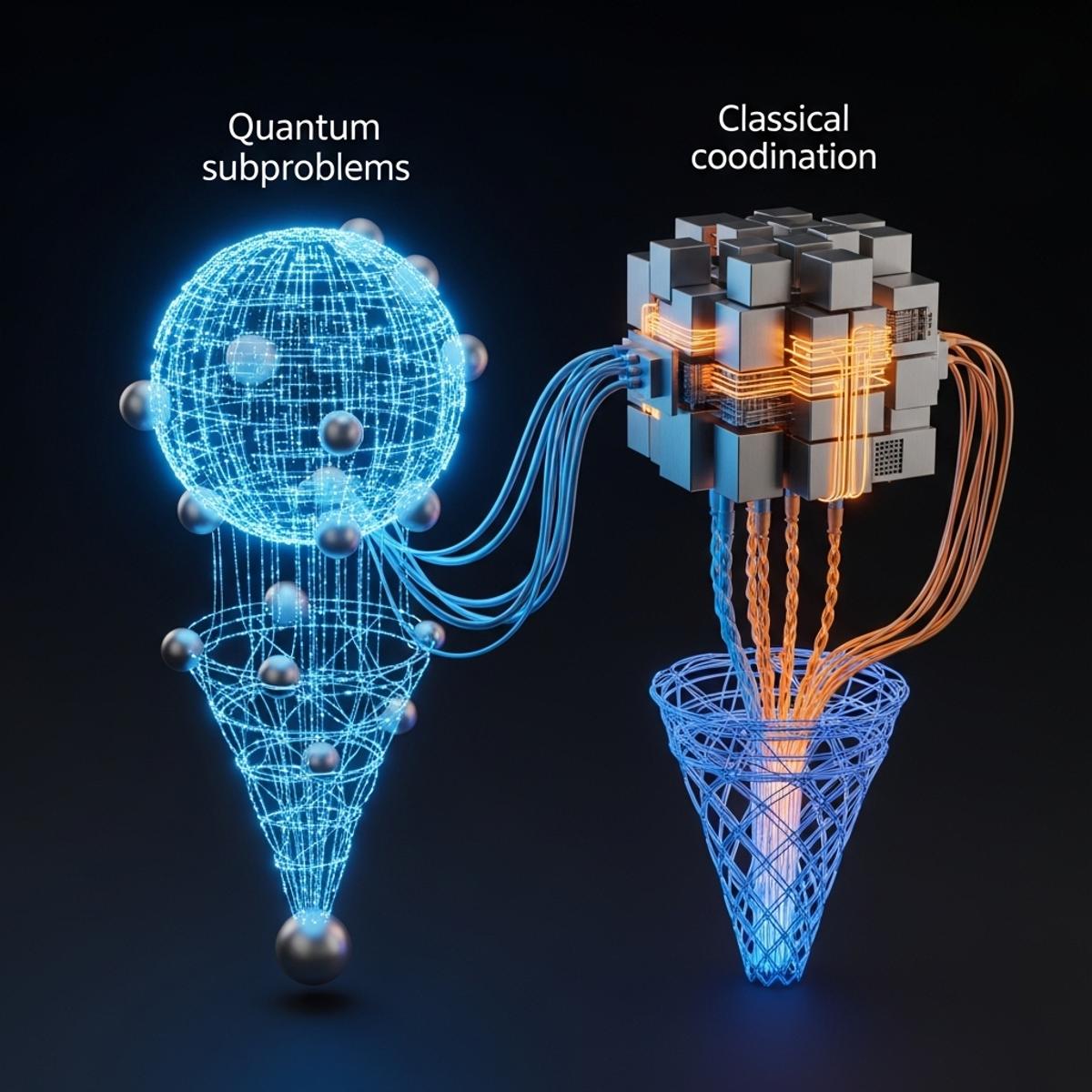
Hybrid Quantum-Classical Benders Approach Achieves Faster MILP Optimisation
Researchers have introduced a hybrid quantum‑classical Benders decomposition algorithm that reformulates the MILP master problem as a QUBO solved on a D‑Wave quantum annealer while handling subproblems classically. The approach incorporates novel embedding techniques, conservative cut‑constraint handling, and a refined...

Quantum Kernel Machine Learning Achieves Materials Discovery with Less Data
Researchers applied quantum‑kernel machine learning to autonomous materials discovery, using X‑ray diffraction patterns from a Fe‑Ga‑Pd alloy library on IonQ’s Aria trapped‑ion quantum computer. By integrating Gaussian‑process‑based active learning, the quantum model navigated the compositional phase space with far fewer...
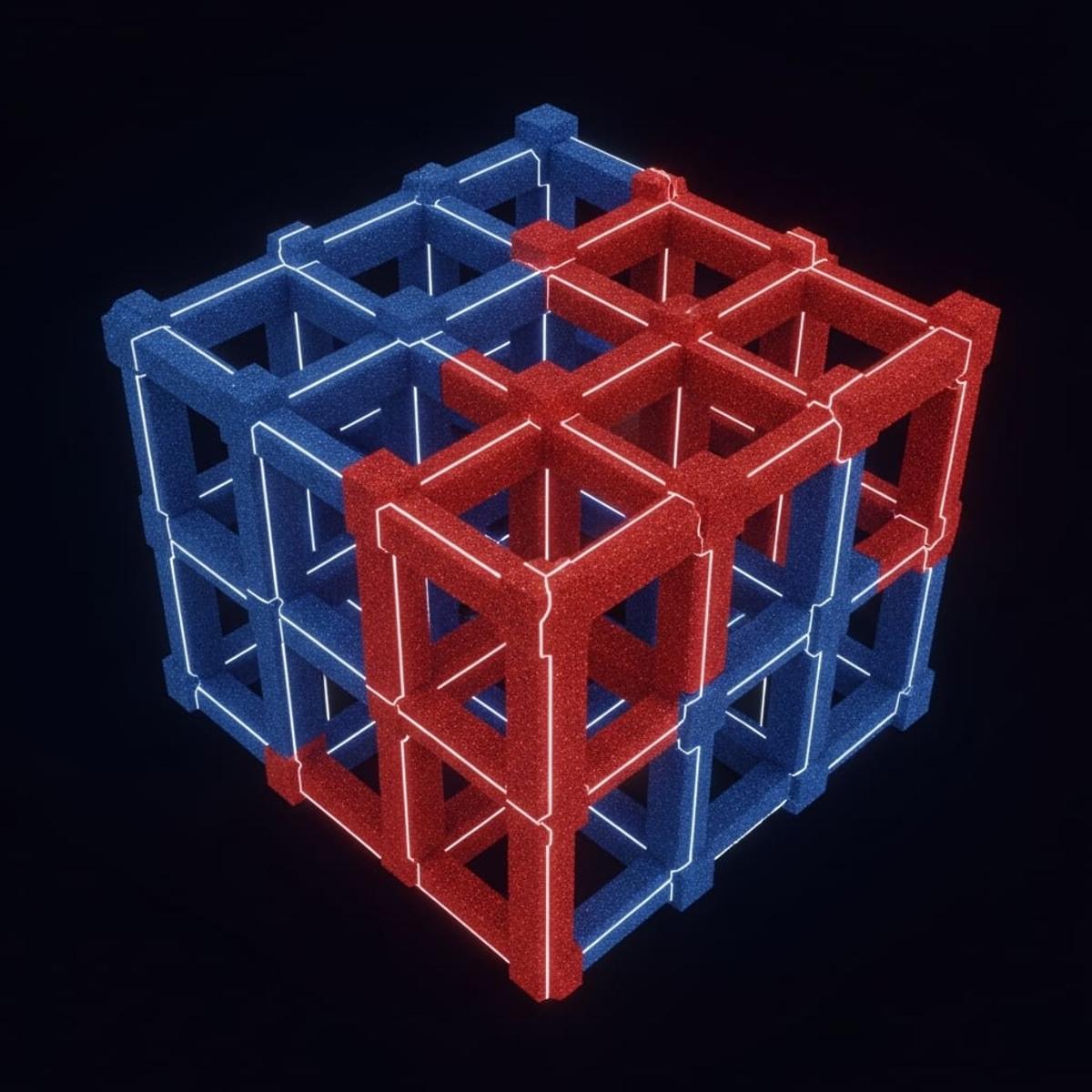
Researchers Achieve Efficient Local Classification of Parity-Based Material Topology
Researchers Wong, Yamazaki, Siefert and collaborators introduced a numerically efficient real‑space framework for classifying topological phases of aperiodic materials. The approach combines spectral localizers with direct Pfaffian sign computation, delivering a local, energy‑resolved \(\mathbb{Z}_2\) invariant without requiring translational symmetry, bulk...
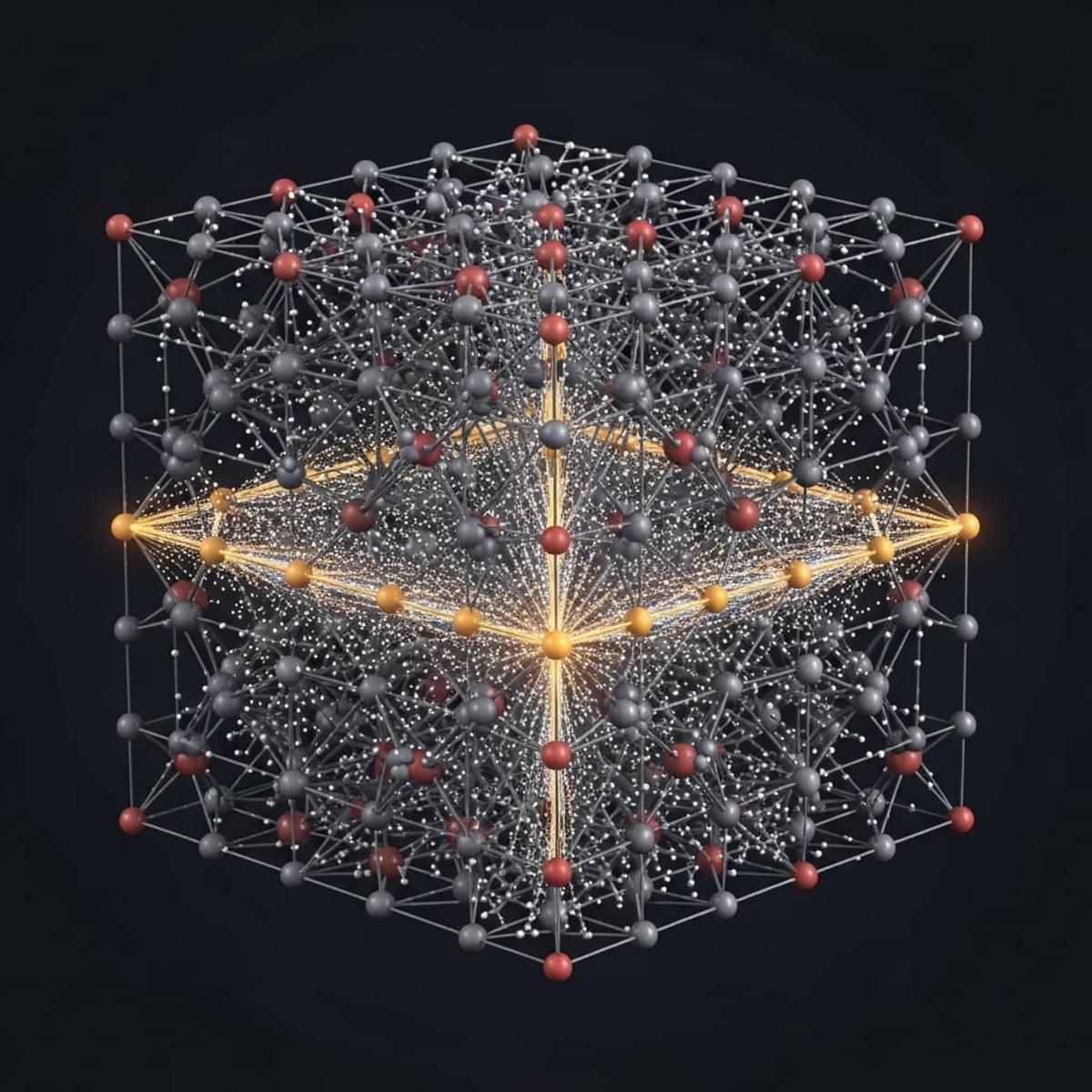
Electrons Meet Ferroelastic Walls in Strontium Titanate, Advancing Oxide Electronics
Researchers have shown that ferroelastic domain walls in strontium titanate (SrTiO₃) are active participants in electron transport, exhibiting emergent polar order, glass‑like relaxations and memory effects. Using resonant piezospectroscopy, electric‑field‑dependent optical imaging, scanning SQUID and single‑electron‑transistor microscopy, they visualized wall...
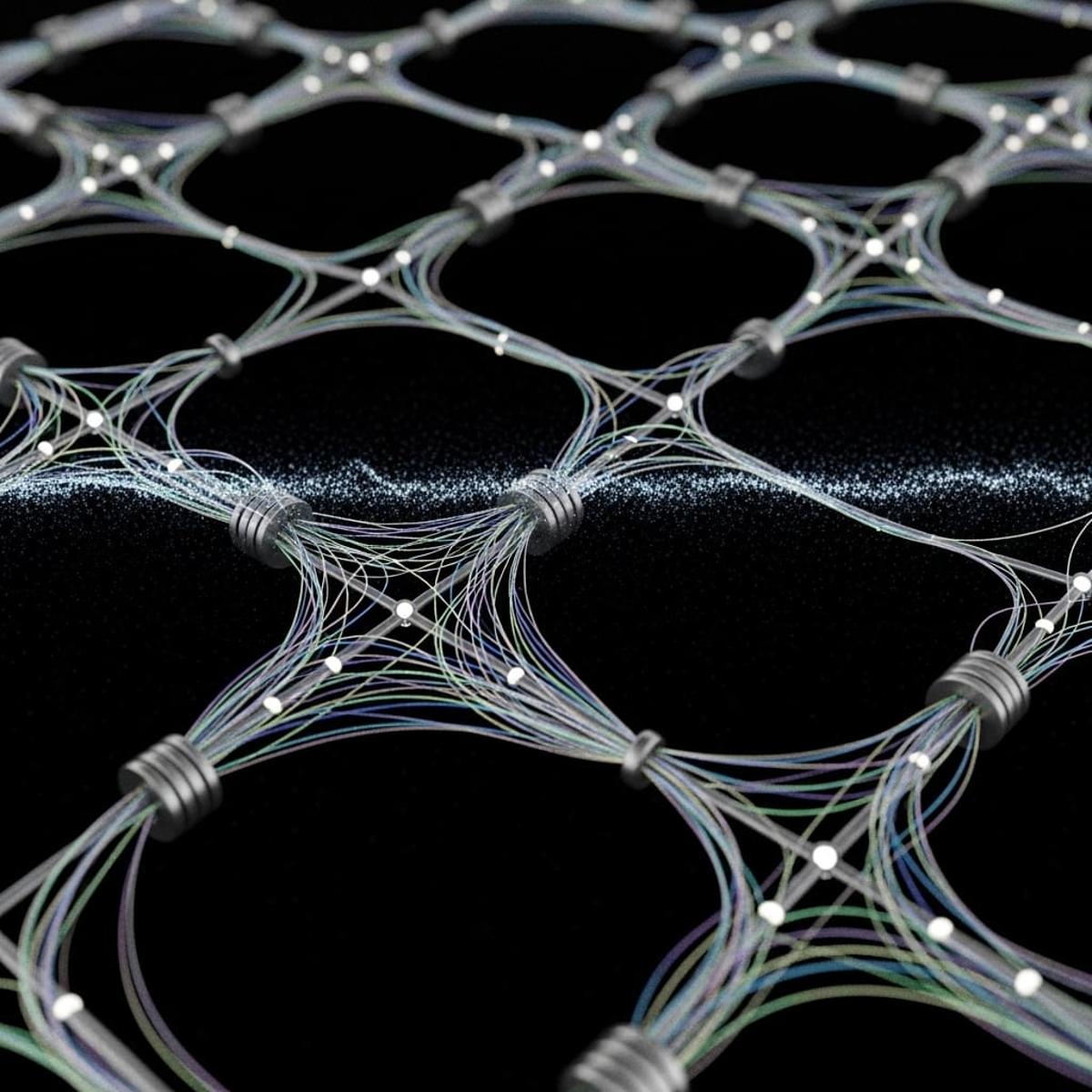
Floquet Engineering Achieves Non-Abelian Phases in Driven Quantum Wire Qubits
Researchers theoretically demonstrated that a spin qubit in a parabolic quantum wire, driven by a bichromatic field, exhibits a confinement‑tunable synthetic gauge field leading to Floquet topological phenomena. Varying the confinement strength triggers a topological Landau‑Zener transition, changing interference patterns...

Generative Adversarial Networks Achieve 98% Fidelity Resource State Generation
Researchers at IIIT Hyderabad and TATA Consultancy Services introduced a physics‑informed Generative Adversarial Network (GAN) that treats quantum resource‑state creation as an inverse‑design problem. By enforcing Hermiticity, trace‑one, and positivity during training, the GAN reliably reproduces Werner‑like and Bell‑diagonal states...
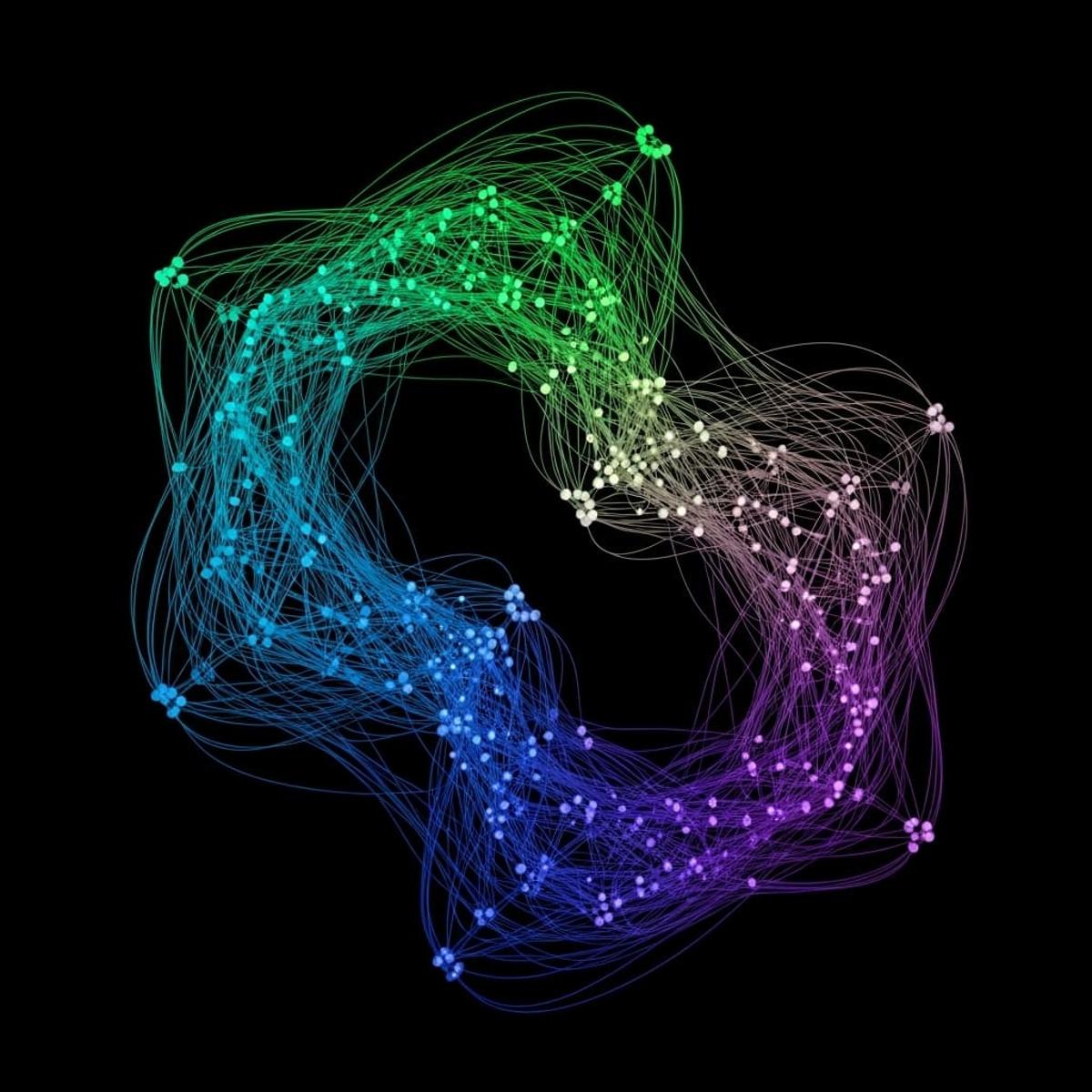
Alphasyndrome Achieves 80.6% Logical Error Rate Reduction with Novel Scheduling
Researchers introduced AlphaSyndrome, an automated framework that optimizes syndrome‑measurement scheduling for general commuting‑stabiliser quantum error‑correction codes. By leveraging Monte Carlo Tree Search and decoder feedback, the system reshapes error‑propagation pathways, achieving an average logical‑error‑rate reduction of 80.6% and up to 96.2%...