
Security Proofs Advance Quantum Key Distribution with Asymmetric Failure Detection
Researchers from the University of Waterloo and NUS uncovered a critical flaw in existing Quantum Key Distribution (QKD) security proofs: they assume perfectly reliable authentication. They introduced a reduction theorem that shows protocols proven secure under ideal authentication remain secure when the classical channel experiences asymmetric aborts, delays, or reordering, requiring only a minor protocol tweak. The theorem cleanly separates authentication from the quantum core, allowing all prior QKD proofs to be retroactively applied to realistic settings. Experiments confirm the approach preserves security bounds, paving the way for more robust quantum communication deployments.
Improved Two-Way Cv-Qkd Achieves Secure Key Generation with Continuous-Mode Analysis
Researchers present an improved two‑way continuous‑variable quantum key distribution (CV‑QKD) protocol that explicitly models continuous‑mode optical fields and incorporates finite‑size security analysis. By decomposing signals into temporal modes and applying adaptive shot‑noise normalization, the scheme achieves tighter secret‑key rate estimates....
Quantum Key Exchange Achieves Security Via Unsolvable Mihailova Subgroup Problem
Researchers at Shenzhen University have unveiled a quantum‑safe key‑exchange protocol that modifies the Anshel‑Anshel‑Goldfeld (AAG) scheme by drawing private keys from Mihailova subgroups of braid groups. The security hinges on the unsolvable membership problem for these subgroups, making the protocol...

Blockchain Prototype Achieves Quantum-Secure Signatures with Crystals-Dilithium, Falcon and Hawk
Researchers unveiled a functional blockchain prototype that can interchangeably employ three lattice‑based post‑quantum signature schemes—CRYSTALS‑Dilithium, Falcon and Hawk. The single‑node system decouples application logic from the cryptographic layer, allowing seamless algorithm swaps without altering core code. Comprehensive testing measured key...

Quantum Computing Advances Cryptographic Algorithms for Data Security , a Doctoral Guide
The new doctoral guide by Darlan Noetzold, Valderi Reis Quietinho Leithardt and co‑authors delivers a comprehensive overview of post‑quantum cryptography, mapping lattice, code, hash‑based, multivariate and isogeny schemes while dissecting the NIST standardisation process. It details the practical hurdles of...

Autonomous Quantum Error Correction Achieves Passive Stability in Two Dimensions
Researchers at the Max Planck Institute have demonstrated autonomous quantum error correction in two spatial dimensions using a quantum cellular automaton. The scheme operates via a time‑independent, translation‑invariant Lindbladian, establishing a noise threshold below which logical errors decay as the...
Folded Surface Code Architecture Achieves Constant Time Logical CNOT Gates
Oxford researchers Zhu Sun and Zhenyu Cai unveil a folded surface‑code architecture that uses short‑range qubit shuttling to create effective three‑dimensional connectivity on conventional two‑dimensional hardware. The design implements logical Clifford gates and CNOT operations in constant time, eliminating the...
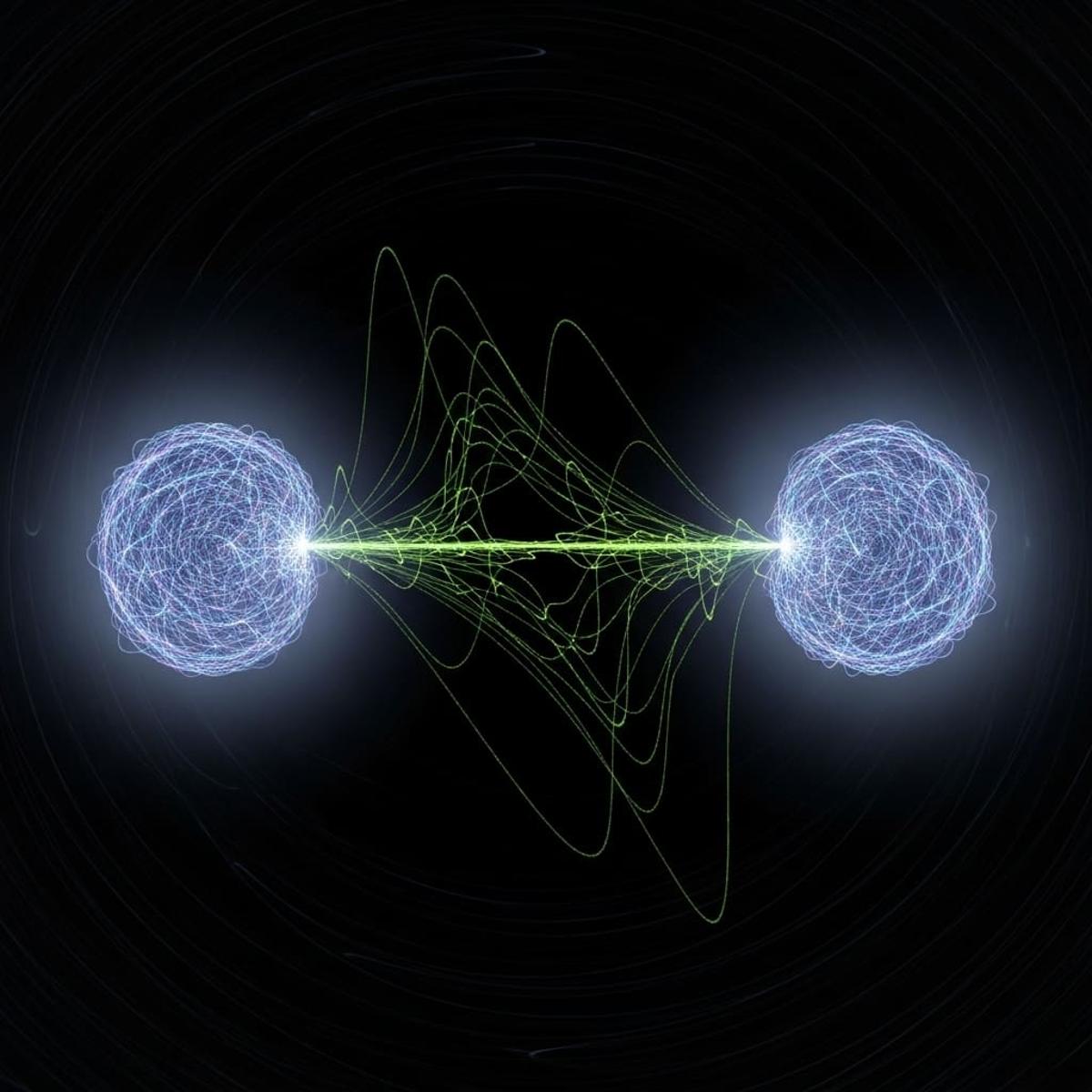
Quantum Energy Teleportation Achieves Scalable, Long-Range Transfer in Gapped Systems
A team of researchers has demonstrated a scalable quantum energy teleportation (QET) protocol that activates local vacuum energy over arbitrary distances. By introducing a hierarchical repeater architecture in the one‑dimensional anisotropic XY model, they shift resource scaling from exponential to...
Quantum Phase Transitions in 4-Spin Systems Achieved Via Variational and Hardware Approaches
Researchers led by Rudraksh Sharma present a comparative study of quantum phase transitions in a four‑spin transverse‑field Ising model, using exact diagonalisation, a shallow variational quantum eigensolver (VQE), and execution on real noisy‑intermediate‑scale quantum (NISQ) hardware. The VQE reproduces ground‑state...
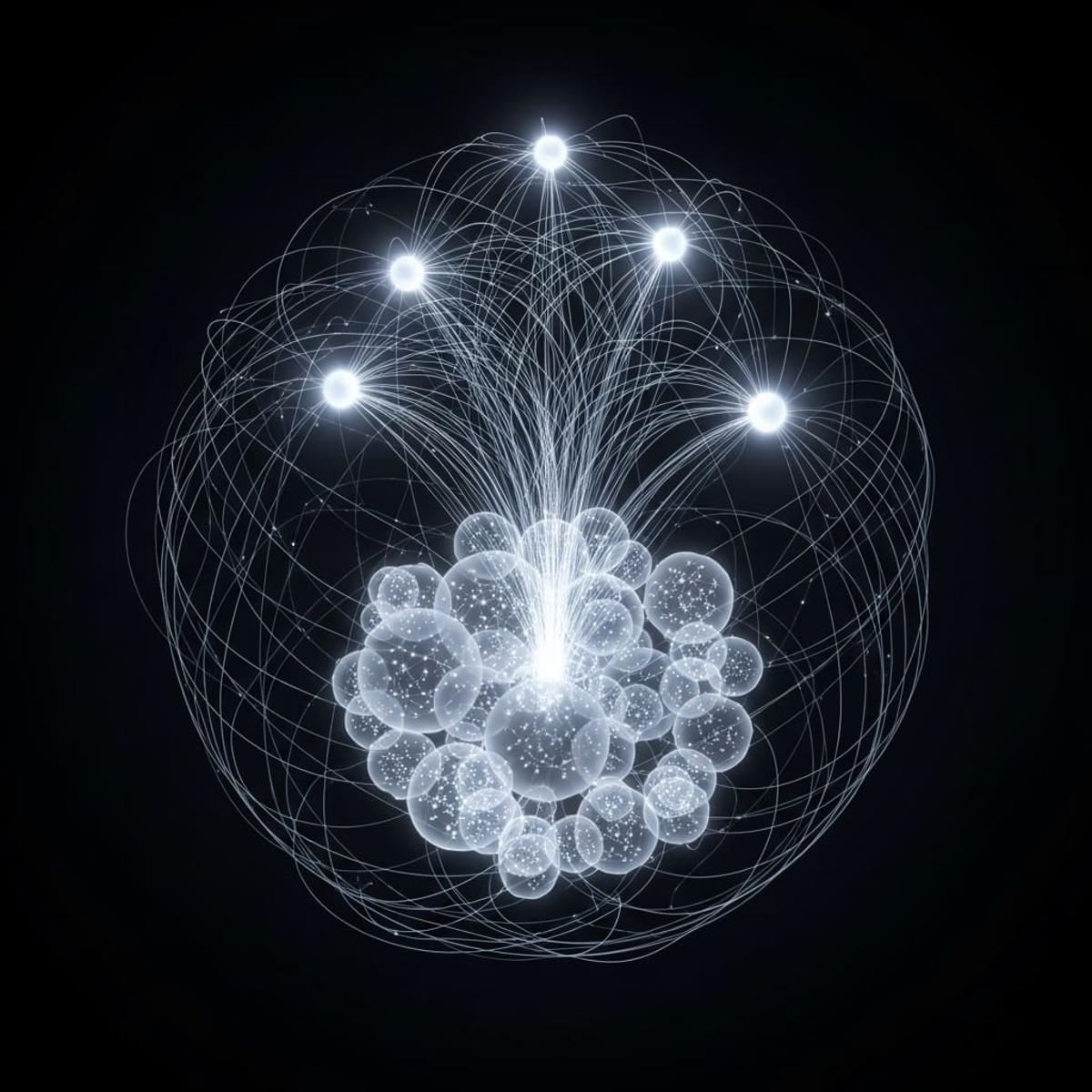
Qubit-Qudit Entanglement Transfer Achieves High-Spin Nuclear Memory with Arbitrary Dimension
Researchers Hannes and Burkard propose a qubit‑to‑qudit entanglement transfer scheme that leverages high‑spin nuclear moments in defect centers. The protocol uses the Ising component of the hyperfine interaction to move entanglement from electron‑spin communication qubits to nuclear‑spin memory qudits without...
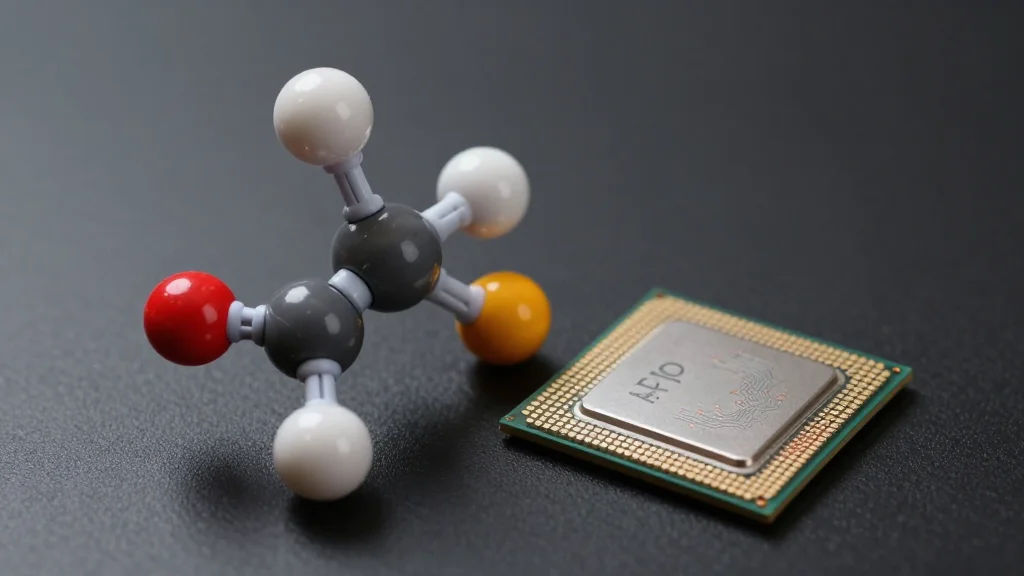
Quantum Algorithms Achieve Lower Resource Needs for ATP/Metaphosphate Hydrolysis
Researchers led by Ryan LaRose, Alan Bidart, and Ben DalFavero quantified quantum resource needs for simulating ATP/metaphosphate hydrolysis. They compared eigensolver, Krylov, and phase‑estimation methods, showing heuristic approaches can run on NISQ, MegaQuop, and fault‑tolerant devices. The study introduced Hamiltonian...
Information Backflow Diagrams Unify Entanglement Revivals and Entropy Overshoots in Models
Researchers Nakagawa et al. introduce an information‑backflow diagram that unifies entanglement revivals and entropy overshoots within minimal non‑Markovian models. They define a functional NI that integrates only intervals where an information‑like observable increases, providing a single metric for memory effects. The...
Bosonic Phases Demonstrate 2e Cooper Pairing Across Superconductor-Insulator Transitions
Researchers have demonstrated bosonic phases across the superconductor‑insulator transition (SIT) in infinite‑layer samarium nickelate films by fabricating nanopatterned networks. Magnetoresistance oscillations with an h/2e period provide direct evidence of 2e Cooper‑pair transport, revealing two anomalous metallic states—one field‑sensitive and one...

Dynq Achieves Virtualisation of Quantum Hardware Using Quality-Weighted Community Detection
Researchers at the University of Western Australia unveiled DynQ, a dynamic, topology‑agnostic quantum virtual machine that leverages quality‑weighted community detection to partition quantum processors into high‑cohesion, low‑coupling regions. By modeling live calibration data as weighted graphs, DynQ automatically selects execution...
Optimal Randomness Achieved Via Multipartite Bell Inequalities in Quantum Networks
Researchers Zhao, Wang and Zhao introduced a family of multipartite Bell inequalities based on the GHZ state that enable optimal device‑independent randomness certification even when Bell violations are non‑maximal. The new inequalities provide a tighter Holevo‑quantity bound than existing MABK,...

Efficient Trotter-Suzuki Schemes Achieve Improved Long-Time Quantum Dynamics at Order 4
Researchers at the University of Bonn introduced a systematic optimisation framework for Trotter‑Suzuki decompositions, yielding two new schemes at fourth and sixth order that surpass traditional Suzuki and Yoshida methods. By directly minimising the leading error term across a vast...
Reinforcement Learning Achieves Quantum Technology Advances in Few and Systems
Scientists have demonstrated that reinforcement learning (RL) can be harnessed to optimise quantum technologies, covering tasks such as state preparation, high‑fidelity gate design, and automated circuit construction. Experimental implementations show RL‑derived control pulses that are up to twice as fast...
Rigorous Proof Achieves Grover-Rudolph State Preparation with Qubit Accuracy
Researchers Falco, Falco‑Pomares, and Matthies deliver a rigorous, self‑contained proof of the Grover‑Rudolph state preparation algorithm. They formalize the dyadic probability tree, prove correctness via induction, and present an ancilla‑free circuit using only Ry, X, and CNOT gates. The implementation...
Universal Privacy Framework Achieves Untrusted Data Security in Distributed Quantum Sensing
Researchers from Korea Institute of Science and Technology and Yonsei University introduced a universal operational privacy framework for distributed quantum sensing. The framework defines privacy through the experimentally accessible classical Fisher information matrix, making it protocol‑independent and applicable to singular...

Hard Problem Demonstrates Limits to Optimal Weight in Quantum Codes
Researchers from Tsinghua University and collaborators proved that finding the optimal weight of stabilizer quantum codes is NP‑hard and introduced a linear‑programming (LP) framework that exactly bounds code parameters for systems up to nine qubits. The study fully characterises weight‑3...

GPU Acceleration Achieves 40 Speedup for Selected Basis Diagonalization with Thrust
Researchers from IBM Quantum, RIKEN, and collaborators have created a GPU‑native implementation of Selected Basis Diagonalisation (SBD) using the Thrust library, achieving up to 40× speedup over traditional CPU code. The matrix‑free design handles configuration spaces of 10⁸–10¹⁰ determinants, reducing...
Tsac Cooling Advances with Depolarizing-Channel Approximation for Noisy Quantum Systems
Researchers Li, Wang, and Huber introduce a global depolarizing‑channel approximation (GDA) to model noise in deep quantum circuits, applying it to the two‑sort algorithmic cooling (TSAC) protocol. The analysis shows that, contrary to noiseless expectations, optimal cooling is achieved with...
Entanglement Hyperlinks Achieve Exact Representation of Multipartite Entanglement Entropy for Pure States
Researchers Santalla, Roy, Sierra and colleagues present entanglement hyperlinks (EHLs), an exact mathematical construction that extends the entanglement‑link approximation to fully capture multipartite entanglement entropy in pure quantum states. By applying the inclusion‑exclusion principle, EHLs avoid double‑counting and encode higher‑order...
Quantum Computers Distinguish Synthetic Unravelings, Revealing Dynamics Beyond Ensemble Averages
Researchers led by Piñol et al. demonstrated synthetic quantum unravelings on IBM superconducting‑qubit hardware, using one‑ and two‑qubit circuits to generate distinct quantum trajectories from the same master equation. By measuring variance and von Neumann entropy, they showed that trajectory‑level statistics...
Reinforcement Learning Achieves 0.9119 Alignment for Satellite-Based Entanglement Sources
Scientists have introduced autonomous optical alignment methods for satellite‑based entanglement sources, comparing a heuristic algorithm with a reinforcement‑learning (RL) approach. The RL agent achieved an AUC‑max of 0.9119, far surpassing the heuristic's 0.7042, and converged within a 60‑minute operational window....
Two Copies of Biseparable States Achieve Genuine Multipartite Entanglement
Scientists have unveiled a protocol that activates genuine multipartite entanglement (GME) using only two copies of biseparable states, a stark improvement over earlier multi‑copy requirements. The method distills bipartite entangled pairs from each copy and recombines them to form a...

Researchers Achieve 96.7%-Fidelity Bell States Using Quantum Cellular Automata
A team from the University of Chicago and the Austrian Academy of Sciences demonstrated quantum cellular automata on a dual‑species Rydberg array of rubidium and cesium atoms. By using only static qubit positions and species‑selective global pulses, they generated Bell...
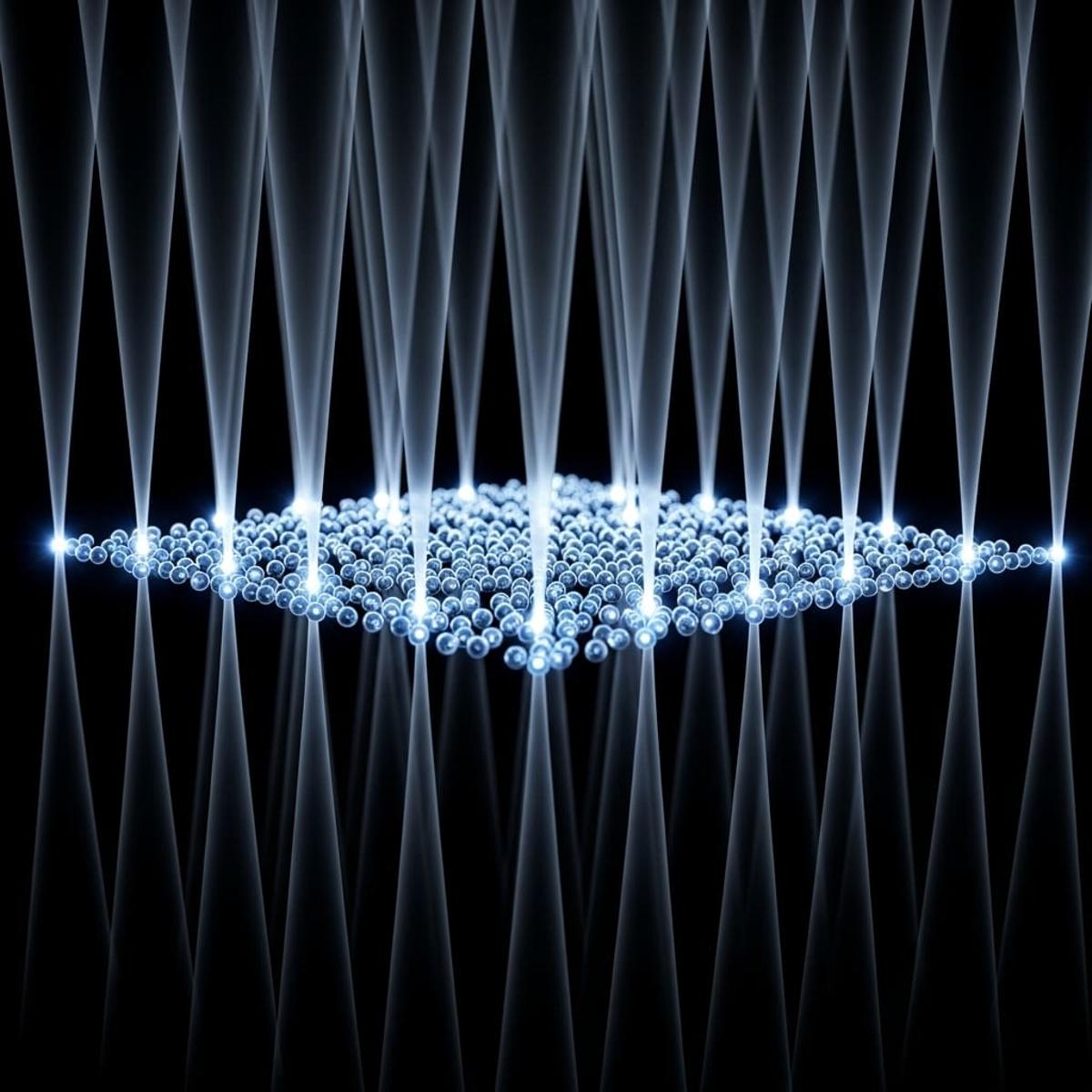
Strontium Tweezer Array Achieves 0.81m Waist for Quantum Computing Advances
Researchers at Eindhoven University of Technology and the University of Amsterdam have built a 5 × 5 strontium‑tweezer array with a 0.81 µm optical‑tweezer waist. The apparatus uses a two‑stage laser‑cooling sequence to reach atom temperatures near 5 µK and employs eight ultra‑stable continuous‑wave...

SEALSQ to Showcase Post-Quantum Cybersecurity Solutions at Tech&Fest 2026 in Grenoble
SEALSQ Corp (NASDAQ: LAES) will display its post‑quantum cybersecurity portfolio at Tech&Fest 2026 in Grenoble on February 4‑5, highlighting hardware‑based roots of trust. The French subsidiary, SEALSQ France, builds on three decades of secure‑semiconductor expertise inherited from Gemplus and employs nearly 200 staff...
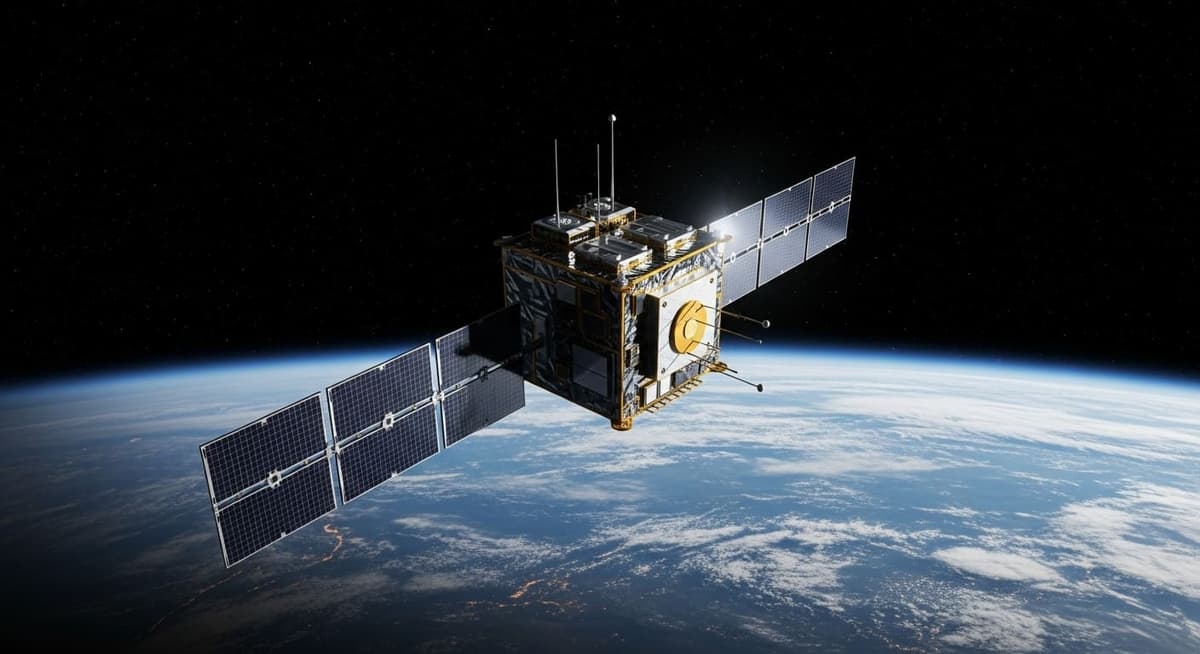
Satellite Quantum-Internet to Reach $1.82B in 2026 with 32.9% CAGR
A new ResearchAndMarkets.com report projects the satellite quantum‑internet market to reach $1.82 billion in 2026, up from $1.37 billion in 2025, representing a 32.9% compound annual growth rate. The market is expected to expand to $5.63 billion by 2030 with a sustained 32.6%...

Data Analysis of 62 National Quantum Strategies Reveals Shifting Priorities
Researchers examined 62 national quantum strategy documents from 20 countries using AI and natural‑language processing. The analysis uncovered twelve dominant topics and shows a clear temporal shift from basic research toward practical applications and commercialization. The study also flags emerging...
Achieves 0.94 Fidelity: LiDMaS Advances Fault-Tolerant GKP Photonic Qubit Injection
Researchers at Georgia Tech introduced LiDMaS, a lightweight density‑matrix modeling framework for fault‑tolerant magic‑state injection in GKP‑encoded photonic qubits. By varying squeezing, loss, and surface‑code distance, they achieved repeat‑until‑success injection success probabilities above 94% with average overhead near one. After...
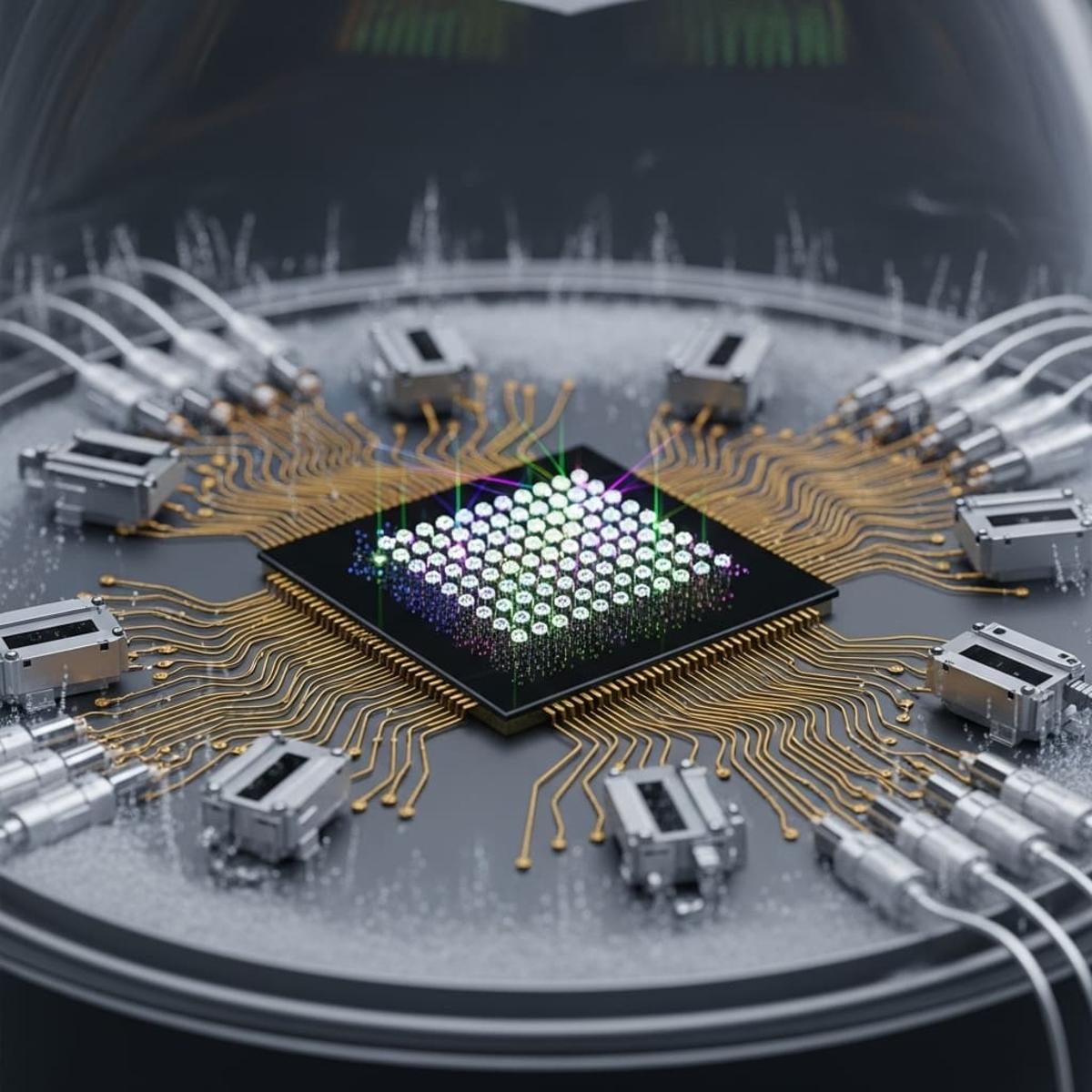
Quantum Computing Achieves Precise Machine Failure Detection Using 133 Qubits
Researchers from Woodside Energy and IBM demonstrated a quantum‑enhanced failure detection algorithm on IBM's 133‑qubit Heron processor. By projecting sensor data into quantum feature space and applying density‑ratio change‑point detection, the method identified machine anomalies with higher precision than classical...
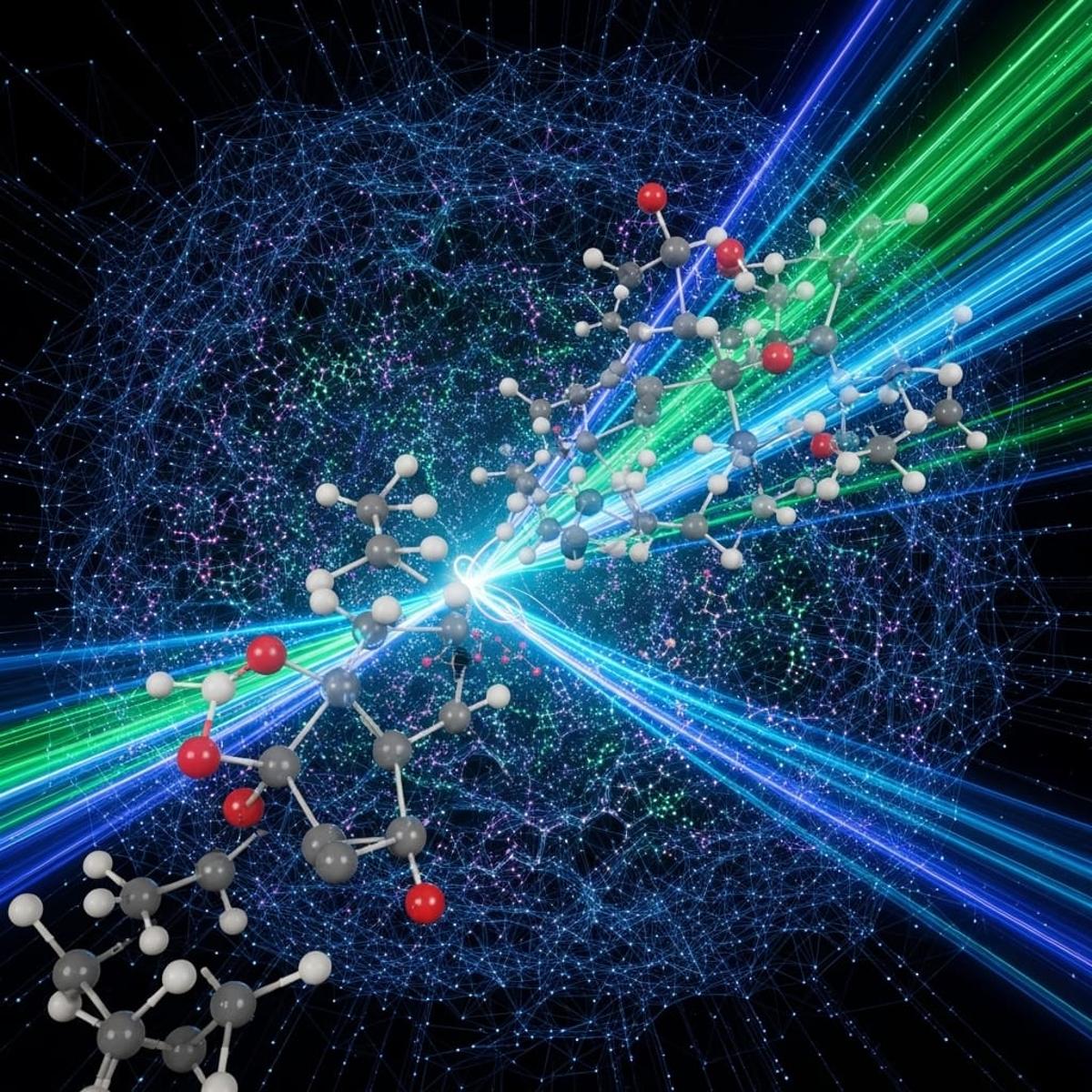
Molecular Language Model Achieves 100x Faster Quantum Hamiltonian Prediction
Researchers introduced MGAHam, a multimodal molecular language model that predicts quantum Hamiltonian matrices directly from SMILES strings. By aligning SMILES with latent geometric representations and applying a modality‑compensation layer, the model reaches a mean absolute error of roughly 7×10⁻⁵, matching...

Advances MBQC with Binomial Codes and Cavity-Qed for Quantum Computing
Researchers Teja and Filip introduced a cavity‑QED protocol that generates binomial‑code photonic states for measurement‑based quantum computation. By leveraging controlled‑phase‑flip operations, atomic rotations and projective measurements, the method creates high‑fidelity cluster and magic states while explicitly modeling photon‑loss via Kraus...
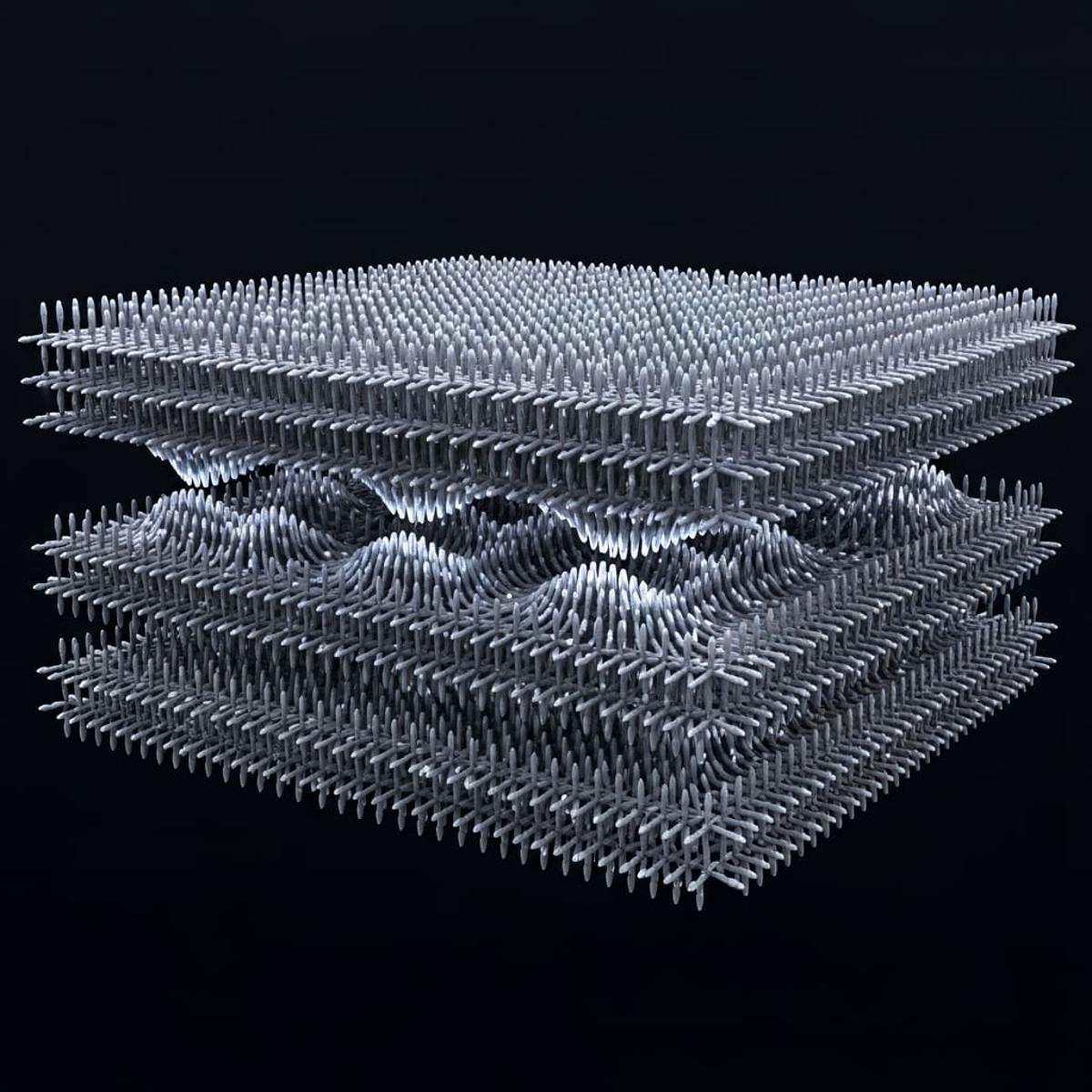
Researchers Demonstrate Gapped Spin Excitations in -Rucl at 8T Magnetic Fields
Researchers using inelastic neutron scattering have identified a gapped spin‑excitation spectrum in α‑RuCl₃ at magnetic fields of 8 Tesla and above. The excitations form a broad, largely flat continuum that cannot be explained by conventional magnon‑decay models, pointing instead to fractionalized...
High-Performance Crypto-Processor Achieves Efficient Implementation for Robust FrodoKEM KEM
Researchers unveiled a high‑performance crypto‑processor tailored for the FrodoKEM post‑quantum key encapsulation mechanism. The design employs a multiple‑instruction overlapped execution scheme, a reconfigurable parallel multiplier array, and a compact memory‑scheduling strategy. Implemented on an Artix‑7 FPGA, it consumes 13,467 LUTs,...

QAOA with 24 Qubits Achieves Efficient 5G CBRS Multi-Channel Allocation
Korea University researchers introduced a subspace‑confined Quantum Approximate Optimization Algorithm (QAOA) that uses Generalized Dicke state initialization and an intra‑register XY mixer to solve multi‑channel allocation in 5G Citizens Broadband Radio Service (CBRS) networks. By restricting the quantum search to...

Quantum Compilers’ Retargetability Assessed: New Metric Analyses Key Aspects
Researchers at Karlsruhe Institute of Technology introduced a new metric to evaluate the retargetability of quantum compilers, measuring how easily software can be adapted to diverse quantum hardware. Their user study compared three leading compilers—Tket, Qiskit, and ProjectQ—using six participants...
GPU Acceleration Advances Real-Time Tamm-Dancoff Approximation for Electron Dynamics Simulations
Researchers at Stony Brook University introduced a GPU‑accelerated real‑time Tamm‑Dancoff approximation (RT‑TDA) that propagates LR‑TDDFT amplitudes directly in time. The method sidesteps Hamiltonian diagonalisation, allowing simulations of molecules with over 120 heavy atoms and extended picosecond timescales. Demonstrations include linear...
Quantum Position Verification Achieves Secure Remote Localization with Loophole-Free Bell Tests
Researchers unveiled a device‑independent quantum position verification protocol that secures remote localisation without trusted hardware. By employing loophole‑free Bell tests across a 195‑meter quantum network, the team demonstrated 2.47× higher precision than the best classical schemes and a 4.53× reduction...
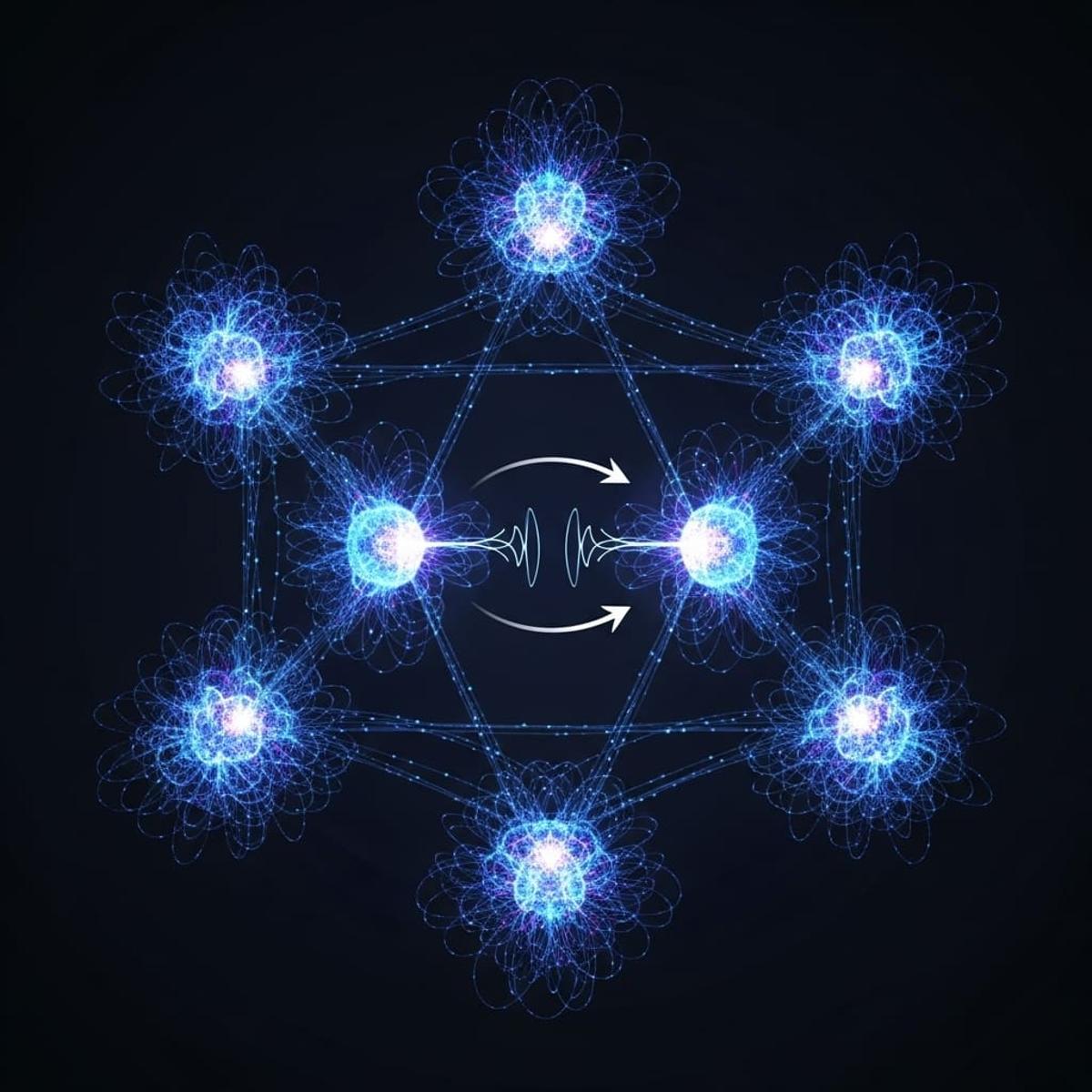
Experimental Results Validate Nonclassicality with Four Preparations and Two Measurements
Researchers demonstrated that classical light can reproduce statistical signatures traditionally linked to quantum non‑classicality using a minimal setup of four preparation states and two binary measurements. By carefully controlling polarization and introducing a calibrated depolarising channel, the experiment violated noise‑robust...

Classical Regularization Achieves Stable Convergence for Variational Quantum Eigensolvers
Researchers demonstrate that adding a classical L₂‑squared‑norm penalty to variational quantum eigensolvers (VQEs) dramatically stabilises optimisation across diverse testbeds such as H₂, LiH, and the Random‑Field Ising Model. The penalty reshapes the classical loss landscape, shrinking parameter norms and raising...
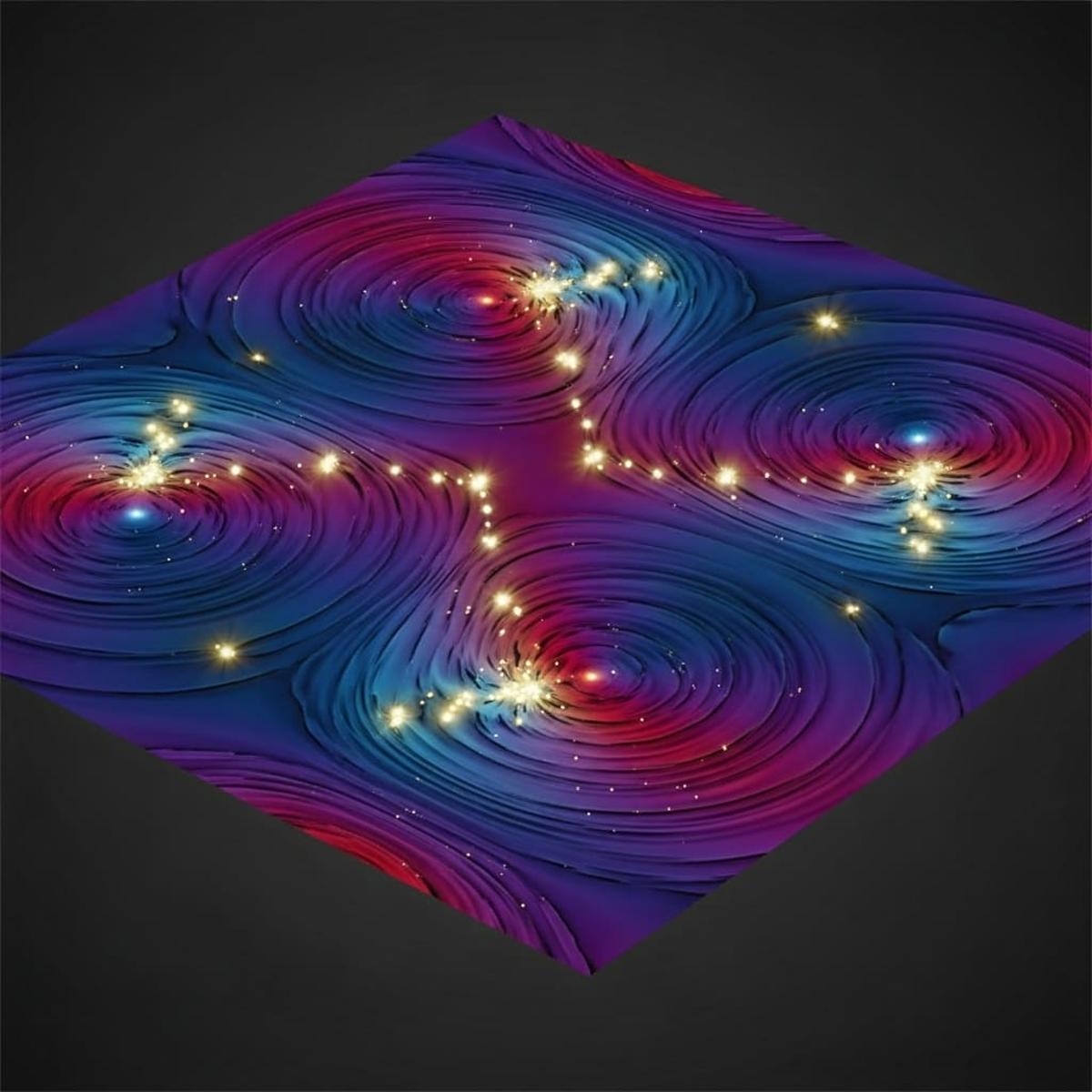
Theory Advances Next-Generation Even-Denominator States at Filling Factors
Researchers Yutushui and Mross introduce a comprehensive theoretical framework for next‑generation even‑denominator quantum Hall states observed at filling factors such as 1/2, 1/4 and 1/6. The model distinguishes these states from earlier Bonderson‑Slingerland proposals, predicts which topological phase will dominate...

SuperQ Quantum Appoints Cybersecurity Veteran to Lead Post-Quantum Commercialization in 2026
SuperQ Quantum Computing Inc. announced the appointment of Brian Beveridge, a 30‑year cybersecurity veteran, as Director of Post‑Quantum Cybersecurity and Partnerships, effective Jan 22 2026. Beveridge will lead the commercialization of the company’s SuperPQC™ suite, which protects against “Harvest Now, Decrypt Later”...
Photon-Added Cat and Kitten States Achieve Enhanced Phase-Space Sensitivity
Researchers Arman and Prasanta K. Panigrahi demonstrate that adding single photons to squeezed Schrödinger cat and kitten states markedly expands their phase‑space support. The photon‑added variants exhibit larger amplitudes, higher quantum Fisher information, and tighter interferometric fringes than their unmodified counterparts. By...

Closing of UNESCO’s Quantum Year in Ghana
UNESCO’s International Year of Quantum Science & Technology 2025 concludes with a two‑day ceremony on February 10‑11 in Accra, Ghana. The event will celebrate hundreds of global activities that raised public awareness of quantum science and will unveil the new Global...
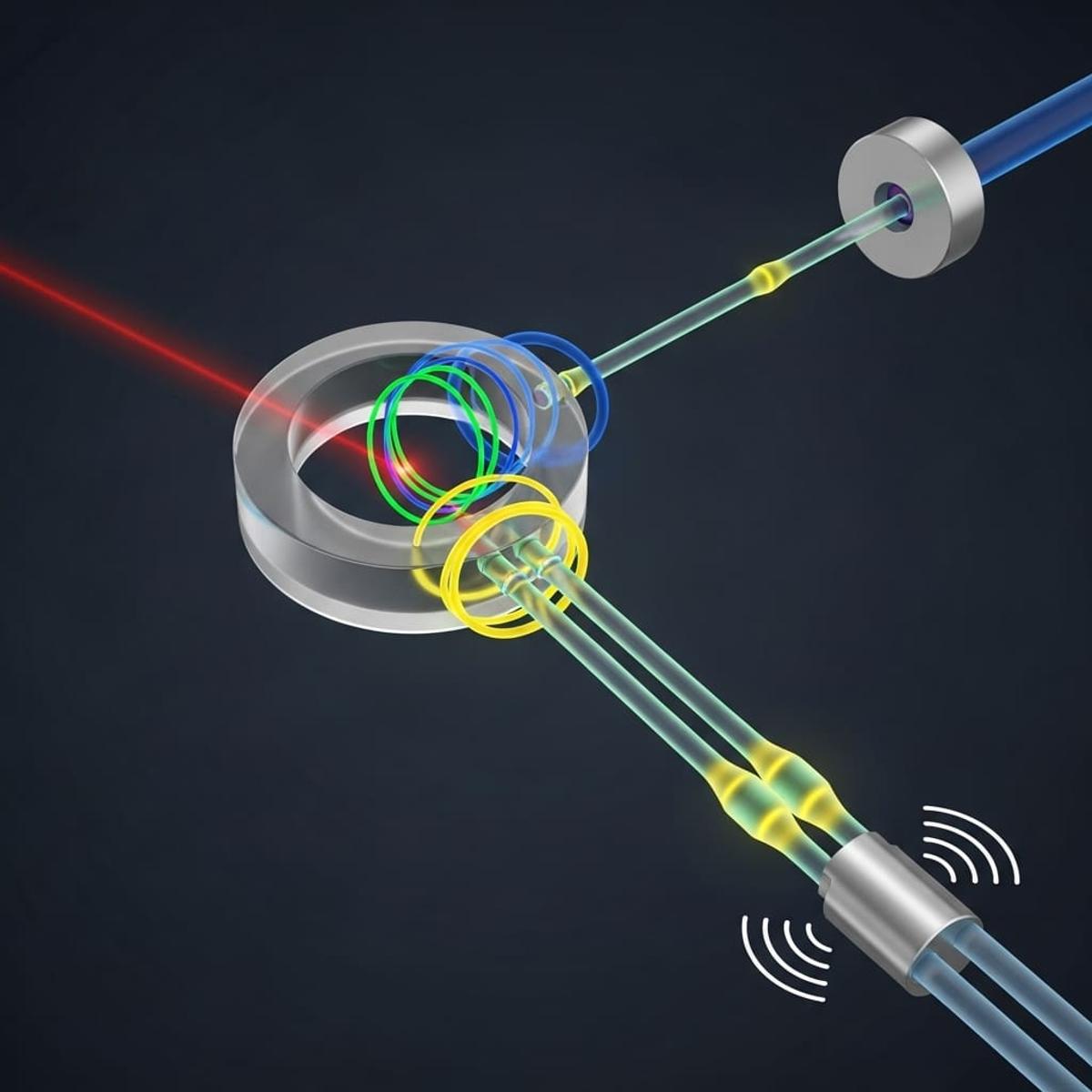
Momentum Achieves Long-Range Entanglement in Broken Symmetry 1D Systems
Researchers Amanda Gatto Lamas and Taylor L. Hughes demonstrate that non‑zero momentum directly indicates long‑range entanglement (LRE) in one‑dimensional quantum systems lacking translational symmetry. By analyzing the many‑body momentum distribution and the expectation value of the translation operator |⟨T⟩|, they...

Support Geometry Achieves Fast Entanglement Diagnostics in Qubit Registers
The study leverages Boolean‑cube geometry to create a fast, scalable method for diagnosing entanglement in pure qubit registers. By linking separability to the support size of computational basis states, the authors derive closed‑form support counts and a diagnostic algorithm that...

Wigner’s Friend Circuit Achieves 0.877 Inter-Branch Communication Witness Fidelity on IBM
Researchers led by Christopher Altman have implemented a five‑qubit Wigner’s Friend circuit on IBM’s ibm_fez superconducting processor, achieving a population‑based visibility of 0.877 and coherence witnesses of 0.840 and –0.811. The experiment benchmarks inter‑branch communication witnesses without physical signalling, providing...