

Shows TopoLS Cuts Lattice Surgery Volume by 33% with Topological Transformations
Researchers at the University of Pennsylvania and UC Berkeley unveiled TopoLS, a topological compiler that merges ZX‑diagram optimisations with Monte Carlo tree search to streamline lattice‑surgery compilation. Across diverse benchmarks, TopoLS slashes the space‑time volume needed for quantum error correction by an average of 33%, with reductions ranging from 4% to 87%. The tool maintains linear compilation‑time scaling and can handle circuits up to 100 qubits, outperforming SAT‑solver‑based approaches that falter on larger problems. Its design targets the 2D rotated surface‑code architecture.

Multiverse Computing Celebrates Major Milestone as Foundational Quantum Finance Paper Exceeds 1,000 Academic Citations
Multiverse Computing’s 2019 paper "Quantum Computing for Finance: Overview and Prospects" has now exceeded 1,000 academic citations, placing the firm alongside quantum heavyweights such as IBM and D‑Wave. The work emphasized quantum software for finance rather than hardware, establishing a...

Shows Hybrid Quantum Network Improves Earth Observation Data Classification with Multitask Learning
Researchers at the Technical University of Munich and the German Aerospace Center introduced a hybrid quantum‑classical neural network, MLTQNN, to classify large‑scale Earth observation data. The model combines multitask learning, a location‑weight module, and quantum convolution operations to streamline data...
CNN-Bilstm Shows 99.97% Accuracy Classifying Entanglement with 100 Samples
Researchers from Beijing Normal University and Tsinghua University introduced a CNN‑BiLSTM hybrid that classifies 3‑ and 4‑qubit multipartite entanglement. Using only 100 training samples, the dimensionality‑transforming Architecture 2 reached over 90 % accuracy, while with a full set of 400 000 samples both...

Two-Step S 2 Mechanism Achieves Insight with Vibrational Strong Coupling (VSC) Studies
Researchers used high‑level ab initio coupled‑cluster methods to resolve the mechanism of the nucleophilic substitution of 1‑phenyl‑2‑trimethylsilylacetylene (PTA) with fluoride under vibrational strong coupling (VSC). The calculations confirm a two‑step S_N2 pathway, revealing previously unreported encounter and product complexes and...

Snowball Ising Machine Achieves Faster Combinatorial Optimisation with 3 Key Advances
Researchers at ETH Zurich introduced Snowball, a digital all‑to‑all Ising machine that combines dual‑mode MCMC spin selection with asynchronous updates. The prototype on an AMD Alveo U250 accelerator achieved an eight‑fold reduction in time‑to‑solution versus state‑of‑the‑art Ising hardware on benchmark...

Superconductivity Achieved in Nanowires Via 5.5m/mT Domain Wall Modulation
Researchers showed that aluminium shells on InAs/EuS nanowires become superconducting only when the EuS layer is in a multi‑domain magnetic state. Scanning SQUID magnetometry and low‑temperature transport revealed that a magnetic domain wall can be shifted at roughly 5.5 µm·mT⁻¹ using...

Advances Quantum Belief Propagation with Messages for Symmetric Q-Ary Channels
Researchers have broadened belief propagation with quantum messages (BPQM) from binary to symmetric q‑ary pure‑state channels with circulant Gram matrices. They derived closed‑form recursions based on Gram‑matrix eigenvalues, yielding explicit BPQM unitaries and analytic fidelity bounds independent of the underlying...

FormationQ Announces Joint Program with Cavendish Lab, Powered by IonQ’s Platform
The Cavendish Laboratory at the University of Cambridge and quantum‑software firm FormationQ have launched a joint applied quantum program powered by IonQ’s trapped‑ion platform. The initiative, backed by a $2.5 million investment from FormationQ, will use IonQ Forte’s 32 algorithmic qubits...
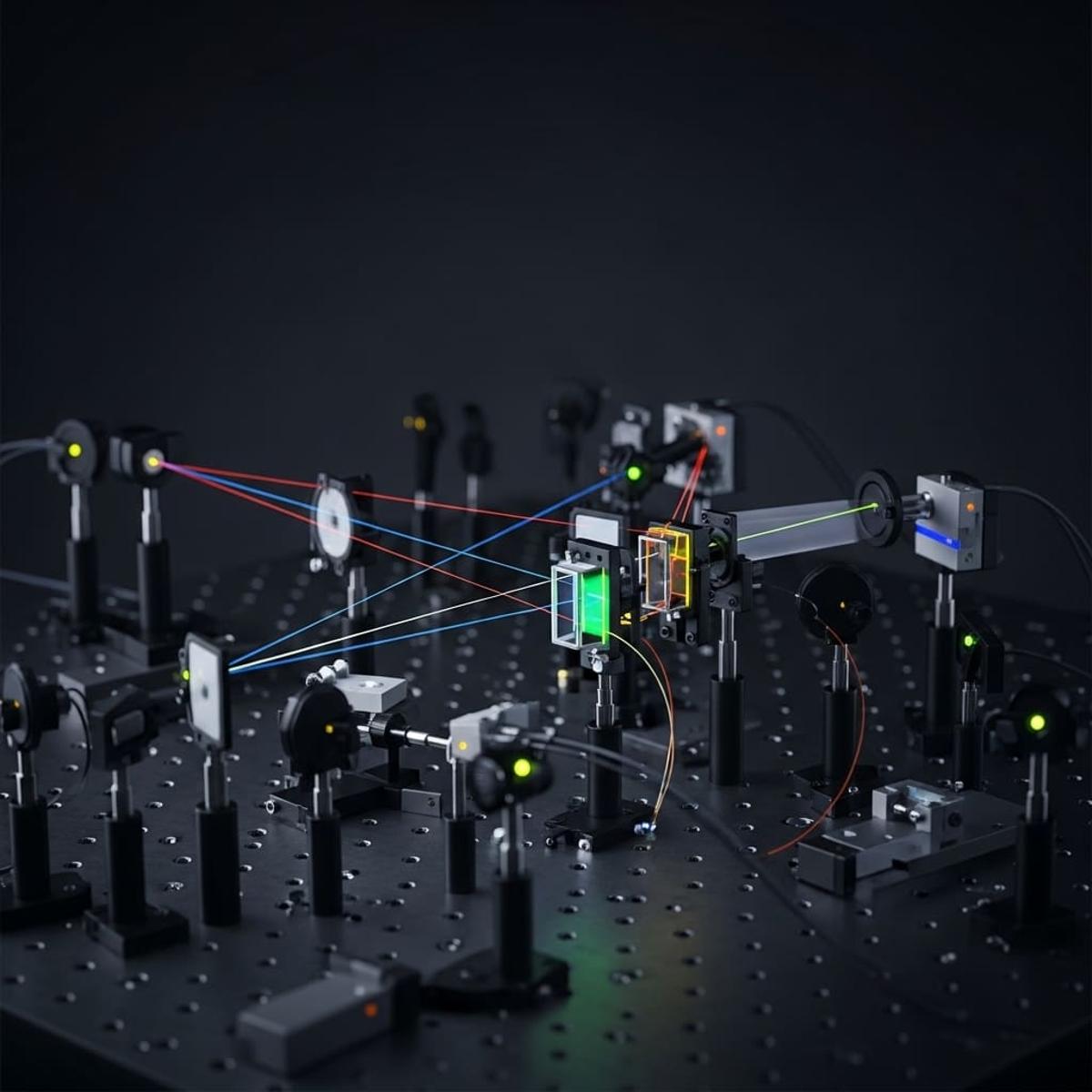
Adiabatic Rapid Passage Achieves Low Multiphoton Emission for Quantum Key Distribution
Researchers at IIT Delhi demonstrated that adiabatic rapid passage (ARP) excitation of a negatively charged quantum dot in an elliptical microcavity dramatically lowers multiphoton emission and raises photon indistinguishability. Compared with conventional resonant driving, ARP yields brighter, cleaner single‑photon output....

Future Cars Shielded From Quantum Hacking with Adaptable Security System
Researchers at the University of Oslo have unveiled an adaptive post‑quantum cryptography framework designed for 6G vehicle‑to‑everything (V2X) networks. By predicting short‑term mobility, channel conditions, weather, and message urgency, the system dynamically selects lattice, code, or hash‑based PQC schemes. A...

Infleqtion Advances Scalable Quantum Computing with Faster, More Reliable Qubit Measurements
Infleqtion, in partnership with the University of Wisconsin–Madison, has achieved 99.93 % reliable nondestructive measurement of neutral‑atom qubits by combining precise readout with continuous cooling. The technique eliminates measurement‑induced decoherence, enabling faster computation cycles and more robust error correction. Published in...

Inference Energy Consumption Diagnosed: LLM Tasks Show 25% Energy Differences
Researchers at the University of Michigan and The ML.ENERGY Initiative conducted a massive measurement campaign across 46 generative AI models, seven tasks, and 1,858 configurations on NVIDIA H100 and B200 GPUs. They discovered order‑of‑magnitude energy differences, with large‑language‑model (LLM) task...
Rényi Entropies: Research Reveals Complete Characterisation of Conditional Entropies
Researchers Rubboli, Haapasalo, and Tomomichel deliver a complete axiomatic characterisation of conditional entropy, proving it must be an exponential average of Rényi entropies weighted by a probability measure. The framework rests on three core axioms—additivity for independent variables, invariance under...

Researchers Reveal Logical Noise Learning From Syndrome Data with 200601 Precision
Researchers from the University of Chicago and the Perimeter Institute have introduced a method to infer logical error channels directly from quantum error‑correction syndrome data using Fourier analysis and compressed‑sensing techniques. They prove necessary and sufficient conditions for learnability and...

Dicke Superposition Probes Reveal N-Qubit Scaling for Resilient Heisenberg Metrology
Researchers from Kuvempu and Bangalore Universities have introduced Dicke‑superposition probes that achieve near‑Heisenberg scaling (quantum Fisher information ≈ N²) for phase estimation. The study shows these probes retain high precision under one‑ and two‑body interaction Hamiltonians while exhibiting superior robustness to...

Quantum Scrambling Shows Exponentially Many Parameter Estimation in System Size
MIT researchers introduced a multiparameter quantum‑sensing protocol that uses quantum scrambling and random Clifford circuits to encode many signals into distinct measurement bit‑strings. The method can estimate an exponentially growing number of non‑commuting, time‑dependent parameters while requiring only a logarithmic...
Fully Exact Module Categories Advance Stability Under Deligne Product for Finite Braided Tensor Categories
Researchers Azat M. Gainutdinov and Robert Laugwitz introduced “fully exact” module categories, a subclass of exact module categories that remains stable under the relative Deligne product. They proved that this class strictly contains invertible and separable module categories and that...

Qcl-Ids Achieves 0.941 Accuracy in Quantum Continual Intrusion Detection Systems
Researchers at Johns Hopkins introduced QCL‑IDS, a quantum‑centric continual‑learning framework for intrusion detection that balances adaptation to new attacks with retention of historic threat knowledge. The system leverages Quantum Fisher Anchors and privacy‑preserved quantum generative replay to achieve mean Attack‑F1...

Fedgraph-Vasp Achieves 0.855 AML Accuracy with Post-Quantum Privacy Preservation
Researchers introduced FedGraph‑VASP, a privacy‑preserving federated graph learning framework that enables virtual asset service providers to jointly detect money‑laundering without sharing raw transaction data. The system exchanges compressed graph embeddings secured with Kyber‑512 key encapsulation and AES‑256‑GCM, delivering quantum‑resistant protection....

Quantum Computers Move Closer with Light-Based Link Breakthrough
Researchers at IST Austria have successfully up‑converted single microwave photons generated by a superconducting transmon qubit to telecom‑band optical photons. The electro‑optic transducer, based on a lithium‑niobate whisper‑gallery resonator, achieved an internal conversion efficiency of 1.6 × 10⁻³ and a signal‑to‑noise ratio...

Hierarchical Quantum Decoders Achieve Optimality with Tunable Speed and Accuracy Tradeoffs
Researchers introduced a hierarchical family of quantum decoders built on the Lasserre Sum‑of‑Squares (SOS) hierarchy, converting the NP‑hard decoding problem into a sequence of semidefinite programs (SDPs). The approach lets users trade decoding speed for accuracy, with lower‑level SDPs delivering...

Quantum Cryptography Moves Closer with Working BB84 and E91 Protocols
Researchers demonstrated quantum key distribution (QKD) on IBM's superconducting quantum platform by implementing the BB84 and E91 protocols with SX‑gate operations. Using a 133‑qubit device and 128‑shot runs, they achieved zero error for BB84 and a 0.094 error rate for...
Bravyi-König Theorem Achieves Limit for -Dimensional Floquet Codes and Stabilisers
Scientists at QuSoft and CWI have proved that the Bravyi‑König theorem, which limits logical operations in topological stabiliser codes, also holds for Floquet codes constructed from locally conjugate stabiliser groups. They defined these dynamic codes, showed that constant‑depth logical gates...
Quantum Metrology Achieves Optimal Measurements Via Geometric Criterion and QCRB Saturation
Researchers have linked the saturation of the quantum Cramér‑Rao bound (QCRB) in multiparameter quantum metrology to a geometric property called simultaneous hollowization of traceless operators. They prove that achieving the ultimate precision limit with single‑copy, rank‑one measurements is equivalent to...

Researchers Achieve Universal Topological Gates Using 54-Qubits
Researchers from Quantinuum have demonstrated universal topological quantum gates on a 54‑qubit H2 processor by implementing the S₃ quantum double model. By treating anyon fusion as a fundamental operation, they achieved a universal gate set comprising an entangling braid and...

Scientists Achieve 89% Coherent Nuclear Spin Control Without RF Fields
Scientists at the University of Stuttgart have demonstrated coherent control of a nuclear spin coupled to a modified divacancy (PL6) center in 4H‑silicon carbide using only microwave pulses. By tilting an external magnetic field they activate hyperfine‑enhanced effects, eliminating the...

Single-Photon Detector Flaws Unravelled, Paving the Way for Faster Data Transmission
Researchers from Oak Ridge National Lab and Single Quantum have mapped how nanoscale disorder affects superconducting nanowire single‑photon detectors (SNSPDs). By using helium‑ion irradiation to introduce controlled disorder, they combined DC transport, dark‑count, and microwave spectroscopy to separate local instability,...

High-Frequency Quantum Computing Achieves 10GHz Operation with Enhanced Coherence Times
Researchers at Jazan University unveiled a high‑frequency, high‑coherence quantum‑computing architecture featuring an 8‑transmon processor that operates above 10 GHz, with a target frequency of 12 GHz. The design promises average relaxation times of up to 1.9 ms and quality factors reaching 2.75 × 10⁷, leveraging...

Niobium Bilayers: XPS Demonstrates 17 Capping Layers Resist Surface Oxidation
Scientists used X‑ray photoelectron spectroscopy to evaluate 17 niobium capping layers for their ability to block oxygen diffusion. The rapid, non‑destructive XPS method identified metal nitrides and zirconium as the most resilient barriers, while 5 nm noble metals proved ineffective. Resonators...

Hyperrbm Achieves High-Fidelity Quantum State Tomography on 1D and 2D Lattices
Researchers at Johannes Kepler University introduced HyperRBM, a hypernetwork‑conditioned Restricted Boltzmann Machine that can reconstruct entire families of quantum ground states. The model achieves high‑fidelity tomography on both one‑ and two‑dimensional lattices, accurately mapping phase transitions and pinpointing the critical...

Szegedy Quantum Walk Achieves -Partition Graph Community Detection with High Accuracy
Researchers at NIT Agartala introduced a Szegedy quantum‑walk algorithm for graph community detection, converting classical transition matrices into unitary operators. The method generates a limiting probability distribution that isolates inter‑community edges, enabling accurate partitioning of benchmark networks such as Zachary’s...

Researchers Achieve 3D Imaging of Biphoton Spatiotemporal Wave Packets Directly
Researchers at the University of Science and Technology of China have unveiled an all‑optical 3D imaging technique that fully characterises the spatial, spectral and temporal correlations of biphoton wave packets. By applying cross‑phase modulation in a photonic crystal fiber and...
Boundary Effects Achieve Coherence Amplification with Three Unruh-Dewitt Detectors
Researchers Wu, Jiang, Yu, Liu and colleagues examined how a perfectly reflecting boundary influences quantum coherence harvesting using three Unruh‑DeWitt detectors. Their model shows that while proximity to the boundary can suppress coherence, orthogonal detector alignments and identical energy gaps...
Researchers Identify Sp Dangling Bonds on H-C(100) Surfaces for Diamond Technologies
Researchers from the Australian National University and La Trobe University introduced a scanning tunnelling spectroscopy (STS) protocol that reliably identifies sp³ dangling bonds on hydrogen‑terminated diamond (H‑C(100)). By pairing high‑resolution STS measurements with density‑functional theory calculations, they mapped defect‑related electronic...
Researchers Demonstrate Collective Emission From Hexagonal Boron Nitride Emitter Ensembles
Researchers have demonstrated superradiant, cooperative light emission from quantum emitters embedded in hexagonal boron nitride (hBN) layers at room temperature. By using localized electron‑beam irradiation to form tightly spaced B‑center defect ensembles, they observed a super‑linear increase in photoluminescence intensity...
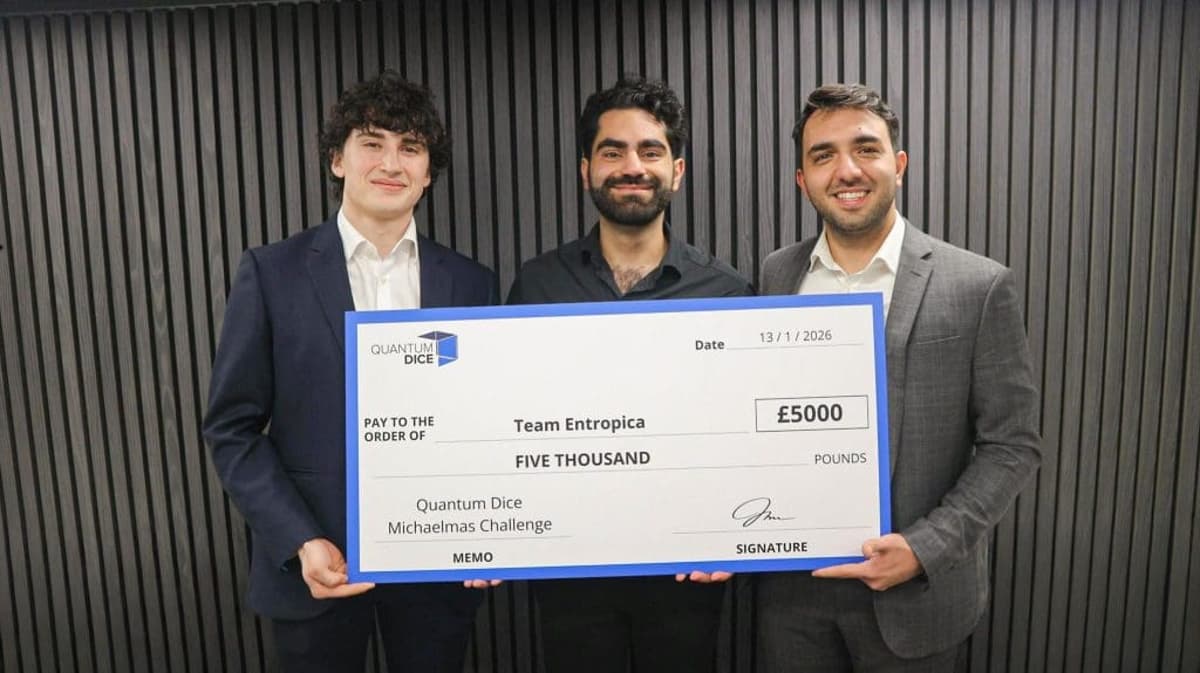
Quantum Dice Michaelmas Challenge: Students Tackle Risk, Energy & AI
Quantum Dice wrapped up its first Michaelmas Challenge, drawing 29 student and researcher teams to explore probabilistic computing over eight weeks. The competition awarded £8,000 in cash prizes, with Team Entropica winning for a novel sports‑betting risk‑management model, The Committed...
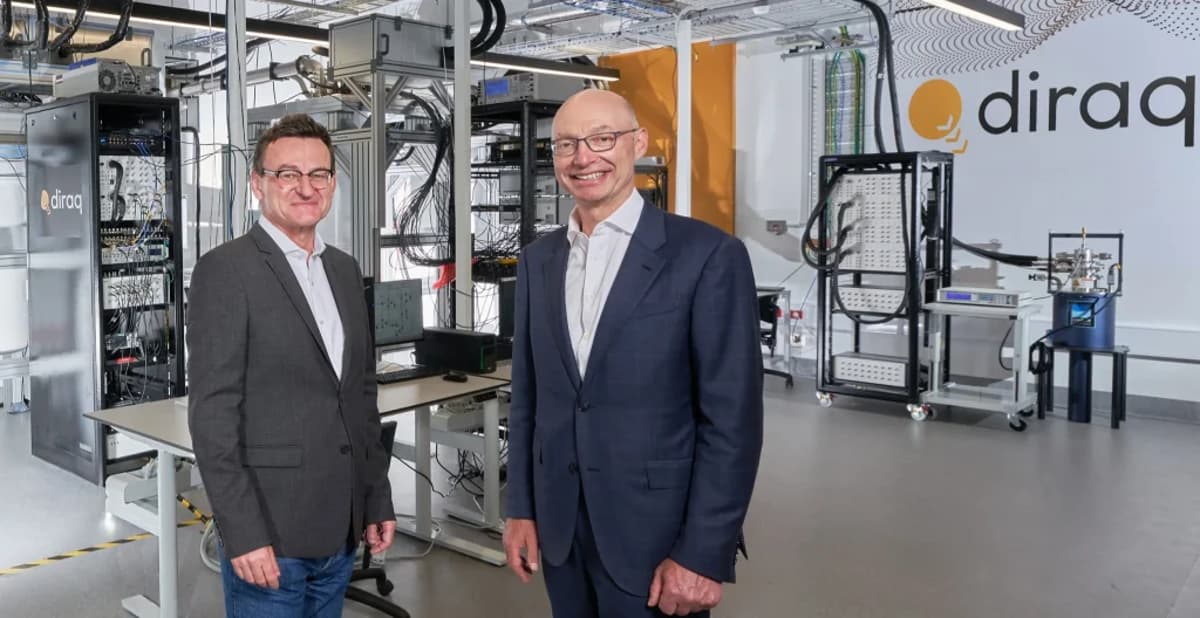
Diraq Secures $20M NRFC Investment to Lead Utility-Scale Quantum Computing
Diraq, an Australian quantum‑computing startup, secured a $20 million equity investment from the National Reconstruction Fund Corporation to accelerate its utility‑scale quantum computer roadmap. The funding will underpin advanced silicon‑based qubit manufacturing, aiming to deliver a machine with genuine quantum advantage...

Grover’s Search Advances Massive MIMO User Scheduling for 5G and B5G
Researchers introduced a Grover‑based quantum reinforcement learning (QRL) framework to tackle user scheduling in massive MIMO downlink systems. The quantum‑gate circuit mimics reinforcement‑learning layers, using Grover’s amplitude amplification to locate high‑reward scheduling policies faster than classical methods. Simulations show a...

Lam Research & CEA-Leti Partner to Accelerate Next-Gen Specialty Tech Fabrication
Lam Research and France’s CEA‑Leti have signed a multi‑year agreement to speed development of next‑generation specialty‑technology devices. The partnership combines Lam’s etch, deposition and its Prestis™ pulsed laser deposition system with CEA‑Leti’s advanced device‑characterization platform to tackle material and integration...
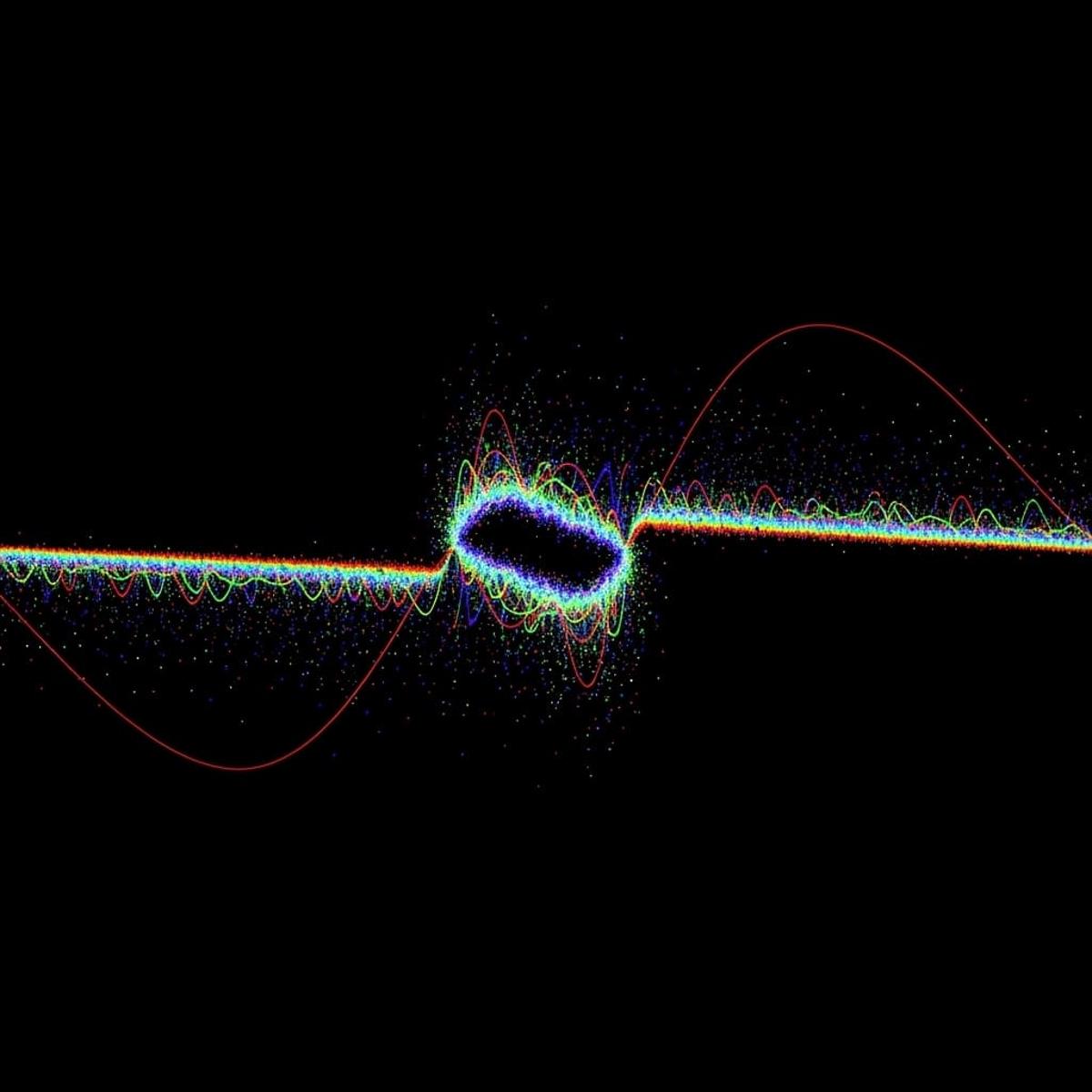
Thermodynamics of Linear Open Walks Achieves Population Inversion Near Critical Value
Researchers at Universidade Federal de Pernambuco introduced a thermodynamic framework for linear open quantum walks (OQWs), defining an equilibrium temperature and characterising entropy, Helmholtz free energy, and thermalisation dynamics. They identified a critical environmental parameter that triggers population inversion, where...
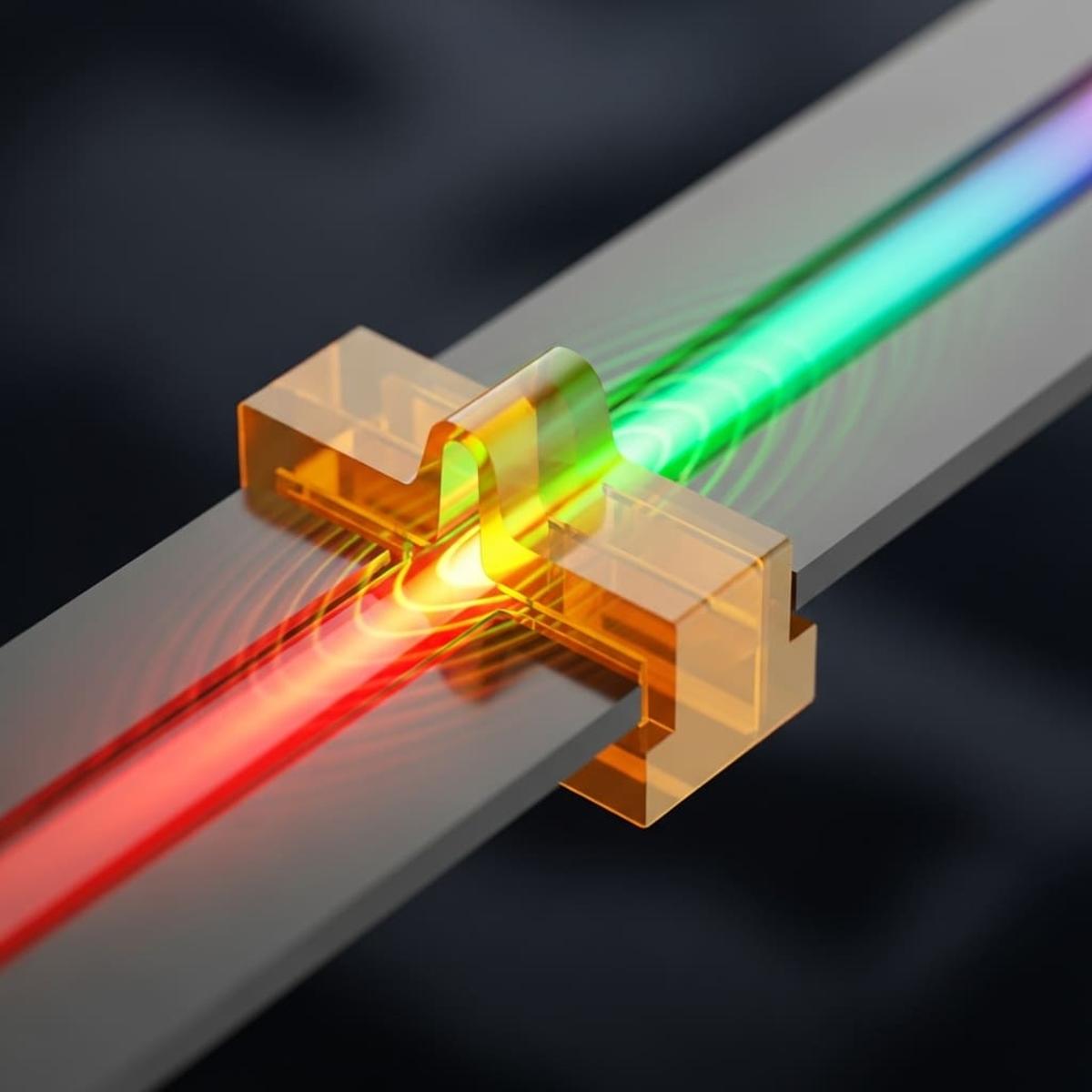
Batio Waveguides Achieve 2.75x Enhanced Nonlinear Frequency Conversion Efficiency
Researchers at the Fraunhofer Institute have introduced hybrid barium titanate‑titanium dioxide (BaTiO₃‑TiO₂) ridge waveguides that achieve a 2.75‑fold increase in normalized second‑harmonic generation (SHG) efficiency compared with monolithic BaTiO₃ devices. The design embeds a thin TiO₂ layer to reshape modal...

Fluxonium Qutrit Arrays Achieve Tunable Interactions for Exotic Matter Simulation
Researchers have demonstrated that fluxonium superconducting circuits can be re‑engineered into tunable qutrits, expanding the toolbox beyond conventional qubits. By applying an external magnetic flux, they identified four distinct operational regimes—plasmon‑plasmon, fluxon‑fluxon, and mixed configurations—each supporting unique interaction patterns. The...

Quantum Random Features Achieve 89.3% Accuracy on Fashion-Mnist with Scalable Qubits
Researchers introduced Quantum Random Features (QRF) and Dynamical Random Features (QDRF), lightweight quantum models that mimic classical random Fourier features without deep circuits. Experiments on the Fashion‑MNIST benchmark showed QRF reaching 86 % accuracy with 11 qubits and QDRF achieving 89 %...

Researchers Achieve Ns-Scale Quantum Dynamics with Novel Computer-Aided Design Framework
Researchers from LG Electronics Toronto AI Lab introduced a computer‑aided design framework that uses quantum computers to simulate nanosecond‑scale dynamics of solid‑state spin systems. The platform models electronic and nuclear spins together with spin‑phonon interactions, employing the sQKFF algorithm and...

Entanglement Via Classical Mediators Achieved Using Hybrid Van Hove Theory
Scientists Ulbricht, Bermúdez Manjarres and Reginatto show that two quantum spins become entangled when their interaction is mediated solely by a classical harmonic oscillator, using a hybrid van Hove theory. The framework combines Schrödinger operators for quantum parts with van Hove operators...
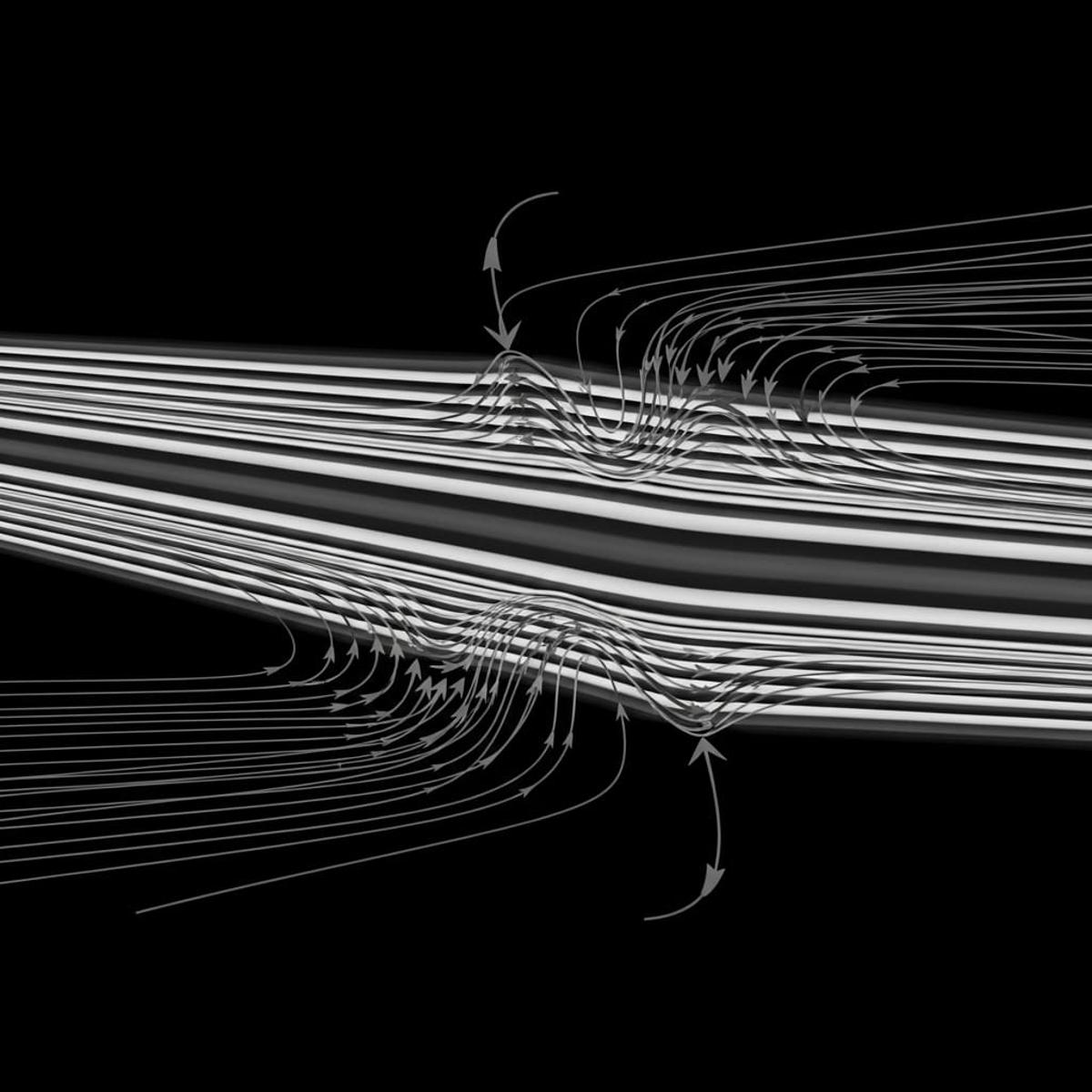
Stripe Antiferromagnetism and Chiral Superconductivity Achieved in tWSe at -Point Van Hove Singularity
Researchers reported that antiferromagnetic interactions in twisted bilayer tungsten diselenide (tWSe₂) can induce a chiral superconducting state when the Fermi level sits near the M‑point van Hove singularity. By constructing a moiré model directly from density‑functional theory and applying a t‑J‑U...
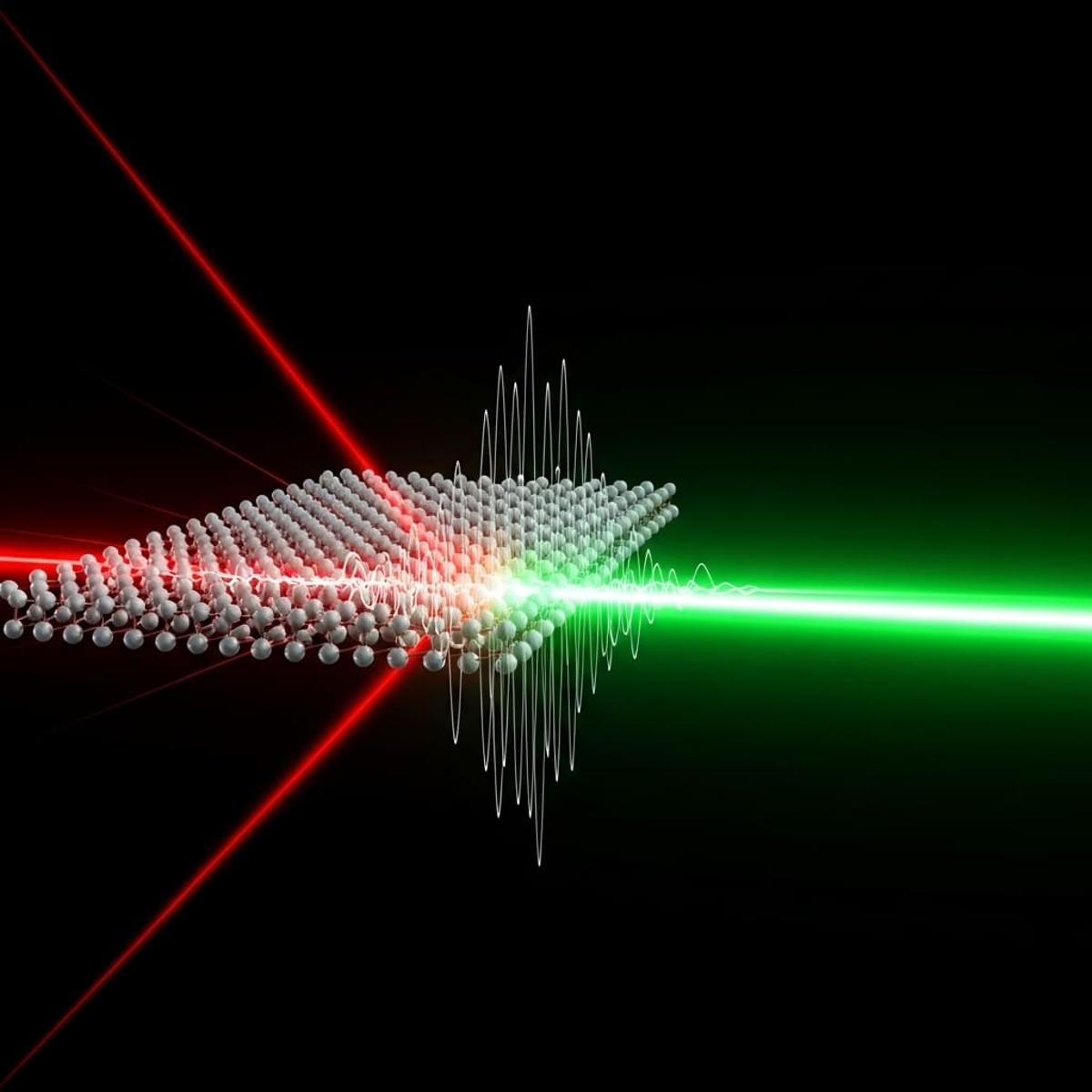
Giant Second-Harmonic Generation Achieves 104 Susceptibility in Bismuth Monolayer
Researchers at Fudan and Sun Yat‑Sen Universities demonstrated that buckling a bismuth monolayer triggers a topological transition, dramatically boosting its second‑harmonic generation (SHG) response. First‑principles calculations show a static susceptibility exceeding that of MoS₂ by two orders of magnitude, with...
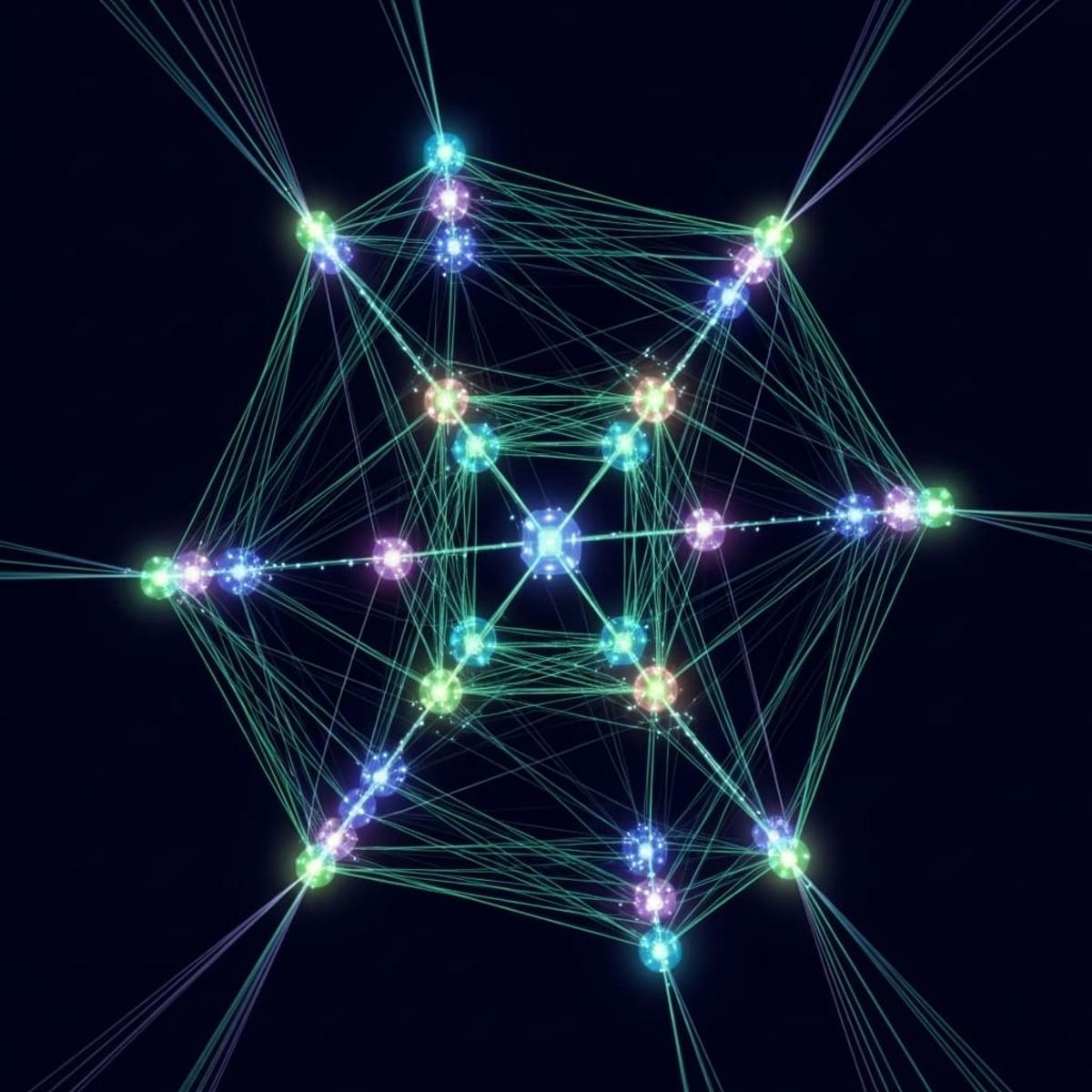
Quantum Approach Achieves Competitive Graph Coloring Solutions Using Gaussian Boson Sampling
A recent study demonstrates that Gaussian Boson Sampling (GBS), a photonic quantum technique, can be used to solve graph‑coloring problems by reformulating them as independent‑set integer programs. By encoding graph adjacency into a Gaussian boson distribution, the method samples dense...

IRID + AIMING: The Pure-Play Quantum Computing Stocks vs Tech Giants Defining the Next Computing Era
Quantum computing investment is split between pure‑play hardware builders (IRID) and diversified tech giants (AIMING). The IRID group includes IonQ, Rigetti, Infleqtion and D‑Wave, each dedicated to manufacturing gate‑based or annealing machines, while AIMING comprises Amazon, IBM, Microsoft, Intel, Nvidia...