
Sub-Picosecond Electronic Switch Could Boost Future Superconductor Technology
Researchers from the University of Puerto Rico and the University of Wisconsin‑Madison introduced a fit‑free nematic response function model (NRFM) combined with a two‑temperature model to directly extract electronic thermalisation times in nematic iron‑based superconductors from polarization‑dependent pump‑probe data. The technique yields sub‑picosecond times of 110–230 fs for FeSeTe and Ba(FeCo)₂As₂ thin films, matching traditional two‑temperature model fits while avoiding complex fitting procedures. It also reveals anisotropic relaxation dynamics, and the authors claim the method can be applied to any material exhibiting electronic nematicity.
Tantalum Quantum Bits Hampered by Infrared, Niobium Proves More Resilient
Researchers at ETH Zurich quantified infrared‑induced quasiparticle tunneling in niobium and tantalum superconducting transmons. Baseline tunneling rates were ~100 Hz for niobium but up to 2 kHz for tantalum, revealing a material‑specific vulnerability. Applying inline low‑pass filters and surrounding foam absorbers lowered...

Entanglement’s Fleeting Dance Now Trackable with New Computational Techniques
Researchers Offen, Wembe, Ares and colleagues introduce new variational‑based numerical techniques to track entanglement in dynamic quantum systems. By applying linear splitting methods and comparing two discretisation strategies, they show that restricting the dynamics to separable states before discretising yields...
Quantum Channel Transposition Now Possible with Just One Measurement, Research Confirms
Researchers at HKUST Guangzhou have mapped the physical realizability hierarchy of quantum channel transformations, showing that the transpose can be implemented exactly with a single query using a post‑selected teleportation protocol. In contrast, they prove that the complex conjugate and...
Quantum Chaos Simulations Boosted by Algorithm with a Cubic Scaling Advantage
Researchers at HKUST‑Guangzhou introduced thermal‑drift sampling, a measurement‑based algorithm that prepares random thermal states together with their Hamiltonian labels. The method’s gate count scales cubically with qubit number, quadratically with inverse temperature, and with the two‑thirds power of error tolerance,...
Silicon Breakthrough Unlocks Quantum Effects at Room Temperature for Efficient Electronics
Scientists have optically detected the quantum Hall effect in silicon nanostructures at room temperature, using electroluminescence spectra linked to dipole‑center chains. The study shows nondissipative single‑carrier transport enabled by negative‑U boron dipole chains, producing fractional quantum Hall signatures and terahertz...
Quantum ‘Walls’ Halt Information Spread, Revealing New Rules for Causality
Researchers at UCL have introduced “wall” unitaries—tri‑partite gates that permanently halt the spread of local operators in time‑periodic quantum circuits. By showing that an embedded invariant sub‑algebra splits the operator space into commuting sub‑algebras, they construct local conserved quantities and...
Photonic Quantum Computer Breaks Barriers to Universal, Scalable Computation
Researchers at Queen Mary and Imperial College unveiled Clavina, an extensible photonic quantum computer that fuses large‑scale linear optical networks with inline nonlinear modules such as squeezers and Kerr gates. The platform delivers a universal gate set, enabling quasi‑deterministic generation...
New Technique Swiftly Predicts Stable States of Complex Quantum Systems
Scientists at ICFO have unveiled a relaxation‑based method that certifies steady states of dissipative quantum many‑body systems by optimizing reduced density matrices via semidefinite programming. The technique sidesteps the exponential cost of representing full density matrices, delivering rapid convergence of...
Quantum Control Leap Simplifies Tasks From Machine Learning to Error Correction
Researchers from the University of Science and Technology of China and the University of Hong Kong have introduced a fully constructive protocol that compiles any Hermitian‑preserving trace‑preserving (HPTP) map into a single completely positive trace‑preserving (CPTP) operation followed by classical...
Time Crystals Break the Rules of Repetition with a Novel, Persistent Rhythm
Researchers at Harish‑Chandra Research Institute have demonstrated time quasicrystals in a driven open Dicke model using a Fibonacci quasi‑periodic drive. The study shows that this non‑equilibrium phase appears even in minimal two‑qubit systems and that its lifetime increases monotonically with...

MicroCloud Hologram (NASDAQ: HOLO) Advances Quantum Communication with Brownian State Breakthrough
MicroCloud Hologram Inc. announced a breakthrough quantum communication protocol that uses a novel Brownian‑state channel to transmit multi‑particle entangled GHZ and W states. The scheme leverages quantum Fourier transform for state‑projection measurement and standard quantum‑gate sequences, and has been validated...

Amazon Web Services Supports Old Dominion University in Updating GAMESS for Global Research Community
Amazon Web Services, in partnership with Old Dominion University and Iowa State University, is modernizing the two‑million‑line GAMESS quantum chemistry code by delivering CPU‑ and GPU‑optimized containers on AWS HPC services. The containerized version standardizes environments, ensuring reproducible results for...

WiMi Hologram Cloud Releases H-QNN Tech, Demonstrating Progress in Practical Quantum Computing
WiMi Hologram Cloud Inc. unveiled its Hybrid Quantum‑Classical Neural Network (H‑QNN), a new architecture that embeds quantum feature mapping into a classical deep‑learning pipeline. The system demonstrated superior binary classification accuracy on the MNIST handwritten‑digit benchmark, outperforming similarly sized multilayer...

Infleqtion’s Quantum Timing Achieves 40x Improvement Over GPS, Validated on Quantum Corridor
Infleqtion’s Tiqker quantum optical atomic clock delivered a 40‑fold improvement in timing precision over GPS, validated on the 21.8 km Quantum Corridor fiber link between Chicago and Hammond, IN. The system maintained picosecond‑level synchronization despite live network traffic and environmental fluctuations....

Scott Aaronson, Leading Theoretical Computer Scientist, Joins StarkWare
StarkWare announced on February 5, 2026 that it has appointed Professor Scott Aaronson to its Scientific Advisory Board and is launching a quantum‑readiness program. The company says quantum computing is the biggest long‑term threat to crypto and will upgrade Starknet and Bitcoin...

Quantum Networks Promise Unhackable Communications and Super-Accurate Sensors
Researchers are developing mechanical quantum communication networks that use phononic or optomechanical modes instead of electrons, offering a more secure and efficient alternative to traditional electronic interconnects. These hybrid systems can be integrated on silicon‑photonic chips, delivering lower loss, reduced...

New Software Accelerates Complex Calculations by up to 500times
Scientists introduced lrux, a JAX‑based library that performs low‑rank updates of determinants and Pfaffians, delivering up to 1000× speedups on GPUs for large matrices. The package cuts the computational scaling of wavefunction evaluations from O(n³) to O(n²k) and includes delayed‑update...
Rapid Quantum Control Technique Boosts Signal Transfer Across Wider Frequencies
Researchers at the University of Science and Technology of China introduced a sutured adiabatic pulse scheme for broadband population transfer. By stitching together adiabatic pulses with opposite chirps, the bandwidth expands linearly with the number of pulses while preserving near‑unity...

Quantum Circuits Mimic Classical Computers with Built-In Timing for Faster Processing
Researchers introduced quantum sequential circuits (QSCs), a transistor‑like architecture that encodes quantum gates as Choi states within symmetry‑protected topological junctions. By leveraging ebits as feedback loops, QSCs enable on‑demand gate activation, temporal sequencing, and universal computation without relying on traditional...

Super-Chilled Atoms Retain Quantum Information 3.3times Longer, Boosting Computer Potential
Researchers at Princeton have shown that cooling a cesium optical tweezer array to 4 K extends Rydberg‑state lifetimes to 406 µs, a 3.3‑fold increase over room temperature. The cryogenic shield suppresses black‑body radiation, reducing the effective temperature below 25 K and limiting decoherence....

Quantum Sensors’ Noise Limits Mapped Across Three Orders of Magnitude in Power
Scientists at ICFO have experimentally mapped the fundamental noise limits of continuously operating multiparameter quantum sensors using a hybrid RF/DC optically pumped magnetometer. By varying probe and pump powers over wide ranges, they quantified photon shot noise, spin‑projection noise, and...

Quantum Computing Beats Best Classical Method for Complex Graph Problems
Researchers from JPMorgan Chase demonstrate that the Quantum Approximate Optimization Algorithm (QAOA) can outperform the classic Frieze‑Jerrum semidefinite programming (SDP) method on Max‑k‑Cut problems for specific graph degrees. They introduce an iterative formula that predicts QAOA performance on high‑girth regular...

Quantum Cryptography’s Secret Key Rates Boosted by New Entropy Link
Researchers have linked two‑way quantum key distribution, specifically advantage distillation, to asymptotic hypothesis testing using an integral representation of relative entropy. This theoretical bridge yields tighter upper and lower bounds on secret‑key rates, outperforming traditional fidelity‑based limits at short and...

Quantum Encryption Secured Against Hacking with New Digital Signal Processing Technique
Researchers have introduced a secure continuous‑variable quantum key distribution (CV‑QKD) framework that links dynamic digital signal processing (DSP) algorithms to a physically realizable optical model. Conventional dynamic DSP underestimates excess noise, inflating key‑rate estimates and risking security. The new model...

Standardised Tensor Calculations Promise Faster Simulations for Materials and Physics Research
Researchers convened the second Toulouse Tensor Workshop to refine a low‑level tensor operation interface, culminating in the formation of the Tensor Algebra Processing Primitives Working Group (TAPP‑WG). The group released a freely available C‑API on GitHub and demonstrated its integration...

Fpga Chips Accelerate Complex Calculations, Paving the Way for Better Materials Simulations
Scientists at the University of Shanghai and Peking University have demonstrated a field‑programmable gate array (FPGA) implementation of tensor‑network algorithms using a novel quad‑tile partitioning strategy. The design accelerates infinite time‑evolving block decimation (iTEBD) and higher‑order tensor renormalization group (HOTRG)...

Quantum Statistics Framework Unlocks Hidden Links Between Classical and Non-Classical Mechanics
Researchers led by Haruki Emori have introduced a unified framework that extends classical statistical tools—moment‑generating, characteristic, cumulant‑generating, and second characteristic functions—into quantum mechanics. By defining these functions as expectation values over purified states, the framework reproduces quantum expectation values, variances,...
Quantum Algorithm Speeds up Complex Calculations to N²log₂N, a New Record
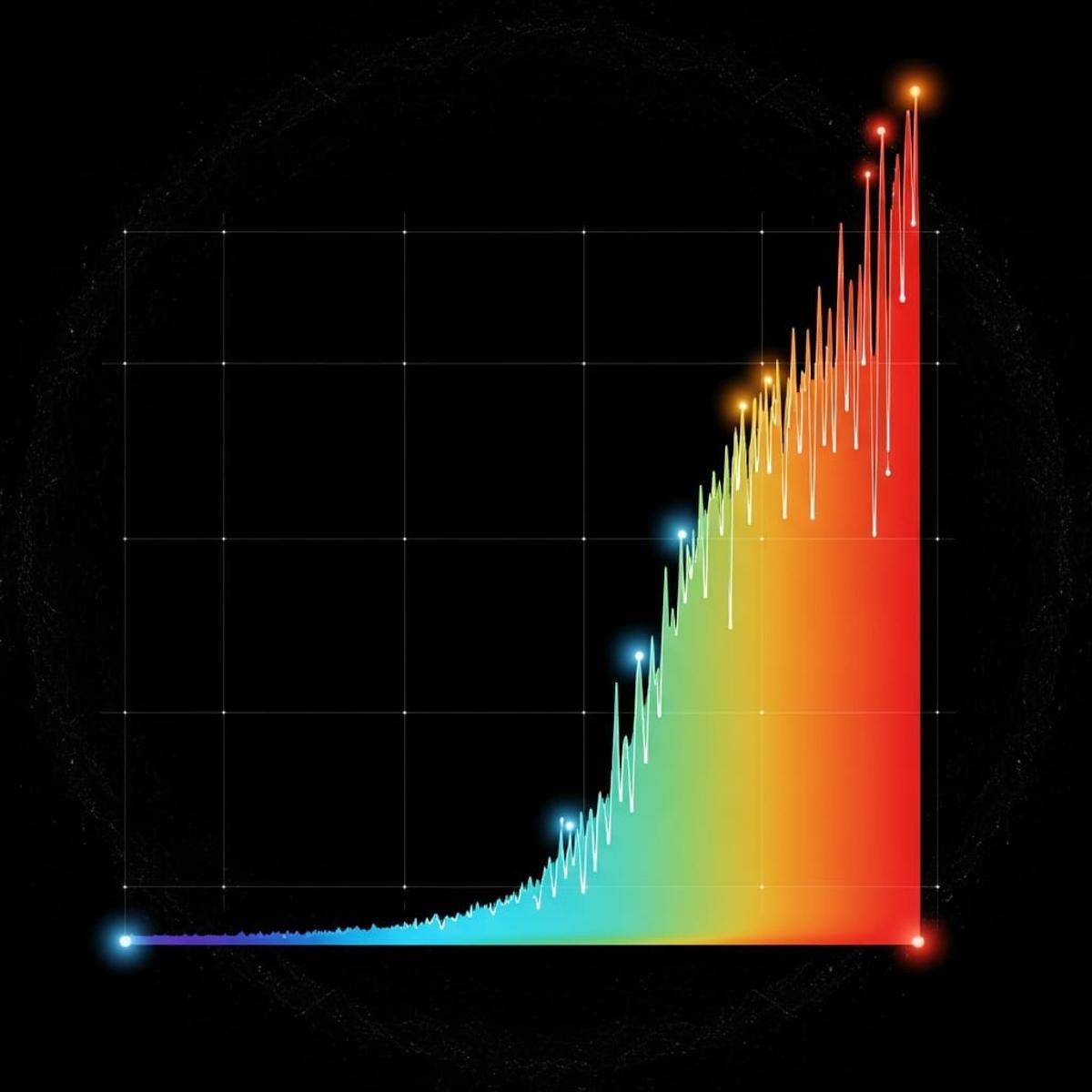
Researchers Jiaqi Yao and Ding Liu introduced a quantum kernel‑based matrix multiplication algorithm (QKMM) that reduces the asymptotic complexity to O(N² log₂ N), a marked improvement over the classical O(N³) bound. The method uses only log₂ N qubits and a gate count of...
Quantum Error Correction Scales Up, Paving the Way for Reliable Computers
Researchers at UCLA introduced ScaLER, a scalable testing framework for quantum error correction that combines targeted fault injection with extrapolation. The tool successfully benchmarked a surface‑code of distance 17 at a physical error rate of 0.0005, delivering a logical error rate...

Light’s Speed Mismatch Weakens Advanced Medical Scans, Researchers Find
Researchers identified intrinsic unbalanced group‑velocity dispersion in nonlinear interferometers as a major source of axial resolution loss for undetected‑photon optical coherence tomography (OCT). The dispersion stems from non‑degenerate optical parametric down‑conversion, making physical compensation difficult. By extracting phase from high‑precision...

Simpler Quantum Circuits Boost Accuracy of Vital Materials Modelling Calculations
Researchers introduced a soft‑coded orthogonal subspace method for variational quantum eigensolvers (VQE) that enforces orthogonality via penalty terms rather than circuit constraints. Benchmarked on a 3 × 3 transverse‑field Ising lattice and a 4 × 4 Edwards‑Anderson spin‑glass, the technique achieved ground‑state fidelities equal...

New Quantum Simulations Promise Faster Routes to Designing Advanced Materials and Molecules
Researchers at Google Quantum AI and Florida State University introduced a weighted sum‑of‑squares (SOS) framework that aligns with the dual of two‑particle reduced density matrix (v2RDM) theory, enabling strict enforcement of particle‑number and spin symmetries. The near‑frustration‑free Hamiltonian representations derived...
New 2D Material Links Strain and Magnetism in a Novel Way
Researchers have identified a novel topological orbital piezomagnetic effect in two‑dimensional Dirac quadrupole altermagnets. Applying mechanical strain distorts the Dirac points, forming a “Dirac dipole” that generates magnetization without spin contributions. The phenomenon is captured by two minimal theoretical frameworks—a...
Insulator Defies Expectations with 2% Thermal Hall Effect, Paving the Way for New Devices
Researchers have measured an unusually large thermal Hall effect in the insulating topological material TlBi₀.₁₅Sb₀.₈₅Te₂, achieving a transverse‑to‑longitudinal thermal conductivity ratio of about 2 % under magnetic fields of 2–8 tesla. The effect persists across a broad temperature window of 50–150 K and...

New Maths Unlocks Hidden Symmetries Within Complex Group Structures
Simon D. Lentner’s new lecture notes, released on January 31 2026 (arXiv:2602.00651v1), present a categorical construction of Nichols algebras that sidesteps traditional Hopf‑algebra prerequisites. The approach uses concrete examples to show how these algebras generate the representation category of a group and...

Quantum Leap Unlocks New Control over Light-Based Computing Components
Researchers from Longyan and Fuzhou Universities have experimentally demonstrated a quantum phase transition in a driven‑dissipative Kerr‑cat qubit that is induced by a Liouvillian exceptional point (LEP). By tuning the detuning between drive and resonator frequencies, the system switches from...

Quantum Circuits Unlock New Ways to Simulate Complex Magnetic Materials
Researchers have extended the Ising model to arbitrary interaction networks, showing that its transition amplitudes are directly proportional to the hafnian and loop‑hafnian matrix functions. This unifies previously separate links between spin dynamics, Gaussian boson sampling, and #P‑hard counting problems...

Quantum Kernel Methods Show Competitive Radar Classification with 133-Qubit IBM Processor
Researchers evaluated quantum kernel methods for radar micro‑Doppler classification using IBM's 133‑qubit Torino and 156‑qubit Fez processors. After classical feature extraction and PCA reduction, data were encoded with a fully‑entangled ZZFeatureMap and classified by a quantum support vector machine. The...
Andreev Spin Qubits: Research Shows Realisation Via 2D Topological Insulators
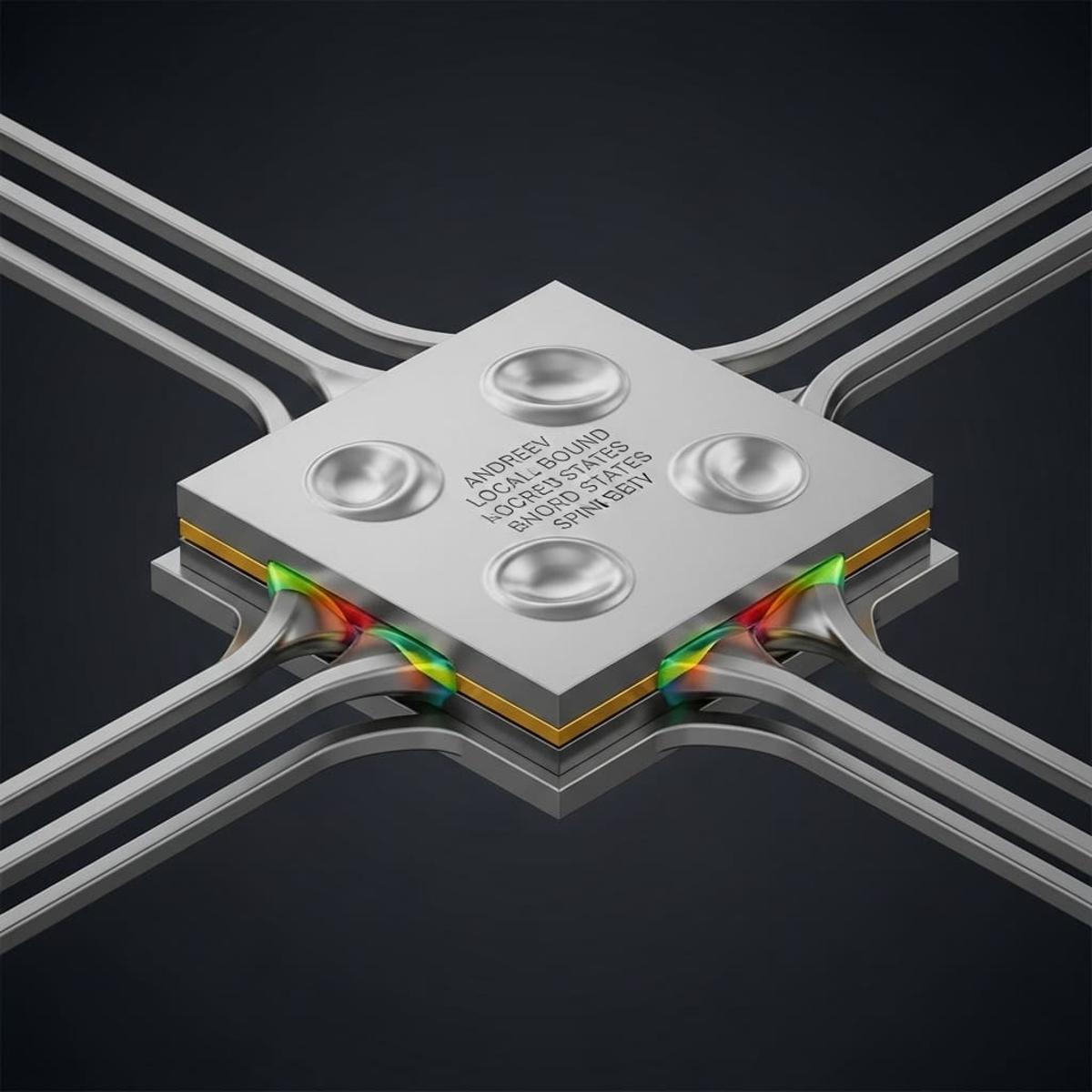
Researchers have demonstrated that Andreev spin qubits can be realized in Josephson junctions built from magnetically doped two‑dimensional topological insulators. By introducing magnetic impurities into the helical edge states, electric dipole transitions become allowed, enabling qubit manipulation with microwave pulses....

Quantum Computer Errors Tracked in Real-Time, Paving Way for Stable Machines
Researchers at Chalmers University have demonstrated real‑time detection of quasiparticle tunneling in a multi‑qubit superconducting device, achieving single‑hertz background sensitivity with microsecond resolution. Their time‑tagged coincidence analysis revealed uncorrelated individual events and correlated burst episodes occurring roughly once per minute,...

Researchers Reveal 100nm Displacement Via the Optical Magnus Effect with an Ion
Researchers at ETH Zurich and PSI have directly observed the optical Magnus effect in a single trapped ⁴⁰Ca⁺ ion. By scanning a tightly focused 729 nm laser across the ion, they mapped spin‑dependent transverse displacements of up to several hundred nanometres,...

AI Evolves Quantum Circuits, Bypassing Design Limits for More Powerful Computers
Researchers at Rochester Institute of Technology unveiled Evolutionary eXploration of Augmenting Quantum Circuits (EXAQC), an automated framework that simultaneously optimizes gate types, qubit connectivity, parameterisation, and circuit depth while respecting hardware limits and noise. The hybrid evolutionary‑variational approach generated quantum...
Quantum Computing Offers Faster, More Accurate Molecular Blueprint Predictions for Better Drugs
Researchers at North Carolina State University have introduced a hybrid quantum‑classical framework that predicts electronic circular dichroism (ECD) spectra of chiral molecules using 20–24 qubit circuits. The method combines variational quantum eigensolvers with quantum equation‑of‑motion techniques and matches the accuracy...
Quantum Computing’s ‘Barren Plateaus’ Overcome with Extra Circuit Parameters
A new numerical study examines how adding extra parameters to variational quantum circuits can counteract barren‑plateau effects that stall optimization. Using a 72‑qubit superconducting processor simulator, the researchers mapped energy accuracy across ansatz depth and training epochs for a transverse‑field...

On-Chip Device Splits Light with 99.95% Accuracy, Boosting Quantum Computing Power
Researchers at Purdue and Johns Hopkins have built an on‑chip silicon pulse‑shaper that functions as a frequency beamsplitter, delivering near‑ideal Hadamard‑gate performance with fidelity above 0.9995 and a modified success probability over 0.9621. The device supports ultra‑narrow 2‑5 GHz channel spacings—a...

Random Matrix Breakthrough Unlocks New Understanding of Quantum Entanglement’s Complexity
Researchers derived a summation‑free recurrence relation for the k‑th spectral moment of the Bures‑Hall random matrix ensemble, valid for any real‑valued k. The breakthrough hinges on new Christoffel‑Darboux formulas for the ensemble’s correlation kernels, simplifying calculations that previously required cumbersome...
Exotic Superconductivity Unlocked by Manipulating Atomic Imbalance Within Materials
Researchers at Capital Normal University have shown that staggered pairing imbalance in a non‑Hermitian Kitaev chain can dramatically broaden the parameter space supporting topological superconductivity. By jointly tuning the chemical potential and the imbalance, the eigenenergy gap switches from real...

Quantum Entanglement’s Secrets Unlocked with New Model of Particle Interactions
Researchers Swann, Nahum et al. introduced a continuum‑mechanics framework to describe entanglement dynamics in noisy, interacting fermion chains. By applying a semiclassical path‑integral treatment to an effective spin‑chain representation, they obtained exact expressions for the entanglement membrane tension and operator...

Quantum ‘Stars’ Reveal Hidden Structure Within Complex Quantum States
Scientists revived Ettore Majorana’s 1932 proposal, showing that any spin‑S quantum state can be represented as a constellation of 2S points on a sphere. The study, led by L. L. Sanchez‑Soto, A. B. Klimov and A. Z. Goldberg, demonstrates how these “Majorana stars” provide geometric insight...