Science Daily AI
Science Daily's coverage of artificial intelligence research

This New Chip Could Slash Data Center Energy Waste
Engineers at UC San Diego have unveiled a hybrid DC‑DC converter that blends a piezoelectric resonator with conventional capacitors, achieving 96.2% efficiency when stepping 48 V down to 4.8 V—levels typical for data‑center GPUs. The prototype delivers roughly four times the output current of earlier piezo‑based designs, promising smaller, more energy‑dense power modules. Published in Nature Communications, the work highlights a potential path beyond the efficiency ceiling of traditional inductive converters. While still early‑stage, the technology could markedly reduce the electricity waste that powers modern cloud infrastructure.
AI Reads Brain MRIs in Seconds and Flags Emergencies
University of Michigan researchers unveiled Prima, a vision‑language AI that reads brain MRIs in seconds and flags urgent cases. In a study of over 30,000 scans, Prima achieved 97.5% accuracy across more than 50 neurological diagnoses and could prioritize emergencies...
AI that Talks to Itself Learns Faster and Smarter
Researchers at the Okinawa Institute of Science and Technology demonstrated that AI systems equipped with an internal "self‑talk" module and enhanced working memory learn faster and generalize better across tasks. By training models to engage in quiet internal speech while...
The Human Brain May Work More Like AI than Anyone Expected
A new Nature Communications study finds that the human brain processes spoken language in a stepwise fashion that mirrors the layered architecture of large language models such as GPT‑2 and Llama 2. Using electrocorticography recordings while participants listened to a 30‑minute...
This AI Spots Dangerous Blood Cells Doctors Often Miss
Researchers at Cambridge, UCL and Queen Mary have unveiled CytoDiffusion, a generative‑AI system that scrutinizes blood‑smear images to flag abnormal cells. Trained on more than half a million samples, the model captures subtle morphological variations that often elude human experts....
AI May Not Need Massive Training Data After All
Johns Hopkins researchers demonstrated that AI systems built with brain‑inspired architectures can exhibit human‑like neural activity without any pre‑training. By comparing untrained transformers, fully connected networks, and convolutional neural networks, they found that only the convolutional designs produced activity patterns matching...

This AI Finds Simple Rules Where Humans See only Chaos
Researchers at Duke University unveiled an AI framework that distills complex, high‑dimensional dynamics into simple, linear‑like equations. Inspired by Koopman’s operator theory, the system combines deep learning with physics‑based constraints to isolate a few hidden variables governing behavior. Tested on...
A New Tool Is Revealing the Invisible Networks Inside Cancer
Researchers at the University of Navarra have launched RNACOREX, an open‑source platform that maps miRNA‑mRNA regulatory networks linked to cancer survival. Tested on thirteen tumor types from TCGA, the tool matches the predictive power of sophisticated AI models while delivering...
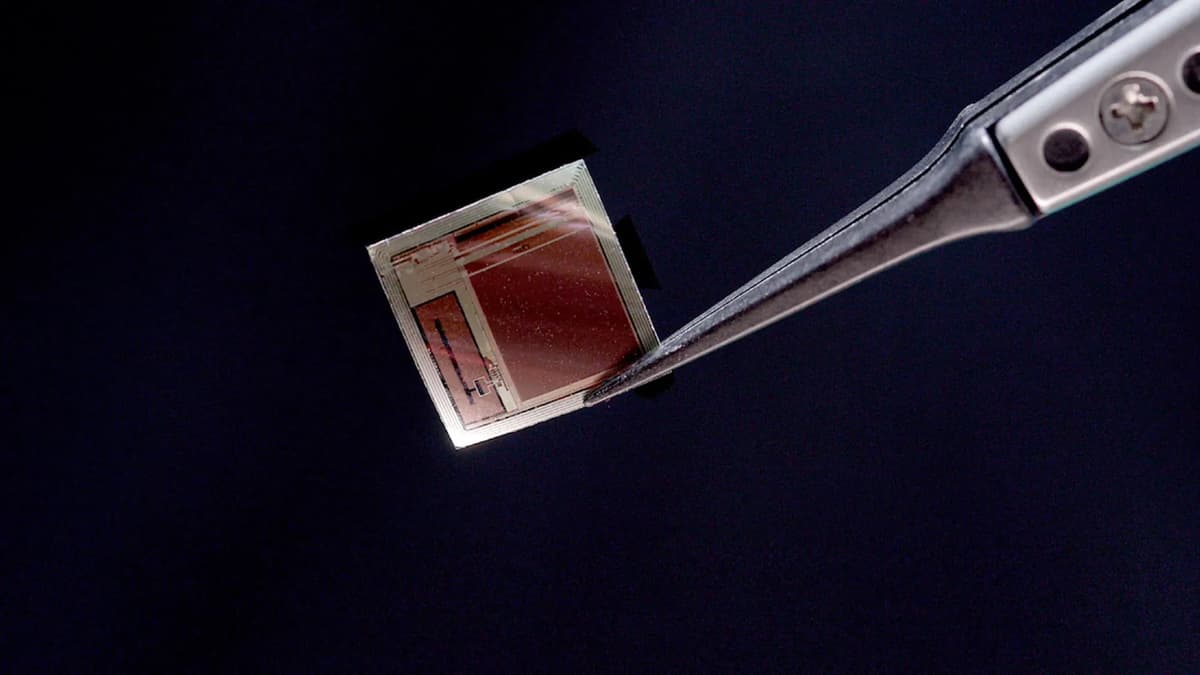
Scientists Reveal a Tiny Brain Chip that Streams Thoughts in Real Time
Researchers from Columbia, Stanford, Penn and NY‑Presbyterian unveiled BISC, a 3 mm³ silicon brain‑computer interface that streams neural data at 100 Mbps. The chip hosts 65,536 electrodes, 1,024 recording and 16,384 stimulation channels, and communicates wirelessly via a wearable relay. Early human...
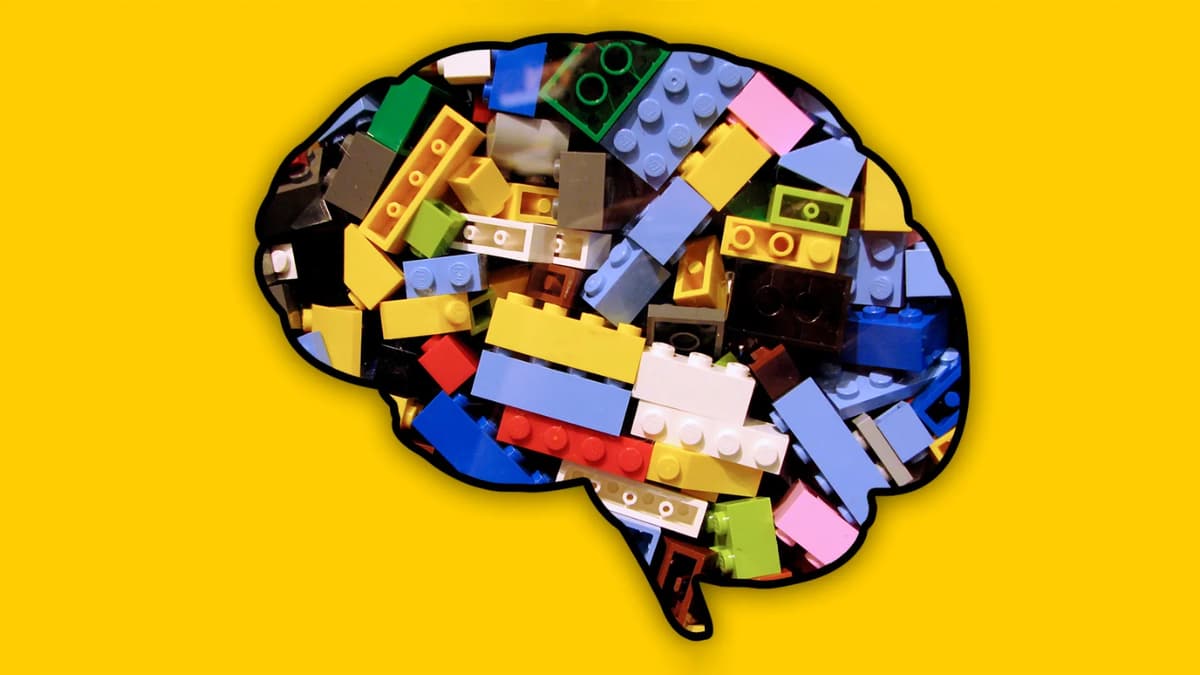
Scientists Uncover the Brain’s Hidden Learning Blocks
Neuroscientists at Princeton discovered that the prefrontal cortex reuses discrete neural patterns—dubbed “cognitive Legos”—across different tasks, enabling flexible learning. Experiments with rhesus macaques performing three visual categorization tasks revealed recurring activity blocks for shared components like color discrimination or eye‑movement...


