
Recent Posts

News•Feb 27, 2026
Deterministic Néel Vector Switching of Altermagnets Via Magnetic Octupole Torque
Researchers have demonstrated deterministic control of d‑d wave altermagnets by injecting a magnetic octupole current into an altermagnet/normal‑metal bilayer. The resulting magnetic octupole torque flips the Néel vector without any external magnetic field, converting inherently multidomain textures into a single‑domain state. Crucially, the process does not rely on net magnetization or the Dzyaloshinskii–Moriya interaction, broadening its applicability across diverse altermagnetic materials. This breakthrough paves the way for practical, field‑free spintronic components.
By Small (Wiley)

News•Feb 27, 2026
Ion‐Regulating SPEEK–BNNS Hybrid Interfaces Enabling Low‐Barrier Zn‐Ion Transport and Dendrite‐Free Zinc Anodes
Researchers introduced a scalable organic‑inorganic hybrid protective layer of sulfonated poly(ether ether ketone) (SPEEK) and boron nitride nanosheets (BNNS) for aqueous Zn‑ion batteries. The SPEEK‑BNNS interface regulates Zn2+ transport, lowers migration barriers, and mechanically suppresses dendrite formation. In symmetric cells...
By Small (Wiley)

News•Feb 27, 2026
Buckybowl‐Based Organic Single‐Crystal Photosynapses: Concave Architecture Inducing High Accuracy in Image Recognition
Researchers have created the first organic single‑crystal photosynaptic transistors using a hetero‑buckybowl molecule (3S‑2Me). The concave architecture enhances oxygen adsorption, inducing persistent photoconductivity that yields over 4000 seconds of non‑volatile current retention and linearly programmable multilevel conductance. These devices demonstrate typical...
By Small (Wiley)

News•Feb 27, 2026
Multi‐Bit Floating‐Gate Memory with an Ultrawide Programmable Window
A MoTe₂/hBN/multilayer‑graphene van der Waals floating‑gate transistor achieves an ultrawide p‑type memory window of ~199 V with a 90.5 % window ratio and charge‑storage density exceeding 10¹³ cm⁻². The device switches in 50 ns, endures over 10⁶ cycles, and retains data for a projected ten years....
By Small (Wiley)

News•Feb 27, 2026
Pdδ+ Formation Induced by Electronic Metal‐Support Interaction Enables Efficient Continuous‐Flow Hydrogenation of Pyridine to Piperidine
Researchers introduced a Pd/θ‑Al2O3 catalyst that leverages strong electronic metal‑support interaction (EMSI) to generate Pdδ+ sites, dramatically improving pyridine hydrogenation to piperidine. The catalyst delivers nearly complete conversion with >99% selectivity under mild continuous‑flow conditions (150 °C, 3 MPa, H2/oil = 300). It maintains...
By Small (Wiley)

News•Feb 27, 2026
Charge‐Tuning Ice Inhibition in Antifreeze Peptides
Researchers engineered a series of antifreeze peptides (AFPTs) with systematically varied charges on their non‑ice‑binding sites (NIBSs) to uncover how charge influences ice‑growth inhibition. They found that moderate net‑negative charges improve peptide adsorption onto ice via hydration‑mediated interfaces, while excessive...
By Small (Wiley)

News•Feb 25, 2026
Unraveling Transformation Pathways of Colloidal Semiconductor Perovskite Magic‐Sized Clusters at Sub‐Ambient Temperature
Researchers have mapped three transformation pathways for colloidal semiconductor perovskite magic-sized clusters (MSCs) at sub‑ambient temperatures. They demonstrate a direct thermally‑induced conversion (Pathway 3) and a precursor‑compound‑assisted route (Pathway 1) between binary PbBr₂ MSCs (≈390 nm absorption) and ternary CsPbBr₃ MSCs (≈415 nm absorption)....
By Small (Wiley)
News•Feb 25, 2026
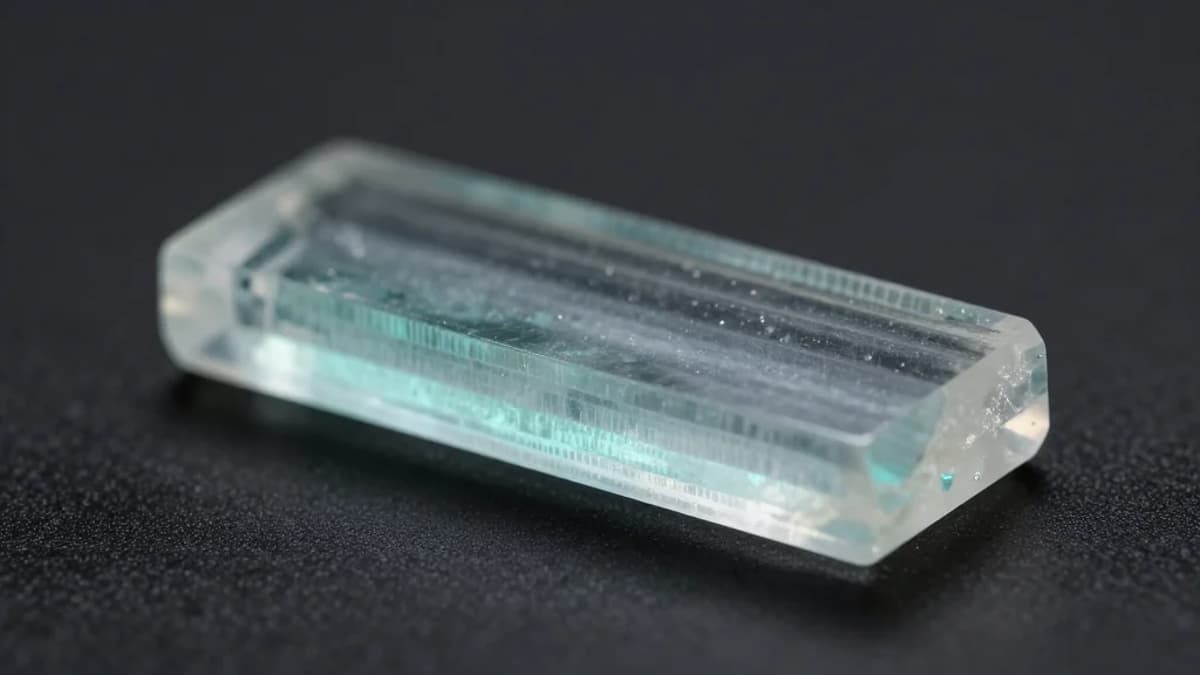
About Carrier's Self‐Trapping and Dynamical Rashba Splitting in the 2D Hybrid Perovskite (BA)2(MA)2Pb3l10
Researchers used time‑ and angle‑resolved photoelectron spectroscopy (tr‑ARPES) to probe carrier dynamics in the 2D hybrid perovskite (BA)2(MA)2Pb3I10. The measured effective masses are –0.18 m0 for holes and 0.12 m0 for electrons, and the Rashba spin‑orbit coupling is constrained to αC < 2.5 eV·Å. Photoexcitation...
By Small (Wiley)
News•Feb 25, 2026
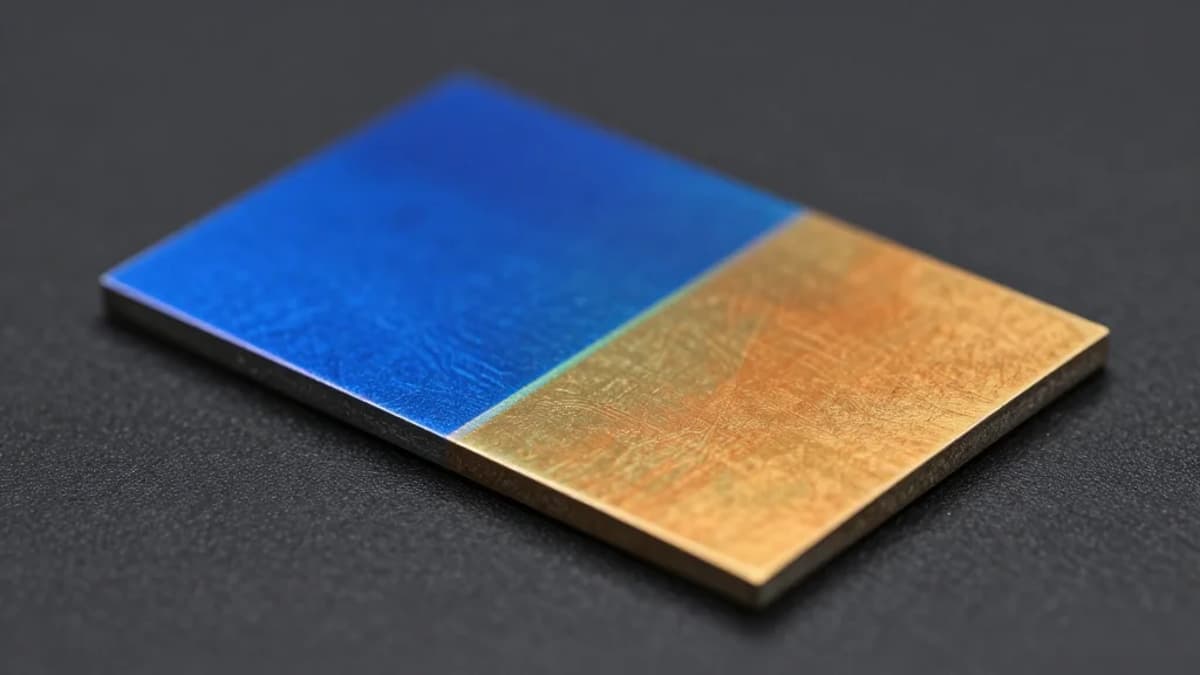
Property Explorations and Applications of 2D Transition Metal Dichalcogenides Through Phase Engineering
The review outlines recent advances in phase engineering of two‑dimensional transition metal dichalcogenides (2D TMDCs), highlighting how controlled synthesis and phase transitions unlock electronic, optical, and magnetic functionalities. It surveys direct growth techniques such as CVD, MBE, and colloidal routes...
By Small (Wiley)
News•Feb 25, 2026
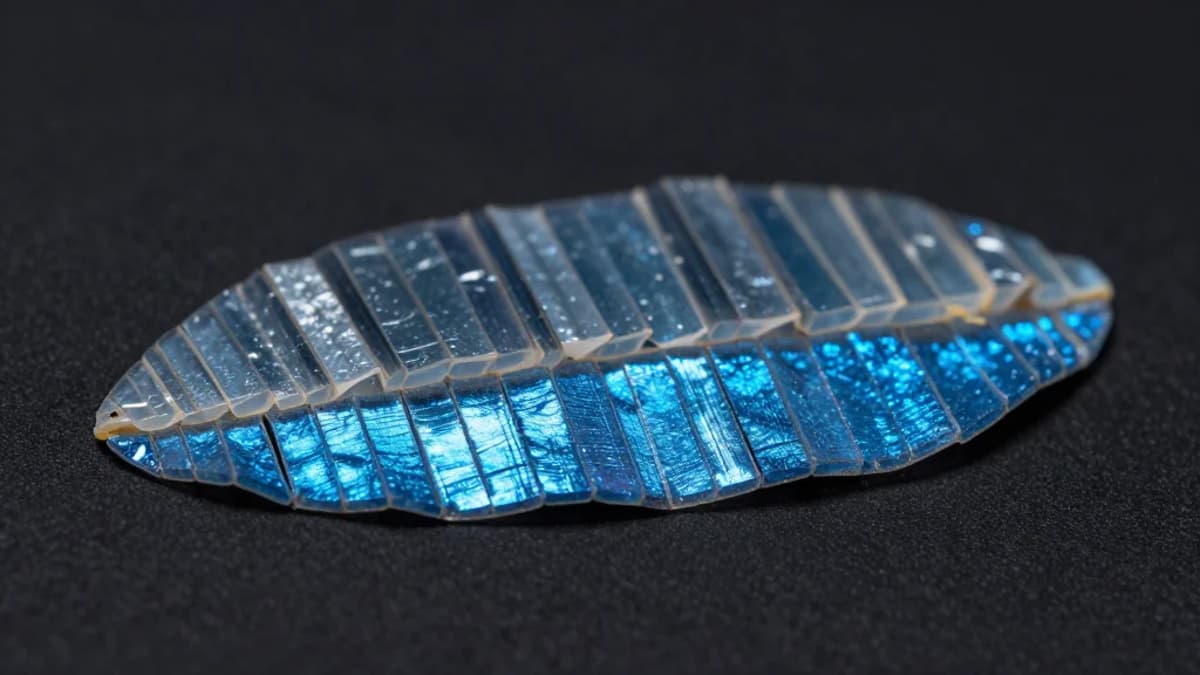
Synergistic Movement of the Dual‐Layer Photonic Guanine Crystal Arrays Reveals a Mechanism of Light Stimuli‐Responsive Structural Color Change in the...
The study uncovers that zebrafish skin changes from slate‑blue in darkness to bright‑blue in light due to coordinated movement of a dual‑layer guanine crystal reflector. The upper S‑iridophore layer contains inclined crystals while the lower L‑iridophore layer holds horizontal crystals,...
By Small (Wiley)
News•Feb 25, 2026
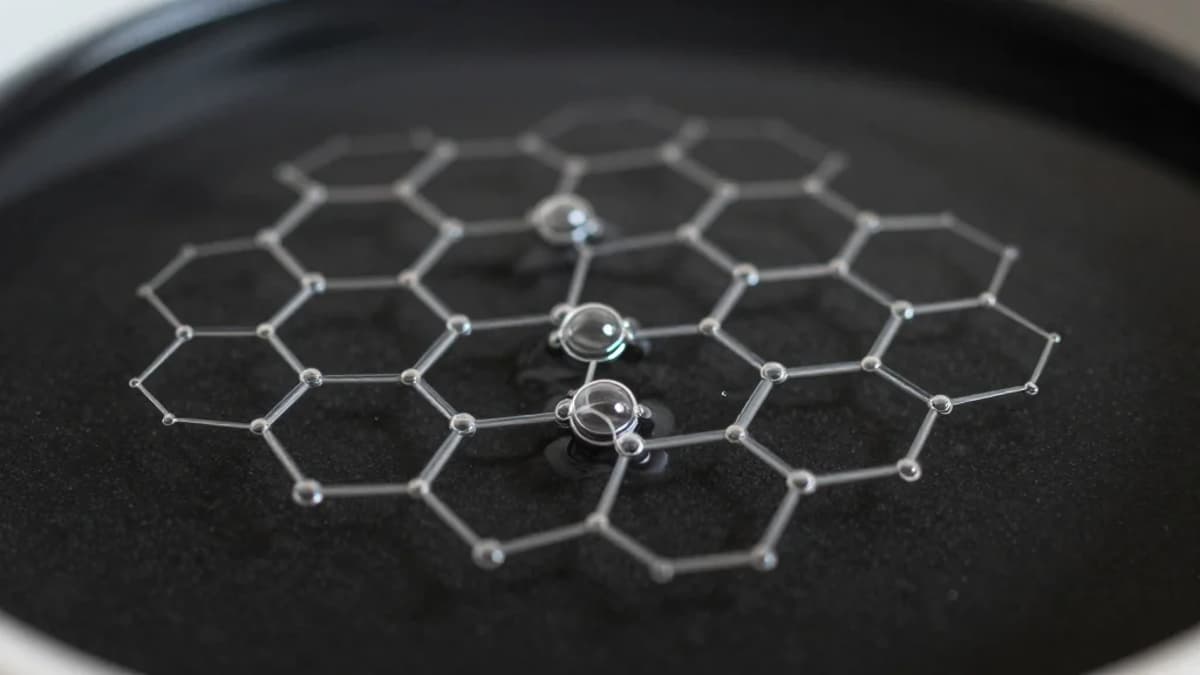
Ultraclean Self‐Assembly on Micro‐Bubble Lattice
Researchers have introduced an underwater micro‑bubble lattice that enables ultraclean self‑assembly of micro‑objects, eliminating residues during transfer. The water‑air interface of the bubbles provides capillary adhesion, preserving the original state of delicate particles. Numerical analysis identified wettability contrast and particle‑to‑bubble...
By Small (Wiley)

News•Feb 25, 2026
Sustainable All‐Inorganic Double Perovskite Memristors Enabling Synaptic Learning and Cognitive Emulation
Researchers have demonstrated lead‑free all‑inorganic double perovskite Cs2AgBiBr6 memristors that combine robust analog resistive switching with biologically relevant synaptic plasticity. The devices rely on reversible Ag⁺ ion migration to form filamentary conduction paths, as confirmed by impedance spectroscopy, c‑AFM, and...
By Small (Wiley)

News•Feb 25, 2026
Photo‐Modulated Proton Transport in Merocyanine Metastable‐State Photoacid Based Polymers
Researchers have covalently incorporated a merocyanine metastable‑state photoacid into soft polymers, turning insulating matrices into light‑responsive, proton‑conducting materials. Upon illumination, the photoacid undergoes a reversible isomerization that releases protons and alters its charge, causing a measurable drop in conductivity. The...
By Small (Wiley)

News•Feb 25, 2026
Entropy‐Engineered Layered Double Hydroxide Derived High‐Entropy Alloy Cathodes for Zinc–Air Batteries Under High Depth‐of‐Discharge
Researchers have created a high‑entropy alloy (HEA) catalyst composed of Mn, Fe, Co, Ni, and Cu, derived from a layered double hydroxide precursor. The HEA nanoparticles are uniformly anchored on nitrogen‑doped carbon nanotubes via dicyandiamide‑assisted pyrolysis, yielding a single‑phase fcc...
By Small (Wiley)

News•Feb 25, 2026
Engineered Nanoplatform with Dual Anti‐Inflammatory and Microbiota‐Modulating Actions for Targeted Therapy in Chronic Inflammatory Bowel Disease
The study introduces BG/SOD@ZIF‑zc, a multifunctional nanoplatform that encapsulates superoxide dismutase within a copper‑doped ZIF framework and coats it with bacterial ghosts for targeted delivery to the colon. The formulation retains SOD activity in the harsh gastrointestinal tract, efficiently scavenges...
By Small (Wiley)