
Fragmented Trade and the Failure of Sanctioned Oil Isolation
Four years after Russia’s 2022 invasion, G7 and EU sanctions have barely dented Moscow’s seaborne crude exports. Exports to Price‑Cap Coalition countries dropped by 59.5 million tons, but shipments to non‑coalition buyers surged by 65 million tons, driven by Dubai’s free‑zone hubs and a 1,065‑vessel “shadow” fleet moving roughly $100 billion of oil. The Dubai Multi‑Commodities Centre’s 0 % tax and flexible licensing let sanctioned firms re‑brand and continue trade, fragmenting ownership and obscuring enforcement. The episode shows that control over shipping, finance and insurance alone cannot isolate sanctioned commodities in a multipolar market.

Brunei Pumps More Oil
Brunei lifted oil exports to 105,000 barrels per day in April, the strongest level in five years, with roughly 70% of shipments flowing to Thailand. The nation’s premium Seria Light Export Blend (SLEB) commands prices above $100 a barrel, outpacing...

6 Months Into Kazakhstan’s Year of AI
Kazakhstan has accelerated its AI agenda by signing a $10 billion agreement with Firebird and NVIDIA to build the Data Center Valley in Ekibastuz, featuring a 100,000‑GPU cluster. The deal follows the creation of a dedicated Ministry of AI, the launch...

Japan Eyes a Homegrown FMS System as Defense Exports Become a Strategic Tool
Japan is weighing the creation of a Japanese‑style Foreign Military Sales (FMS) system to centralise defence exports and strengthen its industrial base. Defence Minister Koizumi said ministries are deliberating a new agency that would manage sales, support dual‑use technologies such...

China’s Limited Advance in El Salvador
El Salvador’s urban makeover under President Nayib Bukele features several high‑profile Chinese‑built projects, including a $54 million library, a tourist pier, and a 50,000‑seat stadium. Despite the visible infrastructure gifts, Chinese firms have contributed little to the broader construction boom, with most of...

Beyond the Malacca Dilemma: China’s Emerging Corridor-Hedging Logic
China is refining its external economic strategy toward a corridor‑hedging logic that pairs its dominant maritime trade with selectively developed overland routes. The approach acknowledges persistent chokepoint risks at the Strait of Hormuz and the Malacca Strait while avoiding a...

What the Rapid Development of the PLA Means for Australia
The People’s Liberation Army has rapidly expanded into the world’s largest navy, bolstered its long‑range missile, bomber and cyber arsenals, and is now conducting blue‑water operations around Australia. This growing capability erodes the geographic sanctuary that has traditionally protected the...

South Korea Has Diversified Some Critical Minerals. The Hardest Dependencies Remain.
South Korea’s export boom – $85.9 billion in April 2026, driven by semiconductors, EV batteries and advanced displays – masks a heavy reliance on a handful of critical minerals sourced largely from China. Trade data through 2025 shows diversification gains for...

Bangladesh-Turkiye Defense Cooperation Grows to Include Joint Production
Turkey’s foreign minister Hakan Fidan’s June visit to Bangladesh marked a shift from simple arms purchases to strategic co‑production talks, especially around drones. The two nations agreed to create ministerial‑level joint committees and annual 2+2 foreign‑defence minister meetings. Bangladesh already...

Why the Indo-Pacific Trade Hinges on East Africa
The Bab el‑Mandeb strait, a chokepoint for 10‑12% of global maritime trade, has become a focal point of great‑power competition in East Africa. China, the EU, the United States, India and Gulf states are pouring infrastructure, security and investment into the...

Democratizing Technology: India Stack 3.0 and the Future of Digital Public Infrastructure
Dr. Pramod Varma, the architect behind Aadhaar, UPI and the India Stack, outlined the next evolution of India’s Digital Public Infrastructure—India Stack 3.0. He contrasted the open, consent‑driven architecture with closed platform models such as Alipay and PayPal, highlighting the Account Aggregator framework’s alignment...

Is VinFast’s Costly EV Gambit Coming to an End?
VinFast, Vietnam's flagship EV maker, expanded rapidly to a 600,000‑unit annual capacity but sold only 197,000 cars in 2025, 89% of which were domestic. The company posted a $3.9 billion loss that year, pushing cumulative deficits to $14.5 billion and leaving just...

Beyond Search and Rescue: What the Japan-South Korea SAREX Revival Really Means
On June 7, 2026 the Japan Maritime Self‑Defense Force and the Republic of Korea Navy conducted their first joint Search‑and‑Rescue Exercise (SAREX) in nine years, deploying the JS Kongo destroyer, an SH‑60K helicopter, and the ROKS Cheon Ja Bong landing ship. The drill incorporated a...

India’s Eye in the Sky: The Rise of a State-Deep Tech Startup Space Partnership
India announced on May 3, 2026 that startup GalaxEye successfully launched the world’s first OptoSAR satellite, marking a breakthrough in combined optical‑SAR imaging. The achievement underscores a broader shift as Indian deep‑tech firms like Pixxel secure high‑profile contracts, including one with the...

Pete Hegseth’s Missed Chance to Reassure – and Deter – on Taiwan
U.S. Defense Secretary Pete Hegseth addressed the Shangri‑La Dialogue in Singapore without mentioning Taiwan, missing a chance to reaffirm U.S. support amid escalating Chinese pressure. China has declared it expects to win a war on Taiwan by 2027 and has...

Trump’s New AI Order Raises the Stakes in China-US Tech Competition
President Donald Trump issued an executive order on June 2 that repositions artificial‑intelligence development as a core national‑security priority. The order creates a voluntary assessment framework allowing federal agencies early access to frontier AI models and designates the NSA and CISA...

Moscow’s New Military Partner Has Something Russia Needs More Than Allies
On May 14, Russia announced a formal partnership with Afghanistan’s Taliban covering security, trade, humanitarian aid and, crucially, migrant‑labour agreements. The deal will channel Afghan agricultural and other professionals into Russian regions such as Tatarstan and Chechnya to offset a...

Why India Cannot Let the Rupee Float
India’s policymakers argue that a freely floating rupee would exacerbate inflation and social strain because the economy imports nearly 89% of its crude oil and other essential inputs. Recent data show the RBI’s aggressive interventions—spot purchases, forward contracts and reserve...

Vietnam’s Quiet Strategy at the Shangri-La Dialogue
Vietnam’s General Secretary To Lam delivered the 2026 Shangri‑La Dialogue keynote, emphasizing a non‑traditional security agenda built over 13 years. He revived the “strategic trust” concept, urging great‑power competition to stay bounded while focusing on climate, pandemics, AI governance, and critical‑infrastructure resilience....

Uzbekistan’s Emergence as Central Asia’s Mobility Hub
Uzbekistan recorded 11.7 million tourist arrivals in 2025, a 46.8% increase year‑over‑year and a 333% rise since 2017. The surge stems from liberalized visa policies, regional border reconciliations, and renewed promotion of historic sites, turning the country into Central Asia’s fastest‑growing...

Why China Needs High GDP Growth Rates to Avoid a Crisis
China’s economy has hinged on a volume‑driven growth model that tolerates selling at or below cost as long as total turnover expands. A slowdown in GDP threatens this approach, exposing hidden "cost black holes" in real estate, food production and...
The 3 Geopolitical Shocks That Boosted the Middle Corridor
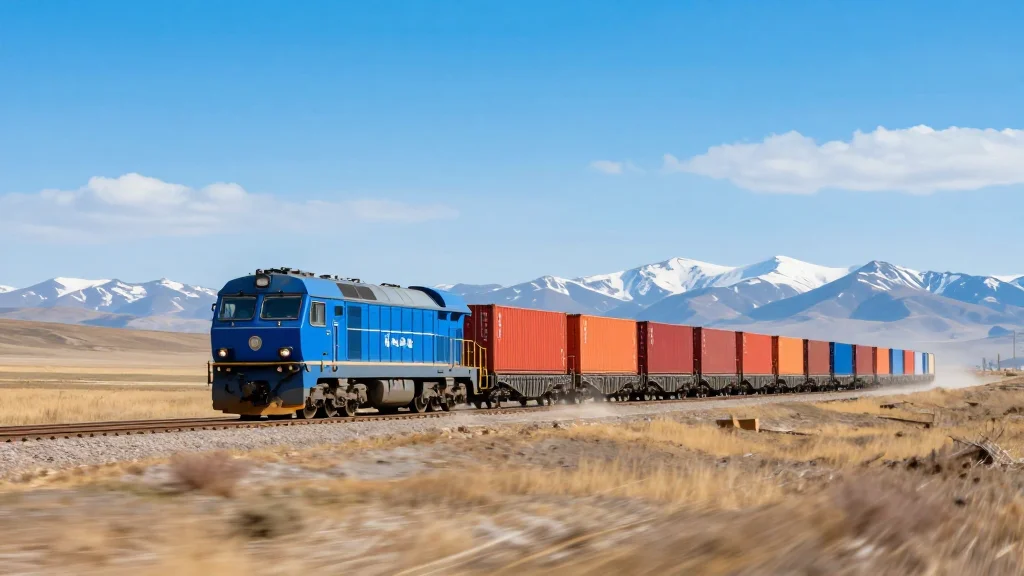
The Middle Corridor, a multimodal land route linking China to Europe, has seen renewed interest as maritime trade faces disruptions. Three recent geopolitical shocks—the Russia‑Ukraine war, escalating US‑China tech tensions, and Red Sea attacks that choked the Suez Canal—have redirected...

No Enemies, Stronger Army: Kazakhstan’s Strategic Bet
Kazakh President Kassym‑Jomart Tokayev set a two‑year deadline to overhaul the armed forces, earmarking over $6 bn—$700 m more than 2025—for modernisation. The plan pivots to drones, artificial‑intelligence‑driven ISR and domestic satellite capability, highlighted by a new military AI unit. Partnerships with...

The Double China Shock: How Beijing Is Disrupting Both Developing and Advanced Economies
China’s 15th Five‑Year‑Plan keeps low‑tech sectors like textiles alive while it pushes advanced tech, creating a "double China shock" that hits both developing and advanced economies. The country now holds over 35% of global textile market share and saw double‑digit...

Transporting Oil to China by Rail Will Not Solve Iran’s Export Headache
Iran’s oil exports to China are hampered by the U.S. blockade of the Strait of Hormuz, forcing Tehran to explore a 10,400‑kilometer rail corridor through Central Asia. While the rail line cuts transit time to about 15 days, each train...

The Manus Fallout Highlights Structural Problems in China’s Industrial Policy Ecosystem
Meta announced a $2 billion acquisition of Chinese AI startup Manus in December 2025, but Beijing intervened and forced the deal to unwind after a four‑month probe. The National Development and Reform Commission invoked the 2021 Foreign Investment Security Review Measures,...

China’s Navy Is Shifting Pressure Beyond the Taiwan Strait
In May 2026 the People’s Liberation Army Navy conducted four joint combat‑readiness patrols around Taiwan, a frequency unprecedented in recent years. At the same time, the Liaoning carrier strike group, accompanied by a Type 055 destroyer, Type 052D destroyer, a Type 054B frigate...

Nepal, India, and the Paradox of Hydro-Hegemony
Nepal aims to become South Asia’s “hydropower battery,” targeting 28.5 GW of capacity by 2035—13.5 GW for domestic use and 15 GW for export, chiefly to India and Bangladesh. The country’s export‑oriented model hinges on India as both the largest buyer and the...

Amid Rumors of a Visit by China’s Leader, North Korea Fires Close-Range Ballistic Missiles
On May 26, 2026 North Korea fired several close‑range ballistic missiles from Chongju, traveling about 80 km before landing in the sea west of the Korean Peninsula. The launch, the country’s eighth missile test this year, came amid media speculation that Chinese President...

Indonesia Bans Polymarket After Site Offers Bets on President’s Ouster
Indonesia’s Communications and Digital Ministry has blocked access to the cryptocurrency‑based prediction market Polymarket, deeming it unregulated online gambling. The ban follows the platform’s launch of a market betting on President Prabowo Subianto’s removal, which has already attracted $51,530 in...

Japan, Philippines to Begin Negotiations on Intelligence Sharing Agreement
Japan and the Philippines will begin formal talks on a General Security of Military Information Agreement (GSOMIA) during President Ferdinand Marcos Jr.'s state visit, the first by a Philippine leader in over a decade. The pact would create a legal...

How Kazakhstan’s Super-Apps Outpace the Law
Kazakhstan’s fintech giants, led by Kaspi.kz, have turned their banking platforms into all‑in‑one super‑apps that handle payments, e‑commerce, government services and biometric authentication for 13.5 million users—about two‑thirds of the population. The rapid rollout outpaces the country’s weak regulatory framework, allowing...

South Korea’s Nuclear Submarine Push Is a Test of Non-Nuclear Deterrence
South Korea is set to unveil a roadmap for a nuclear‑powered submarine program, shifting the concept from long‑term ambition to imminent policy. The move is framed as a way to boost the endurance and survivability of its conventional deterrent against...

India Will Not Become Another China
U.S. officials warn against repeating the China mistake as Secretary of State Marco Rubio visits India, emphasizing that India’s rise need not mirror Beijing’s trajectory. The article argues that India’s democratic, federal structure and historical restraint differ fundamentally from China’s...

Indonesian President Announces Plan to Centralize Control of Key Commodity Exports
Indonesian President Prabowo Subianto announced a plan to place Indonesia’s key commodity exports—palm oil, thermal coal and nickel—under direct state control. A new sovereign‑wealth‑backed enterprise, Danantara Sumberdaya Indonesia, will own 99% of the export entity and exporters must deposit all...

The Duet of Command: Key Operational Issues for OPCON Transfer
The United States and South Korea have formally committed to a wartime operational‑control (OPCON) transfer, targeting the second quarter of fiscal year 2029. The transition hinges on three practical design issues: calibrating the integrated command structure, achieving seamless C4I integration,...

India’s GDP Revisions Explained: What Changed and Why It Matters
India’s Ministry of Statistics shifted the GDP base year from 2011‑12 to 2022‑23, the first overhaul in a decade. The revision lowered total GDP estimates by 2.9% for 2022‑23 and by 3.8% for each of the next two fiscal years,...

India Just Signed Its Most Consequential Chip Deal. The Hard Part Starts Now.
India and the Netherlands sealed a landmark MoU between Tata Electronics and ASML, committing the Dutch firm to supply EUV lithography tools and support for a new semiconductor fab in Dholera, Gujarat. The plant, built with a 50 % government stake...

Australia’s Submarine Problems
Australia has redirected its $7.8 billion Collins‑class submarine life‑extension program toward a condition‑based sustainment model, assessing each boat individually rather than overhauling the fleet. The six aging submarines will now be kept operational into the early 2040s, bridging the gap until...

China’s Plan for Winning the AI Race Hinges on the Token Economy, Not Chips
China is sidestepping U.S. chip sanctions by building a token‑economy advantage that leverages algorithmic efficiency, cheaper domestic hardware, and low‑cost electricity. Chinese models such as MiniMax M2.5 and Zhipu GLM‑5 match U.S. counterparts on coding benchmarks while charging roughly one‑sixteenth...

The Middle Corridor’s Energy Dimension: A New Phase in Turkiye-Kazakhstan Ties
At the sixth Turkiye‑Kazakhstan High‑Level Strategic Cooperation Council in Astana, the two nations signed 13 agreements, with energy as the centerpiece. Turkey pledged to increase the volume of Kazakh oil transiting through its territory via the Middle Corridor, while Turkish...

The Indonesian Air Force’s Turkish Turn
Indonesia has deepened its defense partnership with Turkey, signing a framework contract for 12 Bayraktar Kızılelma unmanned combat aircraft and a $10 billion agreement to co‑produce the Kaan fifth‑generation fighter, its first foreign customer. The deals include extensive technology transfer, joint...

Southeast Asia’s Counter-Drone Efforts
Southeast Asian nations are rapidly expanding counter‑drone capabilities after lessons from the Russia‑Ukraine war and regional border clashes. Malaysia unveiled a home‑grown interceptor drone called “The Ghost,” while Singapore now trains every recruit on drone and counter‑drone operations and has...

Pakistan and the Trump-Xi Summit in Beijing
U.S. President Donald Trump and Chinese President Xi Jinping met in Beijing for a super‑power summit reshaped by the Iran‑U.S. conflict and Strait of Hormuz disruptions. Both sides pledged tighter communication on regional security and economic stability, signaling a potential...

Looking For Oil in All the Wrong Places
Australia’s government launched an April diplomatic tour of East and Southeast Asia to secure diesel, petrol and fertilizer from Malaysia, Brunei, South Korea and Singapore. The pledges proved superficial: Malaysia said the diesel was merely stored fuel, Singapore cannot command...
Pakistan’s Biggest Film Is Going to China. The Real Test for Cultural Ties Comes After.
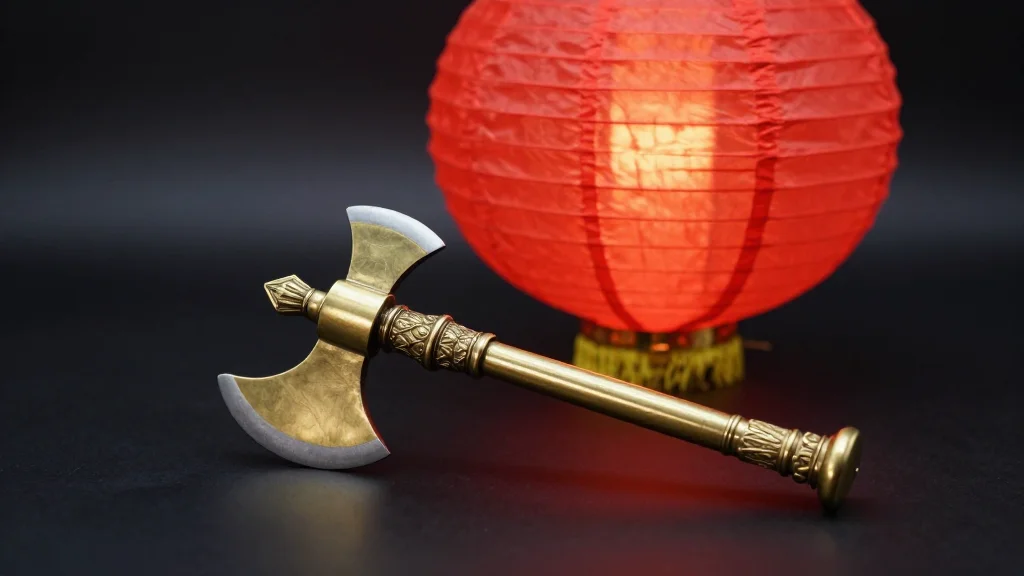
Pakistan’s blockbuster "The Legend of Maula Jatt" will debut in Chinese theatres on May 21, becoming the first home‑grown Pakistani film to break into China’s tightly‑controlled foreign‑film quota. The 2022 release earned roughly $14 million worldwide, a record for Lollywood, and revived...
Why Hasn’t China Criticized Australia’s National Defense Strategy?
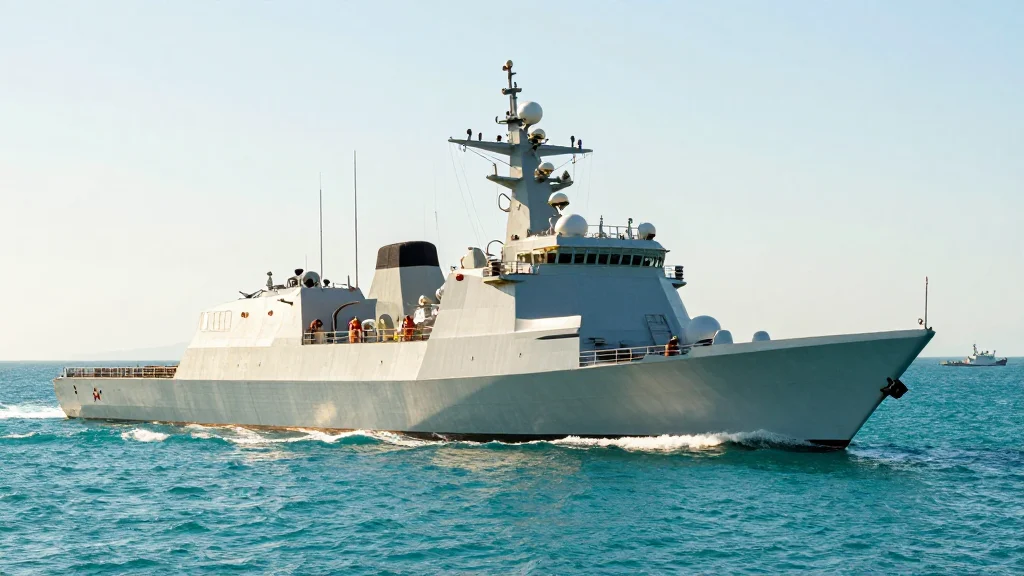
Australia unveiled its 2026 National Defense Strategy, explicitly naming the People’s Liberation Army and China Coast Guard as the chief security challenges in the Indo‑Pacific. Unlike the vocal criticism that followed the 2024 strategy, Beijing remained silent, reflecting a deliberate...

China’s Mahan: The Man Who Created China’s Modern Navy
The Diplomat interview with historian Dr. Xiaobing Li highlights Admiral Liu Huaqing’s role in turning China’s People’s Liberation Army Navy (PLAN) from a near‑shore force into a blue‑water power. While Alfred Mahan’s sea‑power ideas inspired Liu, the book argues Liu...

Indonesia’s Fiscal Outlook in a Period of Divergent Signals
Indonesia’s fiscal fundamentals remain stable—public debt around 40% of GDP and a statutory deficit ceiling of 3%—but external assessments now diverge sharply. Moody’s and Fitch moved their outlook to negative, while S&P kept a stable view and the IMF/World Bank...

Philippine Senator Flees Arrest as ICC Unseals Warrant For ‘Drug War’ Killings
The International Criminal Court unsealed an arrest warrant for former Philippine police chief Ronald “Bato” Dela Rosa, accusing him of crimes against humanity linked to Duterte’s “war on drugs.” Hours after the ICC announcement, Dela Rosa fled to the Senate...