
The Hormuz Crisis and China’s Energy Security Dilemma
The escalation of the Israel‑U.S. conflict with Iran has disrupted traffic through the Strait of Hormuz, turning a long‑standing strategic risk into an immediate constraint on China’s oil supply. China imports roughly 4 billion barrels of crude each year, with about 40% sourced from Gulf producers that rely on Hormuz for transit. While Beijing has built sizable strategic reserves and diversified suppliers, prolonged chokepoint closures would quickly erode those buffers and strain the country’s petrochemical sector. The crisis therefore exposes a fundamental contradiction in China’s energy strategy: expanded material capabilities are still vulnerable to geopolitical forces beyond its control.

Trump Must Put Detained Uyghur Intellectuals on the Agenda for Xi Summit
President Donald Trump’s upcoming summit with Chinese President Xi Jinping presents a rare diplomatic opening to address the detention of Uyghur scholars. The Uyghur Human Rights Project has identified at least 11 intellectuals and cultural leaders held in Chinese custody...

Allies at War: Japan-US Relations From the War on Terror to Today’s Iran Conflict
Professor Ryuji Hattori’s new book examines how Japan‑U.S. relations evolved from the post‑9/11 War on Terror to today’s Iran crisis. Tokyo leveraged its support for the Iraq war to extract U.S. attention on North Korea, expanding the alliance beyond East...

Why Is China Watching India-Vietnam Relations Carefully
India and Vietnam upgraded their ties to an Enhanced Comprehensive Strategic Partnership, expanding defense cooperation such as submarine training and a possible BrahMos missile transfer. The deeper partnership gives India a strategic foothold in Southeast Asia and the contested South...

Why an Australia-US Rare Earth Deal Sparked Backlash in Malaysia
A coalition of 57 Malaysian civil‑society groups has condemned a $96 million rare‑earths supply agreement between Australia’s Lynas Corporation and the U.S. Department of Defense, arguing it ties Malaysia’s processing plant to foreign military supply chains. The backlash highlights Malaysia’s precarious...

1 Campaign, 2 Targets: China’s Cyber Operations Hit Asian Governments and Dissidents Abroad
Trend Micro disclosed a China‑aligned espionage operation, Shadow‑Earth‑053, active since late 2024. The campaign compromised ministries and defense contractors in Pakistan, Thailand, Malaysia, India, Myanmar, Sri Lanka, Taiwan and Poland, while running parallel phishing attacks against Uyghur, Tibetan, Taiwanese and Hong Kong critics....

The US and China Don’t Need Another Dialogue. They Need a Circuit Breaker.
U.S. and Chinese officials are drafting a bilateral Board of Trade ahead of President Donald Trump’s upcoming visit, aiming to delineate permissible commerce and flag national‑security red lines. Analysts argue the proposal is incomplete without a built‑in “circuit breaker” that...

Chinese Fighter Sales Surged After the 2025 India-Pakistan Aerial Clashes
Chinese fighter jet sales surged after the May 2025 India‑Pakistan aerial clash, when Pakistan claimed its J‑10C jets downed Indian aircraft, including a Rafale. Chengdu Aircraft Corporation reported 2025 revenue of about $11 billion, a 15.8% rise, and first‑quarter 2026 sales jumped...

The Achilles’ Heel of China’s Supply Chain Strategy: New Technology
Chinese EV leader BYD reported its weakest first‑quarter performance in six years, with profit plunging 55% to ¥4.1 billion (about $570 million) and revenue falling 12% to ¥150 billion (roughly $21 billion). Deliveries slipped 30%, underscoring a broader slowdown in China’s new‑energy‑vehicle (NEV) market...

Can Pakistan Make Its Space Program Great Again?
Pakistan has selected two Pakistan Air Force pilots for astronaut training in China, paving the way for the nation’s first citizen to fly aboard China’s Tiangong space station in late 2026. In parallel, SUPRCO has launched five indigenous satellites between...

8+1: The New Geometry of Mongolian Foreign Policy
President Khurelsukh Ukhnaa’s April state visit to Kazakhstan marked Mongolia’s first head‑of‑state trip there in 20 years and resulted in a strategic partnership and a $500 million trade target under a temporary EAEU free‑trade arrangement. The visit also launched the “8+1”...

India’s Bangladesh Policy Quagmire: Big Brother’s Recalcitrance and the Chinese Embrace
The BJP now controls all five Indian states that share a border with Bangladesh, giving New Delhi a political advantage but not a diplomatic guarantee. It appointed West Bengal politician Dinesh Trivedi as envoy to Dhaka, breaking the tradition of career diplomats. Ongoing...

Pakistan’s Rising Role in West Asia’s Shifting Geopolitical Landscape
After a decisive military performance in the May 2025 conflict with India, Pakistan re‑emerged as a strategic player in West Asia. A NATO‑style security pact with Saudi Arabia and membership on the Trump‑era Gaza Peace Board have deepened its diplomatic ties....

Reasserting Public Scrutiny Over Indonesia’s Foreign Policy
Indonesia’s foreign policy, especially its partnership with China, has long been a flashpoint for public debate. Under President Jokowi, media scrutiny intensified around Chinese labor and large‑scale infrastructure investments, fueling nationalist and Islamist backlash. By contrast, President Prabowo’s 2024 joint...

Malaysia’s Hotline to Tehran
Malaysia’s prime minister Anwar Ibrahim negotiated safe passage for seven Petronas‑chartered tankers, including the Ocean Thunder carrying about a million barrels of Basrah Heavy crude, through the Strait of Hormuz after the Iran‑Israel conflict erupted. The diplomatic win secures a critical...

Why the Rupiah Is Weakening
The Indonesian rupiah has slipped to roughly 17,400 per U.S. dollar, its weakest level ever and below the rates seen during the 1997 Asian Financial Crisis. A modest $1.5 billion current‑account deficit in 2025, combined with expectations of a wider shortfall...

Thailand Unilaterally Voids Maritime Boundary Agreement With Cambodia
Thailand’s cabinet formally voided the 2001 MoU 44 that set a joint framework for offshore oil and gas exploration with Cambodia in the Gulf of Thailand. The 26,000‑square‑kilometre overlapping claims area is believed to contain significant hydrocarbon reserves, making the agreement...

Philippines Urges Myanmar to Grant ASEAN Special Envoy Access to Aung San Suu Kyi
The Philippines, chair of ASEAN, urged Myanmar to let the bloc’s special envoy meet Aung San Suu Kyi after her reported transfer from prison to house arrest. Manila welcomed the partial sentence reduction as a confidence‑building step but pressed for brief access to...
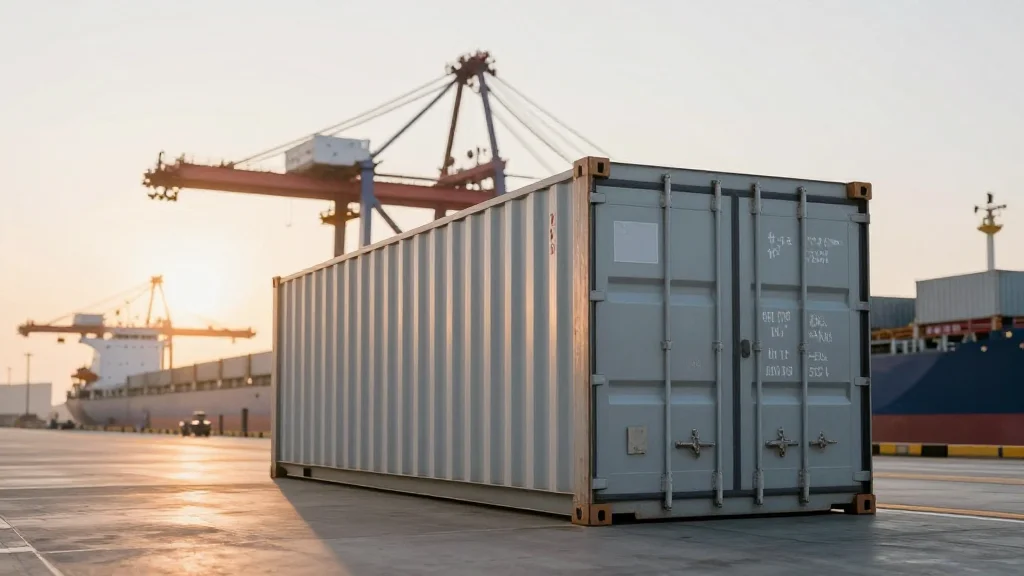
Navigating the Many Issues Surrounding China’s Ports Abroad
China’s overseas‑port strategy has expanded to more than two dozen nations, where Chinese firms act as builders, financiers, operators and investors. Host governments tout expected gains in cargo capacity, surrounding economic zones, jobs and foreign‑exchange earnings, while critics highlight debt...

China and Japan Are Entering a More Dangerous Phase of Rivalry
The long‑standing China‑Japan rivalry has entered a new, more confrontational phase as Tokyo adopts a stronger military stance. Prime Minister Takaichi’s warning that a Chinese attack on Taiwan threatens Japan’s survival, the deployment of 1,000‑km Type‑12 land‑to‑ship missiles, and a...

A Year After Operation Sindoor: Rising Risks and Deepening Instability
On May 6‑7 2025 India launched Operation Sindoor, a series of air and missile strikes against terrorist camps in Pakistan and Pakistan‑administered Kashmir in retaliation for the Pahalgam attack that killed 26 civilians. The strikes sparked a four‑day exchange of fire between the...

Amb. Ina Marciulionyte on the Future of EU-Mongolia Ties
Ambassador Ina Marciulionyte highlighted the deepening EU‑Mongolia partnership as it marks 35 years of diplomatic ties and aligns with the EU’s broader Indo‑Pacific push, including its new free‑trade pact with India. Current EU initiatives span renewable‑energy transmission lines in the Gobi, forest...

Will the US Serra Verde Acquisition Help Break China’s Rare Earth Monopoly?
On April 20, USA Rare Earth announced a $2.8 billion acquisition of Brazil’s Serra Verde Group, backed by a $565 million loan from the U.S. International Development Finance Corporation. The deal includes a 15‑year government‑backed offtake vehicle that will channel all of Serra Verde’s rare‑earth ore...

Better Late Than Never: Italy’s Strategic Bet on India
Italian Defense Minister Guido Crosetto’s April visit to New Delhi cemented a new 2026‑27 bilateral military‑cooperation plan, expanding joint training and naval industry projects. The trip builds on a year of high‑level diplomatic exchanges, including Foreign Minister Antonio Tajani’s December...

Foreign-Invested Apps and Taiwan’s Cybersecurity Blind Spot
Taiwan’s food‑delivery market is on the cusp of a major shift as Grab moves to acquire foodpanda for roughly $600 million, potentially securing over half of the sector’s share. The deal would transfer vast troves of location, consumption, and labor data...

The ICJ and the Limits of International Justice For the Rohingya
The International Court of Justice is finalising its genocide judgment against Myanmar, a case launched by The Gambia in 2019 that led to provisional measures in January 2020. While the court’s rulings are legally binding, they lack direct enforcement power,...

From Consensus to Consequence: Rethinking ASEAN’s Myanmar Approach
ASEAN’s five‑year reliance on the Five‑Point Consensus (5PC) has failed to curb Myanmar’s military junta, with none of its core commitments—ending violence, inclusive dialogue, humanitarian access, a special envoy, and envoy visits—implemented. In February 2026, Timor‑Leste filed a universal‑jurisdiction war‑crimes case...

What Orban’s 16-Year China Experiment Reveals About Europe
Viktor Orban’s defeat in the 2026 election ends a 16‑year China experiment that left Hungary as the EU’s top recipient of Chinese investment – about $3.4 bn in 2024, or 31 % of all Chinese FDI in Europe. The “Eastern Opening” created a...

The Contradictions Shaping Japan’s Russia Policy
Since Russia’s invasion of Ukraine in February 2022, Japan has dramatically reshaped its security posture, pledging to nearly double its defense budget, acquire long‑range strike missiles and entertain lethal‑weapon exports. At the same time, Tokyo has kept importing LNG and oil...

Uzbekistan Aims to Expand Extremism Law and Grow List of Extremist Crimes
Uzbekistan’s Supreme Court updated its extremist blacklist in early April, raising the count from roughly 1,600 to over 1,800 entries, with Telegram accounting for 855 channels. The following day the Legislative Chamber approved a draft law that broadens the catalogue...

In India, Medical Titles Debate Raises Public Health Concerns
India’s Kerala High Court ruled that physiotherapists and occupational therapists may use the prefix “Dr.” provided they add the suffix “PT,” a decision formalized in the 2025 Competency‑Based Curriculum for Physiotherapy. The ruling sparked sharp opposition from the Indian Medical...

What China’s AI Push Can Teach Africa About the Future of Labor
China’s 2026 Two Sessions outlined an "intelligent economy" that blends AI, robotics, and green energy while targeting 4.5‑5% growth and 12 million new urban jobs. The government acknowledges AI will both displace and create work, noting a mismatch where factories lack...

Kim Jong Un Was Right – and Everyone Else Is Taking Notes
The U.S.-led 2026 war against Iran exposed the fragility of security assurances for non‑nuclear states, echoing Ukraine’s 2022 experience. Both conflicts demonstrated that conventional guarantees crumble when a nuclear‑armed power intervenes. North Korea’s expanding arsenal now shields it from similar...

EU Delists Tajik Banks as Kyrgyzstan Feels the Heat
On April 23 the EU removed three Tajik banks—Spitamen Bank, Dushanbe City Bank and Commercebank of Tajikistan—from its sanctions list after Tajik authorities pledged tighter anti‑money‑laundering controls. The same 20th sanctions package simultaneously barred two Kyrgyz banks, Keremet Bank and Capital...

Japan’s Forgotten Deployment to the Middle East
Japan’s ruling Liberal Democratic Party has urged Prime Minister Takaichi Sanae to consider deploying Maritime Self‑Defense Force minesweepers to the Strait of Hormuz once hostilities end, echoing U.S. calls for greater allied involvement. Tokyo already fields assets in the Gulf...

China Never Actually Removed Homosexuality From Its Official List of Mental Disorders
The article debunks the long‑held belief that China removed homosexuality from its official mental‑disorder list in 2001. In fact, the Chinese Classification of Mental Disorders‑3 (CCMD‑3) retained "homosexuality" as a diagnosis, labeling it "not necessarily abnormal" while still allowing conversion‑therapy...

Are the Ryukyu Islands an Overlooked Flashpoint in the Indo-Pacific?
The Ryukyu Islands, a 55‑island chain linking Taiwan and Japan, are emerging as a strategic flashpoint in the Indo‑Pacific. Beijing views the archipelago as a gateway to extend its naval reach, pressure Taiwan, and secure submarine transit beyond the First...

Former Kyrgyz Security Chief Charged With Coup-Plotting and Abuse of Office
Kyrgyzstan’s former security chief Kamchybek Tashiev was formally charged on April 30 with attempting a violent seizure of power and abuse of office, under Articles 326 and 337 of the criminal code. The charges follow his February dismissal by President Sadyr Japarov...

US Deep-Sea Mining Policy Is Eroding Its Pacific Partnerships
The United States declared deep‑sea mining a national priority in 2025 and, through Executive Order 14285 and NOAA’s accelerated permitting, launched the $12 billion Project Vault. Instead of working through the United Nations Convention on the Law of the Sea and the...

Pakistan Moves Toward a Sea-Denial Strategy
Pakistan’s navy has accelerated its sea‑denial posture by testing a 600 km range Taimoor air‑launched cruise missile, a 450 km P282 SMASH anti‑ship ballistic missile launched from a corvette, and the LY‑80(N) surface‑to‑air system. These weapons add precision strike and defensive layers...

China’s Economy: By the Numbers
Moody’s confirmed China’s sovereign A1 rating and shifted its outlook from Negative to Stable, joining Fitch and S&P in affirming the country’s creditworthiness. Official data show Q1 2026 GDP growth at 5% year‑on‑year, nominal GDP around $20.85 trillion, and inflation easing...

Is the EU the Next Migration Destination for Uzbeks?
Uzbekistan adds about 600,000 new workers each year, a figure expected to approach one million by 2030. Russia and Kazakhstan still dominate Uzbek migration, but Germany and the wider EU are gaining traction, evidenced by a 26% rise to 58,691...

Australia’s Foreign Minister Makes Critical Visits to Northeast Asia
Australian Foreign Minister Penny Wong embarked on a three‑nation tour of Japan, South Korea and China to shore up fuel supplies amid a Middle‑East oil disruption. The trip highlighted Australia’s heavy reliance on Asian refineries for refined fuels while leveraging...

Where Do Thailand-China Relations Stand in 2026?
Thailand’s ties with China deepened in 2026 as high‑level visits, booming Chinese consumer brands and joint infrastructure ambitions reinforced a pragmatic partnership. The Bangkok International Motor Show saw BYD outpace Toyota, while Thailand’s “land bridge” rail project looks to Chinese...

Between IMF Conditions and Rising Prices, Is Sri Lanka Heading Toward Stagflation?
Sri Lanka secured a staff‑level IMF agreement that could release about $700 million, but the funds are contingent on reinstating cost‑recovery pricing for fuel and electricity. The government’s move to raise tariffs – a 13.56% request from the Ceylon Electricity Board...

The United States Is Losing the Race for Central Asia’s Critical Minerals
The United States is falling behind in securing Central Asia’s critical‑mineral wealth, a region valued at roughly $46 trillion and home to at least 32 of the 60 U.S.‑identified critical minerals. While China and Russia together command about 70 percent of the...

Swiss Karimova Corruption Case Discontinued
Swiss Federal Criminal Court dismissed the corruption trial against Gulnara Karimova on April 28, citing her inability to appear in court, a procedural obstacle that ends the case against her and a second Uzbek defendant. The dismissal does not affect...

Thailand Walked Into Its LNG Trap With Its Eyes Open – Long Before Hormuz
Thailand’s state power utility has spent roughly $2 billion on availability payments to gas‑fired plants that produced little or no electricity over the past three years. Those fixed fees now add about 0.63 baht per kilowatt‑hour to the 2026 tariff, representing almost...

The Bangladesh-US Trade Deal Is a Litmus Test for Dhaka’s Strategic Autonomy
The U.S.–Bangladesh Agreement on Reciprocal Trade (ART), signed days before Bangladesh’s February elections, expands market access to the United States but embeds clauses that restrict dealings with “non‑market economies” and bind Dhaka to U.S. export‑control, energy and defense rules. Those...

China’s Sanctions Hit Europe’s Emerging Drone Doctrine
On April 24, China’s Ministry of Commerce placed seven European defence firms on an export‑control list, banning dual‑use items over alleged arms links to Taiwan. The sanctions target Germany’s Hensoldt, Belgium’s FN Herstal and FN Browning, and four Czech companies, cutting off...