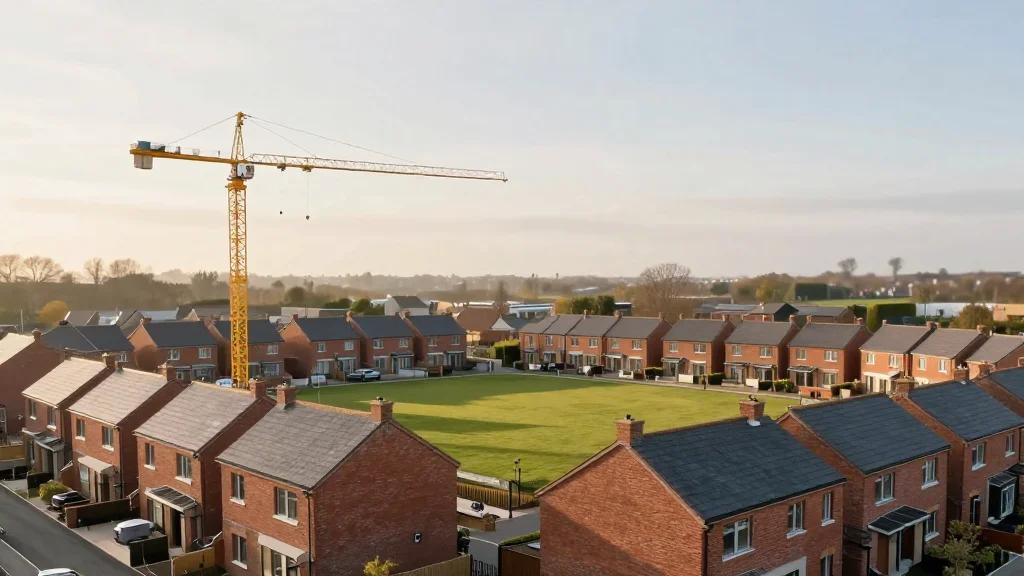
New Housing in U.K.: Spurring Public-Private Development of a Dozen “New Towns”
The UK government is launching 12 large‑scale "new towns" that could deliver up to 300,000 homes across England. Public‑private partnerships will be essential, with development corporations providing the statutory framework and early infrastructure. The nascent National Housing Bank is expected to supply initial loans and guarantees, while private capital will be attracted once critical mass and amenities are in place. Industry leaders stress that patient, long‑term capital is required to achieve the J‑curve returns these projects can generate.

Slower U.S. Construction Pipeline Alters Supply Outlook for Commercial Real Estate
The U.S. construction pipeline is weakening outside the booming data‑center segment, with commercial and multifamily starts falling sharply. Input costs remain 40‑45% above pre‑pandemic levels and financing rates have risen, making new projects financially unattractive. Multifamily starts are projected at...

Metropolitan Park Riverfront Redevelopment Advances Flood Protection and Public Space in Jacksonville
Jacksonville’s 15‑acre Metropolitan Park is being redeveloped by Civitas into a climate‑resilient riverfront that blends flood mitigation with public amenities. The centerpiece is a 100‑foot “Living Edge” of wetlands and native plantings that adds roughly three feet of storm‑surge protection...

University of Texas at Austin Team Wins 2026 ULI Hines Student Competition with Vision to Redevelop Austin
The University of Texas at Austin team captured the 2026 ULI/Gerald D. Hines Student Urban Design Competition, earning a $35,000 prize. Their winning proposal, “The GreenLink,” reimagines the aging Hancock Center as a sustainable, mixed‑use district that links East and...
Closing the Housing Gap in The Phillipines
The Philippines faces a 10‑million‑unit housing deficit across 26 million households, with annual construction lagging at roughly 130,000 units versus 478,000 new households. The government’s Expanded 4PH program has lifted its target to 1.1 million units, while the private sector is testing...

UL10: 10 Small-Scale Infill Projects Add Density to Tight Sites
The article profiles ten small‑scale infill projects spanning the United States, United Kingdom, Canada, and Australia, each turning underused parcels into dense, mixed‑use housing. Developers leveraged compact footprints, all‑electric systems, and renewable energy to deliver affordable units and community amenities....

Workforce, Leadership Gaps Drive New Executive Development Program
The Urban Land Institute’s Women’s Leadership Initiative (WLI) has launched a six‑month Executive Development Program to fast‑track senior women in commercial real estate into CEO, board and succession‑track roles. Partnering with P20 Leadership, the cohort‑based accelerator provides executive coaching, a...

ULI Arizona Trends Day 2026: Energy, Risk, and Resilience Reshaping Phoenix
At ULI Arizona’s 21st Annual Trends Day, industry leaders highlighted a fragile yet growing U.S. economy, AI‑driven tools accelerating post‑fire rebuilding, and a push toward nuclear power to meet Arizona’s soaring energy demand. John Chang projected 2.5% GDP growth in...

Stagflation Risk Is Secondary to a Growing Commercial Real Estate Margin
Analysts at Moody's, AEW, Manulife and others see a 20‑40% chance the U.S. will slip into stagflation within the next year, driven by prolonged Middle‑East oil shocks that keep crude near $125 a barrel. A stagflation scenario would squeeze commercial‑real‑estate...

Can New Standards Make Data Centers Water-Wise?
Artificial intelligence is driving a data‑center boom that could triple capacity by 2030, sparking intense scrutiny over water and energy consumption. ULI’s Water Wise Development Coalition highlighted that U.S. data‑center water use may double—or even quadruple—by 2028, with hyperscale facilities...

Real Estate’s AI Challenge Isn’t Technology—It’s Communication
Columbia University has launched an Artificial Intelligence in Real Estate course aimed at creating professionals who can translate between real‑estate expertise and AI technology. The article argues that the primary barrier to AI adoption in commercial real estate is a...
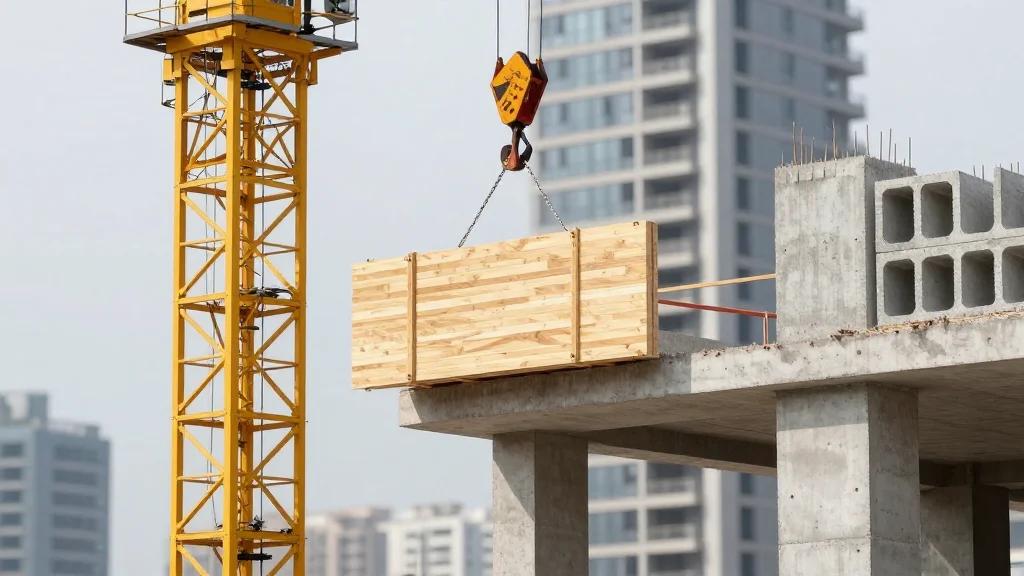
Top-Down Construction, Mass Timber, and Nanotechnology Reshape Building
At a ULI Austin breakfast, industry leaders highlighted four emerging building methods—top‑down construction, mass‑timber framing, nanotechnology‑enhanced concrete, and modular prefab. Top‑down builds the roof and floors close to ground before lifting the stack, improving safety and eliminating interior columns. Mass...

The Second Life of America’s Shuttered Pharmacies
The U.S. pharmacy sector is shedding more than 2,000 stores since 2022, with Walgreens targeting 1,200 closures, CVS 1,170 and Rite Aid exiting entirely after its 2023 bankruptcy. These closures free up prime corner parcels typically 7,000‑14,000 sq ft, which remain highly sought...

Project Profile: A Coca-Cola Bottling Plant Becomes an Entertainment and Cultural Hub
Hendricks Commercial Properties redeveloped Indianapolis’s former Coca‑Cola bottling plant into the mixed‑use Bottleworks District, opening a 139‑room boutique hotel, a 38,000‑sq‑ft food hall, and entertainment venues in December 2020. The project secured federal historic tax credits by negotiating a rooftop...

Opportunity Zones: What We Learned—And What Must Change in Round Two
The 2017 Opportunity Zones tax‑deferral program aimed to spur growth in low‑income census tracts, but its first round unfolded amid COVID‑19 and high inflation, limiting clear outcomes. Ohio’s newly released tract‑level data shows two‑thirds of eligible zones received no investment,...