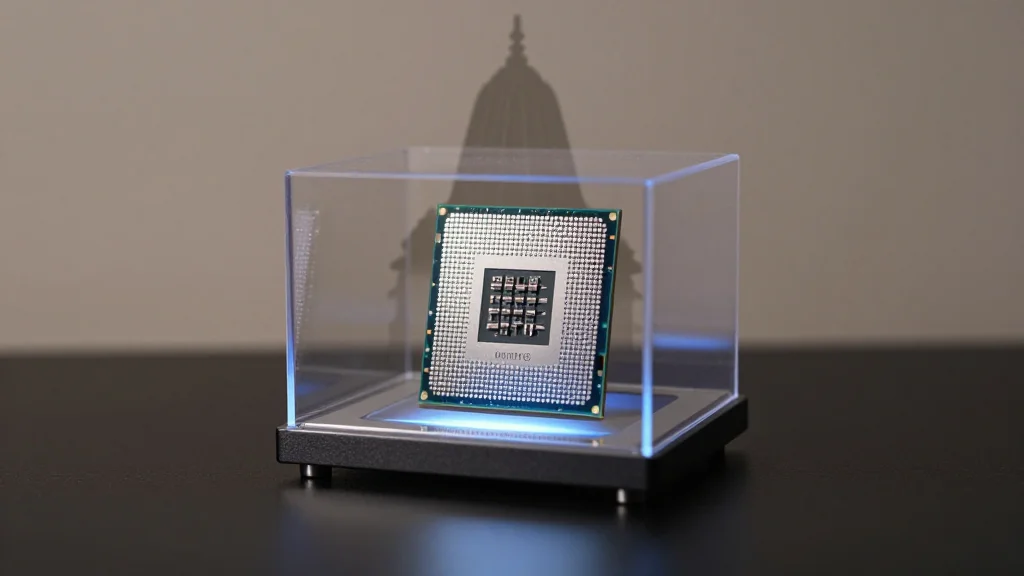
India Launches First Indigenous Open‑Access Quantum Computers at SRM University

Companies Mentioned
Why It Matters
The debut of indigenous, open‑access quantum computers signals a shift from policy pronouncements to concrete hardware capability in India. By offering free access to the processors, Andhra Pradesh aims to lower entry barriers for Indian academia and startups, potentially accelerating home‑grown quantum software and applications. This could narrow the gap with established quantum powerhouses and diversify the global supply chain for quantum hardware. Beyond technology, the launch carries geopolitical weight. As the United States, European Union and China pour billions into quantum research, India’s public‑access model presents an alternative that emphasizes inclusivity and national sovereignty. If successful, the Amaravati Quantum Valley could become a magnet for multinational collaborations, positioning India as both a consumer and contributor in the emerging quantum economy.
Key Takeaways
- •Chief Minister Nara Chandrababu Naidu to inaugurate India's first indigenous open‑access quantum computers on April 14.
- •The processors, Amaravati 1S and 1Q, will be housed at SRM University in Amaravati.
- •State investment in the Amaravati Quantum Valley is reported at roughly ₹5 billion (≈ $60 million).
- •Open‑access model aims to democratize quantum research for Indian academia, startups and government labs.
- •Annual Amaravati Quantum Summit planned for later 2026 to attract global partners and showcase the hardware.
Pulse Analysis
India’s quantum ambition has long been articulated in policy documents, but the Amaravati launch provides the first publicly visible hardware milestone. The decision to make the processors open‑access is a strategic gamble: it accelerates ecosystem growth by removing cost barriers, yet it also exposes the hardware to a broader attack surface and places pressure on the state to deliver enterprise‑grade reliability. Historically, quantum hardware rollouts have been dominated by vertically integrated firms—IBM, Google, Rigetti—whose platforms are tightly controlled. Andhra Pradesh’s approach mirrors the open‑source ethos of the software world, potentially fostering a community‑driven innovation loop that could outpace traditional models in niche applications.
From a market perspective, the launch could catalyze a wave of Indian quantum startups seeking to build algorithms on locally available qubits rather than relying on foreign cloud services. This could keep a larger share of future quantum‑derived value within the country, from cryptographic services to supply‑chain optimization. However, the success of this ecosystem hinges on the technical performance of Amaravati 1S and 1Q. If the qubits exhibit competitive coherence times and gate fidelities, they will attract international collaborations and possibly foreign direct investment. Conversely, sub‑par performance could relegate the initiative to a symbolic gesture, reinforcing the perception that India remains a consumer rather than a producer of quantum technology.
In the broader geopolitical arena, the open‑access model may serve as a soft power tool, showcasing India’s commitment to inclusive scientific advancement. As global powers vie for quantum supremacy, a transparent, accessible platform could draw researchers from nations wary of export controls, positioning India as a neutral hub. The upcoming Amaravati Quantum Summit will be a litmus test: the caliber of speakers, the volume of partnership announcements, and the depth of technical discourse will reveal whether the launch is a stepping stone toward a sustainable quantum industry or a one‑off headline.
India Launches First Indigenous Open‑Access Quantum Computers at SRM University
Comments
Want to join the conversation?
Loading comments...