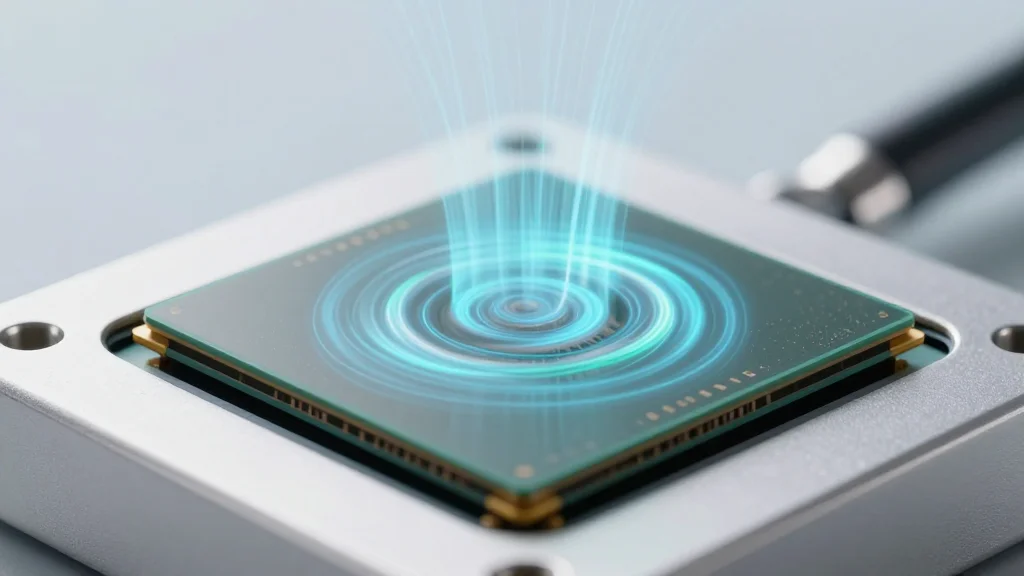
UC Irvine Team Demonstrates Method to Reverse Quantum Scrambling

Companies Mentioned
Why It Matters
Quantum scrambling has long been viewed as a barrier to reliable quantum computation because it disperses information in a way that traditional error‑correction schemes struggle to track. Demonstrating a reversible mechanism directly challenges that assumption, suggesting that quantum processors could recover lost data without excessive qubit overhead. This could accelerate the deployment of fault‑tolerant quantum machines, making them viable for complex simulations, cryptography, and materials discovery. Beyond hardware, the finding deepens our theoretical understanding of quantum thermodynamics and information flow, linking concepts of microscopic time‑reversibility to practical engineering solutions. If the technique scales, it may redefine how quantum algorithms are designed, allowing developers to exploit reversible dynamics rather than merely fighting decoherence.
Key Takeaways
- •UC Irvine researchers experimentally reverse quantum scrambling, a major source of data loss in quantum chips.
- •The work is funded by a U.S. Department of Energy Early Career Research Program award.
- •Collaborators include Michael Flynn at BlocQ and Bryce Kobrin at Google, indicating industry interest.
- •Reversal relies on fine‑tuned control that exploits microscopic time‑reversibility of quantum systems.
- •Future tests will target larger qubit arrays and integration with superconducting hardware.
Pulse Analysis
The UC Irvine breakthrough arrives at a pivotal moment when the quantum industry is wrestling with the trade‑off between qubit count and error‑correction overhead. Current error‑correction codes, such as surface codes, demand thousands of physical qubits to protect a single logical qubit, inflating hardware costs and complicating scaling. By offering a method to unwind the chaotic spread of information, the Irvine team provides a complementary tool that could shrink that overhead. In practice, a reversible scrambling protocol could be layered atop existing codes, acting as a first line of defense that restores coherence before full‑blown correction is invoked.
Historically, quantum scrambling has been studied in high‑energy physics and black‑hole thermodynamics, but its practical implications for computing have been largely theoretical. The translation of these ideas into an experimental protocol signals a maturation of the field: abstract concepts are now being harnessed to solve engineering problems. This convergence may spur a new sub‑discipline focused on "scrambling control," attracting both academic groups and hardware vendors.
Looking ahead, the real test will be scalability. The current demonstration, while compelling, was performed on a modest qubit register under controlled laboratory conditions. Industry partners like Google will need to embed the reversal pulses into noisy, large‑scale devices and verify that the technique remains effective amid real‑world decoherence. If successful, the approach could shorten the timeline for achieving quantum advantage in domains such as drug discovery or climate modeling, where error rates have been a persistent bottleneck. The collaboration between academia and leading quantum firms suggests that the community is ready to invest in this line of research, potentially reshaping the roadmap for fault‑tolerant quantum computing.
UC Irvine Team Demonstrates Method to Reverse Quantum Scrambling
Comments
Want to join the conversation?
Loading comments...