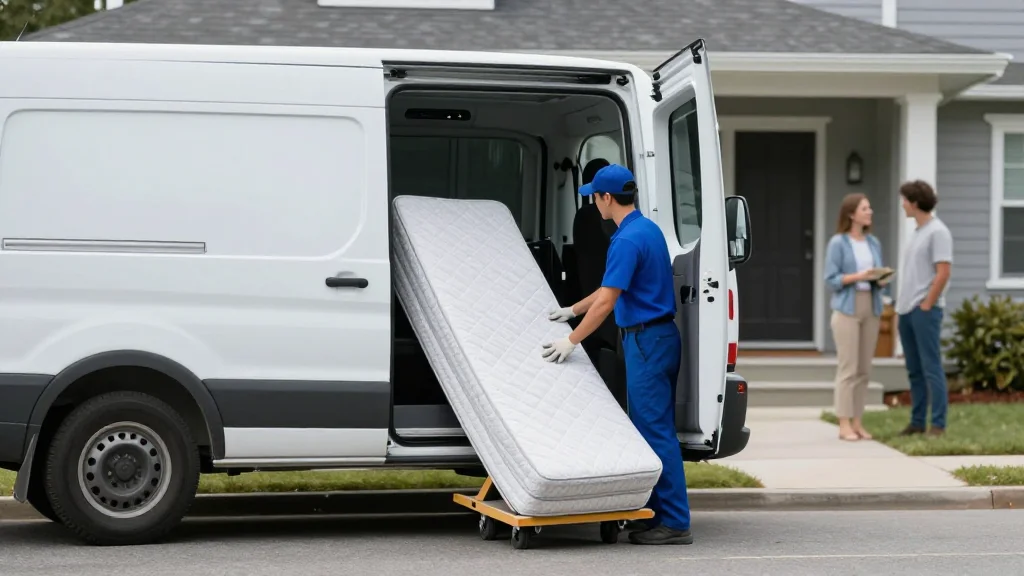
What Mattress Firm Gained From Contactless Delivery
Companies Mentioned
Why It Matters
Contactless delivery cuts costs and speeds fulfillment, giving Mattress Firm a competitive edge as consumers favor low‑touch, convenient purchasing experiences.
Key Takeaways
- •Contactless delivery now accounts for roughly 25% of Mattress Firm shipments
- •Free drop‑off saves customers at least $110 versus in‑home service
- •Initial rollout faced internal resistance and mixed customer satisfaction
- •Clear messaging lifted contactless satisfaction to parity with white‑glove deliveries
Pulse Analysis
The rise of contactless delivery has accelerated across retail, and Mattress Firm’s free drop‑off model illustrates how legacy furniture sellers can adapt. By eliminating the labor‑intensive in‑home setup, the retailer saves on driver wages and reduces the risk of delayed schedules caused by extended installations. Customers benefit from a $110 price differential, while the company leverages a streamlined logistics chain that mirrors e‑commerce giants like Amazon. This shift aligns with post‑pandemic consumer preferences for minimal physical interaction and faster fulfillment.
Operationally, Mattress Firm’s rollout highlighted the challenges of changing entrenched processes. Early pilots in Charlotte showed strong demand, but scaling nationwide encountered resistance from sales and operations teams accustomed to traditional white‑glove service. Miscommunication about the free, no‑entry nature of the offering initially led to driver‑customer friction and lower satisfaction scores. By revising sales messaging to emphasize that "free" meant contactless, the company restored confidence and brought satisfaction metrics in line with its premium delivery option. The experience underscores the importance of cross‑functional alignment when introducing new fulfillment models.
For the broader industry, Mattress Firm’s experience signals that contactless delivery can become a mainstream expectation, even for bulky items like mattresses. Retailers that invest in clear communication, driver training, and robust tracking can capture cost efficiencies while meeting consumer demand for convenience. As competition intensifies, firms that blend low‑touch logistics with transparent service promises are likely to see higher conversion rates and stronger brand loyalty in the evolving home‑goods market.
What Mattress Firm gained from contactless delivery
Comments
Want to join the conversation?
Loading comments...