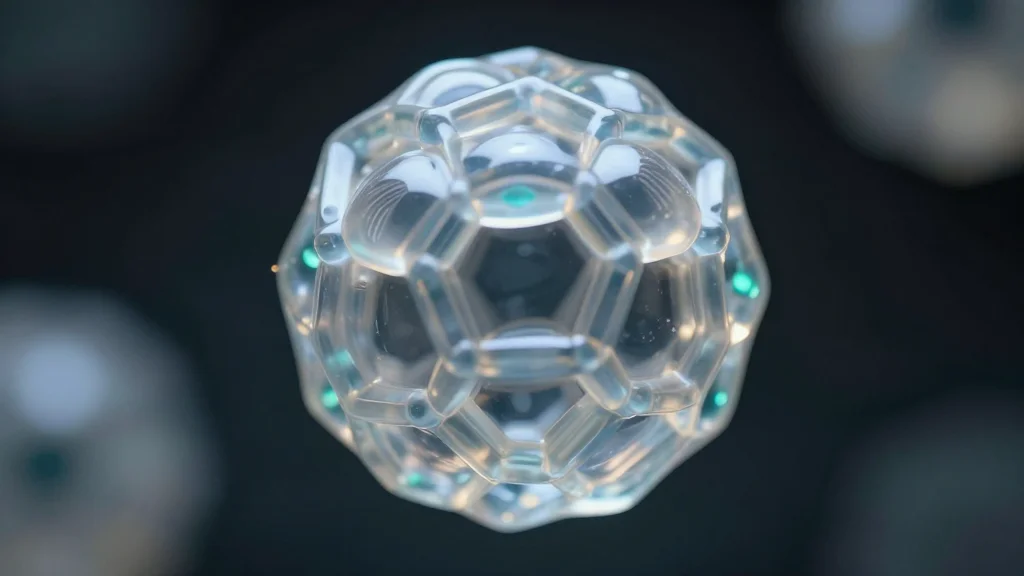
De Novo Design of Quasisymmetric Two-Component Protein Cages
Companies Mentioned

Why It Matters
Quasisymmetric two‑component cages expand the design space beyond symmetric nanostructures, enabling precise control of cargo positioning and surface functionality. This breakthrough accelerates the development of next‑generation nanovaccines and targeted delivery platforms.
Key Takeaways
- •Quasisymmetric two-component cages built from computationally designed heterodimers.
- •RFdiffusion and ProteinMPNN generated C2 linker backbones for cage closure.
- •Cryo‑EM revealed T≈3 icosahedral architecture with 9NDL, 9OM3, 9OP9 structures.
- •Functionalization enables cargo loading and cellular uptake assays.
- •Design platform accelerates nanocage development for vaccines and therapeutics.
Pulse Analysis
Protein nanocages have long been a cornerstone of synthetic biology, offering a programmable scaffold for drug delivery, vaccine presentation, and enzymatic cascades. Historically, designs relied on symmetric subunits that limited the geometric and functional diversity of the resulting assemblies. The new quasisymmetric two‑component cages break this paradigm by pairing distinct protein building blocks, creating a hybrid symmetry that mimics the complexity of viral capsids while retaining the precision of computational design. This approach widens the architectural palette, allowing designers to place functional motifs at specific, non‑equivalent sites and to tailor interior volumes for heterogeneous cargo.
The breakthrough hinges on advances in deep‑learning‑driven protein design. RFdiffusion generated curved hexagonal linkers that guide curvature, while ProteinMPNN optimized sequences for stability and interface complementarity. AlphaFold2 predictions validated the intended folds before experimental testing. High‑resolution cryo‑EM and cryo‑ET confirmed the T≈3 icosahedral geometry, and X‑ray crystallography provided atomic detail of the C2‑B‑α20 linker (PDB 9NDL). By depositing all models, scripts, and raw data on Zenodo and GitHub, the authors ensure reproducibility and invite the community to iterate on the platform.
The implications for biotech are immediate. Quasisymmetric cages can display multiple antigens in defined orientations, enhancing immunogenic breadth for next‑generation vaccines. Their modular interiors support encapsulation of enzymes, nucleic acids, or small‑molecule drugs, enabling targeted delivery with tunable release kinetics. As the design pipeline becomes more automated, we can expect rapid prototyping of bespoke nanocarriers, accelerating translational pipelines from concept to clinic. The open‑source nature of the work also lowers barriers for academic and industrial groups to explore custom nanostructures, heralding a new era of programmable protein materials.
De novo design of quasisymmetric two-component protein cages
Comments
Want to join the conversation?
Loading comments...