Experimental Copper-Based Drug Clears Alzheimer’s Plaques and Boosts Memory in Mice
Why It Matters
By targeting the brain’s clearance mechanisms, Cu(ATSM) offers a novel disease‑modifying strategy that could shift Alzheimer’s treatment from symptomatic relief to plaque reduction. Its existing safety profile accelerates the path to clinical testing, potentially shortening the timeline for a new therapeutic option.
Key Takeaways
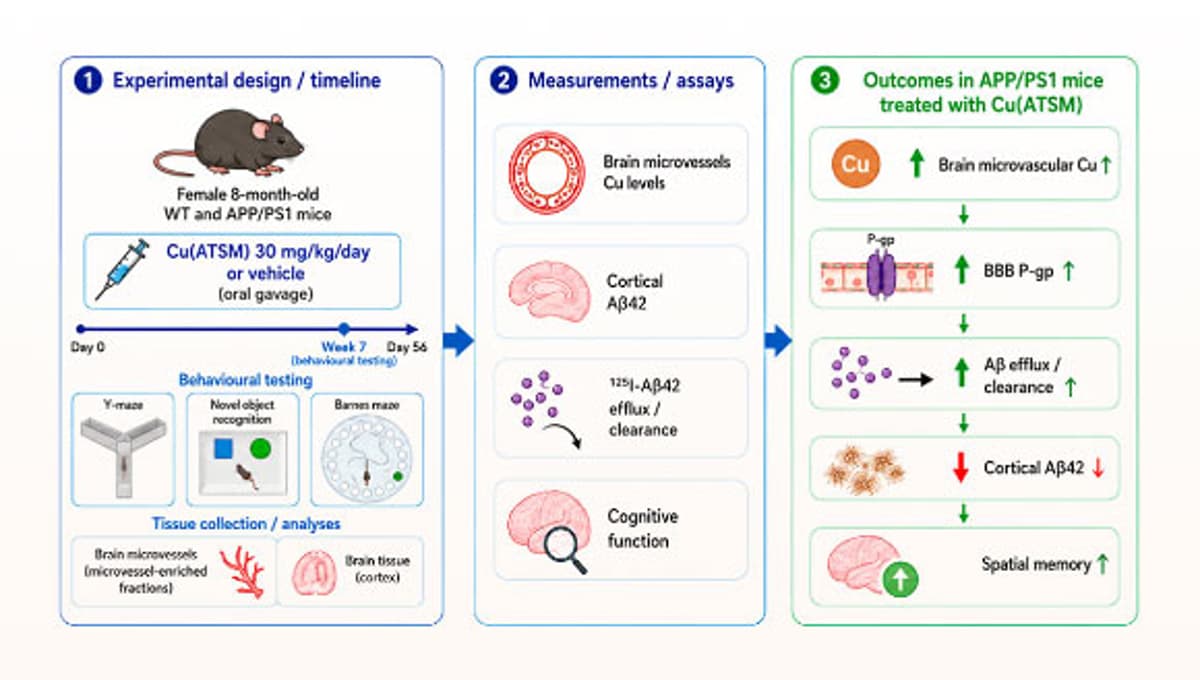
- •Cu(ATSM) boosted P‑glycoprotein pumps 24% in mice
- •Amyloid‑beta levels fell 42% after 56‑day treatment
- •Spatial memory improved nearly 44% in APP/PS1 model
- •Compound already cleared safety tests for Parkinson’s and ALS
Pulse Analysis
Copper‑based therapeutics have long intrigued neurodegenerative researchers because metals can modulate oxidative stress and protein aggregation. Cu(ATSM, originally explored for its neuroprotective effects in Parkinson’s disease, benefits from a well‑characterized pharmacokinetic profile and a safety dossier that includes Phase II ALS trials. This background lowers regulatory barriers, allowing investigators to pivot quickly toward Alzheimer’s indications where vascular dysfunction and impaired waste clearance are increasingly recognized as central disease drivers.
The Monash study demonstrated that Cu(ATSM) restores the abundance and activity of P‑glycoprotein, a key efflux transporter at the blood‑brain barrier. By enhancing this pump, the compound facilitated a 42% reduction in amyloid‑beta deposition and translated into a 44% improvement in spatial learning tasks for APP/PS1 mice. These metrics underscore a mechanistic link between vascular health, plaque clearance, and cognition, suggesting that addressing blood‑brain‑barrier integrity may be as critical as targeting amyloid production itself.
If human trials replicate these preclinical outcomes, Cu(ATSM) could reshape the Alzheimer’s drug pipeline, offering a disease‑modifying option that leverages an existing safety platform. Nonetheless, challenges remain, including confirming the exact clearance pathways and ensuring that copper‑mediated effects do not provoke off‑target toxicity. Investors and biotech firms will watch forthcoming Phase I data closely, as successful translation could unlock a new class of biometal‑based therapeutics for a market projected to exceed $13 billion by 2030.
Experimental Copper-Based Drug Clears Alzheimer’s Plaques and Boosts Memory in Mice
Comments
Want to join the conversation?
Loading comments...