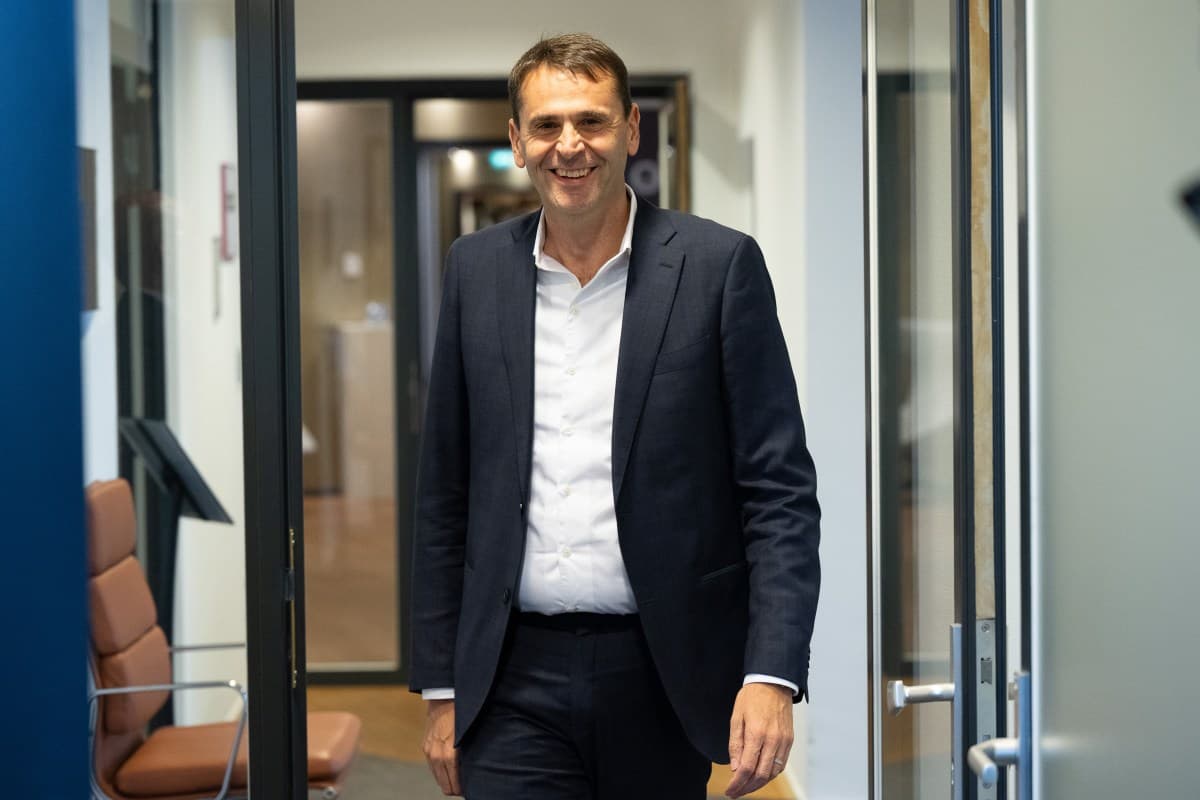
ASML CEO Christophe Fouquet on His Company’s Monopoly: No One Is Coming for Us
Companies Mentioned

Why It Matters
ASML's dominance directly shapes the supply chain for AI‑driven semiconductors, making its capacity decisions a bottleneck for the broader tech industry. Any disruption or successful competition could reshape global chip economics and geopolitical tech rivalries.
Key Takeaways
- •ASML's EUV machines cost $200‑$400 million each, monopolizing chip production
- •AI boom drives $600 billion hyperscaler spend, intensifying chip demand
- •Startup Substrate raised $100 million to challenge lithography monopoly
- •ASML denies Chinese reverse‑engineering claims, cites strict export controls
- •High‑NA EUV tools above $350 million aim 20‑30% wafer cost cut
Pulse Analysis
The semiconductor landscape has become inseparable from ASML’s EUV lithography platform, a technology that enables the sub‑10‑nanometer features powering today’s AI accelerators. By delivering the only machines capable of printing at extreme ultraviolet wavelengths, ASML controls a critical node in the value chain, and its pricing—$200 million to $400 million per unit—reflects the immense R&D spend of roughly $4.9 billion annually. As hyperscalers pour more than $600 billion into AI infrastructure, the pressure on wafer supply intensifies, positioning ASML as both a growth engine and a potential choke point for the industry.
Competitive pressure is mounting, but the barriers remain formidable. Substrate, a Peter Thiel‑backed startup, has secured $100 million in funding to pursue a rival lithography system, yet ASML’s CEO stresses that the underlying physics—generating stable EUV light and achieving nanometer‑scale precision—required two decades of incremental breakthroughs. Parallel efforts like xLight’s new laser source are being evaluated, but they must demonstrate clear performance or cost advantages to threaten the incumbent. Meanwhile, allegations of Chinese reverse‑engineering are refuted by ASML, which maintains strict export controls and tracks every shipped tool, underscoring the geopolitical sensitivity of the technology.
Looking ahead, ASML’s roadmap centers on high‑NA EUV machines priced above $350 million, promising 20‑30% wafer‑cost reductions and extending the relevance of its platform for the next 10‑20 years. Balancing aggressive capacity expansion with export‑policy constraints will be crucial; too slow a rollout could exacerbate the chip shortage, while overly liberal sales risk eroding the technological edge that underpins Western AI leadership. Stakeholders—from chipmakers to policymakers—must monitor ASML’s production cadence, as it will dictate the pace at which AI‑driven applications can scale globally.
ASML CEO Christophe Fouquet on his company’s monopoly: no one is coming for us
Comments
Want to join the conversation?
Loading comments...