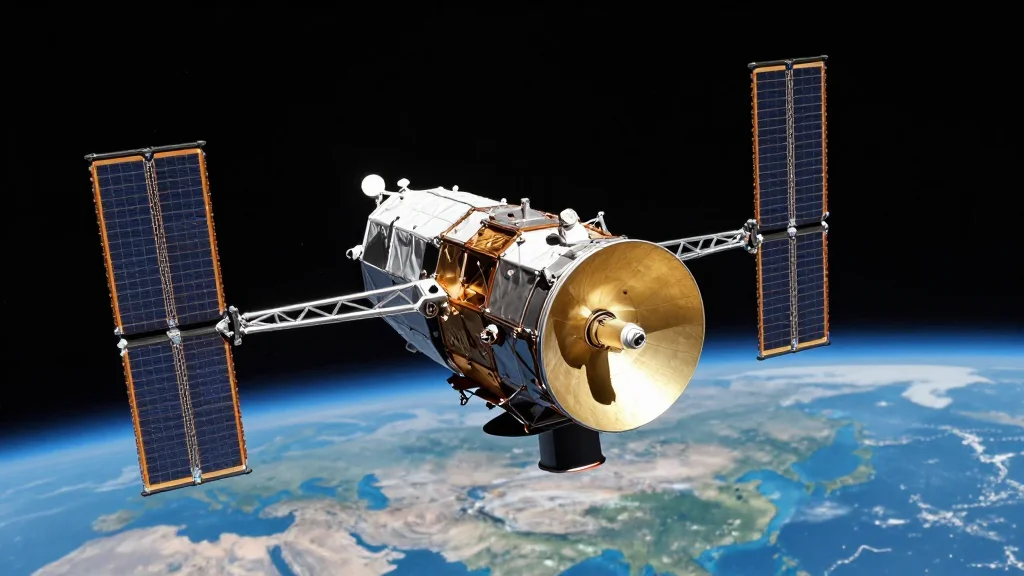
SpaceX Launches ViaSat‑3 Flight 3, Delivering 1 Tbps Broadband Across Asia‑Pacific

Companies Mentioned
Why It Matters
The launch of ViaSat‑3 Flight 3 closes the company’s global geostationary constellation, giving it true worldwide coverage for high‑throughput broadband. This capability positions ViaSat to compete directly with LEO constellations for government, defense, and enterprise contracts, especially in regions where LEO latency advantages are less critical than raw capacity. Moreover, the successful use of SpaceX’s heavy‑lift vehicle highlights the growing interdependence of satellite manufacturers and commercial launch providers, shaping the economics of future broadband satellite deployments. For the broader telecom sector, the addition of a 1 Tbps satellite expands the total available satellite bandwidth, potentially easing congestion on existing networks and enabling new services such as high‑definition video streaming, cloud gaming, and real‑time data analytics in underserved markets. The deployment also signals that large‑scale geostationary platforms remain viable alongside LEO constellations, preserving a diversified satellite ecosystem that can adapt to varied latency, coverage, and capacity requirements.
Key Takeaways
- •SpaceX Falcon Heavy launched ViaSat‑3 Flight 3 at 7:13 a.m. PT on Wednesday.
- •The satellite offers up to 1 Tbps of broadband capacity for Asia‑Pacific customers.
- •ViaSat‑3 Flight 3 completes a three‑satellite geostationary constellation covering the entire globe.
- •ViaSat’s stock rose nearly 3% to $60.98 following the launch.
- •The satellite features a 25‑kilowatt solar array and the largest commercial dish ever launched.
Pulse Analysis
ViaSat’s decision to double‑down on massive geostationary satellites reflects a strategic bet that raw throughput and flexible beamforming can outcompete the low‑latency advantage of LEO constellations in certain market segments. While Starlink dominates consumer broadband with sub‑30‑ms latency, enterprise and defense customers often prioritize bandwidth over latency, especially for back‑haul, remote sensing, and secure communications. ViaSat’s 1 Tbps platform could therefore carve out a niche in high‑capacity back‑haul links for maritime, aviation, and remote industrial sites across the Indo‑Pacific.
The launch also underscores the evolving role of SpaceX as a launch service provider for competitors. By delivering a critical payload for a direct rival, SpaceX reinforces its market dominance in launch capacity, potentially driving down costs for all satellite operators. This dynamic may accelerate the pace of satellite deployments, compressing the timeline for new capacity to reach market.
Looking ahead, the real test will be whether ViaSat can translate the satellite’s theoretical capacity into commercial revenue. Successful on‑orbit testing, timely service activation, and competitive pricing will be essential. If ViaSat can secure sizable government contracts in the region, it could force LEO players to reconsider pricing or develop hybrid solutions that combine GEO capacity with LEO low‑latency links, reshaping the satellite broadband value chain for years to come.
SpaceX launches ViaSat‑3 Flight 3, delivering 1 Tbps broadband across Asia‑Pacific
Comments
Want to join the conversation?
Loading comments...