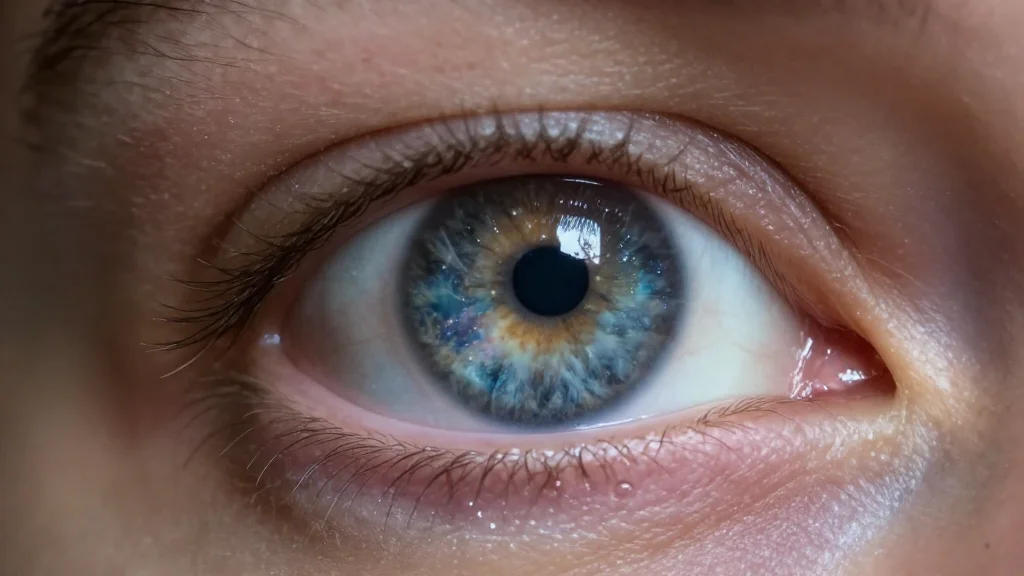
Neuroscientist Christof Koch Claims Consciousness Is a Fundamental Building Block of Reality

Companies Mentioned

Why It Matters
The proposition that consciousness is a fundamental aspect of reality bridges a gap between empirical neuroscience and age‑old spiritual doctrines, potentially offering a common language for interdisciplinary dialogue. If validated, it could shift funding toward research programs that treat subjective experience as a primary variable, altering curricula in psychology, physics, and theology alike. Beyond academia, the theory touches on public concerns about the nature of self, free will, and the afterlife. A universe where mind is primary may lend credence to meditation practices, near‑death experiences, and other phenomena traditionally relegated to the spiritual domain, influencing cultural attitudes toward mental health, ethics, and even policy decisions about AI consciousness.
Key Takeaways
- •Christof Koch presented a theory that consciousness is a fundamental building block of the universe.
- •Nicco Reggente echoed the view, using kite and radio analogies to describe consciousness as a universal field.
- •The claim challenges the dominant physicalist paradigm that ties experience strictly to neural activity.
- •Researchers plan joint publications and experimental proposals to test the hypothesis later this year.
- •If proven, the theory could reshape funding, curricula, and public perception of mind‑matter relations.
Pulse Analysis
Koch’s hypothesis arrives at a moment when neuroscience, quantum physics, and AI research are converging on questions of agency and experience. Historically, attempts to locate consciousness outside the brain have been dismissed as metaphysical speculation, but the growing sophistication of neuroimaging and quantum sensing tools provides a tentative methodological foothold. By framing consciousness as a field akin to electromagnetic radiation, Koch invites a paradigm shift that could democratize the study of subjective experience across disciplines.
The strategic timing also aligns with a broader cultural resurgence of interest in mindfulness, psychedelics, and transpersonal psychology. As investors pour capital into companies that claim to quantify or enhance consciousness, a scientific validation of a universal consciousness could legitimize a multibillion‑dollar market segment. However, the theory’s reliance on concepts that are difficult to operationalize may invite skepticism from funding agencies that demand clear, testable hypotheses.
Looking ahead, the real test will be whether Koch and his collaborators can devise experiments that isolate consciousness from neural substrates. Success would not only rewrite textbooks but also force ethicists to reconsider the moral status of non‑human entities and AI systems. Failure, on the other hand, could reinforce the physicalist status quo, relegating consciousness to a byproduct of brain chemistry and preserving the current trajectory of neuroscience research.
Neuroscientist Christof Koch Claims Consciousness Is a Fundamental Building Block of Reality
Comments
Want to join the conversation?
Loading comments...