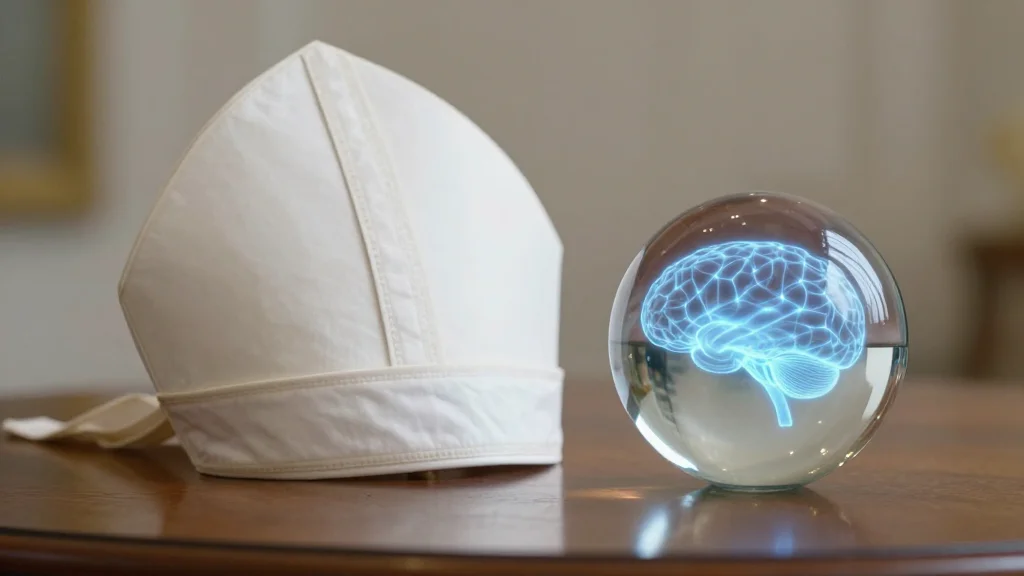
Pope Leo XIV’s First Encyclical Calls for AI ‘Disarmament’ and Human‑Centred Ethics

Companies Mentioned

Why It Matters
The encyclical marks the first time a sitting Pope has devoted a major doctrinal statement to artificial intelligence, signaling that religious institutions are prepared to shape the ethical discourse surrounding emerging technologies. By framing AI as a moral challenge, the Vatican can influence policymakers, especially in countries where Catholic social teaching informs legislation on labor, social justice, and human rights. The call for "disarmament" of AI also adds a spiritual dimension to ongoing geopolitical debates about autonomous weapons and data monopolies, potentially galvanizing civil society groups to demand greater transparency and accountability from tech giants. Beyond immediate policy implications, the document could reshape public perception of AI, encouraging a narrative that places human dignity at the core of technological development. This may inspire new collaborations between theologians, ethicists, and engineers, fostering interdisciplinary frameworks that balance innovation with moral responsibility.
Key Takeaways
- •Pope Leo XIV released the 42,300‑word encyclical Magnifica Humanitas on May 25, 2026.
- •The document labels AI a "defining moral challenge" and calls for its "disarmament".
- •Anthropic co‑founder Christopher Olah attended the Vatican presentation.
- •Leo XIV warns AI amplifies power concentration, urging clear oversight and an end to the AI arms race.
- •The Vatican will host international symposia on AI ethics, beginning in early 2027.
Pulse Analysis
Leo XIV’s encyclical arrives at a moment when AI governance is fragmented across national security, corporate self‑regulation, and nascent international norms. By invoking the moral authority of the Catholic Church, the Pope injects a values‑based counterweight to the market‑driven narratives that dominate the tech sector. Historically, papal encyclicals such as Rerum Novarum reshaped labor law and social policy; Magnifica Humanitas could similarly influence emerging AI regulations, especially in regions where Catholic social teaching informs public policy.
The document’s emphasis on "disarmament" is strategically framed to resonate with both peace activists and policymakers wary of an AI arms race. While critics label the language as cautious, the Pope’s call for "clear criteria and effective oversight" aligns with growing bipartisan calls in the United States and Europe for transparency in AI development. The presence of Christopher Olah signals a willingness from the tech community to engage with religious moral frameworks, potentially opening channels for joint advisory bodies that blend technical expertise with ethical guidance.
Looking ahead, the encyclical may catalyze a new coalition of faith‑based organizations, NGOs, and academic institutions advocating for AI policies that prioritize human dignity over profit. If the Vatican’s outreach succeeds, we could see a shift from purely technical standards to a more holistic governance model that incorporates spiritual and moral considerations, reshaping the global conversation on AI for years to come.
Pope Leo XIV’s First Encyclical Calls for AI ‘Disarmament’ and Human‑Centred Ethics
Comments
Want to join the conversation?
Loading comments...