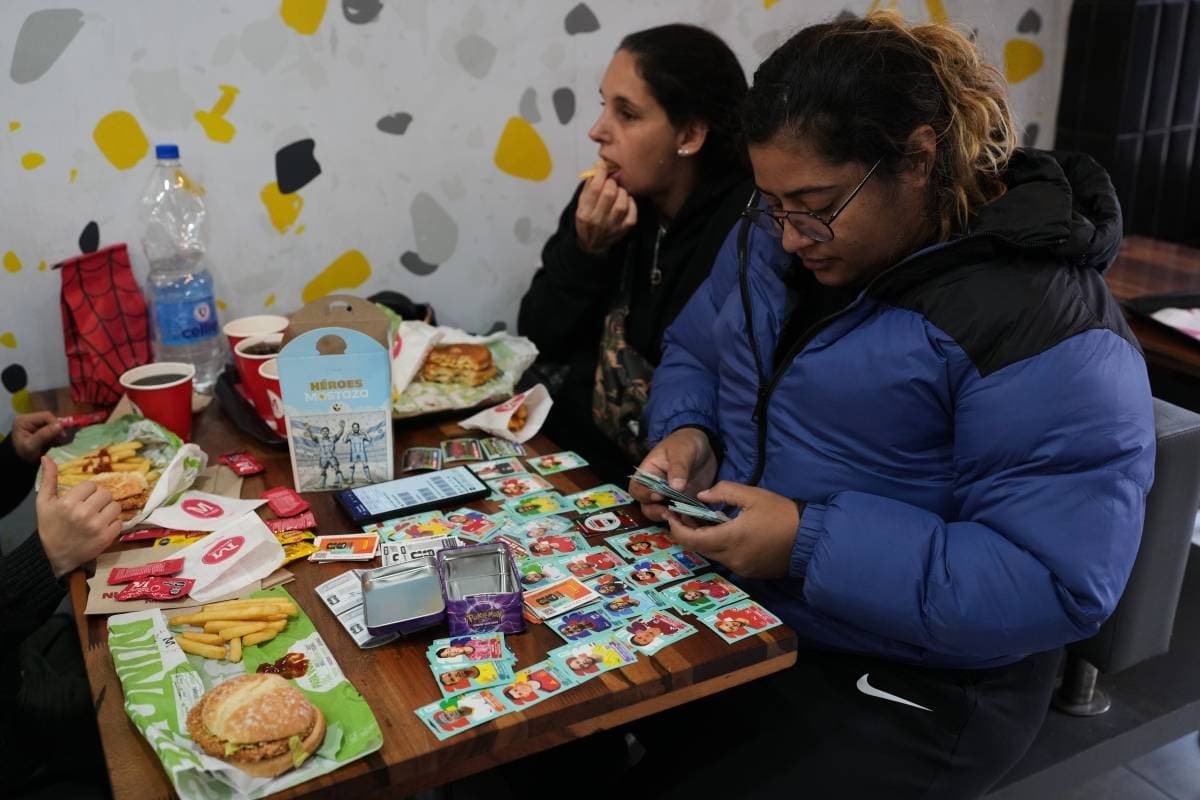
Argentine Plazas Buzz with World Cup Sticker Trading Fever
Companies Mentioned
Why It Matters
The sticker trade drives significant consumer spending and creates a grassroots marketing channel for Panini, while reinforcing community engagement around the World Cup.
Key Takeaways
- •Panini’s biggest World Cup sticker set launched for 48-team tournament
- •Packs sell for $1.50; bulk boxes of 104 cost $180
- •WhatsApp groups and apps now central to South American swaps
- •Rare player stickers like Messi, Ronaldo, Mbappé are widely available
- •Collecting boosts kids’ fine motor, geography, and sequencing skills
Pulse Analysis
Sticker collecting has been a World Cup tradition for over half a century, but this cycle is larger than any before. Panini’s 2026 album expands to 48 national teams, translating into more pages, more stickers, and a higher price point for consumers. At roughly $1.50 per pack, the hobby generates millions in revenue across Argentina and Uruguay, especially as families buy bulk boxes at $180 to avoid the hunt for elusive player cards. This surge illustrates how a simple paper product can become a seasonal economic engine, fueling retail sales, informal markets, and even secondary‑hand pricing where completed albums fetch thousands of dollars online.
Digital platforms have reshaped the age‑old bartering ritual. WhatsApp groups, specialized swapping apps, and dedicated websites now coordinate exchanges that once happened face‑to‑face in schoolyards. The immediacy of real‑time chats accelerates trade cycles, reduces duplication, and creates micro‑communities centered on sticker rarity. Meanwhile, Panini’s partnership with Fanatics, set to replace it after the 2030 tournament, signals a shift toward a more data‑driven, e‑commerce‑focused distribution model. Collectors may soon see integrated digital catalogs, AI‑matched trades, and subscription‑based delivery, blurring the line between physical hobby and online marketplace.
Beyond economics, the activity offers measurable developmental benefits for children. Psychologists note improvements in fine motor coordination, geographic literacy, and numerical sequencing as kids paste stickers into albums. The communal aspect also nurtures social skills, teaching negotiation and patience. As brands recognize these educational angles, sponsorships and cross‑promotions could emerge, positioning sticker collections as a marketing conduit that blends nostalgia, learning, and fan engagement for the next generation of football enthusiasts.
Argentine plazas buzz with World Cup sticker trading fever
Comments
Want to join the conversation?
Loading comments...