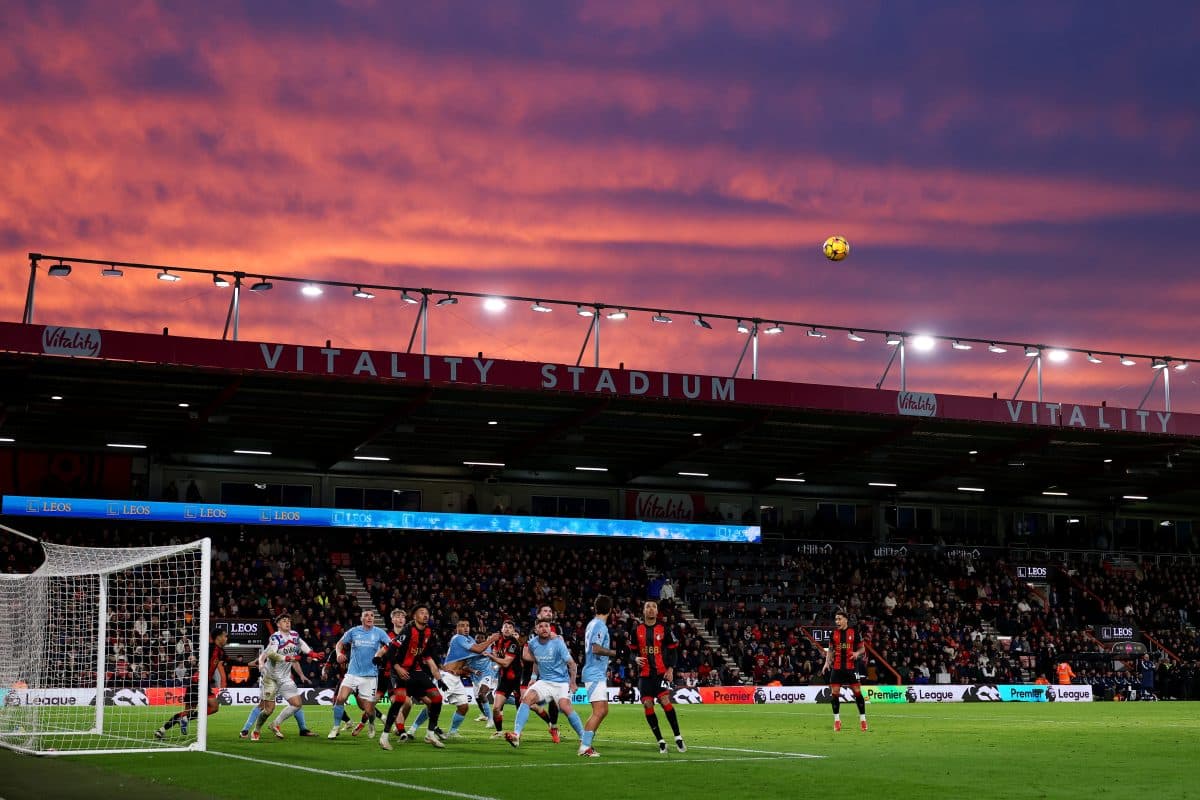
Bournemouth: Vitality Stadium Expansion Setback Hits European Plans
Companies Mentioned

Why It Matters
The delays and financial pressures limit revenue growth for Bournemouth and Burnley, while FIFA’s rule change advances gender inclusion and Saudi Arabia’s investment shift signals a new focus on younger audiences in global sport.
Key Takeaways
- •Bournemouth’s South Stand rebuild postponed; extra seats cut to 800
- •Burnley’s interest payments rose 32.6% to $17.6 m in 2025
- •Cumulative interest on Burnley’s loan exceeds $50 m since 2020
- •FIFA can now ratify Afghanistan women’s team without Taliban consent
- •Saudi PIF shifts funding to youth‑focused clubs and esports
Pulse Analysis
Bournemouth’s ambition to double the Vitality Stadium’s capacity from 11,286 to roughly 20,200 seats was a cornerstone of its strategy to capture the financial upside of a potential first‑ever European campaign. The council’s postponement of the South Stand planning meeting forces the club to defer major construction until later in the season, limiting the immediate addition of only 800 seats. This delay not only curtails match‑day revenue growth but also heightens community tensions, as nearby residents cite concerns over daylight loss, privacy, and transport congestion on game days.
Burnley’s financial picture illustrates the growing risk of private‑equity‑driven ownership in English football. Since ALK Capital’s 2020 leveraged buyout, the club has serviced a loan originally valued at about $70 m, with interest payments soaring to $17.6 m in 2025—a 32.6% increase year‑on‑year. Cumulative interest now tops $50 m, eroding profitability despite a $75 m gain from player sales and a league title. The $36 m pre‑tax loss underscores how high‑interest debt can strain clubs, especially when relegated to the Championship, prompting broader debate on sustainable financing models.
The sport’s governance and investment landscape is also evolving. FIFA’s amendment allowing teams to be ratified without national‑association approval ends a five‑year exclusion of Afghanistan’s women’s side, reinforcing the organization’s commitment to gender equity amid geopolitical challenges. Meanwhile, Saudi Arabia’s Public Investment Fund is recalibrating its portfolio, shifting away from marquee golf, snooker and tennis deals toward assets with strong youth appeal—Newcastle United, esports platforms, and other digital‑first properties. This pivot reflects a recognition that younger fans favor shorter, interactive experiences, and that long‑term brand loyalty may be cultivated through esports and youth‑centric football ventures.
Bournemouth: Vitality Stadium expansion setback hits European plans
Comments
Want to join the conversation?
Loading comments...