Building a Platform for Olympic-Scale Sports Production
Companies Mentioned
Why It Matters
The scalable platform shows broadcasters can meet growing multi‑event demands while cutting upgrade downtime, setting a new standard for large‑scale sports production.
Key Takeaways
- •650 concurrent users accessed the platform during peak Olympic coverage.
- •Unified microservices architecture allowed upgrades without halting live production.
- •Pop‑up channels launched alongside core services using existing resources.
- •Framelight X federated ingest to publishing across multiple locations.
- •Platform supports both Olympic events and daily sports output.
Pulse Analysis
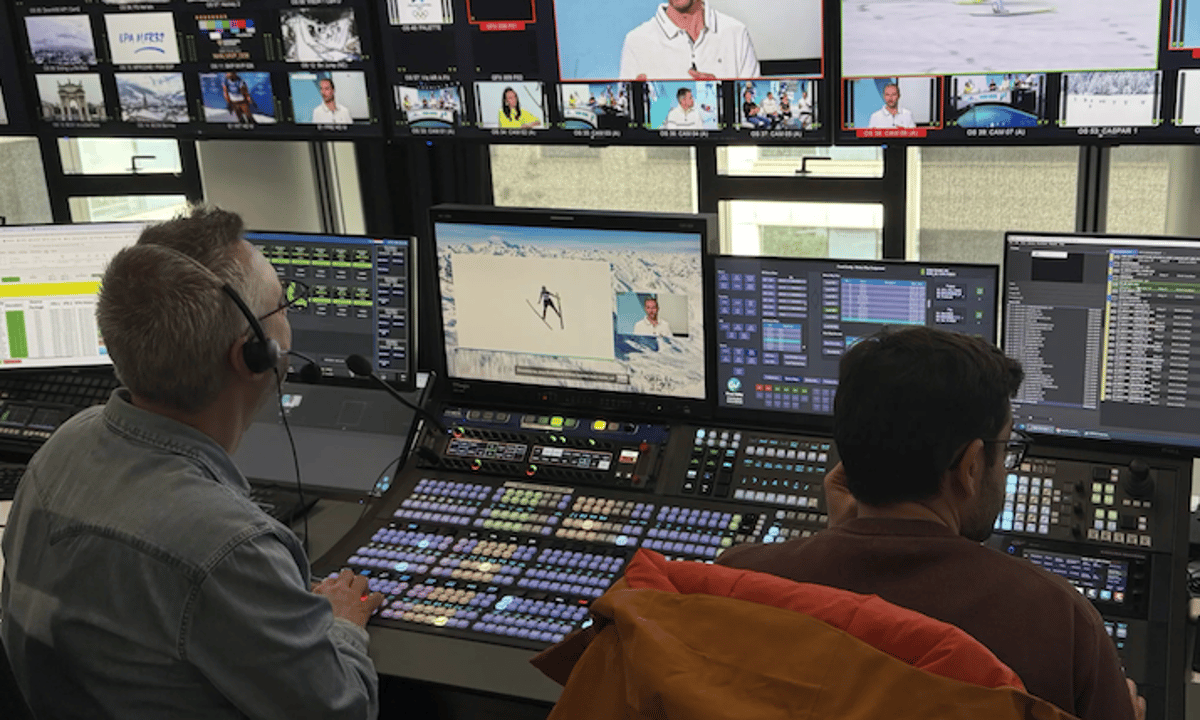
The 2026 Milan‑Cortina Winter Games forced broadcasters to juggle dozens of live feeds, editorial desks, and simultaneous events across continents. Warner Bros. Discovery answered that challenge by deploying Grass Valley’s Advanced Media Processing Platform (AMPP) built around Framelight X and Playout X. This cloud‑native stack replaces the legacy, siloed setups that once required separate hardware for each sport or market. By consolidating ingest, editing, replay and playout into a single, federated environment, the company created a production backbone capable of scaling from a single channel to an Olympic‑wide operation.
At the heart of the solution is a microservices architecture that treats each function—ingest, content management, LiveTouch replay, and playout—as an independent, upgradable component. During the Games, roughly 650 users logged in simultaneously from Europe and the United States, collaborating in real time without noticeable latency. Because updates are delivered as software‑defined changes, engineers could patch or expand individual services while the broadcast stayed on air. The flexibility also enabled the rapid launch of pop‑up channels, leveraging existing compute resources instead of building new infrastructure from scratch.
The success of this unified platform signals a broader shift in sports media toward modular, cloud‑first production pipelines. Networks that adopt similar architectures can expect faster time‑to‑market for new channels, lower capital expenditures, and reduced risk of on‑air failures during high‑profile events. As audiences increasingly demand multi‑camera, interactive experiences, the ability to reconfigure workflows on the fly becomes a competitive differentiator. Warner Bros. Discovery’s Olympic deployment therefore serves as a blueprint for future large‑scale live‑event productions.
Building a Platform for Olympic-Scale Sports Production
Comments
Want to join the conversation?
Loading comments...