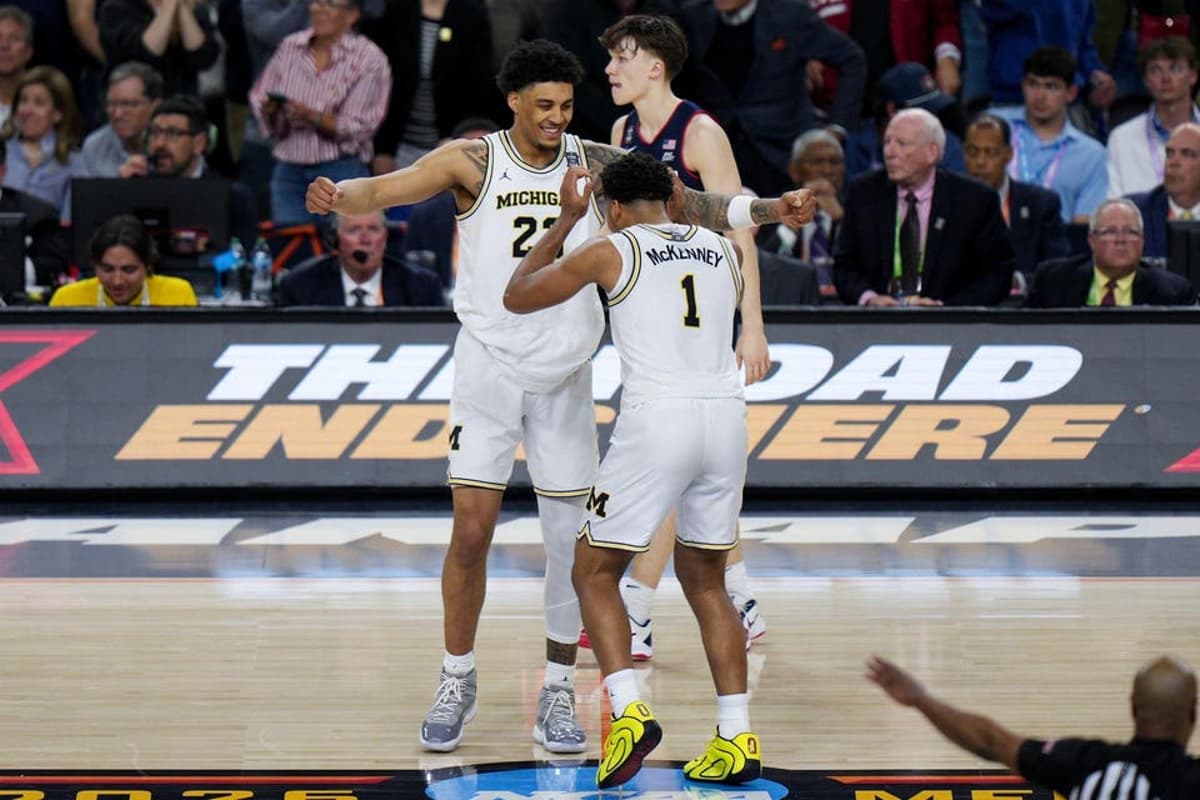
How NCAA Tournament Expansion Will Mostly Benefit Major Conferences
Companies Mentioned
Why It Matters
An expanded tournament would increase television revenue and deepen the financial disparity between Power Five and smaller conferences, reshaping the college basketball landscape.
Key Takeaways
- •NCAA may expand tournament to 76 teams, adding 8 at‑large spots
- •Power Five conferences stand to gain most revenue from extra tournament units
- •Non‑Power Five schools likely see limited increase in at‑large bids
- •Media rights negotiations with ESPN, CBS, TNT drive expansion push
- •Larger field could boost TV revenue but may widen financial gap
Pulse Analysis
The push to enlarge the NCAA basketball tournaments reflects a broader shift toward monetizing marquee college sports. Historically, the men’s field grew from 65 to 68 teams in 2011, while the women’s expanded to 68 in 2022. The latest proposal adds a preliminary round of 12 games, preserving the 64‑team core but increasing at‑large selections from 37 to 45. This change aligns with ongoing media rights renegotiations; ESPN, CBS and TNT are re‑structuring contracts that could inject billions into the NCAA’s coffers, making a larger field financially attractive.
Revenue distribution is the linchpin of the debate. The NCAA allocates money to conferences based on "units" earned each time a member advances in the tournament. More games mean more units, and the Power Five—SEC, Big Ten, ACC, Big 12 and Big East—already dominate unit generation. By adding eight extra at‑large spots, these conferences can potentially secure additional units, translating into tens of millions of dollars annually. Meanwhile, non‑Power Five leagues may see only marginal improvements in representation, limiting their ability to close the funding gap that affects facilities, coaching salaries and recruiting budgets.
For smaller conferences, the expansion offers a modest chance at greater exposure but does little to alter the competitive hierarchy. While a few mid‑major programs could break through, the financial model still favors schools with deep pockets, such as Michigan, Kentucky and UConn, which are already budgeting over $10 million for roster construction. As media conglomerates like Paramount Skydance and Warner Bros. Discovery consolidate, the incentive to maximize viewership—and thus revenue—will likely keep the Power Five at the forefront of any future tournament reforms.
How NCAA Tournament Expansion Will Mostly Benefit Major Conferences
Comments
Want to join the conversation?
Loading comments...