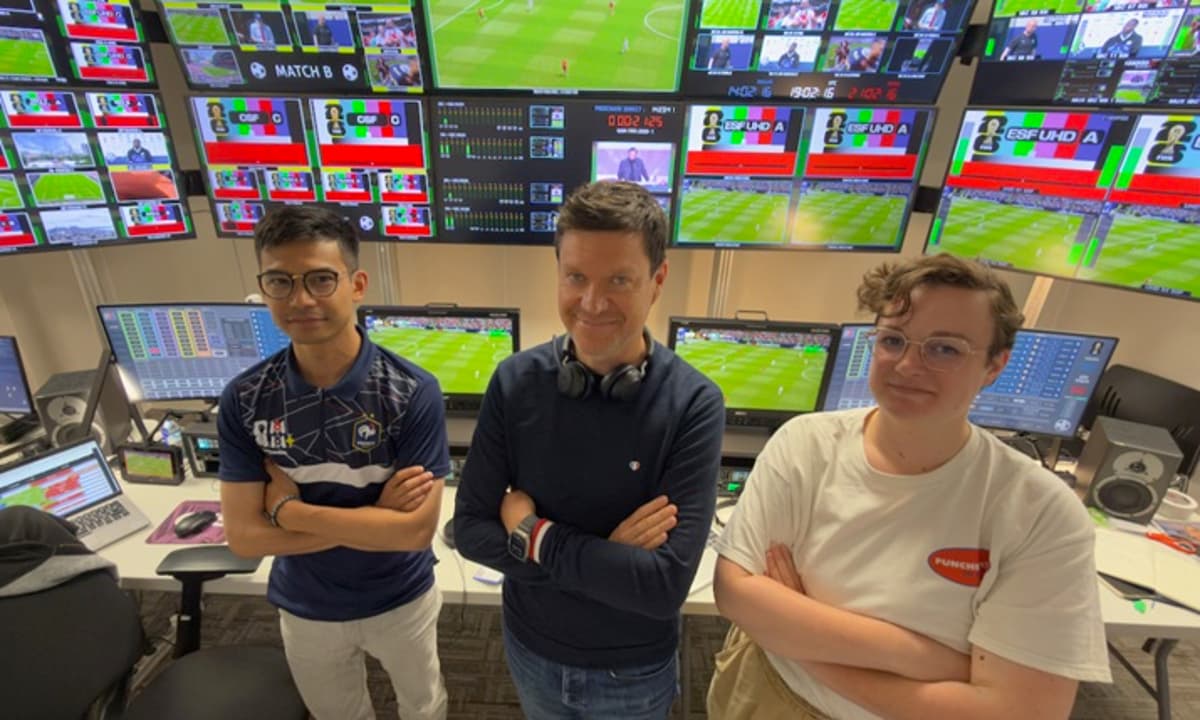
M6 France Takes on First World Cup Rights with IBC Master Control Setup
Why It Matters
M6’s entry into World Cup broadcasting reshapes the French sports‑media landscape and showcases a cost‑efficient, IP‑driven production model that could set a new standard for large‑scale live events.
Key Takeaways
- •M6 secures inaugural World Cup broadcast rights after 40 years
- •Master control at IBC handles 12 feeds, 1080i50 HD and 4K HDR
- •Telstra uses Net Insight Nimbra for transport and frame‑rate conversion
- •Off‑tube commentary in Paris reduces travel costs and adds redundancy
- •FIFA Max server and Haivision deliver live highlights, cutting ENG crew size
Pulse Analysis
M6 France’s breakthrough into World Cup broadcasting marks a pivotal shift for the nation’s private broadcasters. After decades of relying on established players, M6 secured rights for the upcoming tournament and immediately invested in a sophisticated production pipeline. By positioning a master‑control hub at the IBC, the network not only guarantees real‑time quality control but also aligns itself with the global trend of centralised, IP‑based broadcast operations. This move signals M6’s ambition to compete head‑to‑head with legacy giants and to capture premium advertising revenue tied to the world’s most watched sporting event.
The technical architecture deployed by M6 underscores the industry’s migration toward flexible, cloud‑compatible workflows. Telstra’s use of Net Insight’s Nimbra platform handles high‑capacity transport and frame‑rate conversion, ensuring seamless delivery from Qatar to Paris. Inside the IBC, a compact six‑person crew monitors picture, color and lip‑sync via SDI and MADI circuits, while the Paris control room ingests twelve separate feeds for 1080i50 HD and 4K HDR output. Off‑tube commentary teams, backed by a Ross XPression clock, reduce travel costs and provide redundancy, illustrating how remote production can maintain broadcast quality without the traditional on‑site footprint.
Beyond M6’s immediate needs, the adoption of the FIFA Max server and Haivision transmission illustrates a broader industry pivot toward server‑based content aggregation and IP video delivery. By leveraging pre‑packaged highlights and press‑conference feeds, M6 minimizes the size of its ENG crews while still delivering timely, engaging content for its sports magazines and halftime shows. This model—combining centralized master control, IP transport, and server‑driven assets—offers a blueprint for broadcasters worldwide seeking to balance cost efficiency with the high‑definition expectations of modern audiences.
M6 France Takes on First World Cup Rights with IBC Master Control Setup
Comments
Want to join the conversation?
Loading comments...