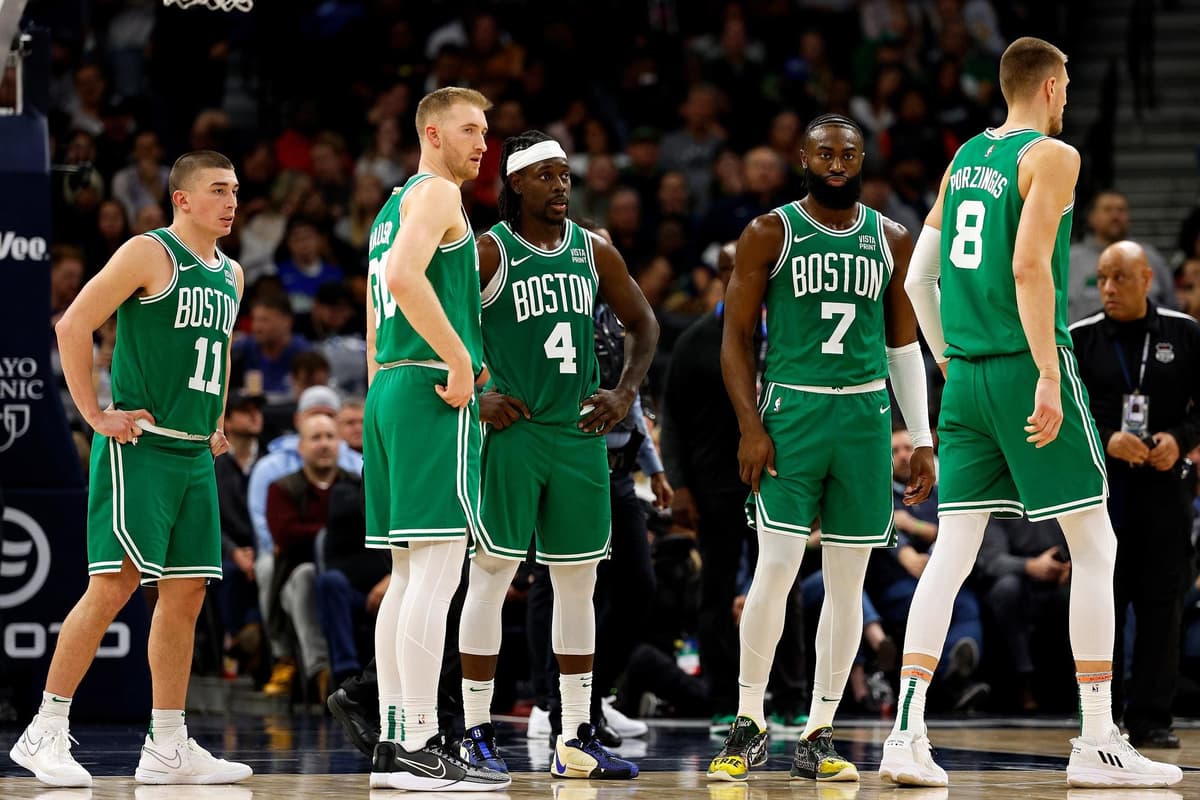
The Celtics' Luxury-Tax Dumps Came Back To Haunt Them Against The Sixers
Why It Matters
The Celtics’ aggressive tax‑avoidance strategy exposed how salary‑dump moves can erode roster quality, forcing teams to balance short‑term fiscal gains against long‑term playoff viability.
Key Takeaways
- •Celtics saved roughly $300 million by dumping salaries and avoiding luxury tax
- •Salary‑dump trades removed key contributors Jrue Holiday and Kristaps Porziņģis
- •Nikola Vučević’s under‑performance helped Celtics lose 3‑1 series lead
- •Loss pushes Celtics into uncertain offseason and potential roster rebuild
- •Brad Stevens earned Exec of Year despite playoff disappointment
Pulse Analysis
Boston’s recent luxury‑tax maneuvering illustrates a growing trend among NBA franchises to prioritize cap flexibility over star power. By offloading contracts worth roughly $40 million and staying just $12 million above the $187.9 million apron, the Celtics avoided the repeater tax and positioned themselves for a three‑year window of unrestricted spending. While the financial engineering earned Brad Stevens Executive of the Year honors, it also stripped the roster of veteran depth, a liability that became starkly apparent once Jayson Tatum’s Achilles injury sidelined the league’s premier scorer.
On the court, the Celtics’ cost‑cutting left a thin frontcourt that struggled against Philadelphia’s elite interior. Nikola Vučević, acquired to bolster size, posted modest regular‑season numbers and then shot just 37.8% in the series, providing little resistance to Joel Embiid’s dominance. The decision to start a third‑string center in Game 7 underscored the roster’s lack of viable alternatives, turning a 3‑1 series advantage into a historic comeback for the Sixers. The collapse serves as a cautionary tale: aggressive salary‑dumping can undermine a team’s ability to adapt when injuries force lineup reshuffles.
Looking ahead, Boston must decide whether to re‑invest in proven talent or continue chasing cap space. The loss of Holiday and Porziņģis not only reduced immediate competitiveness but also limited trade leverage in the upcoming free‑agency market. Other clubs watching Boston’s experiment may recalibrate their own luxury‑tax strategies, recognizing that the marginal savings of $300 million can be outweighed by the cost of a premature playoff exit. For the Celtics, the offseason will likely focus on acquiring a high‑impact center and re‑evaluating the balance between fiscal prudence and championship aspirations.
The Celtics' Luxury-Tax Dumps Came Back To Haunt Them Against The Sixers
Comments
Want to join the conversation?
Loading comments...