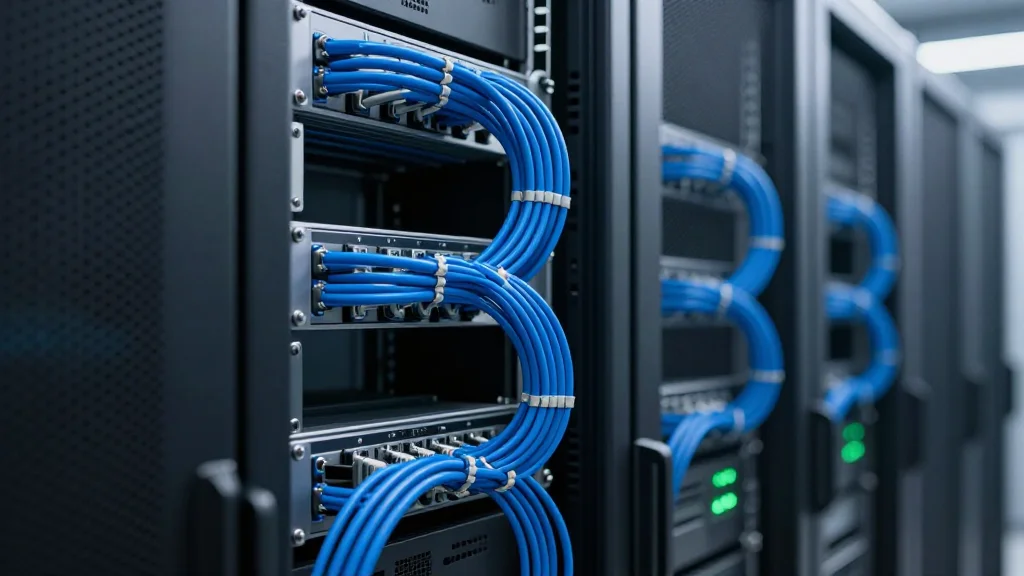
Amazon Unveils RNG Data‑Center Network, Claiming Faster Speeds and Lower Energy Use

Companies Mentioned
Why It Matters
The RNG breakthrough touches two strategic imperatives for the telecom and cloud sectors: performance and sustainability. Faster inter‑rack communication reduces latency for edge‑deployed services, a critical factor as 5G and IoT workloads demand near‑real‑time processing. At the same time, lower power consumption directly addresses the growing carbon‑footprint concerns of large‑scale operators, many of whom have pledged net‑zero targets for the next decade. By potentially setting a new efficiency baseline, Amazon’s design could force rivals—Microsoft Azure, Google Cloud, and traditional telecom equipment vendors—to accelerate their own networking research. The competitive pressure may spur a wave of innovation in topological design, hardware automation, and software‑defined networking, reshaping the economics of data‑center construction for years to come.
Key Takeaways
- •Amazon claims its RNG design raises data‑center throughput while cutting energy use, a first at scale.
- •The architecture replaces traditional fat‑tree topologies with a quasi‑random graph, flattening the network.
- •Matt Rehder, AWS Network Engineering VP, says the design “eliminated the bottlenecks” of legacy networks.
- •Professor Brighten Godfrey calls the achievement “remarkable” and notes the long‑standing difficulty of scaling random graphs.
- •RNG could lower operating costs for cloud and telecom services, especially latency‑sensitive 5G and AI workloads.
Pulse Analysis
Amazon’s RNG rollout arrives at a moment when the economics of data‑center operation are under intense scrutiny. Energy costs have risen sharply in recent years, and cloud providers are under pressure from both customers and regulators to demonstrate greener practices. By re‑architecting the fundamental fabric of its facilities, Amazon is not merely tweaking a component; it is redefining the cost curve of scale. The reduction in cabling complexity alone translates into lower capital expenditures for fiber and switch hardware, while the flatter topology reduces the number of high‑power aggregation switches that dominate power budgets.
From a competitive standpoint, the move could widen the performance gap between AWS and its rivals. While Microsoft and Google have invested heavily in custom silicon and specialized interconnects (e.g., Azure’s Project Olympus, Google’s TPU‑linked fabrics), none have publicly disclosed a comparable shift to random‑graph networking. If AWS can substantiate its latency and energy claims, customers with latency‑critical workloads—such as autonomous vehicle fleets or real‑time video analytics—may gravitate toward AWS for its superior network fabric.
The telecom angle is equally compelling. As carriers offload more of their core functions to the cloud, the efficiency of the underlying data‑center network becomes a proxy for the carrier’s own service quality. A carrier that partners with AWS could leverage RNG’s lower latency to deliver tighter 5G slicing guarantees, while also touting reduced carbon emissions in its sustainability reports. Conversely, carriers tied to legacy hardware may find themselves at a strategic disadvantage, prompting a wave of network‑function virtualization upgrades or new partnership models. In short, Amazon’s RNG could become a catalyst for a broader industry shift toward more fluid, energy‑aware networking architectures.
Amazon Unveils RNG Data‑Center Network, Claiming Faster Speeds and Lower Energy Use
Comments
Want to join the conversation?
Loading comments...