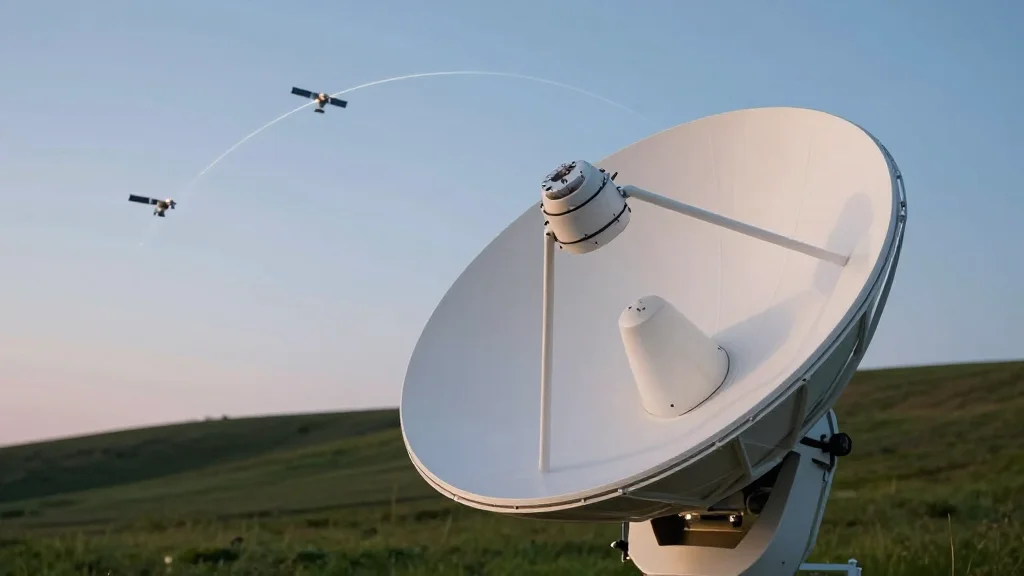
Amazon's $11.57 B Globalstar Deal Escalates Battle with Musk's Expanding Starlink Constellation

Companies Mentioned
Why It Matters
The Amazon‑Globalstar acquisition and Starlink’s proposed million‑satellite expansion represent the two most powerful forces shaping the future of global broadband. If Amazon succeeds, it could break SpaceX’s near‑monopoly, driving down costs and expanding service options for consumers, enterprises, and governments. Conversely, Musk’s plan to add AI‑focused satellites raises questions about spectrum allocation, space debris, and the geopolitical influence of a single private actor. Regulators must now address how to manage a crowded LEO environment while ensuring competition and security in a sector that underpins everything from emergency services to remote work. For telecom operators, the stakes are equally high. Traditional fiber and terrestrial wireless providers may soon face a new class of competitors that can deliver high‑speed internet to any location without ground infrastructure. The outcome of these regulatory battles will determine whether satellite broadband becomes a complementary layer to existing networks or a disruptive alternative that reshapes the industry’s value chain.
Key Takeaways
- •Amazon to acquire Globalstar for $11.57 billion, adding a 24‑satellite fleet to its LEO ambitions.
- •Starlink currently operates ~10,000 satellites and serves >9 million users worldwide.
- •Musk has filed with the FCC to launch up to a million AI‑powered satellites, sparking regulatory concerns.
- •Amazon aims to deploy 3,200 satellites by 2029, with half required by July 2026.
- •Regulators face pressure to manage spectrum, orbital debris, and market concentration in the rapidly expanding LEO market.
Pulse Analysis
The satellite broadband arena is transitioning from a niche, government‑driven service to a fiercely contested commercial battleground. Amazon’s acquisition of Globalstar is not merely a purchase of assets; it is a strategic move to embed satellite connectivity into its broader AWS ecosystem, enabling seamless integration of edge computing, IoT, and cloud services. By leveraging Globalstar’s existing voice and emergency‑SOS capabilities—already embedded in Apple devices—Amazon can offer a differentiated product suite that rivals Starlink’s consumer‑focused broadband.
Musk’s ambition to field a million AI satellites is a bold escalation that could redefine the economics of LEO. If successful, the constellation would provide on‑orbit compute power, reducing latency for AI workloads and potentially creating a new revenue stream beyond internet access. However, the sheer scale raises legitimate concerns about spectrum scarcity and collision risk, especially as other players like OneWeb and Telesat also seek to fill the LEO gap. The FCC’s decision will likely hinge on whether Musk’s plan includes robust debris‑mitigation and spectrum‑sharing protocols.
In the near term, the market will watch how Amazon meets its 2026 deployment deadline. Failure to do so could invite antitrust action or force a strategic pivot, while a successful rollout could democratize access to high‑speed internet and force Starlink to adjust pricing or accelerate its own service enhancements. Ultimately, the competition between these two tech titans will accelerate innovation, but it also underscores the need for coordinated international policy to ensure that the sky remains a shared resource rather than a monopoly of a few corporate giants.
Amazon's $11.57 B Globalstar Deal Escalates Battle with Musk's Expanding Starlink Constellation
Comments
Want to join the conversation?
Loading comments...