Estimating Mode Choice in Decentralized Shared Mobility: A Bagging-Enhanced Heterogeneous Ensemble Method
Key Takeaways
- •BESHEM merges bagging and stacking across diverse models
- •Outperforms 20 base models and four ensemble benchmarks
- •Extra Trees meta‑learner yields highest accuracy
- •Prior ride‑sharing experience boosts UPR adoption
- •Safety perception drives female user participation
Pulse Analysis
The rapid rise of decentralized shared‑mobility options—such as user‑organized pre‑pooled ride‑hailing—has strained traditional travel‑demand models, which often assume linear relationships and homogeneous traveler behavior. Researchers increasingly turn to machine‑learning ensembles to capture the nonlinear, context‑specific factors that drive mode choice. By blending multiple algorithmic perspectives, ensembles can mitigate overfitting and improve generalizability, a critical advantage when data span diverse socioeconomic and attitudinal variables.
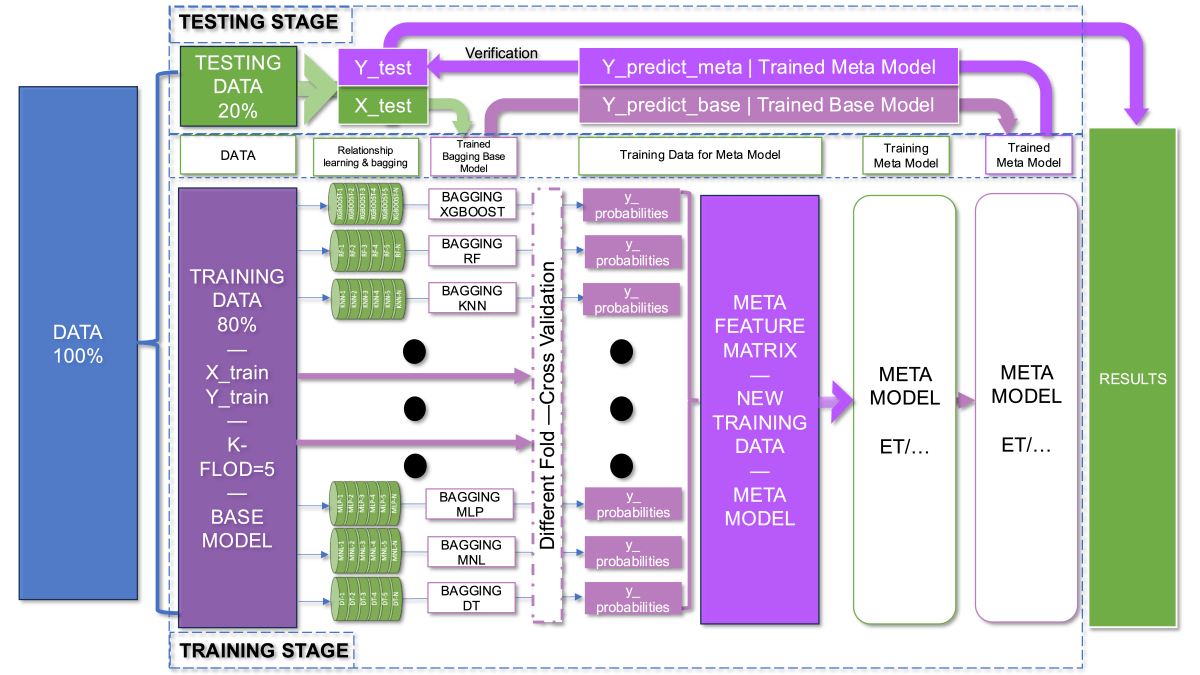
The BESHEM framework pushes this frontier further by nesting bagging within a stacking architecture, allowing each base learner to benefit from variance reduction before their predictions are combined by a meta‑learner. In the study, the ensemble incorporated linear regressions, decision trees, probabilistic classifiers, k‑nearest neighbors, and deep neural networks, ultimately selecting an Extra Trees model as the meta‑learner. This configuration delivered statistically significant gains over twenty individual models and four conventional ensembles, demonstrating that heterogeneous model diversity, when orchestrated through robust resampling, can unlock higher predictive fidelity for complex travel‑choice scenarios.
For practitioners, BESHEM’s superior accuracy translates into more precise forecasts of UPR uptake, informing fleet sizing, pricing strategies, and safety interventions. Policymakers can leverage the identified drivers—such as prior ride‑sharing experience and perceived safety among women—to design targeted outreach and regulatory frameworks that encourage sustainable, equity‑focused mobility solutions. Moreover, the methodological blueprint is portable to other emerging modes, from micro‑mobility scooters to autonomous shuttles, suggesting a broader shift toward advanced ensemble analytics in transportation planning.
Estimating mode choice in decentralized shared mobility: A bagging-enhanced heterogeneous ensemble method
Comments
Want to join the conversation?