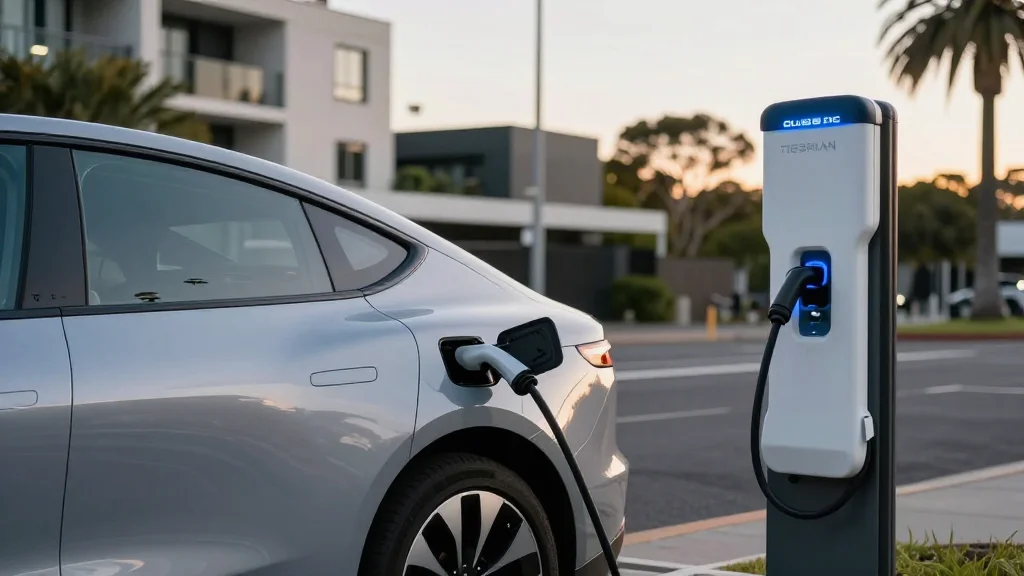
EV Fast Charging Queues Are Back. Could a Kerbside Charger Network Help?
Why It Matters
Kerbside chargers can unlock EV adoption for urban renters and reduce reliance on congested fast‑charging hubs, shaping Australia’s transition to sustainable transport. Their deployment also influences grid load management and the economics of public charging infrastructure.
Key Takeaways
- •60% Sydney residents live in apartments, limiting home charging.
- •DC kerbside chargers deliver five times more energy than AC.
- •Faster chargers used four times daily, slower only once.
- •Peak‑hour pricing could shift load to cheaper solar periods.
- •Federal grant ≈ $26 million supports kerbside rollout.
Pulse Analysis
The surge in electric‑vehicle purchases across Australia has exposed a critical bottleneck: urban dwellers without private parking lack convenient, affordable charging options. While home chargers dominate the market, roughly half of Sydney’s inner‑city population rents, making street‑side solutions essential. Kerbside chargers, mounted on poles or footpaths, provide a middle ground between costly ultra‑fast stations and home‑level AC units, allowing drivers to top up while running errands. This model not only eases fast‑charger queues but also broadens the perceived viability of EV ownership in dense neighborhoods.
Data from three eastern‑Sydney councils reveal stark usage patterns that favor higher‑power DC chargers. These 30‑50 kW units deliver about 100 kWh per day—five times the energy of 7‑11 kW AC chargers—and see four charging sessions daily versus a single session for slower models. The higher throughput translates into better space efficiency and, paradoxically, lower per‑kilowatt‑hour costs despite higher upfront capital. However, peak‑hour demand spikes, especially in evenings, could strain the grid unless dynamic pricing or time‑of‑use incentives steer charging toward solar‑rich daytime periods.
Policy makers are poised to shape the next phase of the rollout. The Australian government’s A$40 million (≈ $26 million USD) grant earmarks funds for expanding kerbside networks, but success hinges on strategic choices: prioritising DC chargers, enforcing two‑hour parking limits, and integrating dedicated EV bays. Electricity distributors lobbying for infrastructure roles must collaborate with local councils to embed smart‑metering and demand‑response capabilities. As the market matures, a well‑designed kerbside ecosystem could become the linchpin of Australia’s broader decarbonisation agenda, delivering convenience for renters while safeguarding grid stability.
EV fast charging queues are back. Could a kerbside charger network help?
Comments
Want to join the conversation?
Loading comments...