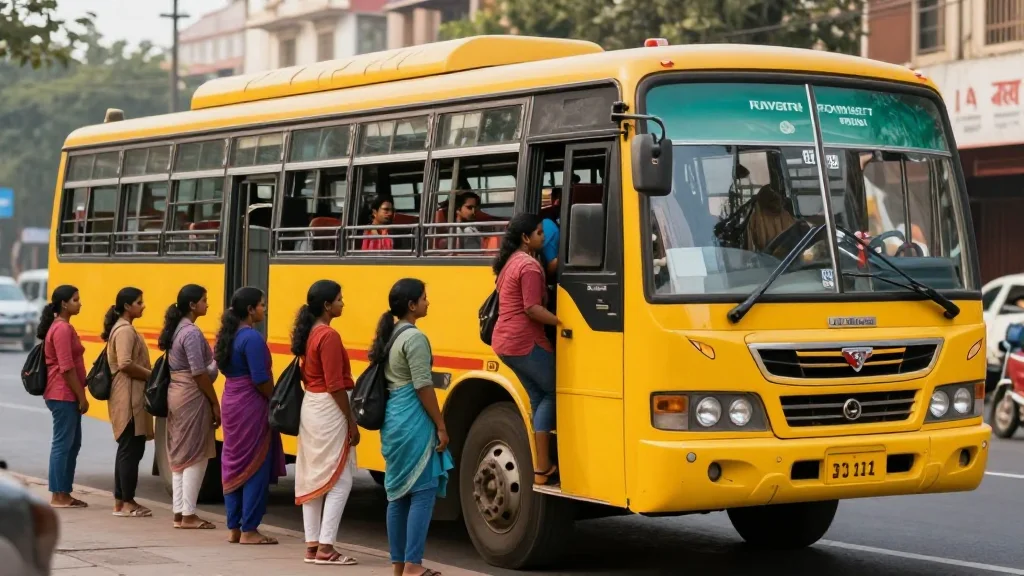
Free Bus Travel Scheme Led to Shortage of Buses: Sasikala
Why It Matters
The shortage threatens the viability of a high‑visibility welfare program and underscores fiscal and governance challenges that could affect Tamil Nadu’s political stability and service delivery.
Key Takeaways
- •Free women’s bus travel scheme strains Tamil Nadu’s fleet
- •State borrowed ~₹12 lakh crore (~$145 billion) over five years
- •Rural villages still lack water, roads, and street lighting
- •Opposition vows to prioritize neglected villages if elected
- •Flyover projects focus on revenue-generating corridors, ignoring remote areas
Pulse Analysis
The Magalir Vidiyal Payanam scheme, launched to provide free bus rides for women across Tamil Nadu, quickly became a flashpoint for transport capacity. By eliminating fares, the program spurred a sharp rise in ridership, but the state’s fleet has not kept pace. Existing buses are now over‑utilized, leading to longer wait times and service gaps, especially in peripheral constituencies where demand was previously modest. The situation illustrates how well‑intentioned subsidies can strain infrastructure when supply-side planning lags behind demand.
Compounding the operational strain is the state’s aggressive borrowing strategy. Over the past five years, the DMK administration has accumulated roughly ₹12 lakh crore—about $145 billion—largely financed through market loans. While the funds have financed high‑visibility projects like flyovers, critics argue that essential services in rural districts have been sidelined. Compared with the previous AIADMK government, which added new buses annually, the current fiscal approach appears to prioritize revenue‑generating corridors over basic connectivity, raising questions about long‑term fiscal sustainability and the trade‑offs between urban development and rural equity.
Politically, the bus shortage has become a rallying cry for opposition parties. Sasikala’s criticism frames the issue as symptomatic of broader governance failures: inadequate rural infrastructure, neglect of basic amenities, and a perceived bias toward projects that boost tax receipts. If the DMK does not address the fleet deficit and re‑balance investment priorities, it risks eroding public support for its flagship welfare schemes. The episode serves as a cautionary tale for other Indian states contemplating expansive free‑service programs without parallel capacity upgrades, highlighting the need for integrated planning that aligns fiscal policy with on‑the‑ground service delivery.
Free bus travel scheme led to shortage of buses: Sasikala
Comments
Want to join the conversation?
Loading comments...